Section Line Rights in Practice
Many North Dakota ATV and UTV riders find themselves staring down a section line, wondering if it's fair game for a ride. The concept of "section line rights" often gets tossed around in conversation, but what does it really mean for someone wanting to ride their off-highway vehicle (OHV), and how do you avoid a sticky situation with a landowner or law enforcement? This guide is here to untangle the complexities of section line rights in North Dakota, specifically how they apply to OHV riders like you, offering practical insights and helping you understand where you can and cannot legally ride while maintaining good neighborly relations.
Understanding North Dakota's Section Line Rights
Before we dive into the specifics of riding, it’s crucial to understand what section line rights actually are in North Dakota. This isn't just some old-fashioned concept; it's a fundamental aspect of land division and public access in our state, stemming from the very way North Dakota was surveyed and settled.
The Historical Context and Purpose
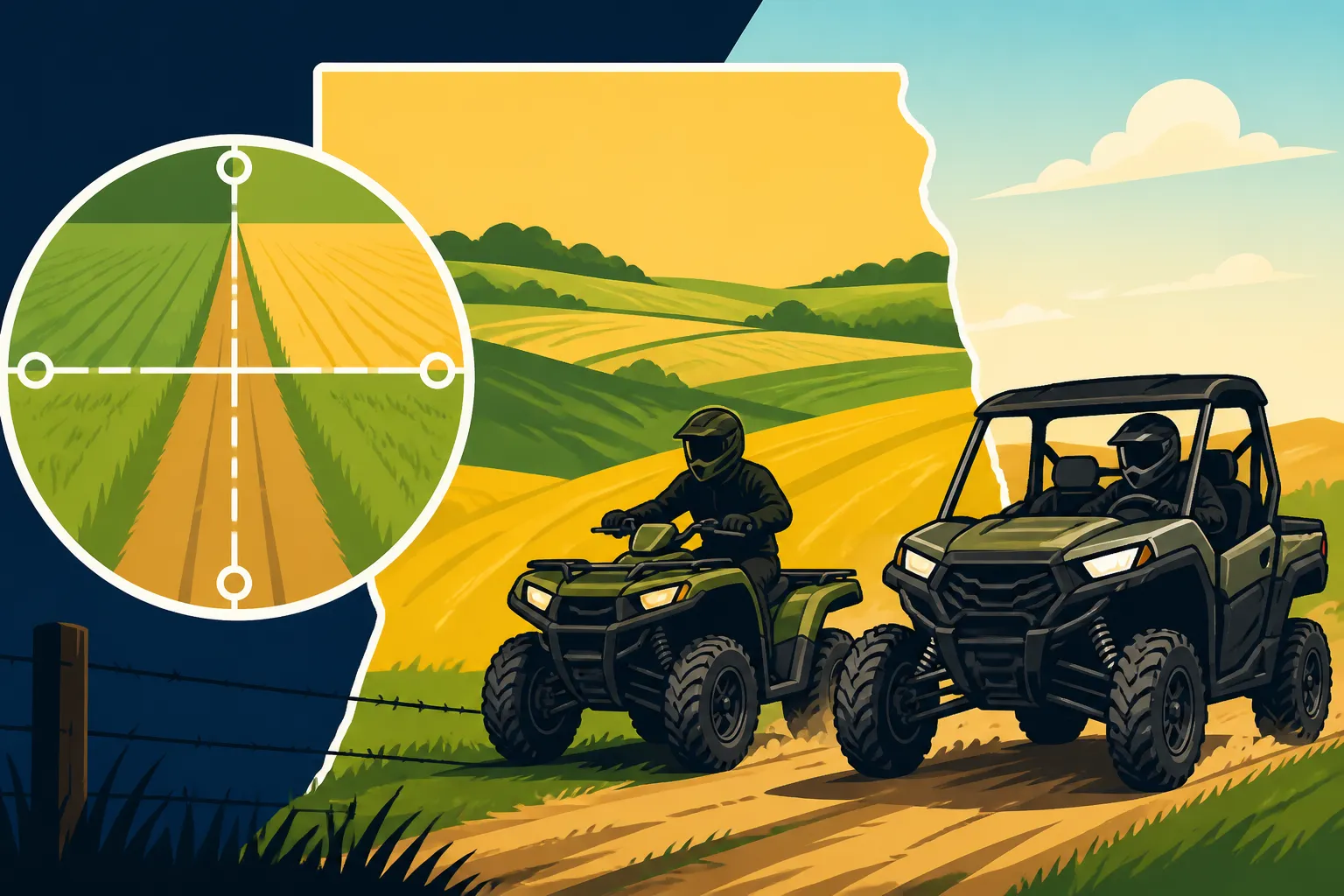
Back in the day, when North Dakota was being mapped out and settled, the land was divided into a grid system of townships and sections. Each township is six miles by six miles, and each section is one mile by one mile. To ensure access to these individual sections, the state wisely reserved a 33-foot right-of-way on each side of every section line. This means that, theoretically, there's a 66-foot wide strip of public land running north-south and east-west between almost every mile of privately owned land in the state. This system was put in place to ensure public access for travel, even if the adjacent land was privately owned. It's a cornerstone of how people got to their fields, their homes, and even the nearest town before modern roads were everywhere.
The intent was always to provide a means for people to get from one place to another. Over time, many of these section line rights-of-way became established roads, gravel routes, or even paved highways. However, plenty of them remain unimproved, often appearing as nothing more than a grassy strip, a fence line, or even an unmaintained trail through a field. This is where the confusion, and the desire to ride, often comes in for OHV enthusiasts.
What Constitutes a Public Section Line
A "public section line" in North Dakota refers to these 66-foot wide easements that crisscross the landscape. It's important to differentiate between the existence of the right-of-way and its actual condition or level of improvement. Just because a section line exists on a map doesn't mean it's a well-traveled path suitable for all vehicles. Many are still considered public rights-of-way, even if they're not maintained by a township or county. They are generally considered "highways" in the legal sense, which brings specific rules into play for vehicle operation.
Crucially, this public easement generally extends 33 feet onto either side of the section line itself. This means that even if a farmer has planted crops right up to what looks like a fence, that fence might actually be within the public right-of-way. However, it's generally understood that the public's right to use these areas is for travel and passage, not necessarily for recreation that damages or interferes with agricultural operations. Understanding this distinction is vital, especially when you're looking at a section line that might be overgrown or appear to be part of a private field. For more general information on where you can and cannot ride, check out [North Dakota Ditch Riding: The Legal Right Explained].
OHV Riding Regulations on North Dakota Section Lines
Riding your ATV or UTV on North Dakota section lines isn't as simple as just hopping on and going. While the law grants certain public access rights, there are specific regulations and unwritten rules that OHV riders must adhere to. This includes everything from the legal status of the section line to the equipment your machine must have.
Legal vs. Practical Access
The legal right to traverse a section line is one thing, but the practical reality can be quite different. North Dakota law generally considers section lines as part of the state's highway system, even if they are unimproved. This means that if your OHV meets specific criteria for road-legal operation, you might be able to ride it on certain section lines. However, a local county or township board has the authority to restrict or prohibit OHV use on section lines under their jurisdiction. This often happens if the section line is deemed unsafe, causes excessive wear, or interferes with local farming operations. It’s absolutely essential to check with local authorities – like the county sheriff’s office or the township board – before assuming a section line is open for recreational riding. Simply put, just because the law says it can be a public right-of-way doesn't automatically mean it's an open invitation for recreational OHV use, especially if there's significant local opposition or safety concerns.
Furthermore, many section lines run directly through private property. While you may have a right to travel the 66-foot width, veering off that path, even slightly, onto a farmer's field or yard, immediately constitutes trespass. This is why discretion and respect are paramount.
Equipment and Rider Requirements
When considering riding on a section line, your OHV needs to meet the basic requirements for operating on a public roadway in North Dakota. This isn't about specific trail-riding gear, but about road-legal essentials. Your machine must have:
- Headlights and Taillights: Visible from a certain distance, especially if riding after dark.
- Brake Lights: To signal when you're slowing down or stopping.
- Horn: Audible from at least 200 feet.
- Mirrors: At least one, providing a clear view to the rear.
- Speedometer and Odometer: To monitor your speed and distance.
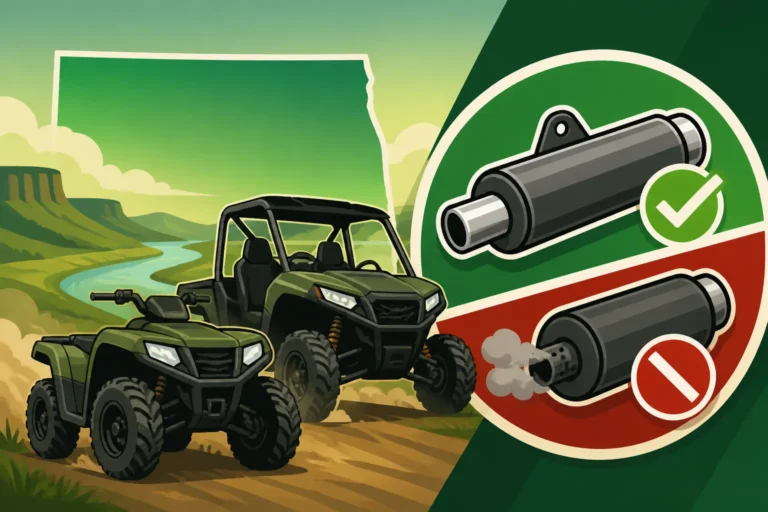
- Muffler: To keep noise levels within acceptable limits.
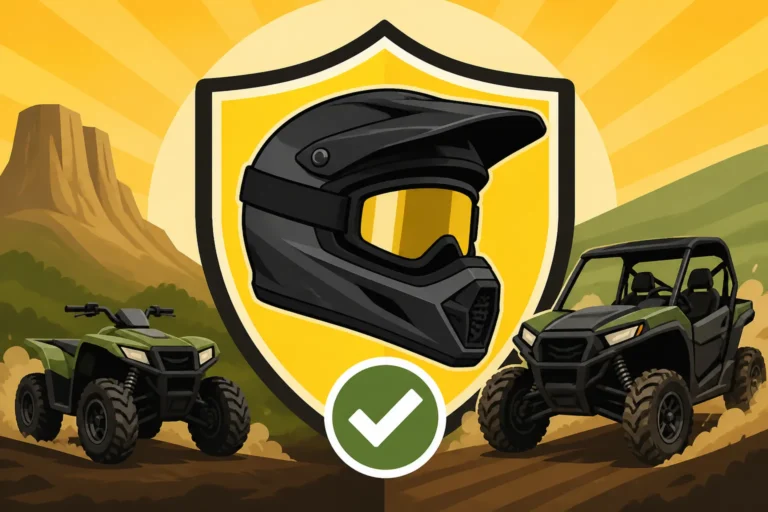
Beyond that, your OHV needs to be capable of maintaining a speed of at least 30 mph if you're riding on gravel or paved roads, which some section lines might be. Riders, especially those under 18, also have specific helmet requirements. [North Dakota Helmet Law for Riders Under 18] outlines these rules clearly. Making sure your OHV is properly equipped for the sometimes-rough conditions of a section line, perhaps with heavy-duty components from brands like SuperATV, is a smart move. Aftermarket parts like strengthened control arms or heavy-duty axles can mean the difference between making it through a challenging section and being stranded. Also, don't forget your [North Dakota Insurance Requirements at Registration] as liability insurance is crucial for any public land use.
Restrictions and Prohibitions
While the state law establishes section line rights, there are several situations where riding your OHV is restricted or outright prohibited:
- Posted Land: If a section line passes through or adjacent to posted land, you still need to respect those signs. While the public right-of-way exists, landowners can post against recreational use or trespass. Signs reading "No Trespassing" or "Posted" generally mean you should avoid that section line, or at least seek explicit permission. It's often safer to assume restrictions apply. Understanding [North Dakota Posted Land Signs and Riders] is vital for any OHV enthusiast.
- Local Ordinances: As mentioned, counties and cities can enact their own ordinances restricting OHV use on section lines within their jurisdiction. What's allowed in one county might be forbidden just across the border. Always check with the relevant local authorities before riding. For more on this, see [North Dakota County and City ATV Ordinances].
- Damage to Property: You are absolutely prohibited from causing damage to crops, fences, culverts, or any other property along a section line. If the section line is impassable without driving through a field, it's best to turn around.
- Interstates and Controlled-Access Highways: Section line rights do not grant access to interstates or other controlled-access highways. These are off-limits to OHVs, regardless of whether a section line theoretically crosses them.
- Environmental Concerns: During certain times of the year, particularly after heavy rains or during spring thaw, riding on section lines can cause significant rutting and erosion, damaging the right-of-way and adjacent private land. Such conditions might lead to temporary closures or simply be an irresponsible time to ride.
Navigating Section Lines: Etiquette and Safety
Riding section lines in North Dakota demands more than just legal compliance; it requires a strong sense of etiquette and a keen awareness of safety. Our rural communities thrive on mutual respect, and how OHV riders behave can greatly impact future access.
Respecting Landowners and Their Property
This cannot be stressed enough: respect for landowners is the golden rule of section line riding. Even though the law dictates a public right-of-way, the land on either side is almost certainly private property, often someone's livelihood. Think about it from their perspective: they've invested time, money, and effort into their land, and someone on a machine is suddenly passing through, often creating noise and dust.
- Stay on the Right-of-Way: The 66-foot easement is your boundary. Do not venture into fields, pastures, or yards. This includes avoiding shortcuts around muddy spots that take you onto private land.
- Close Gates: If you encounter a gate across a section line, it's likely there to contain livestock. Always close it behind you. Leaving a gate open can lead to livestock escaping, which is a significant problem for a farmer or rancher.
- Minimize Disturbance: Keep your speed appropriate, especially near homes or livestock. Excessive noise or dust is not just annoying; it can spook animals or interfere with farm operations. If you see farm equipment working nearby, slow down, give them a wide berth, and be prepared to stop if necessary. Waving a friendly greeting often goes a long way.
- No Littering: Pack out everything you pack in. Leaving trash is a surefire way to sour landowner relations.
- Avoid Posted Areas: Even if you believe you have a right to pass, if a section line is clearly and legally posted, it's often best to respect the landowner's wishes to avoid confrontation or legal issues. Landowner permission in writing is always the safest bet.
Safety Considerations for Section Line Riding
Section lines, especially unimproved ones, are not groomed trails. They come with their own unique set of hazards that demand caution and preparedness.
- Hidden Obstructions: Tall grass, weeds, and brush can conceal rocks, stumps, old farm equipment, culverts, or even deep ruts. Riding at a moderate speed and staying alert is crucial. SuperATV, for instance, offers robust skid plates and A-arm guards that can provide extra protection for your machine against unseen hazards, helping you protect your investment when riding in less-than-ideal conditions.
- Weather Conditions: North Dakota weather can change rapidly. Rain can quickly turn section lines into slick, muddy gumbo, making travel difficult and potentially causing significant rutting. Snow can hide ice or deep drifts. Always check the forecast and assess conditions before heading out.
- Visibility: Section lines often have poor visibility due to tall crops, trees, or rolling terrain. Be extra cautious at intersections with roads or other section lines. Consider bright-colored clothing and ensure your OHV's lights are functioning.
- Farm Equipment: You are sharing these routes with large, slow-moving farm machinery. They often have blind spots and may not expect to encounter an OHV. Always assume they haven't seen you and be prepared to yield.
- Remote Locations: Many section lines are far from paved roads and towns. Cell service can be spotty. Always let someone know your route and expected return time. Carry a basic first-aid kit, water, and tools for minor repairs.
Preparing Your Machine for Section Lines
Given the often rough and unpredictable nature of section lines, proper machine preparation is key to both safety and an enjoyable ride.
- Tire Condition: Ensure your tires are in good condition with adequate tread. For muddy or soft conditions, tires designed for traction will be a huge benefit. Check tire pressure before each ride, as proper inflation can improve handling and prevent flats.
- Suspension Check: Section lines can be bumpy. Make sure your shocks and suspension components are in good working order to handle the bumps and absorb impacts, saving both you and your machine from excessive wear.
- Winch and Recovery Gear: Getting stuck in a muddy section line is a real possibility. A reliable winch, tow straps, and a shovel can be invaluable for self-recovery or helping a friend.
- Communication Devices: A fully charged cell phone is a must, but remember that service can be unreliable in rural areas. Consider a satellite messenger or a two-way radio if riding in groups or very remote locations.
- Protective Gear: Always wear a helmet, eye protection, gloves, and appropriate riding apparel. While not always legally required for adults, it's just common sense for safety on unpredictable terrain.
Resolving Conflicts and Best Practices
Despite your best intentions, misunderstandings or conflicts can arise when riding on section lines. Knowing how to prevent them and what to do if they happen is part of being a responsible OHV enthusiast.
When in Doubt, Ask
This is perhaps the simplest, yet most effective, best practice for section line riding: if you are unsure about the legality of riding a particular section line, or if you suspect it might be privately maintained, ask for permission. Locate the landowner (often easy to do through county plat maps or by asking a local resident) and politely inquire about using the section line. Many landowners are reasonable and will grant permission, especially if you demonstrate respect for their property. This simple act of communication can prevent potential confrontations, legal issues, and helps foster a positive relationship between riders and rural communities. It shows you care about their concerns and aren't just taking advantage of a technicality.
If you can't find the landowner, your next best bet is to contact the local county sheriff's department or the township board. They can provide clarification on any local ordinances or restrictions that might apply to the specific section line you're interested in. Taking a few minutes to make these inquiries can save you a lot of grief in the long run.
Understanding Trespass Laws
Even with section line rights, it's incredibly easy to inadvertently trespass. [North Dakota Trespass Law for Riders] clearly defines what constitutes unlawful entry or remaining on private property. If you leave the 66-foot public right-of-way, even for a moment, to circumvent an obstacle, take a photograph, or simply explore, you are technically trespassing. Trespass can result in fines and, in some cases, even more serious legal consequences, especially if damage occurs.
- Consequences: Beyond legal penalties, trespassing damages the reputation of all OHV riders. It contributes to negative perceptions and makes landowners less likely to support any form of OHV access in the future.
- "Electronic Posting": North Dakota has provisions for "electronic posting," meaning land can be posted against trespass without physical signs at every corner, if the landowner has registered their property with the state. This means you can't always rely solely on visible signs; it's another reason to exercise caution and inquire locally.
- Intent vs. Action: Even if you didn't intend to trespass, the act itself can still be a violation. Your best defense is to always stay within the clearly defined public right-of-way and to retreat if there's any ambiguity.
Local Ordinances and Their Impact
While state law broadly addresses section line rights, individual counties and even smaller townships often have their own specific ordinances that can further regulate or restrict OHV use. These local rules can be influenced by population density, agricultural practices, or specific environmental concerns.
- Variability: What's allowed on a section line in a sparsely populated western North Dakota county might be strictly prohibited in a more populated eastern county or near a city. These ordinances can dictate hours of operation, specific types of machines allowed, or even outright bans on recreational OHV use on section lines within their jurisdiction.
- Where to Check: Before you plan a ride, always check the county website or call the county auditor's office for information on local OHV ordinances. For township roads and section lines, you might need to contact the township clerk. This due diligence is part of being a responsible rider.
- Impact on Access: These local ordinances are a direct reflection of community concerns. By respecting them and riding responsibly where allowed, you help maintain existing access and potentially open doors for future riding opportunities. Disregarding them, however, only leads to further restrictions and stricter enforcement, making it harder for everyone.
Remember, section line riding in North Dakota is a privilege that comes with significant responsibilities. By understanding the legal framework, practicing good etiquette, prioritizing safety, and staying informed about local rules, you can enjoy these unique routes while maintaining positive relationships with the landowners and communities that share them.
Disclaimer
This article is for general informational purposes only and does not constitute professional advice. Laws, prices and regulations vary by location and change over time. Consult a qualified professional for guidance on your specific situation.