North Dakota’s Obstruction Exception
It can feel incredibly frustrating to be out on your ATV or UTV, enjoying a perfectly legal ditch ride in North Dakota, only to suddenly encounter something blocking your path. Maybe it’s a massive pile of snow left by a recent plowing, a stalled farm implement, or even a deep, unexpected wash-out from heavy rains. You know you’re generally supposed to stay in the ditch bottom or on the back-slope, but what are you supposed to do when that's no longer an option? This guide is here to walk you through North Dakota’s often-misunderstood "obstruction exception," helping you understand when and how you can legally navigate around obstacles without breaking the law or getting yourself into a heap of trouble.
Understanding North Dakota's General Ditch Riding Rules
Before we dive into how to get around things, it's crucial to first understand the baseline rules for where you should be riding your ATV or UTV in North Dakota. The state has specific guidelines designed to keep riders safe and minimize conflicts with other traffic, and frankly, these rules can feel a bit complex if you're not used to them. Many riders assume "ditch riding" means the entire ditch, but that's not quite the case.
The Standard Ditch Bottom and Back-Slope Rule
Generally speaking, when you're riding your off-highway vehicle (OHV) in a public right-of-way in North Dakota, you are permitted to operate in the ditch bottom or on the back-slope. Think of the ditch as having three main parts: the inslope, the ditch bottom, and the back-slope. The ditch bottom is the lowest part, the "V" shape where water collects. The back-slope is the gentle rise on the side farthest from the road, leading up to the fence line or private property. These areas are usually well away from active traffic lanes, which is precisely why they're designated for OHV use. This distinction is really important, because straying from these specific areas can quickly land you in a conversation with law enforcement. You're allowed to move along these parts of the ditch, parallel to the roadway, as long as you're not interfering with traffic or causing a nuisance. For a deeper dive into the basic regulations, you might want to read [North Dakota Ditch Riding: The Legal Right Explained].
Why the Inslope and Shoulder Are Off-Limits
Now, you might wonder why you can’t just hug the road or pop up onto the shoulder. The "inslope" is the part of the ditch that slopes down from the paved or gravel road surface into the ditch bottom. The "shoulder" is that immediate strip of ground directly adjacent to the main travel lane. Both of these areas are generally off-limits for OHV operation in North Dakota. The reasoning is pretty straightforward: these areas are much closer to moving vehicle traffic, increasing the risk of accidents. Drivers on the road might not expect an OHV to be operating so close, especially at higher speeds. This proximity also increases dust, noise, and potential for conflict. Maintaining a safe distance from traffic is paramount, which is why the law pushes OHV riders into the deeper parts of the ditch. It’s a safety measure for everyone involved, even if it sometimes feels restrictive when you’re trying to navigate.
Navigating the Obstruction Exception
So, what happens when the legal parts of the ditch – the bottom or the back-slope – are impassable? This is where North Dakota’s "obstruction exception" comes into play. It's a critical provision that recognizes the realities of riding in agricultural and rural areas, where clear paths aren't always guaranteed. However, it's not a free pass to suddenly drive on the paved road; there are very specific conditions that must be met. Misunderstanding these conditions is a common reason riders get into trouble, so let's break it down.
What Qualifies as an Obstruction
An "obstruction" in the context of North Dakota OHV law refers to anything that genuinely makes the legal portions of the ditch (the bottom or back-slope) impassable. This isn't just about minor inconveniences, like a slightly muddy patch. We're talking about things that completely block your passage or make it unsafe to proceed.
Think about common scenarios:
- Heavy snow accumulation: After a significant snowfall or when plows have pushed snow into the ditch, there might be large drifts or compacted snowbanks that completely fill the ditch bottom and cover the back-slope. You simply can't get through.
- Stalled vehicles or farm equipment: A farmer might have left a tractor, combine, or other large implement temporarily in the ditch, maybe broken down or waiting for pickup.
- Significant water or mud: Sometimes, prolonged rain can turn a ditch bottom into a deep, impassable bog or a fast-moving stream, making it impossible to traverse safely. A true wash-out or flood event would certainly qualify.
- Debris or fallen trees: High winds or storms can bring down branches, entire trees, or leave other substantial debris in the ditch that you can't ride over or around without leaving the right-of-way.
- Construction zones: Temporary barriers, equipment, or freshly dug trenches associated with road or utility work can create impassable sections.
The key is that the obstruction must prevent safe and lawful operation within the designated ditch areas. If you could easily drive around it within the ditch, then it's not truly an obstruction that permits you to use the exception.
The "Transitory Operation" Requirement
This is perhaps the most crucial part of the obstruction exception: the concept of "transitory operation." It means you are only allowed to move briefly onto the inslope, the shoulder, or even the main roadway, and only for the minimum distance necessary to get around the specific obstruction. This isn't an invitation to cruise for miles on the shoulder because the ditch is a little bumpy.
Here’s what "transitory operation" implies:
- Direct Route: You must take the most direct path around the obstruction. No scenic detours on the pavement.
- Minimum Distance: The moment you've safely cleared the obstruction, you are legally obligated to return your OHV to the ditch bottom or back-slope as quickly and safely as possible. Every foot you spend on the shoulder or roadway beyond what's strictly necessary is a violation.
- Safety First: When performing this transitory maneuver, you must always yield to all oncoming and passing traffic, and ensure you do so in a manner that doesn't create a hazard for yourself or others. Your brief foray onto the road should be done with extreme caution, acting as predictably as possible.
Imagine you're riding along the ditch and come across a massive, unavoidable snowdrift. You'd signal, carefully check for traffic, move onto the shoulder just far enough to clear the drift, and then immediately return to the ditch bottom. This brief, calculated maneuver is the essence of transitory operation. The state isn’t trying to trap you, but it's also not giving you an excuse for prolonged road use. Understanding North Dakota's Obstruction Exception is vital for staying on the right side of the law.
Safely Returning to the Ditch
Once you’ve successfully navigated around the obstruction, your immediate priority is to return to the legally designated ditch bottom or back-slope. This isn't a suggestion; it's a requirement of the law. Failing to return promptly can turn a legal maneuver into an illegal one, with potential penalties.
Here are some considerations for returning to the ditch:
- Look for a Safe Point: Don't just swerve back into the ditch at the first available spot if it's too steep, muddy, or otherwise unsafe. Look for a gradual slope or a clear entry point where you can smoothly transition back without risk of rolling over or getting stuck.
- Check Your Surroundings: Before you make your move, double-check your mirrors and blind spots for any approaching vehicles. Even if you're not on the main travel lane, a quick, unexpected movement could still be dangerous.
- Maintain Control: The transition from a firm shoulder to a softer ditch bottom can sometimes be tricky. Maintain a safe speed, keep a firm grip on the handlebars or steering wheel, and be prepared for changes in terrain and traction. This is where quality aftermarket components, like robust suspension or control arms from a company like SuperATV, can really shine, giving you more confidence in unpredictable transitions.
- Don't Dawdle: The "minimum distance necessary" rule applies to the return as much as it does to the bypass. Once a safe opportunity presents itself, make your move back to the legal riding area.
The overall principle is safe, brief, and purposeful movement. You're not using the road as a shortcut or a convenience; you're using it only as a temporary bypass around a legitimate impediment.
Practical Scenarios and Common Obstructions
Let's get down to some real-world examples that you might encounter on your rides across North Dakota. Knowing how to react in these specific situations can help you apply the obstruction exception correctly and confidently.
Dealing with Farm Equipment and Vehicles
It's North Dakota, so encountering farm equipment in or near the ditch is incredibly common, especially during planting and harvest seasons. Farmers often use ditch areas for staging equipment, temporary storage, or even for field access.
- Scenario 1: Stalled Tractor in the Ditch Bottom: You're cruising along and see a large tractor, perhaps with an implement attached, completely blocking the ditch bottom ahead.
- Action: Slow down significantly. Assess the situation. Is there any way to safely pass on the back-slope? If not, check for oncoming road traffic, signal your intent, and carefully move onto the inslope or shoulder, passing the tractor with ample clearance. The moment you're past, look for a safe entry point and return to the ditch bottom or back-slope. This is a classic example of transitory operation.
- Scenario 2: Farm Vehicle Entering/Exiting a Field: You see a combine attempting to enter a field via a ditch approach, temporarily blocking your path.
- Action: Yield to the farm equipment. They often move slowly and have large blind spots. Wait for them to clear the ditch. If they are completely stuck or taking a long time, and you cannot safely pass in the ditch, the transitory rule applies. Be patient, give them space, and only proceed when it's safe and necessary.
Always remember that farm vehicles have a right to be there, and patience and courtesy go a long way.
Avoiding Piles of Snow or Debris
Winter riding offers unique challenges, and few are as common as massive snow piles. Similarly, high winds can bring unexpected debris.
- Scenario 1: Plowed Snow Berm: A municipal snowplow has created a towering berm of snow, effectively filling the ditch bottom and inslope for a significant stretch.
- Action: This is a clear obstruction. You'll need to use the shoulder or a small portion of the road itself to navigate around it. Again, keep it to the minimum distance. Be extra cautious here, as visibility can be reduced in snowy conditions, and road surfaces might be icy. Ensure your lights are on and you're highly visible.
- Scenario 2: Storm Debris (Fallen Tree Branch): After a storm, a large tree branch has fallen directly into your path in the ditch.
- Action: If it's too big to move or safely ride over, treat it as an obstruction. Follow the same procedure: check traffic, move briefly onto the shoulder, pass the debris, and return to the ditch. For those who frequently ride in varied conditions, ensuring your machine is equipped with reliable winches or sturdy bumpers, potentially from a brand like SuperATV, can be a huge asset in self-recovery or clearing smaller obstructions safely.
Construction Zones and Road Work
Road improvements and utility work are constant in North Dakota, and they can often impact ditch access.
- Scenario: Ditch Closed for Culvert Replacement: You encounter orange cones and signs indicating road work, with a section of the ditch dug up for culvert replacement.
- Action: Construction zones are inherently dangerous. You must respect all barriers and signage. If the work completely obstructs the ditch, you may need to use the transitory operation to get around it. However, if the construction encompasses the entire right-of-way, including the shoulder and road, you might need to find an alternative route entirely. Never assume you can just "squeeze by" heavy machinery. Safety personnel on site can sometimes provide guidance, but generally, give them a wide berth.
Addressing Flooded Areas and Washouts
Heavy rains or spring thaws can turn a benign ditch into a challenging waterway.
- Scenario: Deep Water or Washed-Out Section: The ditch bottom is completely submerged in deep water, or a section has been eroded away, creating a dangerous drop-off.
- Action: Do not attempt to ride through deep water if you can't assess its depth or the bottom. Many OHVs are not designed for deep water crossings, and you risk stalling, damage, or even being swept away. A severe washout is a definite obstruction. If safe to do so, move onto the shoulder briefly to bypass. If the entire area is flooded or the washout is extensive, you may need to turn back and find another route. Knowing [North Dakota Trail Closures After Rain] is important here.
Legal Implications and Enforcement
It's one thing to understand the rule; it's another to apply it correctly in the heat of the moment and understand the consequences if you get it wrong. The obstruction exception is a narrow carve-out, not a broad invitation, and law enforcement officers are trained to distinguish between legitimate transitory operation and illegal road riding.
Distinguishing Legal Maneuvers from Illegal Road Riding
The critical difference lies in intent, duration, and necessity.
- Legal Maneuver: You encounter a genuine, impassable obstruction in the ditch. You briefly, and with extreme caution, move onto the shoulder or a minimal part of the roadway, pass the obstruction, and immediately return to the ditch bottom/back-slope. Your path is direct and only as long as absolutely necessary. You are doing this to continue your legal ditch ride.
- Illegal Road Riding: This happens when:
- You use the shoulder or road because the ditch is merely inconvenient, slightly muddy, or you just prefer the smoother surface.
- You continue riding on the shoulder or road for a prolonged period after clearing an obstruction.
- You enter the shoulder or road without a clear obstruction, perhaps to gain speed or shortcut to another section.
- You fail to yield to other traffic or create a dangerous situation while on the roadway.
An officer observing you might interpret prolonged shoulder use as intentional road riding, which is a violation. The onus is on the rider to demonstrate that their use of the road was strictly limited to bypassing an unavoidable obstruction.
Penalties for Improper Use of the Exception
If you are caught riding illegally on the inslope, shoulder, or main roadway when the obstruction exception does not apply, or if your "transitory operation" extends beyond what's legally necessary, you could face penalties. North Dakota takes OHV laws seriously, particularly those concerning public safety and road use.
Typically, an OHV violation for illegal road operation might result in a citation. While specific fine amounts can vary and change over time, they generally start at a base amount, plus court costs. For example, a basic OHV violation in North Dakota can be around $50, but repeat offenses or more egregious violations, especially those deemed reckless or dangerous, could lead to higher fines or even more serious charges. It's not uncommon for officers to issue a Class B Misdemeanor citation for severe violations, which carries more significant penalties. For details on potential costs, you might want to review [North Dakota Ticket Cost for a Road Violation]. These aren't just minor inconveniences; they can impact your record and wallet.
Officer Discretion and Interpretation
It’s important to acknowledge that there can sometimes be an element of officer discretion when it comes to enforcement. What one officer deems "minimal distance" or a "genuine obstruction" might be viewed slightly differently by another. This isn't to say officers are arbitrary, but they are assessing the situation in real-time, based on their training and judgment.
- Be Respectful and Prepared: If you are stopped, be polite, explain your actions clearly, and if possible, point out the obstruction you were bypassing. Having your registration and [North Dakota Insurance Requirements at Registration] in order always helps.
- Safety First: An officer is much more likely to be lenient if your actions were clearly safe, well-controlled, and did not endanger others. Err on the side of extreme caution when using the exception.
- Know the Law: Being knowledgeable about the specifics of the obstruction exception, as outlined in this guide, can help you articulate your case if questioned. It shows you're a responsible rider who understands the rules.
Essential Equipment and Best Practices for Road and Ditch Riding
Beyond knowing the letter of the law, having the right mindset and equipment can make all the difference when you're navigating ditches, especially when the occasional obstruction requires a brief hop onto the pavement.
Visibility and Safety Gear
When you're operating an OHV, particularly when transitioning near roads, visibility is your first line of defense. You need to be seen, and you need to see clearly.
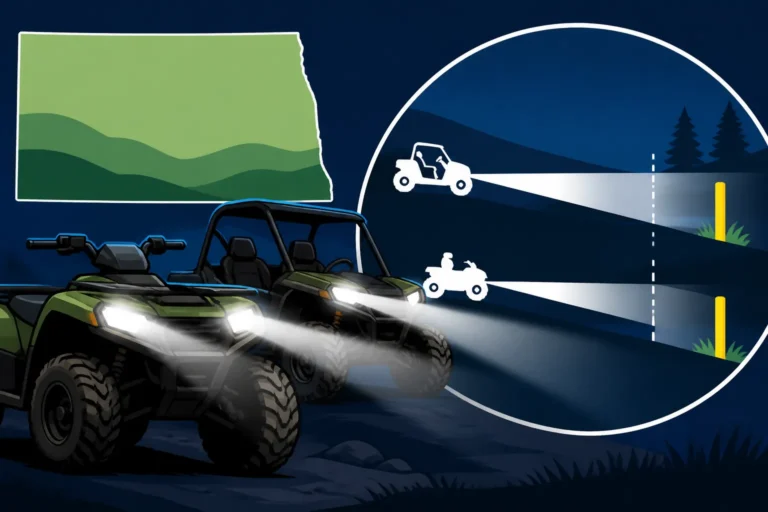
- Headlamps and Taillamps: Your machine should have fully functional headlamps and taillamps. Use them, even during the day, especially if weather conditions are poor or if you anticipate operating near roads. North Dakota law generally requires headlamps to be visible from 300 feet and taillamps from 500 feet, particularly for night travel.
- Mirrors: North Dakota requires a rear-view mirror for road-legal operation. For transitory operation, having at least one mirror with 10 square inches of reflective surface is crucial to monitor traffic behind you. High-quality, durable mirrors, such as those made by SuperATV, can withstand the rigors of off-road riding while still providing clear visibility for those quick glances at road traffic.
- Reflective Gear: Wear brightly colored clothing or a reflective vest, especially if riding in low-light conditions, at dusk, or when dealing with snow and dust. The more visible you are, the safer you'll be.
- Helmets: While not always mandated for adults off-road, North Dakota's helmet law requires riders under 18 to wear a helmet meeting DOT standards. If you're going to be near traffic, it's always a smart idea for all riders to wear a helmet for maximum protection. For more on this, see [North Dakota Helmet Law for Riders Under 18].
- Horn: Having a working horn is another piece of equipment required for road-legal OHVs. It can be a vital communication tool in an unexpected situation, helping to alert other drivers to your presence.
Communication and Planning
Riding with others offers advantages, especially when encountering unexpected obstacles.
- Ride with a Buddy: Riding in a group means more eyes and ears. If one rider spots an obstruction, they can alert others. This also means you have assistance if someone gets stuck or has a mechanical issue.
- Hand Signals and Radios: Establish clear hand signals for "stopping," "obstruction ahead," or "moving onto road." If your group uses radios (like GMRS or FRS radios), these can be invaluable for real-time communication, especially in dusty conditions or when spread out.
- Pre-Ride Briefing: Before setting out, especially on a route you haven't taken before, discuss potential hazards and how your group will handle them, including the obstruction exception. What's the plan if you hit a deep wash-out? Who goes first to scout?
Maintaining Your Machine for Road Use
While your OHV is built for off-road, its brief excursions onto a road surface require certain components to be in good working order.
- Tires: Ensure your tires are in good condition with adequate tread. While knobby off-road tires aren't ideal for pavement, you need them to be safe. Check your tire pressure before each ride.
- Brakes: Your brakes need to be responsive and effective. Test them before you start your ride. If you're going to be briefly near road traffic, stopping power is critical.
- Steering and Suspension: Ensure your steering is tight and your suspension is in good working order. Any looseness or clunks could be exacerbated on harder road surfaces, making control more difficult during quick maneuvers. Components like heavy-duty tie rods or ball joints, often available from manufacturers like SuperATV, can enhance the durability and precision of your machine for all types of terrain.
- Muffler: North Dakota has muffler requirements to keep noise levels reasonable. Ensure your muffler is intact and not excessively loud. A noisy machine can draw unwanted attention, especially near residential areas.
Knowing When to Turn Back
Sometimes, the smartest move isn't to push forward, even with the obstruction exception.
- Assess the Risk: If the obstruction is too extensive, the weather is too bad, or the traffic conditions make any road interaction excessively risky, turning back or finding an alternative route might be your safest bet. No ride is worth risking an accident or a significant fine.
- Plan B: Always have a general idea of alternative routes or bailout points, especially if you're exploring new areas. A good map (paper or digital) can be a lifesaver.
- Listen to Your Gut: If something feels unsafe or just "off," trust that instinct. There's always another day to ride.
By combining legal knowledge with practical preparation, you can confidently navigate North Dakota’s ditch riding landscape, even when unexpected obstacles appear.
Understanding Obstruction Maneuvers: Legal vs. Illegal
To really nail down the distinction, let's look at some examples of what's allowed and what could get you into trouble when facing an obstruction.
| Scenario | Obstruction Type | Legal Maneuver (Transitory) | Illegal Maneuver (Violation) |
|---|---|---|---|
| Deep Snowdrift | Natural, Impassable | Carefully moves onto shoulder for 50 feet, clears drift, immediately returns to ditch. | Rides on shoulder for 1/4 mile to get to a preferred ditch entry point or faster pace. |
| Stalled Farm Tractor | Equipment, Impassable | Signals, moves onto inslope/shoulder for 20 feet to pass, returns to ditch as soon as clear. | Weaves onto road to pass the tractor, then continues on road to pass two other vehicles that were in the ditch. |
| Muddy/Flooded Ditch | Natural, Impassable | Finds a short, safe stretch of dry shoulder to bypass a 100-foot flooded section, then promptly re-enters ditch. | Sees a large puddle, decides the shoulder is "less messy," and rides on the shoulder for the next mile. |
| Construction Trench | Man-made, Impassable | Follows temporary detour signs (if applicable), or briefly uses shoulder to get past the trench and barriers. | Ignores barriers and attempts to ride too close to the construction, or uses the road for an extended period to completely bypass the construction zone. |
| Tall Grass/Brush | Minor Inconvenience | Not an obstruction. Rider must slow down and navigate through the tall grass within the ditch bottom or back-slope. | Moves onto the shoulder because the ditch grass is too tall and slows down their ride. |
| Rough Terrain/Bumps | Minor Inconvenience | Not an obstruction. Rider must slow down and navigate the rough terrain within the ditch. | Moves onto the inslope or shoulder because the ditch is bumpy and uncomfortable. |
| Broken Down OHV | Vehicle, Impassable | Briefly moves onto the shoulder to pass another broken-down OHV in the ditch, then immediately returns. | Uses the broken-down OHV as an excuse to ride the shoulder with their friend who is also on the shoulder, helping the broken OHV. |
This article is for general informational purposes only and does not constitute professional advice. Laws, prices and regulations vary by location and change over time. Consult a qualified professional for guidance on your specific situation.