Reporting a Rider on Posted Land
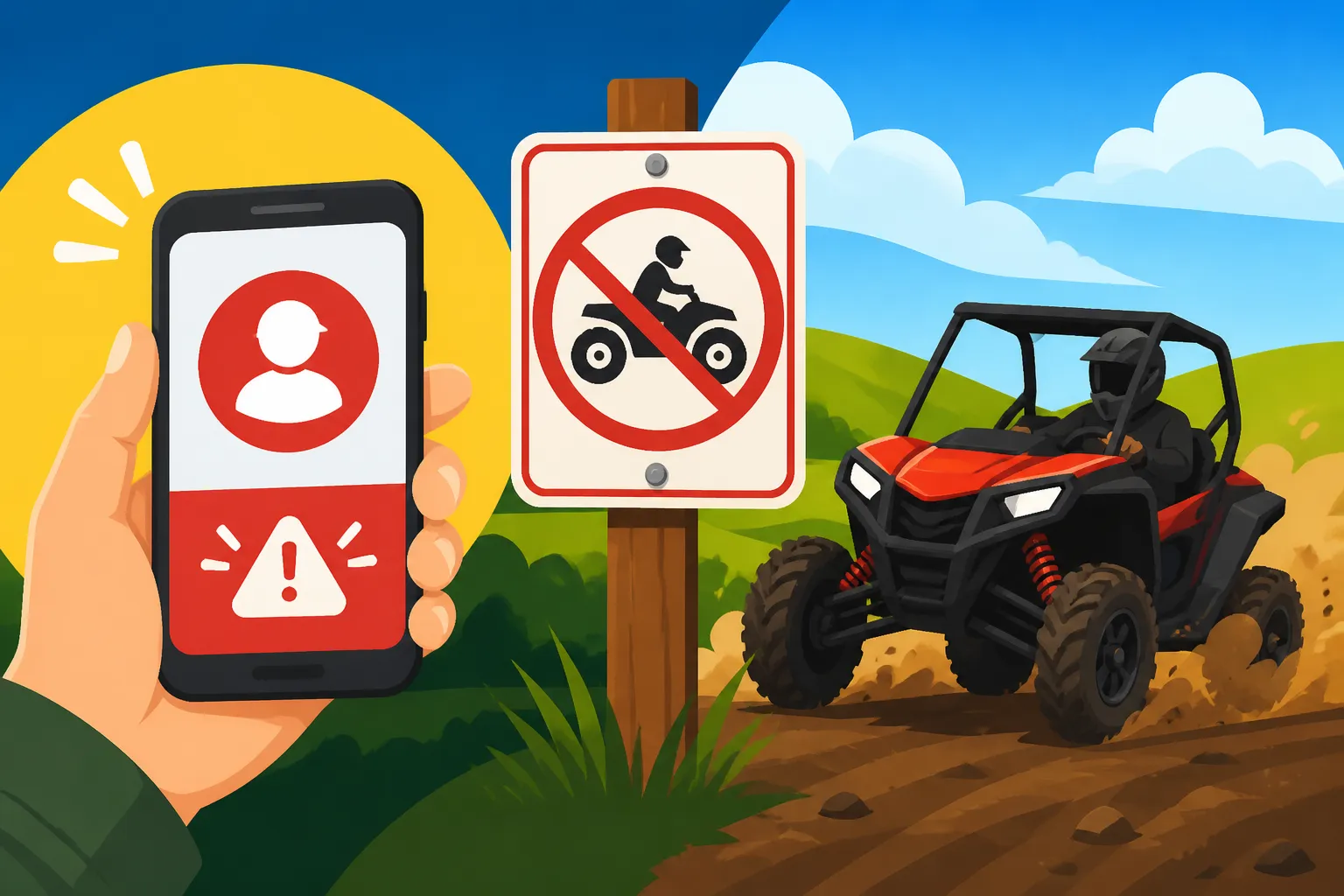
Finding someone illegally riding their ATV or UTV across your private land in North Dakota can be incredibly frustrating and even intimidating. You've worked hard for your property, perhaps invested in fencing and "No Trespassing" signs, only to have someone disregard your boundaries, potentially damage your land, and certainly disrupt your peace. This guide is here to walk you through the proper steps to take when you encounter a rider on your posted land, ensuring you handle the situation safely and effectively, and know exactly whom to contact and what information to provide.
Understanding Posted Land in North Dakota
When you own land in North Dakota, having it "posted" is your legal way of saying, "This is private property, and unauthorized entry is prohibited." It’s a clear demarcation that protects your rights as a landowner and sets expectations for anyone approaching your boundaries.
What "Posted" Really Means
In North Dakota, simply having a fence or an implied boundary isn't always enough to legally define your land as "posted." The law is pretty specific about how land must be marked to be considered legally posted, especially when it comes to activities like hunting, fishing, or off-highway vehicle (OHV) riding. Generally, land is considered posted if there are signs conspicuously placed around its perimeter. These signs need to be legible and placed at intervals that clearly inform anyone entering that it is private property. Think about every gate, every major corner, and any easily accessible entry point. Some landowners also utilize [North Dakota Electronic Posting and Riders] services, which is a modern way to register your land's posted status, though physical signs are still a crucial component for clear communication on the ground. It’s all about leaving no room for doubt for someone who might claim they "didn't know."
Why Landowners Post Their Property
People post their land for a whole host of reasons, and it's almost never out of spite. Often, it's about privacy. Landowners cherish their solitude, and seeing an unfamiliar ATV ripping through their fields shatters that peace. It's also significantly about safety. You might have livestock, farm equipment, or even family members enjoying the property, and unexpected riders create dangerous situations. Imagine a child playing in the yard and an unknown UTV suddenly appears. There's also the very real concern of liability. If an unauthorized rider gets injured on your property, there could be legal implications, even if they were trespassing. Posting your land helps mitigate some of that risk by clearly stating that entry is at their own peril and against your wishes. Beyond that, many landowners have specific land management plans, like wildlife habitats or agricultural rotations, that can be severely disrupted by unauthorized vehicle traffic. When you see a machine with aftermarket parts from a company like SuperATV, designed for aggressive off-road use, tearing up your freshly seeded field, the damage isn't just aesthetic; it can impact your livelihood.
Common Trespassing Scenarios
Trespassing isn't always a malicious act, but it's always unauthorized and often costly for the landowner. With ATVs and UTVs, we often hear about a few common scenarios. Sometimes it's riders simply taking a shortcut through a field to get from one section line to another, thinking it's "just dirt" and won't hurt anything. Other times, it's a group of riders who see an old two-track trail that looks inviting and follow it onto private ground, maybe not realizing the property line has shifted or that the trail is no longer public. We also see instances where riders cut fences or sneak through open gates, sometimes leaving them open for livestock to escape. Then there are the more deliberate cases, often involving hunting or fishing access, where riders use their machines to gain easier access to prime spots, disregarding the [North Dakota Posted Land Signs and Riders] they've passed. Each of these situations, regardless of intent, is a violation of your property rights and can lead to significant issues.
Initial Steps When You Discover a Trespasser
When you realize there's an unauthorized OHV on your land, it's natural to feel a surge of emotions – anger, frustration, even a little fear. But before anything else, your personal safety has to be the absolute priority.
Safety First and Non-Confrontation
It's tempting to march right out there and confront the trespassers, especially when they're actively causing damage or making a ruckus. However, I cannot stress this enough: do NOT confront them directly. You have no idea who these individuals are, what their intentions are, or if they might be armed. Your personal safety and the safety of anyone with you must come first. A confrontation can quickly escalate from a simple trespass into a dangerous situation. Trespassers, even if they're just joyriding, might react unpredictably when confronted, especially if they feel cornered or caught. Your best course of action is to observe from a safe distance, ideally from within your home or a secure vehicle, and gather as much information as you can.
Documenting the Incident
This is where you become a detective, and your camera (most likely your phone) becomes your most valuable tool. The more information you can collect, the stronger your report to law enforcement will be.
- Photos and Videos: Snap clear pictures or short videos of the ATV or UTV, the riders, and any damage being caused. Get multiple angles. If possible, capture their license plate or registration decal. If they have custom accessories, like a distinctive SuperATV bumper or specific tire tread, these details can be incredibly helpful for identification.
- Descriptions: Write down detailed descriptions.
- Machines: What make and model? What color? How many riders? Were they side-by-sides, four-wheelers, or dirt bikes? Did they have any unique modifications, like a specific light bar, a winch, or a large cargo box?
- Riders: How many? Approximate age? What were they wearing (helmet color, jacket, distinct clothing)? Any visible characteristics?
- Direction of Travel: Which way did they come from, and which way did they go?
- Time and Date: Be precise. This is critical for any official report.
- Location: Pinpoint exactly where on your property the incident occurred. GPS coordinates from your phone can be incredibly useful.
- Damage: If there's damage to fences, crops, or land, photograph it immediately and make notes. This will be important evidence.
Here's a quick checklist to help you organize your documentation:
| Information Category | Specific Details to Capture | Importance |
|---|---|---|
| Date & Time | Exact date and time of observation (e.g., "Tuesday, 3:15 PM, May 14") | Crucial for official reports and establishing a timeline. |
| Location | Specific address, GPS coordinates, or clear landmarks on your property | Helps law enforcement locate the incident and respond. |
| Machine Details | Make, model, color, type (ATV, UTV, dirt bike), distinguishing features (lift kit, specific tires, accessories like a SuperATV winch) | Key for identifying the vehicle and owner. |
| Registration | License plate number, North Dakota OHV decal number if visible | Direct identification of the registered owner. |
| Rider Details | Number of riders, approximate age, gender, clothing color, helmet style/color, any unique features | Helps identify individuals, especially if no plate is visible. |
| Activity | What they were doing (e.g., "riding through alfalfa field," "cutting fence," "driving aggressively") | Explains the nature of the trespass and potential damage. |
| Damage | Description of damage (e.g., "cut barbed wire fence," "deep ruts in field," "broken gate") | Evidence for potential charges and restitution. |
| Direction | Where they entered from and where they exited | Helps track movement and potential escape routes. |
| Photos/Video | Digital files capturing all the above details | Tangible, undeniable evidence. |
Identifying the Machine and Rider
While getting a clear license plate or registration decal is the holy grail for identification, it's not always possible. Focus on what you can see. The color, make, and general type of machine are foundational. Did it have a specific brand of tires or aftermarket parts? Many riders customize their machines with items from companies like SuperATV, making them more distinct. Pay attention to unique stickers, modifications, or even the type of cargo they might be carrying. For the riders, note general descriptors like "male, wearing a blue jacket and white helmet" or "female, younger, on the back of a red ATV." If they are wearing specific gear, like a particular brand of riding boots or goggles, those details can add up. Every little piece of information you gather helps law enforcement narrow down their search and is important when they are investigating [North Dakota Trespass Law for Riders].
Whom to Contact and How to Report
Once you've safely documented the incident, it's time to reach out to the authorities. Knowing which agency to call and how to present your information is key to getting an effective response.
Your Local Law Enforcement
For most trespassing incidents on private land, your first call should be to your local county sheriff's office. They are the primary law enforcement agency for rural areas and have jurisdiction over private property. Do not automatically call 911 unless there is an active threat to life or property, or if the trespassers are still present and engaging in destructive behavior. Instead, look up the non-emergency dispatch number for your county sheriff. [Checking With Local Law Enforcement First] is always a good idea, even if it's just to confirm who you should contact.
When you call, clearly state that you are reporting a trespass on your posted private land. Be ready to provide:
- Your name and contact information.
- The exact address or location of your property.
- The time and date of the incident.
- A concise description of what happened and what you observed.
- Confirmation that you did not confront the individuals.
- Details about the ATV/UTV and riders (colors, descriptions, any visible registration).
- Any evidence you have (photos, videos), which they will likely want you to send to them.
The sheriff's office will create a report and may dispatch a deputy to your property to investigate further, especially if the trespassers are still in the area or if there's significant damage.
North Dakota Game and Fish Department
While the county sheriff handles general trespass, the North Dakota Game and Fish Department (NDGFD) plays a crucial role if the trespassing is related to hunting, fishing, or other wildlife activities. For example, if you suspect the individuals were poaching or scouting hunting spots on your posted land, or if they damaged natural habitats, then contacting NDGFD is appropriate, either in conjunction with or after notifying the sheriff's office. [What an Officer Can Ask to See] applies to game wardens as well, and they are adept at investigating violations related to wildlife and public land use, which sometimes intertwines with private land trespass. They can also provide valuable insights into the behavior of individuals using OHVs for hunting access.
Providing Your Evidence
When you report the incident, the officers will want to see your evidence. Be prepared to share your photos, videos, and detailed notes. Most law enforcement agencies have email addresses or online portals where you can submit digital evidence. If you captured a license plate or registration decal, that's often the quickest way for them to identify the owner. Remember, the more organized and detailed your evidence is, the easier it will be for the authorities to act. Your goal is to give them everything they need to follow up effectively. Ensure you have copies of all your documentation for your own records, just in case.
What to Expect After Reporting
Reporting a trespasser is the first step, but it's important to understand that the process might not always lead to an immediate arrest. Law enforcement will follow specific procedures to investigate and, if possible, identify and prosecute the responsible parties.
The Investigation Process
Once you've made your report to the county sheriff or North Dakota Game and Fish, they will typically open an investigation. This might involve:
- Reviewing your evidence: They'll look at your photos, videos, and notes to see if there's enough identifiable information.
- Checking OHV registrations: If you provided a license plate or decal number, they'll run it through the system to identify the registered owner. Even if it's not a full plate, a partial decal number can sometimes be enough.
- Patrols: Deputies might increase patrols in your area, especially if the trespassing is a recurring issue, to try and catch the individuals in the act or deter future incidents.
- Interviews: If they identify a potential suspect, they may conduct interviews.
- Crime scene assessment: For significant damage, they might visit your property to assess the scene and document the damage themselves.
It’s important to be patient. These investigations can take time, especially if the identification is challenging. Don't be afraid to follow up politely after a reasonable period to check on the status of your report.
Potential Penalties for Trespassers
In North Dakota, trespassing with an OHV can carry some serious consequences, though the specifics depend on the nature of the trespass and any accompanying damage. Generally, it's considered a Class B Misdemeanor for a first offense. [What a Class B Misdemeanor Means in North Dakota] is serious; it can result in fines and even jail time. Beyond the criminal charges, trespassers can also face:
- Fines: These can vary but are designed to be a deterrent.
- Restitution: If damage was done to your property (e.g., cut fences, ruts in fields), the court can order the trespasser to pay you for the cost of repairs. This is why documenting damage thoroughly is so important.
- Machine Impoundment: In some cases, especially with repeat offenses or severe violations, the OHV itself could be impounded.
- Loss of Privileges: For hunting-related trespass, individuals could lose their hunting and fishing privileges.
It's also worth noting that if the trespasser was riding an unregistered machine, they could face additional [North Dakota Penalties for Riding Unregistered]. These penalties are in place to discourage such behavior and protect landowners' rights.
Deterrents and Prevention
While reporting is crucial after an incident, there are also steps you can take to prevent future trespassing on your land.
- Clearer Signage: Ensure your property is clearly marked with "No Trespassing" or "Posted" signs at regular intervals, especially at all entry points and corners. Make sure they meet North Dakota's legal requirements for size and visibility. Regularly check your signs to ensure they haven't been removed or vandalized. Remember, [Why a Fenced Parcel Is Posted at the Gates] is not just about keeping livestock in, but people out.
- Secure Gates and Fences: Repair any broken fences promptly. Consider stronger gates, and if possible, use locks on gates that access your property. While it won't stop everyone, it's an added barrier.
- Security Cameras: Investing in game cameras or security cameras placed strategically along your property lines or at access points can be an excellent deterrent and a powerful tool for gathering evidence. Many modern cameras can send alerts directly to your phone.
- Community Awareness: Talk to your neighbors. If everyone in your area is vigilant and reports suspicious activity, it creates a stronger front against trespassers. Sometimes, just knowing that the community is watching can be enough to make riders think twice.
- Visible Property Boundaries: Keep property lines clear. Trim back brush along your fence lines so signs are visible and it's obvious where your land ends and theirs (or public land) begins.
By taking these steps, you not only make it harder for trespassers to enter but also strengthen your legal standing should another incident occur.
Disclaimer
This article is for general informational purposes only and does not constitute professional advice. Laws, prices and regulations vary by location and change over time. Consult a qualified professional for guidance on your specific situation.