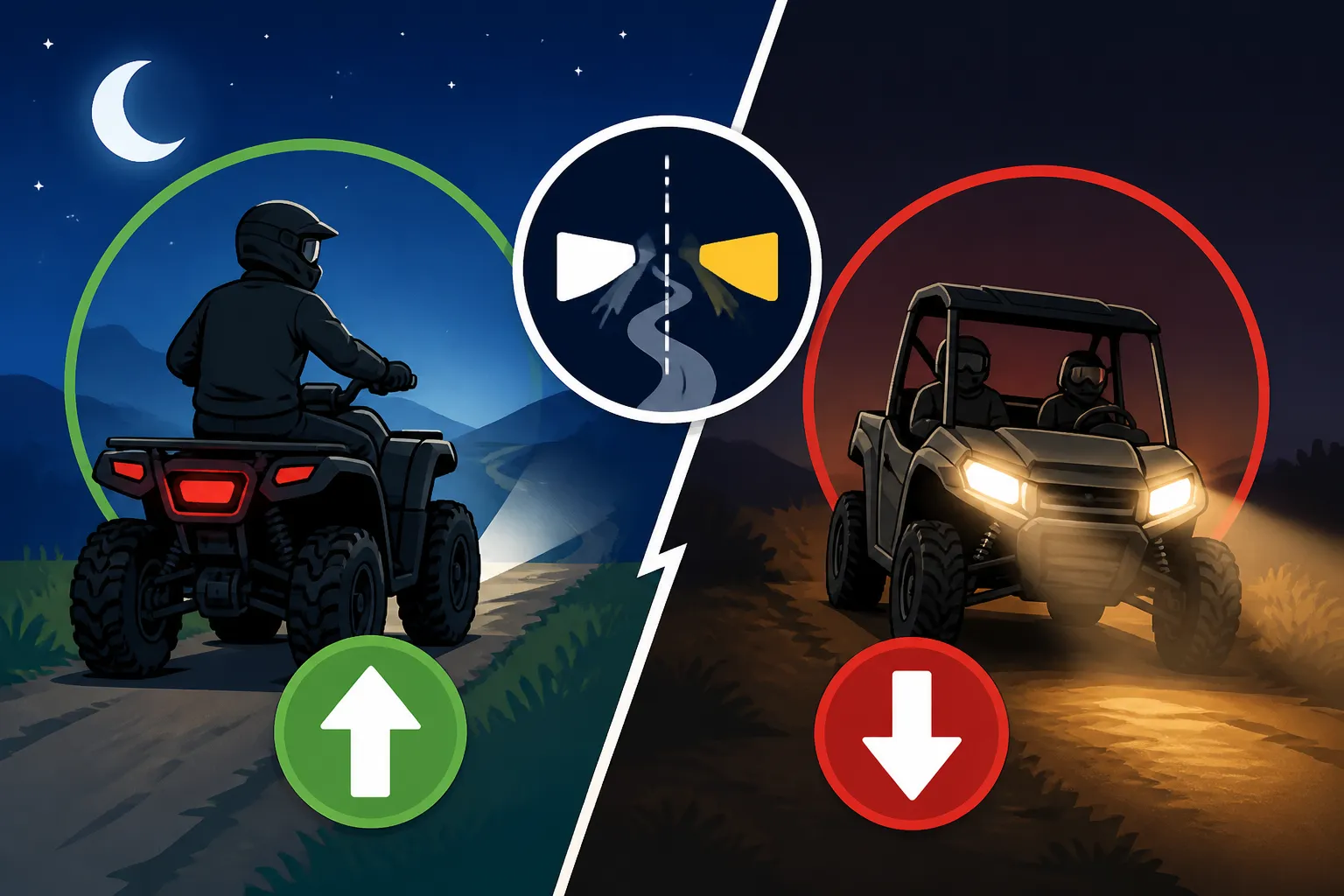
North Dakota Night Travel Direction Rule
Navigating North Dakota's expansive landscape on your ATV or UTV can be an incredible experience, offering unmatched freedom and a unique connection to the prairie. However, when the sun dips below the horizon and you find yourself needing to operate your machine on public roads or ditches, things get a little more complicated than just flipping on your lights. Many riders feel frustrated and confused about exactly how they're supposed to travel, especially concerning the direction of traffic. This guide is here to untangle those rules, specifically addressing the North Dakota Night Travel Direction Rule, so you can ride safely and legally after dark.
Understanding North Dakota's OHV Road Rules After Dark
Riding your off-highway vehicle (OHV) in North Dakota during daylight hours already comes with a specific set of rules, particularly when you venture onto ditches, section lines, or certain roadways. But once night falls, the stakes — and the regulations — increase significantly. It's not just about seeing where you're going; it's about being seen and operating in a predictable manner that minimizes risk for everyone on the road, including yourself. Ignoring these rules can lead to dangerous situations and unwanted legal headaches.
The General Principle: Traveling With Traffic
Here’s the core of the North Dakota Night Travel Direction Rule: when operating your OHV on any public highway, street, or roadway after dark, you absolutely must travel in the same direction as the flow of traffic. This isn't an option or a suggestion; it's a fundamental safety and legal requirement. Think of it like this: your ATV or UTV, even though it's an off-road machine, becomes part of the traffic ecosystem when it's on a road or road-like surface at night. Other drivers expect vehicles to be traveling in the same direction, and going against that expectation creates an immediate and severe hazard. This rule applies whether you're briefly crossing a road or traveling a longer distance on a permissible route. It's all about maintaining predictability and minimizing the chance of a head-on collision or a sudden, unexpected encounter in the dark.
Why Night Riding is Different from Day Riding
You might be thinking, "But I can ride against traffic in the ditch during the day, so why not at night?" And you'd be right that there are different rules for daytime ditch riding. During daylight, a rider in a ditch often has better visibility of oncoming traffic, and drivers on the main road are more likely to spot a slower-moving, differently positioned vehicle. However, night changes everything. Human perception, even with good headlights, is severely limited after dark. Distances are harder to judge, and objects can blend into the background.
When you're riding with the flow of traffic at night, your taillights and brake lights are visible to vehicles approaching from behind, and your headlights face the same direction as theirs, making you a more recognizable part of the traffic stream. If you were to ride against traffic, especially in a ditch close to the road, your headlights would be interpreted by oncoming drivers as a vehicle moving toward them, but your position and speed could be highly confusing and dangerous. The intention of the night travel direction rule is to remove this ambiguity and enhance safety by making OHV operators conform to standard vehicular movement patterns. [North Dakota Rules for Riding After Dark] elaborates on many of these distinctions.
The Importance of Visibility and Equipment
Beyond simply traveling with traffic, your visibility is paramount when riding at night. North Dakota's laws are very clear about the equipment your OHV must have to be considered safe and legal for nighttime operation. This includes, but isn't limited to, specific headlamps, taillamps, and brake lights. These aren't just for you to see; they're primarily for others to see you.
Think about it: a standard vehicle is a large, obvious presence on the road. An ATV or UTV is smaller, often lower to the ground, and can be easily overlooked, especially by a distracted driver. This is where specialized lighting and reflective gear really come into play. Many riders opt for aftermarket LED light bars or enhanced taillights, and investing in these can drastically improve your safety profile. [North Dakota Headlamp Distance Standards] and [North Dakota Brake Light Requirement] delve into the specifics of what's expected from your machine's lighting. Without proper and functioning equipment, even if you’re following the direction of travel rule, you're putting yourself and others at serious risk.
Specific Scenarios for Night Travel Direction
North Dakota's diverse terrain and open spaces mean OHV riders frequently encounter different types of public thoroughfares. Understanding how the night travel direction rule applies to each scenario is crucial. It’s easy to assume a "road is a road," but the specifics of ditch riding, section lines, and highway crossings each present unique considerations once darkness falls.
Riding in Ditches and Back-Slopes
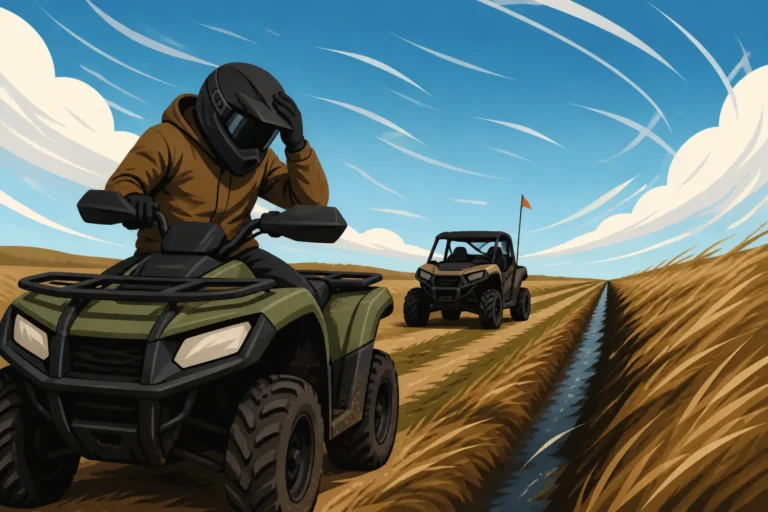
For many North Dakota riders, the ditch is a lifeline – a legal pathway to connect trails, fields, and even towns. [North Dakota Ditch Riding: The Legal Right Explained] covers the general rules, but at night, the game changes. While during the day you might have the flexibility to travel against the flow of traffic in the ditch or on the back-slope, this flexibility typically evaporates after dark on any ditch adjacent to a public highway. The "travel with traffic" rule kicks in hard here.
The reason for this strict adherence is simple: confusion and safety. A vehicle approaching from the opposite direction on the main road, seeing your headlights coming from the ditch, might misinterpret your position or assume you're pulling out into their lane. Even if your lights are dipped, the unexpected angle can be disorienting. Therefore, if you're using a ditch or back-slope that parallels a road where vehicular traffic flows, you must orient your OHV to travel in the same direction as the vehicles on the main road. This ensures that your lights are facing the same way as other traffic and that your taillights are visible to anyone approaching from behind on the roadway. Always assume the most conservative, safest interpretation of the rule: match the traffic flow.
Navigating Section Lines and Township Roads
Section lines and township roads are the backbone of rural North Dakota, often providing direct access to remote areas. These can range from well-maintained gravel to barely discernible tracks. When operating on these surfaces after dark, the North Dakota Night Travel Direction Rule still applies: you must travel with the flow of traffic.
Even if a section line or township road sees minimal traffic, it's still considered a public roadway. Therefore, the expectation is that any vehicle, including an OHV, will operate in a predictable manner, aligning with the accepted direction of travel for that specific lane or side of the road. If the road is a two-way street, you stay to the right. If it's a one-way stretch (though rare for section lines), you follow that direction. It's not about how much traffic you encounter; it's about adhering to the legal standard for operating a vehicle on a public thoroughfare after dark. This is particularly important because unlit or poorly lit section lines can be treacherous, and the unexpected appearance of an OHV going the wrong way could have dire consequences, even if the other vehicle is simply another farmer heading home.
Crossing Highways and Intersections at Night
Crossing a major highway or navigating an intersection is already a point of high risk for OHV riders, especially on machines that aren't designed for high-speed road travel. At night, this risk is amplified exponentially. When you're making a legal crossing of a highway or traversing an intersection in North Dakota after dark, the rule remains: you must still adhere to the general flow of traffic.
This means if you're crossing a two-lane highway, you must cross at a 90-degree angle to the flow of traffic, looking both ways, and getting across as quickly and safely as possible. You are not to drive down the center of the road, nor are you to make wide, arcing turns against traffic. When you're approaching an intersection, you must treat it like any other vehicle, signaling if possible and turning into the appropriate lane, always moving with the traffic. The brief nature of a crossing does not exempt you from the fundamental rule of predictable movement. Consider using enhanced lighting, like auxiliary LEDs from a brand like SuperATV, to ensure maximum visibility during these critical moments. The goal is to make your intent and presence as clear as possible to any other drivers, minimizing any confusion that darkness might otherwise create.
Essential Lighting and Safety Equipment for Night Riding
Riding after dark in North Dakota means more than just having a working headlight. The law, and common sense, demand a suite of lighting and safety equipment to ensure you can see and, more importantly, be seen. The wide-open spaces and often unlit rural roads of North Dakota make visibility a critical component of safe OHV operation at night. Without the right gear, you're not just risking a ticket; you're risking your life.
Headlamps, Taillamps, and Brake Lights
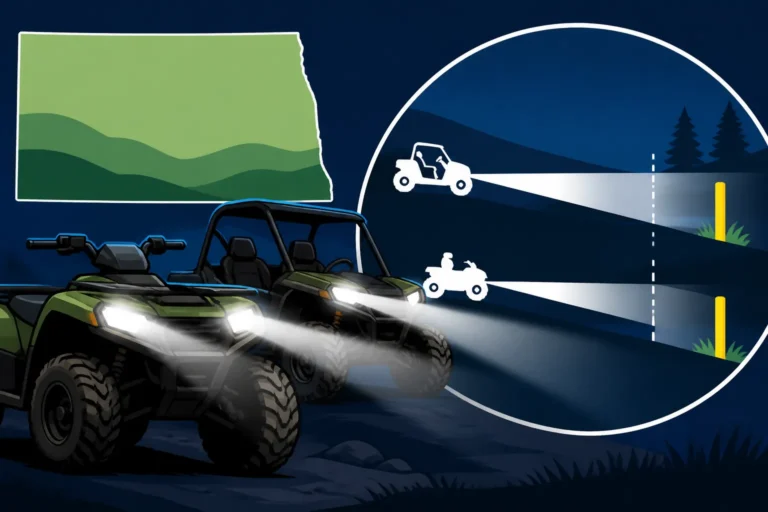
Your OHV must be equipped with functional headlamps, taillamps, and brake lights that meet North Dakota's standards. These aren't optional extras; they are fundamental safety features. Your headlamp needs to be strong enough to illuminate the road ahead for a specified distance, typically 300 feet, to allow you to react to obstacles or changes in terrain. [North Dakota Headlamp Distance Standards] lays this out precisely. This is especially crucial on rough terrain or in ditches where unforeseen hazards can appear quickly.
Taillamps, on the other hand, are for those behind you. They need to be clearly visible from a certain distance to warn approaching vehicles of your presence. And brake lights? Those are non-negotiable. They must activate when you apply the brakes, signaling to anyone behind you that you're slowing down or stopping. [North Dakota Brake Light Requirement] details these requirements. For many riders, the factory lighting might be sufficient for casual trail riding, but for sustained road or ditch travel at night, upgrading to brighter, more robust LED lights, perhaps from a reputable brand like SuperATV, is a wise investment. The more visible you are, the safer you'll be.
Reflective Gear and Auxiliary Lighting
While your machine's primary lights are essential, they are just the starting point for night riding safety. North Dakota, with its vast stretches of dark roads, benefits immensely from supplemental visibility measures. This includes reflective gear – both on your machine and on yourself. Consider adding reflective tape to the sides and rear of your OHV, especially if its factory colors are dark. Helmets, jackets, and even backpacks with reflective elements can significantly increase your profile to other drivers. Every bit of reflected light helps.
Beyond passive reflectors, auxiliary lighting can be a game-changer. LED light bars mounted on your roof or front bumper, ditch lights, or even rock lights can vastly improve your ability to see terrain features that might otherwise be missed by your main headlights. These are particularly useful when you veer off the main road into a ditch or a field. However, be mindful of how you use these. High-powered auxiliary lights, especially light bars, should never be used when approaching or following other vehicles on public roads, as they can blind other drivers. They are best reserved for off-road or unpopulated areas.
The Role of Mirrors and Horns After Dark
While not directly related to direction of travel, mirrors and horns play a vital role in situational awareness, which becomes even more critical after dark. North Dakota law requires a mirror that provides a clear view of the highway to the rear for a minimum of 200 feet. At night, this mirror allows you to keep track of vehicles approaching from behind, letting you anticipate their movements and ensure you're maintaining a safe distance and lane position. [North Dakota Mirror and Horn Requirements] outlines the specific dimensions and audibility.
A horn, audible from at least 200 feet, is your audible warning system. It's not just for startling wildlife; it's for alerting other drivers to your presence in situations where your lights might not be enough, or to warn of an immediate hazard. For example, if you encounter an unexpected obstacle in a dark ditch and need to quickly adjust your position, a quick honk could alert a nearby vehicle to your unexpected maneuver. While it might feel like overkill, having fully functional mirrors and a loud horn are fundamental components of a comprehensive night riding safety strategy, empowering you to respond effectively to unseen threats in the dark.
Common Misconceptions and Legal Consequences
Despite the clear language in North Dakota's statutes, many OHV riders still harbor misconceptions about night riding rules. These misunderstandings often stem from experiences in other states, interpretations of daytime rules, or simply a lack of awareness. However, ignorance of the law is never an excuse, and these misconceptions can lead to serious legal consequences, not to mention dangerous situations on the road.
"Just Follow the Car Ahead": Why That's Not Enough
One common, and dangerous, misconception is that as long as you can see a vehicle ahead of you, you're fine for night travel. This thinking is flawed on multiple levels. First, "following the car ahead" only addresses your ability to see; it does nothing for their ability to see you, or for other vehicles that might be approaching from different directions. The North Dakota Night Travel Direction Rule is specifically about making your vehicle predictable and visible within the flow of traffic, not just about your personal line of sight.
Secondly, relying solely on the vehicle in front of you can lead to dangerously close following distances, especially on unlit rural roads where an OHV's braking distance might differ from a passenger car's. Furthermore, if the lead vehicle makes an illegal turn, enters a restricted area, or encounters an unexpected hazard, you could be following them directly into trouble. Your responsibility is to know and follow the rules independently, ensuring your machine is properly equipped and you are traveling in the correct direction and manner, regardless of what other drivers might be doing. Your safety is ultimately your responsibility.
Penalties for Non-Compliance and Reckless Operation
Ignoring North Dakota's night travel rules, including the direction of travel, can result in significant legal penalties. Operating an OHV illegally on a public roadway is often categorized as a Class B misdemeanor, which can carry fines and potentially even jail time, depending on the severity of the offense and whether it's a repeat violation. Even a basic OHV violation can result in a fine, and those fines can increase, especially with recent legislative changes like those discussed in [North Dakota Fine Increase in 2025].
Beyond the specific penalties for violating the night travel direction rule, reckless operation — which can easily be cited if you're driving against traffic in the dark and causing a hazard — carries even harsher consequences. It's not just about the direction; it's about the overall manner in which you operate your machine. An officer has discretion to issue citations for multiple offenses if your actions are deemed to be dangerous or disregard public safety. The goal of enforcement is to deter unsafe behavior and ensure everyone on North Dakota's roads, whether in a car or on an OHV, can travel without undue risk.
The Impact on Insurance and Liability
Legal penalties are only one piece of the puzzle. An often-overlooked consequence of violating OHV laws, particularly those related to safe operation after dark, is the potential impact on your insurance and liability. If you're involved in an accident while operating your OHV against the legal direction of traffic at night, your insurance company could deny coverage for damages or injuries. Insurance policies typically have clauses that void coverage if the insured vehicle was being operated illegally at the time of an incident. [North Dakota Insurance Rules for OHV Riders] explains the general requirements.
This means you could be personally liable for significant medical bills, property damage, and legal fees, which could easily run into the tens or even hundreds of thousands of dollars. The financial burden could be catastrophic. Even if you carry good liability insurance, operating outside the bounds of the law can give the insurance company grounds to refuse payment. It's a sobering thought, but understanding this risk is crucial. Adhering to the North Dakota Night Travel Direction Rule isn't just about avoiding a ticket; it's about protecting your financial future and ensuring you're covered if an unforeseen event occurs.
Planning Your North Dakota Night Ride Safely
North Dakota offers incredible opportunities for OHV enthusiasts, and sometimes, the best adventures happen under a starry sky. However, night riding, especially on or near public thoroughfares, requires careful planning and a heightened awareness of safety. It's not just about knowing the rules; it's about actively preparing for the unique challenges that darkness presents.
Checking Local Ordinances and Conditions
Before you even think about firing up your machine after dark, always check for any local ordinances that might further restrict OHV use, especially at night. While North Dakota state law governs much of OHV operation, counties and cities have the authority to impose additional restrictions. [North Dakota County and City ATV Ordinances] highlights how these local rules can vary widely. What's legal in one township might be prohibited just a few miles down the road. This is particularly true for curfews or specific road closures after dark.
Additionally, always consider the current conditions. Is it foggy? Is there blowing snow or dust? These conditions severely reduce visibility for both you and other drivers, making night travel even riskier. If visibility is poor, it's best to delay your ride. The wide-open spaces of North Dakota can experience rapid weather changes, so checking forecasts is also a good practice. A planned night ride might need to be postponed if unexpected severe weather rolls in.
Group Riding Etiquette and Communication
If you're planning a night ride with a group, clear communication and established etiquette are more critical than ever. In the dark, it's much harder to keep track of everyone, spot hand signals, or hear shouted warnings over engine noise. Before setting out, brief your group on the North Dakota Night Travel Direction Rule and other relevant regulations. Establish clear communication protocols, whether that's two-way radios, specific light signals, or agreed-upon stopping procedures.
It's also a good idea to stagger your group slightly, rather than riding bumper-to-bumper, to allow each rider's lights to be distinctly seen by others and to minimize dust kick-up (if applicable). Ensure everyone has appropriate lighting and reflective gear. Consider pairing up less experienced night riders with seasoned veterans. A well-organized group ride enhances safety for everyone, making the experience more enjoyable and reducing the risk of someone getting lost or encountering an unforeseen issue alone in the dark.
Emergency Preparedness for Nighttime Adventures
No matter how well you plan or how experienced you are, things can go wrong. Being prepared for emergencies is paramount, especially when riding after dark in North Dakota's sometimes remote areas. Your emergency kit for night riding should be more comprehensive than a daytime kit. This includes extra lighting (headlamps, flashlights with fresh batteries), a fully charged cell phone (though cell service can be spotty in some regions, so don't solely rely on it), a first-aid kit, and enough water and snacks.
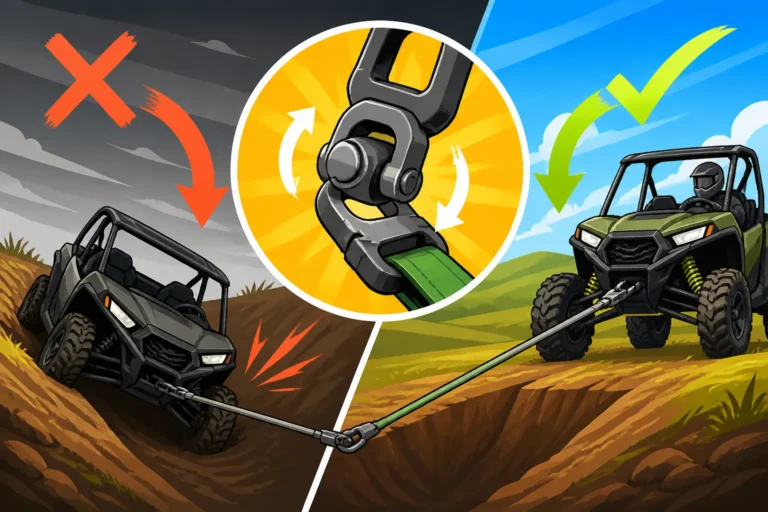
Consider adding a reflective emergency blanket or bright-colored flagging tape to your kit, which can make you more visible if you become stranded. A tow strap is also a smart addition, especially if riding with a group, as getting stuck in a ditch or mud can be far more challenging in the dark. Always let someone know your planned route and estimated return time. Tell them when to expect to hear from you and what to do if they don't. These simple steps can make a huge difference in ensuring a minor mishap doesn't turn into a life-threatening situation under the vast, dark skies of North Dakota.
| Rule Aspect | Daytime Operation (General) | Nighttime Operation (General) |
|---|---|---|
| Direction of Travel | Can often travel against traffic in ditches/back-slopes for access. | MUST travel with the flow of traffic on roads and adjacent ditches. |
| Visibility | Good natural light, though still require proper lighting on roads. | Critical. Requires functional headlamps, taillamps, brake lights. |
| Headlamps | Required on roads, primarily for seeing. | Required, for seeing and being seen. Must meet distance standards. |
| Taillamps/Brakes | Required on roads, for signaling. | Required, for being seen and signaling to vehicles behind you. |
| Reflective Gear | Recommended, especially for bright colors. | Highly recommended for rider and machine, enhances overall visibility. |
| Auxiliary Lighting | Useful for trails or work, minimal impact on road safety. | Boosts rider visibility, but use responsibly on public roads to avoid blinding others. |
| Mirrors | Required if on roadway for rear visibility. | Required, crucial for tracking vehicles in limited light. |
| Horn | Required, for warning. | Required, vital for audible warnings in low-visibility conditions. |
| Local Ordinances | Can vary for daytime access/hours. | May impose curfews or stricter access rules. Always check. |
Disclaimer
This article is for general informational purposes only and does not constitute professional advice. Laws, prices and regulations vary by location and change over time. Consult a qualified professional for guidance on your specific situation.