North Dakota’s 350cc Minimum for Road Riding
One of the biggest head-scratchers for North Dakota ATV and UTV enthusiasts who want to take their machines beyond the dirt is figuring out exactly what's allowed on public roads. It's frustrating to invest in a great side-by-side or quad only to discover it doesn't meet the state's basic requirements for road use. This guide will dive deep into North Dakota's 350cc minimum engine displacement rule for road riding, helping you understand why it exists, where you can legally ride, and what other crucial requirements you need to meet to stay compliant and safe.
Understanding North Dakota's ATV/UTV Classifications for Road Use
North Dakota has specific ways of classifying off-highway vehicles (OHVs), and these classifications directly impact whether your machine can legally cruise down a paved highway or even a gravel section line. It's not just about having a motor; it's about having the right kind of motor, and enough of it, to safely integrate with other traffic. Many riders assume if they just get a license plate, they're good to go, but the engine size is a critical, often overlooked, detail that can lead to a roadside chat with law enforcement.
Class I Machines and the Engine Size
Class I machines are typically your traditional ATVs, designed for a straddle seat and handlebars. Think of most four-wheelers you see out on the trails. While these machines are fantastic for off-road adventures, their engine displacement becomes a sticking point when considering road legality. The state's rule regarding a North Dakota's 350cc Minimum for Road Riding is primarily aimed at ensuring that any machine sharing the road can maintain a reasonable speed and not become a hazard due to being underpowered.
If you have a smaller Class I ATV, say a 250cc model, it simply won't meet the minimum engine size requirement for general road use, even if it has all the other necessary equipment like lights and mirrors. This isn't about discriminating against smaller machines; it's about road safety and the expectation that all vehicles on public roads can keep up with traffic flow or at least not impede it dangerously. For those with youth quads or entry-level ATVs, this means limiting your riding to private land or designated off-highway trails.
Class II Machines and Road Capabilities
Class II machines include your larger utility vehicles (UTVs) and side-by-sides, characterized by a steering wheel, bench or bucket seating, and foot pedals. These machines often have larger engines by default, making them more likely to meet the 350cc minimum without any issues. In fact, many modern UTVs come equipped with engines far exceeding this displacement, giving them plenty of power for both off-road tasks and road-legal cruising.
The robust design and typically higher horsepower of Class II machines make them more suitable for road use in North Dakota. However, simply having a large engine isn't the only factor. These machines still need to meet other equipment requirements, like adequate lighting, mirrors, and braking systems, to be truly street-legal. The good news is that for many side-by-sides, adding the necessary road-legal accessories is a straightforward process, often with aftermarket kits available from companies like SuperATV that consolidate these needs.
Class III Machines and Their Larger Engines
Class III machines are a bit of a hybrid, often resembling modified dirt bikes with tracks, but also including other specialized off-highway vehicles under 8,000 pounds that don't fit into Class I or II. For the purpose of road riding, these machines generally face even more stringent rules or are often limited to specific, very narrow use cases. The 350cc rule still applies as a baseline, but their unique design, especially if tracked, usually restricts them from general road use.
When you're dealing with a [North Dakota Class III Machines Under 8,000 Pounds], the emphasis shifts from general recreation to specialized utility or very limited roadway crossings. While their engines might exceed 350cc, their overall design is not typically conducive to safely sharing highways with cars and trucks. It's always best to consult the specifics for Class III machines, as their road legality is often tied to very particular permits or exemptions rather than general access.
The Rationale Behind the 350cc Minimum
It might seem arbitrary to some that North Dakota dictates a minimum engine size for an OHV to be allowed on public roads. After all, if your machine is registered and has all the proper lights, why does it matter how big the engine is? The truth is, this rule isn't about being restrictive for the sake of it; it's deeply rooted in practical safety considerations and ensuring that all vehicles on the road can coexist without creating undue hazards. It's about maintaining a predictable flow of traffic and minimizing the chances of dangerous situations arising from significant speed differentials.
Ensuring Adequate Road Speed and Traffic Flow
Imagine driving your car down a 55 mph paved highway, only to come upon an ATV struggling to maintain 20-25 mph. This scenario is precisely what the 350cc minimum aims to prevent. An underpowered OHV can become a significant obstruction, leading to sudden braking, swerving, and general frustration for other drivers, increasing the risk of rear-end collisions or unsafe passing maneuvers. The state wants to ensure that any vehicle operating on a public road, especially those with higher speed limits, can reasonably keep pace with the flow of traffic.
While a 350cc engine isn't going to turn your OHV into a race car, it generally provides enough power and torque for the machine to reach and sustain speeds that are safer for common North Dakota roadways, like county gravel roads or township paths. This helps in maintaining consistent traffic flow, which is a cornerstone of safe driving. Without this minimum, roads could become choked with slow-moving vehicles, turning routine commutes into high-stress situations.
Stability and Control for Roadway Use
Beyond just speed, a larger engine often correlates with a larger, heavier, and more stable machine. While not a direct guarantee, ATVs and UTVs with engines of 350cc or more tend to be built on more robust platforms. This can translate to better handling characteristics at higher speeds, improved braking performance, and increased stability, especially when encountering bumps, potholes, or crosswinds common on North Dakota's open roads. Smaller, lighter machines, while nimble off-road, can feel less planted and more prone to instability when traveling at road speeds.
The engineering that goes into machines with larger engines often includes more sophisticated suspension systems, wider stances, and better tire options, all of which contribute to a safer, more controlled ride on asphalt or packed gravel. This enhanced stability is crucial when sharing the road with much larger and faster vehicles, where predictability and control are paramount for avoiding accidents. A company like SuperATV, for instance, offers suspension upgrades that can further enhance the stability of many UTVs for those who frequently ride on diverse terrain, including roads.
Manufacturer Intent and OHV Design
It's also worth considering the original intent of the manufacturers. Many smaller displacement ATVs are designed primarily for youth riders, light utility, or recreational trail riding at lower speeds. They might not be engineered with the sustained high-speed operation, brake fade resistance, or tire durability required for regular road use. Attempting to force these machines into a role they weren't designed for can quickly lead to accelerated wear and tear, or worse, mechanical failures at inopportune moments on the road.
The 350cc minimum helps to align the machine's capabilities with the demands of public road environments. It's a recognition that simply bolting on a rearview mirror doesn't magically transform a trail machine into a road-worthy vehicle. The underlying design, power, and structural integrity need to be there to handle the stresses of road travel, and the engine size is often a good indicator of whether a machine was built with these broader capabilities in mind.
Road Surfaces Open to OHVs in North Dakota
Navigating where you can and cannot ride your ATV or UTV in North Dakota is almost as complex as understanding the engine requirements. The state has specific rules about which types of roads are open to OHVs, and these often intersect with the 350cc minimum. It's not a free-for-all; you can't just jump on any road you please, even if your machine meets the engine size and equipment mandates. Understanding these distinctions is crucial for legal and safe riding.
Gravel Roads and the 350cc Threshold
Good news for many riders: North Dakota generally allows properly registered and equipped OHVs on most gravel roads. This is a huge benefit for those living in rural areas or wanting to connect between trail systems. The gravel road network forms a vital part of the OHV landscape in the state, offering extensive access for utility, hunting, and recreational purposes. However, the 350cc minimum engine size is still firmly in place for these aggregate surfaces.
Even though gravel roads typically have lower speed limits than paved highways, the state still requires your machine to have sufficient power to maintain a reasonable, safe speed and not become an impediment to other vehicles like farm equipment or local traffic. So, if you're planning to ride your larger displacement ATV or UTV on a gravel section line, you're likely in the clear, provided you've met all other [North Dakota ATV Road Rules by Surface Type] and registration requirements. Always exercise caution on gravel, as conditions can change rapidly, and dust can significantly reduce visibility.
Paved Roads with Speed Limits
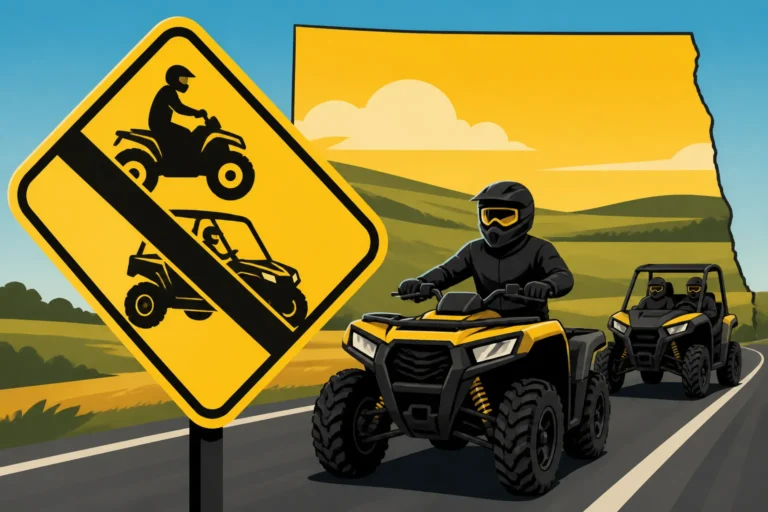
This is where things get a bit more restrictive. While some paved roads are open to OHVs, it's typically those with lower posted speed limits. You won't find yourself cruising down an interstate or major state highway on your UTV. North Dakota specifically limits OHV access to paved roads posted at 55 mph or less for Class I and II machines. [North Dakota Class III Machines at 65 mph Roads] have a separate provision for certain roads, but these are exceptions rather than the norm for general OHVs.
Even on these lower-speed paved roads, your machine still needs to meet the 350cc minimum and be equipped with all the necessary road-legal features, including mirrors, a horn, and proper lighting. The intent here is to allow limited connectivity between areas while minimizing potential hazards on higher-speed routes where OHVs are less visible and slower than typical automotive traffic. Always look for signage and local ordinances, as city and county rules can add further restrictions.
Ditch Riding and the Engine Size Consideration
Ditch riding is a unique aspect of North Dakota OHV law and is often a practical way for riders to travel between points or access fields. The law generally permits registered OHVs to operate in the ditch bottom and back-slope of most public highways, excluding interstates and certain controlled-access roads. While this offers significant access, the 350cc rule still applies here because the ditch is still considered part of the highway right-of-way.
Even though you're not in the main travel lanes, your machine still needs to be capable of safe operation within that environment, which includes the ability to navigate various terrains and, if necessary, to temporarily cross a roadway. The engine size ensures that the machine has the power to handle the often uneven and sometimes challenging conditions of a ditch, reducing the likelihood of getting stuck or causing an obstruction. Understanding [North Dakota Ditch Riding: The Legal Right Explained] is crucial for any rider utilizing this unique aspect of the state's OHV laws.
| OHV Class | Engine Requirement | Common Road Access | Paved Road Speed Limit | Ditch Riding |
|---|---|---|---|---|
| Class I | 350cc minimum | Gravel Roads | 55 mph or less | Generally Allowed |
| Class II | 350cc minimum | Gravel Roads, Some Paved | 55 mph or less | Generally Allowed |
| Class III | 350cc minimum | Limited, Specific Use | 65 mph (exceptions) | Limited |
Equipment Requirements Beyond Engine Size for Road Use
Meeting the 350cc minimum engine requirement is a fundamental step, but it's far from the only hurdle you'll face when trying to make your ATV or UTV road-legal in North Dakota. The state demands that any off-highway vehicle venturing onto public roads is outfitted with specific safety equipment designed to make it visible, audible, and controllable in traffic. These requirements are in place to ensure your safety and the safety of everyone else sharing the road. Ignoring these can lead to fines and put you at serious risk.
Mirrors, Horns, and Lighting Essentials
Just like any other motor vehicle, an OHV operating on North Dakota roads needs to be able to see, be seen, and communicate its presence. This means having proper mirrors, an audible horn, and a full suite of functional lighting. You'll need at least one rearview mirror, providing a clear view of the road behind you, and it must meet specific size requirements – often at least 10 square inches of reflective surface. A good quality, durable mirror is essential, especially given the vibrations and potential bumps of off-road and gravel road use.
Your OHV must also be equipped with a working horn that is audible from at least 200 feet away. This is crucial for signaling other drivers or pedestrians, especially when navigating turns, approaching intersections, or simply making your presence known. Headlamps that can illuminate objects at least 300 feet ahead, tail lamps, and brake lights are also mandatory. For those who frequently ride after dark, ensuring all [North Dakota Lighting Rules on a Quad] are met is not just about legality, but critical for safety. Many riders turn to aftermarket kits from companies like SuperATV that bundle these essential components, making compliance easier.
Speedometer, Odometer, and Braking Systems
While not always standard on every off-road machine, a speedometer is a definite requirement for road-legal OHVs in North Dakota. You need to be able to monitor your speed to comply with posted limits, and this speedometer must register in miles per hour. This isn't just a suggestion; it's a legal obligation to ensure you're not inadvertently speeding or driving too slowly for conditions. An odometer, while often part of the same unit, also provides useful information for maintenance and tracking usage, though its specific legal mandate for road use is often less emphasized than the speedometer.
Beyond speed, your braking system must be in excellent working order. This includes both front and rear brakes, capable of bringing your machine to a safe, controlled stop. While OHV brakes are designed for tough conditions, regular maintenance is essential, especially when transitioning to road use where sudden stops can be more frequent and demanding. Always ensure your brakes are properly adjusted and that your brake lights activate promptly when you apply pressure.
Tires and Safety Gear
The tires on your OHV are another critical component for road safety. While knobby, aggressive tires are fantastic for mud and loose terrain, they can wear quickly, generate excessive noise, and offer less grip on paved surfaces. North Dakota law requires that tires be designed for the use intended, and for road use, this often implies a need for tires that can handle the increased speeds and different traction characteristics of asphalt and gravel. While not always explicitly outlawing knobby tires, an officer could deem them unsafe for road conditions if they compromise handling or generate excessive noise.
Finally, while not strictly an equipment requirement on the machine itself, rider safety gear is paramount. [North Dakota Helmet Law for Riders Under 18] requires anyone under the age of 18 to wear a DOT-approved helmet when riding an OHV. Even if you're over 18, wearing a helmet, eye protection, and appropriate riding gear (gloves, long sleeves, sturdy footwear) is a smart choice. These items drastically reduce the risk of injury in the event of an accident, making your road-legal adventure much safer.
Navigating Exceptions and Special Circumstances
North Dakota's OHV laws, while generally clear-cut, do have provisions for specific situations that allow machines – including some that might not meet all general road-legal requirements – to operate on public roads under controlled conditions. These exceptions are typically tied to necessity, such as farm work or emergency responses, rather than recreational road use. It's crucial to understand these carve-outs so you don't mistakenly assume broader permissions for your machine.
Farm and Ranch Operations
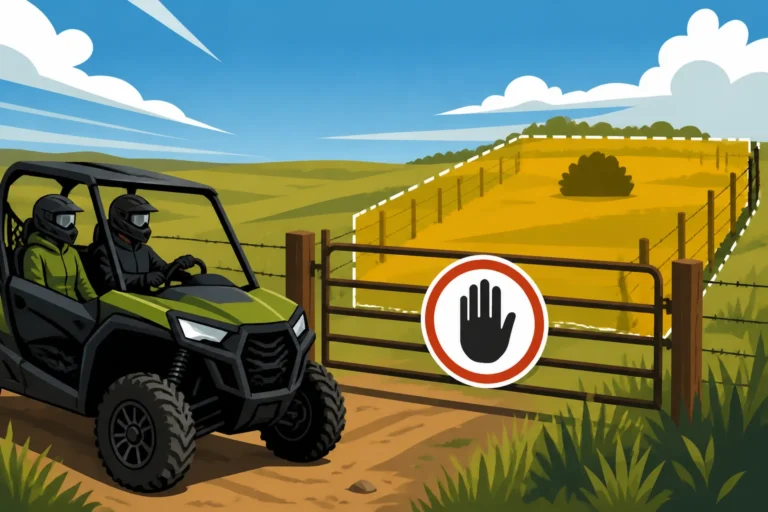
One of the most significant exceptions for OHV road use revolves around agricultural activities. North Dakota is a heavily agricultural state, and its laws reflect the practical needs of farmers and ranchers. An OHV being used for legitimate farm or ranch purposes, such as checking fences, hauling feed, or moving between fields, can often operate on public roads even if it doesn't meet every single road-legal requirement, including potentially the 350cc engine minimum.
However, this isn't a blanket exemption. The use must be directly related to the farm or ranch operation, and the machine should still be operated safely and prudently. This allowance acknowledges that these vehicles are essential tools for many North Dakotans. This means a farmer can ride their smaller ATV from one field to another across a gravel road without facing penalties, but they can't take that same machine for a joyride into town. For those considering [North Dakota Rules for Farm Use on a Road], remember that "farm use" is the key.
Crossing Highways Safely
Even if your OHV isn't generally street-legal for cruising down a highway, North Dakota law allows for controlled crossings of roadways. This means you can typically cross a paved or gravel road directly and safely to get from one side to the other, provided you do so at a right angle to the road and yield to all other traffic. This is a practical provision, recognizing that properties and trail systems often exist on both sides of public roads.
When making a crossing, the focus is on quick, direct movement and maximum visibility. You should approach the roadway cautiously, check for traffic in both directions, and cross only when it is safe to do so. This is a momentary exception for necessary transit, not an invitation to travel along the road. Even for machines meeting the 350cc minimum, crossing rules apply for safety, and for smaller machines, this might be their only permitted interaction with a paved road.
Emergency Situations and Utility Work
In situations where public safety or essential services are at stake, OHVs might be allowed to operate on roads even if they don't fully comply with all road-legal requirements. This typically applies to law enforcement, emergency medical services, fire departments, or utility companies responding to an outage or incident. These machines are often specially equipped and operated by trained professionals under specific guidelines.
For the average private OHV owner, this exception is very narrow. It does not grant you permission to bypass road-legal requirements for personal emergencies or if you're "just trying to help." If you encounter an emergency while riding, your priority should be personal safety and calling for appropriate assistance. Only designated emergency responders or utility workers acting within the scope of their duties typically fall under these specific provisions.
Consequences of Riding an Underpowered Machine on North Dakota Roads
Deciding to ignore North Dakota's 350cc minimum engine rule and other road-legal requirements for your OHV can have serious ramifications. It's not just about potentially getting a ticket; it's about the safety of yourself and others, and the financial implications that can follow. Many riders don't fully grasp the cascade of problems that can arise from operating an illegal machine on public roadways.
Fines and Penalties for Non-Compliance
The most immediate consequence of riding an underpowered or otherwise non-compliant OHV on a public road in North Dakota is a citation. Law enforcement officers are tasked with ensuring road safety, and that includes enforcing OHV regulations. A basic violation can result in a significant fine, and if your machine is deemed particularly unsafe or you're a repeat offender, the penalties can escalate. You might face a Class B Misdemeanor in some instances, depending on the severity and nature of the infraction. [North Dakota Fine Increase in 2025] legislation also means these penalties are not getting any cheaper.
Beyond the initial fine, you could incur court costs and other administrative fees. If the officer deems your machine unsafe for the road, they might even impound it, adding towing and storage fees to your growing list of expenses. This isn't just a slap on the wrist; it's a significant financial hit that could easily outweigh the cost of ensuring your machine is compliant or choosing to ride it only where it's legally permitted.
Safety Risks and Accident Liability
The 350cc minimum, as discussed, is primarily a safety measure. An underpowered machine on a road designed for faster traffic poses a significant accident risk. Your inability to keep up with traffic flow, accelerate quickly to avoid hazards, or maintain stability at road speeds puts you and other drivers in danger. The OHV's design, optimized for off-road use, might also behave unpredictably on hard, paved surfaces, especially during sudden braking or evasive maneuvers.
If you are involved in an accident while operating a non-compliant OHV on a public road, your liability can skyrocket. Even if you believe another driver was at fault, your illegal operation of the machine could be used against you in civil court, potentially leaving you responsible for damages, medical bills, and legal fees for all parties involved. This is a far more severe consequence than a simple ticket and can have life-altering financial implications.
Insurance Implications for Unapproved Road Use
This is perhaps one of the most overlooked, yet most devastating, consequences. Many OHV insurance policies are written with the understanding that the machine will be used off-road or in compliance with all state laws when on public roads. If you're involved in an accident while riding an OHV that doesn't meet North Dakota's road-legal requirements – specifically the 350cc minimum – your insurance company could deny your claim.
Imagine paying for comprehensive insurance, only to have your claim denied after a serious accident because your 200cc ATV wasn't legally allowed on the road where the incident occurred. This would leave you personally responsible for all repair costs for your machine, any damages to other vehicles or property, and all medical expenses for yourself and any injured parties. Always check your specific [North Dakota Insurance Requirements at Registration] and policy details, and be transparent with your insurer about your intended use to avoid this devastating scenario.
Tips for Choosing the Right OHV for North Dakota Road Use
So, you've decided you want the flexibility of riding your OHV on North Dakota's permissible roads and trails. Great! The next step is making an informed decision about which machine to buy or how to assess your current one. It's not just about raw power or flashy looks; it's about finding a machine that seamlessly integrates with North Dakota's legal framework for road use, especially regarding that 350cc minimum. Taking the time to do your homework upfront can save you a lot of headaches and expenses down the line.
Evaluating Engine Displacement and Power
The 350cc minimum is your starting point. When you're looking at ATVs or UTVs, make sure the engine displacement is at least 350 cubic centimeters. Many modern UTVs and larger ATVs easily exceed this, offering plenty of power for both off-road adventures and maintaining safe speeds on gravel or lower-speed paved roads. Don't just assume; always check the manufacturer's specifications. If you're buying used, confirm the engine size with the seller and perhaps even look up the VIN to verify the original specs.
Beyond the displacement number, consider the overall power output (horsepower and torque) relative to the machine's weight. A heavier UTV might need more than just 350cc to feel comfortable and safe at road speeds, especially if you plan on carrying passengers or cargo. Test driving is invaluable here; a machine that feels peppy on a trail might feel sluggish and unstable on a road. Look for a balance of power and stability that instills confidence when you're sharing the road.
Considering Manufacturer Specifications and Road Kits
Many manufacturers now design certain UTV models with a nod towards road legality in states that allow it. These "crossover" or "utility-sport" models often come with larger engines, a wider stance, and more robust components that make them better candidates for road use. While they won't come "street-legal" from the factory in North Dakota, their foundation is usually much more suitable for adding the necessary accessories.
For equipping your machine, consider investing in a dedicated road-legal kit from a reputable aftermarket provider. Companies like SuperATV offer kits that bundle essential items like mirrors, horns, turn signals, and sometimes even DOT-approved windshields. These kits are designed for specific make/models, ensuring compatibility and often simplifying the installation process. Avoid piecemealing components if possible, as a well-integrated kit often provides better functionality and a more cohesive look.
Test Riding and Dealer Consultations
Before making any final decisions, especially if you're new to OHV road use, take your potential machine for a test ride, ideally on varied terrain that mimics what you'll encounter. Pay close attention to how it handles on packed gravel, maintains speed on inclines, and brakes on hard surfaces. Does it feel stable and predictable at the speeds you'll likely travel on open roads? Can you comfortably reach and operate all controls?
Visiting a North Dakota OHV dealer is also an excellent strategy. They are often knowledgeable about local regulations and can guide you toward models that are good candidates for road-legal conversion. They can also advise on necessary accessories and even install them for you. Don't be afraid to ask specific questions about the 350cc rule, [North Dakota Equipment Required on a Roadway], and what steps are involved in getting your machine fully compliant for the roads you intend to ride. Their expertise can be invaluable in making sure your investment is a smart one.
Disclaimer
This article is for general informational purposes only and does not constitute professional advice. Laws, prices and regulations vary by location and change over time. Consult a qualified professional for guidance on your specific situation.