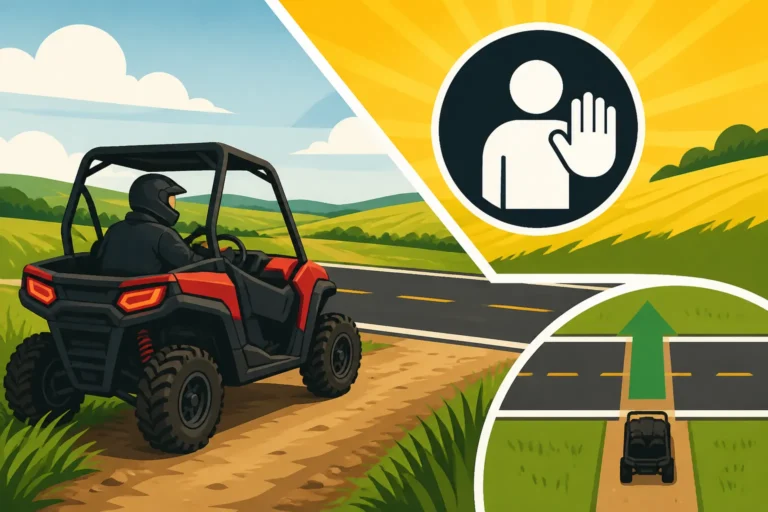
Gates and Livestock Etiquette
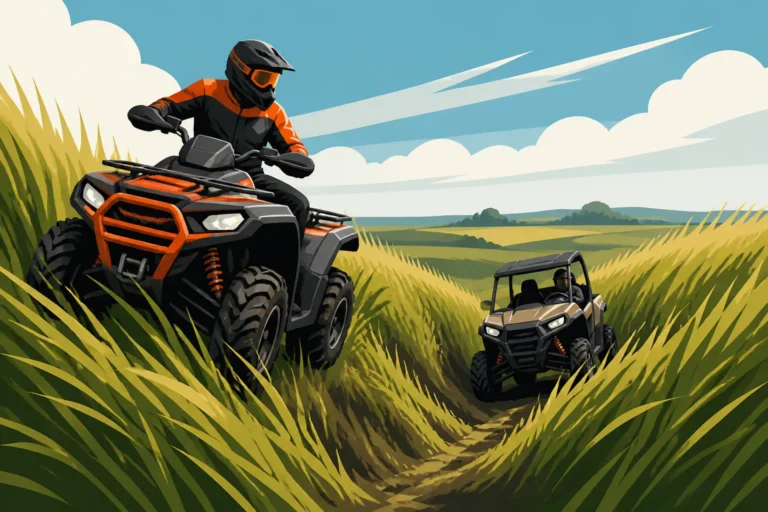
Riding your ATV or UTV across North Dakota's vast and beautiful landscapes often means encountering the realities of rural life: gates and livestock. It can be a real head-scratcher when you're out enjoying the open air, suddenly faced with a fence line or a herd of cattle, and you just want to do the right thing without causing any trouble. This guide is here to walk you through the proper etiquette and legal considerations for interacting with gates and livestock, ensuring you can keep riding responsibly and respectfully in the Peace Garden State.
Understanding North Dakota's Open Range and Fencing Laws for OHVs
When you're out exploring North Dakota, especially on those scenic section lines and gravel roads, it's not uncommon to come across livestock. Our state has a unique blend of regulations and traditions that riders need to understand to avoid issues.
The Concept of Open Range and Your Responsibilities
North Dakota operates under what's often referred to as an "open range" policy in many areas. What does that mean for you as an OHV rider? It means that livestock, such as cattle, horses, or sheep, are legally allowed to roam freely on public roads and certain unfenced private lands. They aren't always confined behind fences like you might expect in more urbanized areas. This can be a surprising sight if you're not used to it – imagine turning a corner on a dusty section line and finding a dozen cows chilling in the middle of your path!
Your primary responsibility in these situations is safety and respect. Livestock are animals, and they can be unpredictable. They're heavy, they can move surprisingly fast, and they don't understand traffic laws. It's crucial to always yield to livestock. This means slowing down immediately, maintaining a safe distance, and giving them ample space to move. Never try to rush them, honk excessively, or make sudden, loud noises. Not only is it dangerous for you and the animals, but it's also incredibly disrespectful to the ranchers who own them. Think of it this way: you're a guest in their outdoor office, and startling their employees is definitely not good etiquette.
Differentiating Between Posted and Unposted Land
Beyond just the animals themselves, you also need to be mindful of where you're riding in relation to private land. North Dakota's trespass laws are clear, and they apply to OHV riders just as much as anyone else. You absolutely must respect private property boundaries. This is where "posted" signs come into play. [North Dakota Posted Land Signs and Riders] will tell you exactly what to look for. Posted land means the landowner has explicitly marked their property as off-limits to unauthorized entry. This could be with physical signs, but increasingly, landowners are also using [North Dakota Electronic Posting and Riders] systems that you can check via an app on your phone.
Even if land isn't explicitly "posted" with signs every few yards, the presence of a gate almost always indicates a property boundary or an area where livestock are being managed. Don't assume that because a gate is there, the land beyond it is automatically public access. Always err on the side of caution. If you're unsure, it's best to turn around or seek explicit permission. Respecting these boundaries and understanding the nuances of open range areas is fundamental to being a responsible OHV rider in North Dakota.
Navigating Gates on North Dakota's Roads and Section Lines
Encountering a gate while riding your ATV or UTV is a common occurrence in North Dakota's rural areas. How you handle these gates says a lot about your respect for the land and its stewards. It's not just about getting through; it's about responsibility.
The "Leave It As You Found It" Rule: Open or Closed?
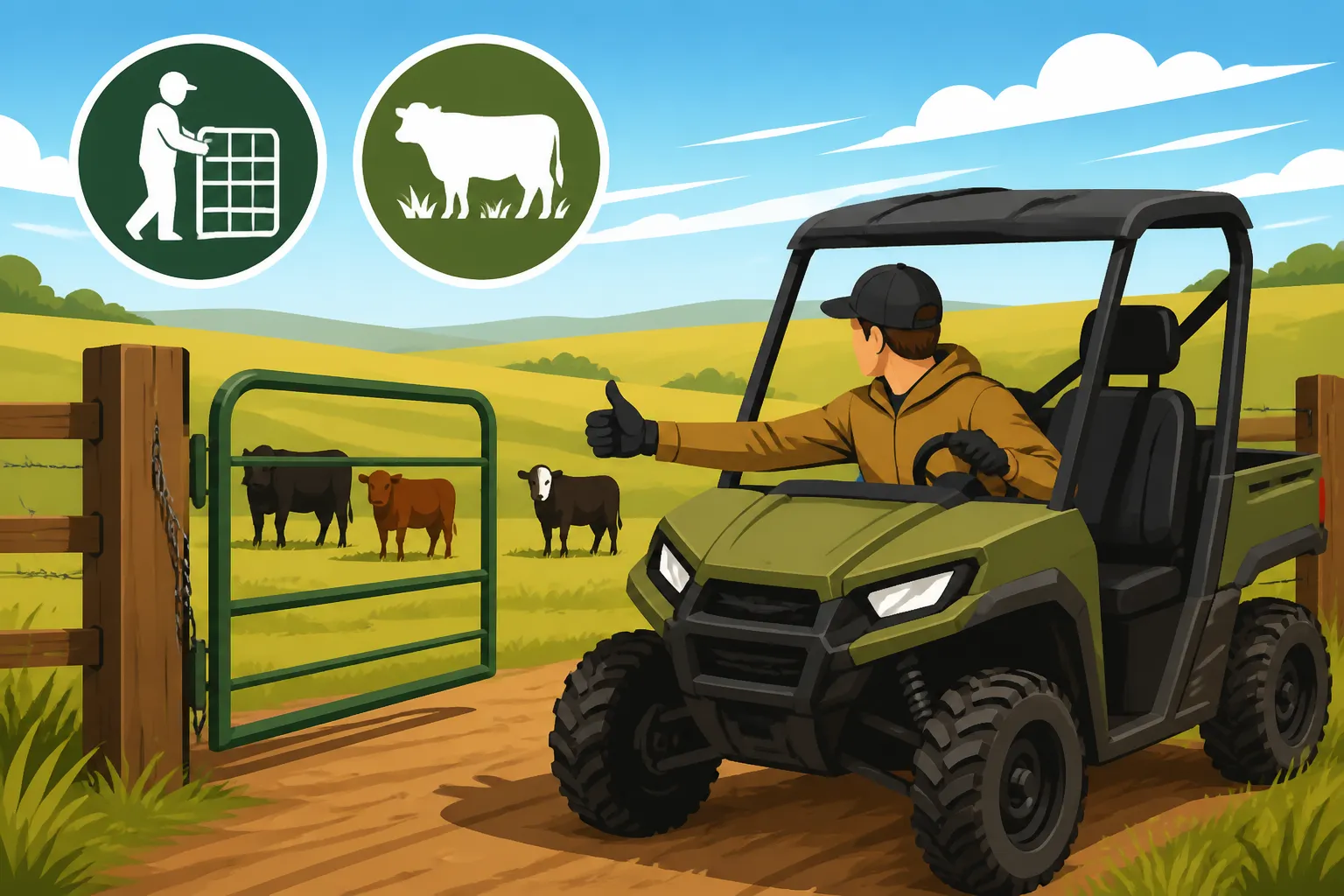
This rule is probably the single most important piece of gate etiquette you'll ever learn, and it applies universally when you encounter Gates and Livestock Etiquette on your rides. If you find a gate open, leave it open. If you find it closed, close it behind you. It sounds simple, right? But the implications of ignoring this rule can be significant.
Imagine you're riding a gravel section line, and you come across a gate. It's closed. You open it, ride your SuperATV RZR or Ranger through, and then, distracted by the beautiful prairie views, you forget to close it. Later that day, the rancher who owns that land discovers their prize-winning herd of Angus cattle has wandered out onto a busy highway, or into a neighbor's hayfield. This kind of mistake can cause thousands of dollars in damages, create dangerous situations for motorists, and seriously damage the relationship between recreational riders and landowners.
Conversely, if you find a gate open and decide to close it because it "looks like it should be closed," you could be inadvertently blocking a rancher's access to their own land or trapping their livestock in an area where they shouldn't be. Ranchers often leave gates open for specific reasons related to rotational grazing, access to water, or allowing equipment to pass through frequently. Your best bet is to assume the landowner has a reason for the gate's status and to maintain it.
Types of Gates and How to Operate Them Safely with an OHV
North Dakota's rural landscape features a variety of gates, each with its own quirks. Knowing how to safely and efficiently operate them with your OHV is a skill every rider should master.
- Wire Gates: These are common, often made of barbed wire or woven wire, stretched taut between posts and secured with a loop of wire or chain. They can be tricky. Park your OHV in a safe spot, well clear of the gate swing area. Carefully unhook the wire, pull the gate open just enough to allow your machine through, and then gently swing it back into place, securing the latch tightly. Be cautious of spring-loaded wire gates that can snap back quickly.
- Wooden Gates: These are usually sturdier, often held closed by a simple latch, chain, or pin. They're generally easier to operate than wire gates. Again, park your OHV, open the gate, ride through, and then close it securely. Make sure any chains or pins are fully engaged.
- Pipe Gates: Common on larger ranches, these are typically made of welded metal pipes and are quite robust. They often have a simple drop-pin or chain latch. These are usually the easiest to manage.
- Cattle Guards: Not technically a "gate" you open or close, but an important feature of managing livestock. We'll dive into these next.
Regardless of the type, always ensure your OHV is stable and the engine is off or in neutral with the brake engaged before you dismount to open a gate. If you're riding a larger UTV with a wide footprint, like many models from SuperATV, make sure you have enough clearance to maneuver around the gate posts without damaging them or your machine. Patience and care are your best allies here.
Approaching and Crossing Cattle Guards
[Cattle Guards and Open Range] are a staple in North Dakota's ranching country, serving as an invisible fence that livestock won't cross, while allowing vehicles to pass without the need to open and close a gate. They are essentially a series of parallel metal or wooden pipes, or concrete slats, set into the roadbed. The gaps between the rails are too wide for an animal to walk on comfortably, deterring them from crossing.
When you approach a cattle guard on your ATV or UTV, you should always slow down significantly. While they are designed for vehicles, hitting one too fast or at an awkward angle can cause a jolt, potentially jarring your suspension, throwing off your balance, or even damaging your tires. Approach them head-on, at a controlled, slow speed. On an ATV, you'll feel each "bump" as you roll over the rails. On a UTV, it'll be a bit smoother, but still requires caution. Once you're safely across, you can gradually increase your speed.
The presence of a cattle guard is a strong indicator that you are either entering or leaving an area where livestock are, or could be, present. It's a visual cue to remain vigilant and ready to encounter animals.
Encountering Livestock on North Dakota Trails and Roads
Spotting livestock on your ride can be an exciting part of the North Dakota experience, but it requires careful navigation. Your actions can impact the safety of both the animals and your riding party.
Best Practices for Riding Near Cattle, Horses, and Sheep
When you see cattle, horses, or sheep up ahead, whether they're grazing in a field adjacent to the road or standing right in your path, the first rule is to slow down. Way down. Your OHV might be a powerful machine, but to a nervous cow or a skittish horse, it's a loud, strange, potentially threatening presence.
- Maintain Distance: Give the animals as much space as possible. If they are in the road, wait patiently for them to move. Do not drive directly into a herd or try to "squeeze" through a narrow gap they might create.
- Avoid Sudden Movements or Noises: Don't rev your engine, honk your horn unnecessarily, or make any abrupt movements. Speak softly if you're with a group. Sudden noises can easily spook animals, causing them to panic and potentially bolt into danger, or even become aggressive. Protective mothers, especially with calves or foals, can be particularly defensive.
- Never Chase or Harass: This should go without saying, but never, ever attempt to chase, herd, or harass livestock with your ATV or UTV. This is not only incredibly dangerous and unethical but can also be illegal, leading to hefty fines and serious penalties under North Dakota law. Your role is to pass safely and respectfully, not to interact with them.
- Eye Contact (Carefully): With horses, sometimes making gentle eye contact can help them understand you're not a predator. With cattle, it's generally best to keep a respectful distance and let them ignore you.
Remember, ranchers work incredibly hard to care for their animals. Your responsible behavior ensures that future generations of riders will continue to be welcomed on North Dakota's open lands. You can find more specific advice for situations like [North Dakota Rules for Riding to a Field] when approaching areas with livestock.
What to Do If Livestock Block Your Path
It's going to happen: you're cruising along a quiet road, and there they are – a whole herd of cattle casually taking up residence right where you want to go. Your first instinct might be to gently nudge them along or rev your engine, but patience is absolutely key here.
- Wait Them Out: Most times, if you stop at a respectful distance and simply wait, the animals will eventually move off the road on their own. They might stare at you for a bit, but they'll usually decide to mosey on. This could take a few minutes, so embrace the pause and enjoy the scenery.
- Gentle Encouragement (Last Resort): If they're truly stubborn and not moving, you can, very gently and from a distance, try a soft, brief rev of your engine. Do not do this repeatedly or aggressively. The goal is to make a subtle sound, not to startle them. Be ready to back off immediately if they show signs of distress or aggression. Never use your OHV as a physical barrier or try to push them.
- Consider an Alternate Route: If the animals seem completely unbothered, or if you're concerned about their behavior, consider whether there's a safe and legal alternate route you can take. Sometimes, looping around a quarter section on another passable section line is a better option than risking a confrontation. Always be aware of [North Dakota Posted Land Rules for Riders] to ensure your alternate route is legal.
- Farm Use Considerations: If you're operating your machine for agricultural purposes, such as riding to a field or checking fence lines, [North Dakota Rules for Farm Use on a Road] might offer some leeway, but the core principle of respecting livestock remains.
Reporting Issues: Injured Animals or Damaged Fences
As responsible OHV riders, we're also stewards of the land we travel. If you encounter an injured animal, livestock that seem trapped or in distress, or notice a damaged fence that could lead to animals escaping, you have an ethical obligation to report it.
- Injured or Distressed Livestock: If you see an animal that appears injured or clearly in distress, do not approach it. Instead, contact the local sheriff's department or the North Dakota Game and Fish Department. Provide as much detail as possible about the location (GPS coordinates are best), the type of animal, and the nature of the issue.
- Damaged Fences: A damaged fence means livestock could easily wander off, leading to safety hazards and financial loss for the landowner. If you notice a broken gate, downed fence line, or even one you accidentally damaged, it's crucial to report it. If you know the landowner, contact them directly. If not, inform the local authorities. Being honest about accidental damage, even if it was your fault, is always the best policy. It shows respect and responsibility.
Avoiding Conflict and Building Good Relationships with Landowners
The future of OHV riding in North Dakota depends heavily on the relationship between riders and landowners. Respectful behavior around gates and livestock goes a long way.
The Importance of Landowner Permission
While North Dakota law allows for public access on certain unimproved section lines and some road ditches, it's vital to remember that the land adjacent to these routes is almost always private property. Even if you're technically on a public right-of-way, straying off it, parking on private land without permission, or disturbing the landowner's operations (including their livestock) can lead to serious issues.
This is why, especially when you're exploring areas that might take you across or near private parcels, seeking [Landowner Permission in Writing] is always the gold standard. A simple handshake can go a long way in rural North Dakota, but having a written agreement, or at least a clear verbal understanding, protects both you and the landowner. Many landowners appreciate the courtesy, and it can open up opportunities to ride on trails you might not otherwise access. Remember, [North Dakota Landowner Permission Forms] exist for a reason – they help formalize these agreements. Thinking about [North Dakota Section Line Rights in Practice] is good, but always consider the adjacent private land.
Being Prepared: Maps and Communication
Good preparation can prevent misunderstandings and resolve issues quickly when they arise. When you head out for a ride in North Dakota's vast and often remote areas, particularly where you might encounter gates and livestock, think about what you'd need if things don't go as planned.
- Carry Up-to-Date Maps or GPS: Don't rely solely on cell service, as many rural areas have dead zones. Have physical maps or a reliable GPS device with downloaded offline maps that show property boundaries. Apps like Avenza Maps or OnX Offroad can be incredibly useful for this, helping you identify public versus private land. Knowing whose land you're approaching or on can help you make informed decisions, especially regarding gates.
- Communication Devices: A satellite messenger or a two-way radio (if riding in a group) can be a lifesaver if you need to report an emergency, an injured animal, or a damaged fence in an area without cell service. It allows you to quickly alert authorities or a landowner, demonstrating your commitment to responsible riding.
- Essential Gear: A sturdy cargo box on your UTV, maybe even one from a brand like SuperATV, can hold not just your maps and communication devices, but also basic tools for minor fence repairs (like a multi-tool or some bailing wire), a first-aid kit, and plenty of water. Being prepared shows you're a thoughtful and responsible rider who respects the challenges of the rural environment.
By being mindful, respectful, and prepared, you contribute to a positive perception of OHV riders in North Dakota. This means more access, fewer conflicts, and a better experience for everyone. Always remember, the privilege of riding these beautiful lands comes with the responsibility to care for them and respect those who live and work there.
Here’s a quick summary of gate etiquette:
| Gate Status Found | Action to Take | Reason |
|---|---|---|
| Open | Leave it open. | Landowner likely has a reason (e.g., livestock movement, equipment access). |
| Closed | Open, pass through, and close it securely. | It was closed to contain livestock or delineate property; maintain its function. |
| Damaged | Do not attempt to use. Report to authorities/landowner. | Avoid further damage or livestock escape; ethical responsibility. |
| Cattle Guard | Slow down, cross carefully. | Not a gate to open/close; indicates presence of livestock. |
Disclaimer
This article is for general informational purposes only and does not constitute professional advice. Laws, prices and regulations vary by location and change over time. Consult a qualified professional for guidance on your specific situation.