Hauling a Machine to Pembina Gorge
Planning a trip with your ATV or UTV to Pembina Gorge is exciting, but the logistics of getting your machine there safely and legally can feel like a maze. Many riders worry about whether their registration is valid, if their trailer meets regulations, or what specific North Dakota rules apply when transporting an off-highway vehicle (OHV) across state lines or even just across the county. This guide will walk you through everything you need to know about hauling your off-road machine to Pembina Gorge, ensuring you arrive ready to hit the trails without any unexpected bumps in the road.
Getting Your Machine Legally Ready for the Road
Even before you hitch up your trailer, ensuring your off-highway vehicle (OHV) is properly prepared from a legal standpoint is paramount. North Dakota has specific rules regarding registration and titling that apply to both residents and visitors, and understanding these will prevent any headaches once you're on the road or at the trailhead.
Understanding North Dakota's Registration and Titling for OHVs
Whether you're planning to ride on designated trails, in open play areas, or even just on approved private land accessible via public ways, your OHV needs to be properly registered and titled in North Dakota. This isn't just a formality; it's about proving ownership, complying with state law, and contributing to the maintenance of the very trails you intend to enjoy, such as those at Pembina Gorge. Many riders mistakenly believe that if their machine is only on a trailer, it doesn't need to be "on the books" until they unload it. However, the intent to operate on public lands generally triggers these requirements. North Dakota utilizes a [North Dakota's Two-Year OHV Registration] cycle, so it’s always a good idea to check your current registration’s expiration date well before you load up for your trip.
The titling process itself is crucial, especially if you're a new owner. You'll need to go through the steps for [Titling an ATV in North Dakota], which typically involves presenting a bill of sale or other proof of ownership to the North Dakota Department of Transportation (NDDOT). This is especially important if you purchased your machine from a private seller, as the transfer of ownership needs to be accurately documented. Overlooking these details can lead to significant delays or issues with law enforcement or park rangers when you reach your destination. If you find yourself needing to create formal documents for a private sale, a transfer of ownership, or other legal agreements, resources like LawDepot can provide templates that help ensure all legal bases are covered, making the transaction clear and documented for all parties.
Beyond the initial title and registration, remember the financial aspects. When you purchase an OHV, North Dakota levies an [North Dakota Excise Tax on an ATV Purchase]. This tax is usually paid at the time of titling, regardless of whether you bought the machine in-state or brought it in from elsewhere. It's a one-time tax, but if you've recently acquired your machine, ensure this has been handled. For residents who are new to the state and bringing their machines with them, there are specific guidelines for [North Dakota Registration for a New Resident] that you'll want to review carefully to avoid any unexpected fees or bureaucratic hurdles.
Special Considerations for Out-of-State Visitors
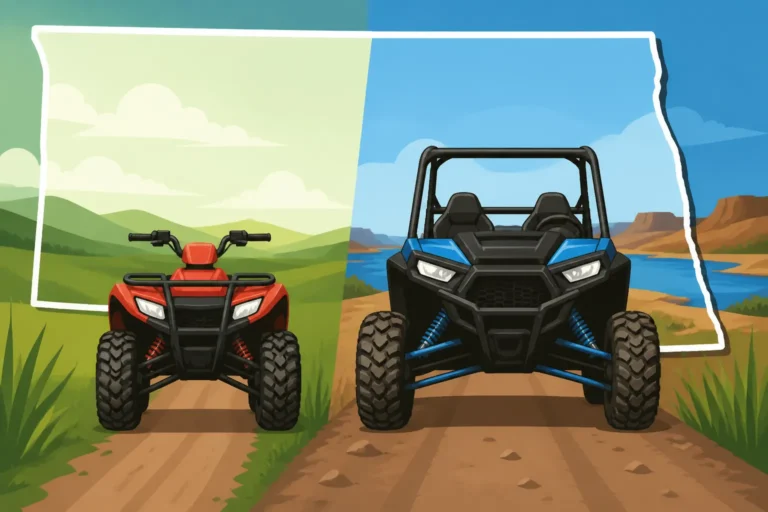
If your adventure to Pembina Gorge originates from another state, the rules for your OHV can introduce a layer of complexity. North Dakota, unlike some other states, does not have reciprocity agreements with its neighbors when it comes to OHV registration. This means that your home-state registration, while valid where you live, generally isn't sufficient if you plan to operate your OHV on North Dakota's public lands, including the fantastic trails at Pembina Gorge. This lack of reciprocity often catches out-of-state visitors off guard, potentially leading to fines or the unfortunate scenario of being unable to ride. It's truly important to grasp that [North Dakota Has No Reciprocity With Any State].
To address this, North Dakota offers a [North Dakota Non-Resident OHV Permit] specifically for visiting riders. Obtaining this permit is a non-negotiable step if you intend to operate your OHV on any public land in the state. It's strongly recommended that you secure this permit before you embark on your journey to ensure a smooth arrival. While there is a [North Dakota's 30-Day Out-of-State Rule] that provides a very limited exemption for short stays, for most recreational riders heading to a destination like Pembina Gorge, securing the non-resident permit is the most compliant and stress-free option. This permit demonstrates your compliance with state law and helps support the trails you're about to enjoy.
The non-resident permit is typically an affordable investment that directly contributes to the maintenance and development of North Dakota's OHV trail systems. Don't risk a costly ticket or having your long-anticipated trip cut short due to an oversight. When you're making arrangements for your trip, especially if you're coordinating with others or have specific agreements regarding vehicle use, legal document resources like LawDepot can be useful for crafting clear and legally sound agreements. This ensures that all parties understand their responsibilities and that your focus remains on the fun ahead, not on legal complications.
Safe and Legal Transport to Pembina Gorge
Once your machine is legally squared away with registration and titling, the next critical step is ensuring its safe and legal transport to Pembina Gorge. Hauling an OHV isn't just about throwing it on a trailer; it requires careful planning, proper equipment, and adherence to road safety regulations to protect your investment and everyone else on the road.
Trailer Requirements and Safety Checks
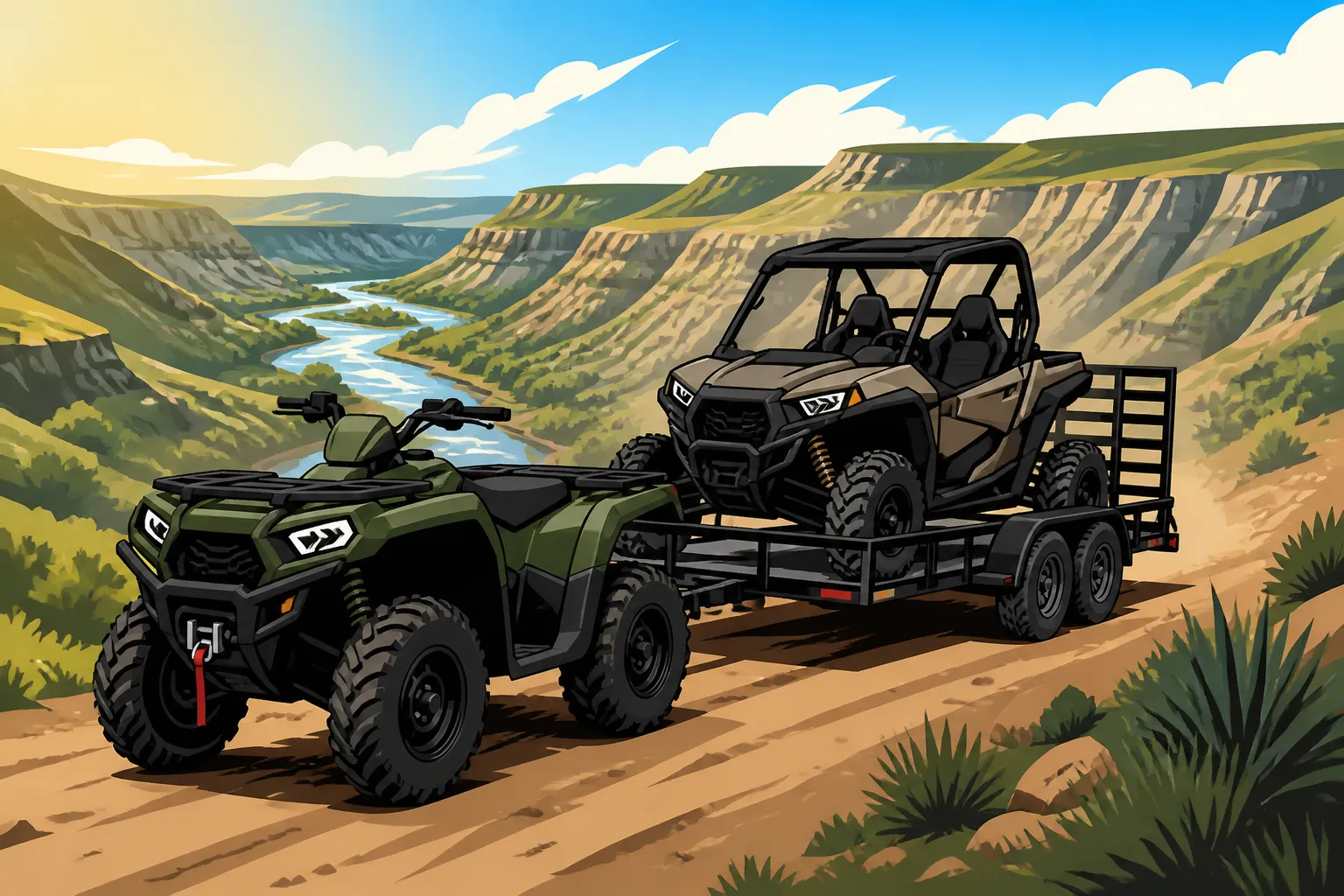
Hauling an ATV or UTV safely demands the right equipment and a rigorous approach to safety checks. First and foremost, you must ensure your trailer is robust enough and rated for the weight and dimensions of your off-highway machine. Overloading a trailer is not only a serious safety hazard but also illegal, and it can significantly strain your towing vehicle and trailer components. Before every trip, perform a thorough inspection: check the condition and inflation of all tires on both your towing vehicle and the trailer, verify that all lights (running, brake, and turn signals) are fully functional, and test the trailer brakes if your setup includes them. A flat tire on a trailer in a remote area, or worse, a brake failure, can quickly turn a fun trip into a stressful ordeal.
Securement of your OHV to the trailer is absolutely paramount. Forget about using flimsy bungee cords; invest in high-quality, load-rated tie-down straps. The best practice is to use at least four points of securement – one at each corner of your OHV – pulling the machine down and slightly outward. This method prevents any lateral or vertical shifting during transit, even over rough roads or sudden stops. An inadequately secured machine can shift, damage itself or the trailer, or, in the worst-case scenario, break loose and become a dangerous projectile on the highway. Imagine hitting an unexpected pothole on I-29 near Grand Forks and having your prized UTV bounce or shift precariously; this is a preventable disaster that proper tie-downs will avert.
Beyond securing the load, your trailer's connectivity and roadworthiness are vital. Ensure that your trailer's safety chains are properly connected and crossed underneath the hitch, serving as a backup in case the primary hitch fails. The hitch itself must be correctly seated and locked onto the tow ball. For longer journeys, or any trip really, it’s a smart move to carry a spare tire for your trailer, along with a jack and wrench compatible with your trailer's lug nuts. This simple preparation can save you hours of waiting for roadside assistance.
| Hauling Method | Pros | Cons | Key Considerations |
|---|---|---|---|
| Open Utility Trailer | Versatile for various loads, easy to load/unload, good ventilation | OHV exposed to weather, road grime, less theft security | Secure tie-downs, potential for weather cover, proper weight distribution |
| Enclosed Trailer | Maximum security against theft/weather, extra storage space | Heavier, more expensive, requires larger tow vehicle, potentially hotter | Adequate ventilation, internal tie-down points, careful weight balance |
| Truck Bed | No separate trailer needed, easier to maneuver, potentially less fuel | Limited to smaller OHVs, potential truck bed damage, higher center of gravity | Proper ramp usage, secure tie-downs, tailgate weight limits, cab clearance |
| Toy Hauler RV | All-in-one transport & accommodation, ultimate convenience | Very expensive, requires heavy-duty tow vehicle, complex maintenance | Significant fuel costs, managing multiple vehicle systems, large footprint |
Navigating North Dakota Roads with an OHV in Tow
When you're pulling a trailer with your OHV through North Dakota, you're operating a larger, heavier, and less nimble vehicle combination. This necessitates a significant adjustment to your normal driving habits. You must allow for considerably greater stopping distances, especially when traveling at highway speeds, in adverse weather conditions, or on unpaved roads. Curves, turns, and highway ramps should be approached at a reduced speed to prevent sway or loss of control. Furthermore, North Dakota's wide-open prairie can experience strong winds, which can profoundly affect your trailer's stability, so be prepared for increased sway and maintain a firm grip on the steering wheel.
While your primary concern is safe highway travel, it's also beneficial to be generally aware of North Dakota's OHV operation laws, even if they don't directly pertain to hauling. For instance, knowing about [North Dakota Ditch Riding: The Legal Right Explained] provides context for local regulations if you ever consider riding off the designated trails once your machine is unloaded. However, for the journey to Pembina Gorge, your focus remains squarely on safe and legal highway transit, ensuring your vehicle and trailer meet all state requirements for lighting, mirrors, and general roadworthiness.
Pembina Gorge is a premier destination, and the drive to get there is an integral part of the adventure. You'll be pleased to find that specific [North Dakota Trailheads With Trailer Parking] are available at the Gorge, making it relatively convenient to unload your machine and begin your ride. As a rule of thumb, always keep an eye out for any local city or county ordinances in the communities you pass through that might affect wide loads or trailer parking, though these are generally less common for standard OHV trailers. The state's Department of Transportation prioritizes safe travel, so ensure your vehicle's mirrors provide ample rear visibility around your trailer and that all trailer lights are functioning perfectly.
Enjoying Pembina Gorge: Pre-Ride Preparations
You've successfully hauled your machine to the beautiful Pembina Gorge, endured the drive, and perhaps even set up camp. Now, with the hard part of transport behind you, it’s time to shift your focus to getting yourself and your machine ready for the incredible riding experience that awaits.
Understanding Pembina Gorge's Specifics
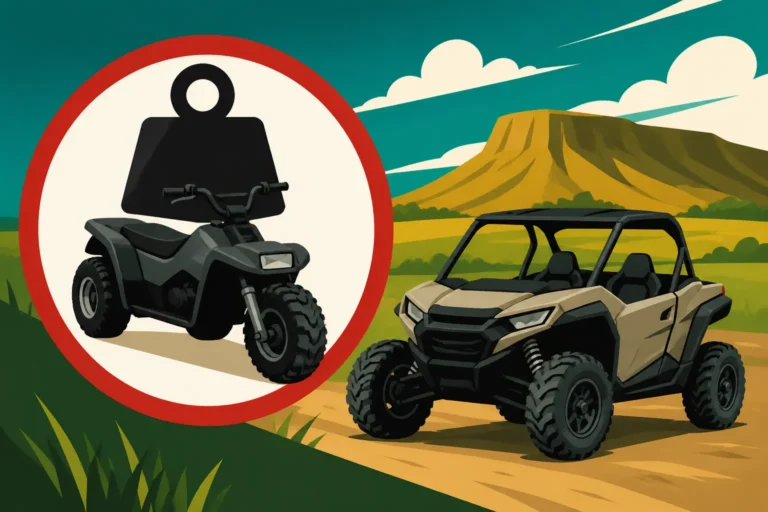
With your OHV safely unloaded from the trailer, you’re on the cusp of experiencing one of North Dakota's truly unique riding areas. Pembina Gorge is indeed [Pembina Gorge: North Dakota's OHV Trail Park], renowned for its stunning, rugged terrain that contrasts sharply with the state's typically flat landscape. The park offers [Pembina Gorge's 16 Miles in North Dakota] of dedicated trails, which, while not an overwhelming mileage total, are celebrated for their significant elevation changes, dense forest sections, and breathtaking scenic vistas. However, a critical point for riders, especially those with larger side-by-sides, is to be acutely aware of the [North Dakota Trails With Width Limits] in place at the Gorge. Many of these trails enforce a strict 60-inch width cap, and exceeding this limit can lead to trail damage or, worse, getting stuck or cited. Ensure your machine fits within these parameters to avoid disappointment.
Before you even think about starting your engine, it’s always prudent to check the current weather forecast and, crucially, the official trail status for Pembina Gorge. Trails, particularly in an environmentally sensitive area like the Gorge, are often subject to closures due to heavy rainfall and muddy conditions. This is done to prevent severe resource damage, erosion, and to maintain rider safety. There’s nothing more deflating than hauling your machine all that way only to find the trails temporarily closed. This region is also a fantastic spot for [North Dakota OHV Camping at Pembina Gorge], so if your trip involves an overnight stay, double-check that your camping reservations are confirmed and that you understand the specific rules for campers with OHVs.
Beyond the exhilaration of the trails, be mindful of the local environment and ecosystem. The Pembina Gorge is a significant natural area, home to unique plant and animal species. Therefore, sticking strictly to marked and designated trails is not merely a rule but a fundamental responsibility for all riders. Adopting "Tread Lightly!" principles is essential to preserving the Gorge’s natural beauty and ensuring it remains a prime riding destination for years to come. While you might use resources like LawDepot for personal legal documents, here you are dealing with land use regulations set forth by state parks and recreation, which require respectful adherence.
Rider Readiness and On-Trail Essentials
Once your machine is prepped and Pembina Gorge's specific rules are understood, the final step is to ensure that you and your riding companions are ready for the adventure. Before anyone even thinks about starting an engine, everyone in your riding party must be properly geared up. Helmets are always a smart choice for any OHV rider, offering crucial head protection. For all riders under the age of 18, helmets are not just recommended, but legally required in North Dakota. Beyond helmets, protective eyewear, sturdy gloves, and durable, over-the-ankle boots are highly recommended to protect against debris, branches, and potential falls. Even if everyone is eager to get going, a quick pre-ride safety briefing with your group, reviewing hand signals and ride plan, can significantly prevent mishaps and ensure everyone is on the same page.
For any off-road excursion, particularly in a potentially remote area like Pembina Gorge, carrying a small, essential toolkit is a non-negotiable item. This kit should include basic repair items such as tire plugs, a portable air compressor (12V models are compact and effective), a multi-tool, and common wrenches that fit your machine. A comprehensive first-aid kit is equally crucial, along with ample supplies of water and high-energy snacks for everyone in your group. It’s important to remember that cell service can be spotty or non-existent in more remote sections of the Gorge, so consider bringing a physical paper map of the trails or a reliable GPS device, especially one that doesn’t rely on cellular data. Also, remember that [North Dakota Insurance Requirements at Registration] are important not just for legal compliance, but for your peace of mind and financial protection in the unlikely event of an accident.
Finally, always remember to ride well within your skill level and the capabilities of your particular machine. The terrain at Pembina Gorge, while beautiful, can be quite challenging, featuring steep climbs, challenging descents, and technical sections. Never ride alone, and always inform someone reliable – a family member, a friend not on the ride, or campground staff – of your planned route, estimated duration, and expected return time. Being thoroughly prepared means you can immerse yourself completely in the incredible experience of riding your OHV amidst the unique landscapes of North Dakota’s Pembina Gorge, making memories that will last a lifetime.
Disclaimer
This article is for general informational purposes only and does not constitute professional advice. Laws, prices and regulations vary by location and change over time. Consult a qualified professional for guidance on your specific situation.