Class II’s Two Width Options
If you're an off-highway vehicle (OHV) enthusiast in North Dakota, you've probably encountered the state's classification system. It’s not always straightforward, especially when you start digging into the specifics of Class II machines. Many riders find themselves scratching their heads over what seems like a simple question: "How wide is my machine, and what does that mean for where I can ride?" The nuances of Class II OHV width can significantly impact everything from registration to trail access, leading to frustration if you don't have a clear understanding. This guide aims to demystify the two distinct width options for North Dakota's Class II off-highway vehicles, ensuring you can confidently navigate the regulations and enjoy your adventures without a hitch.
Decoding North Dakota's OHV Classification System
Before we dive deep into the specific width options for Class II machines, it's really helpful to understand the broader context of North Dakota's OHV classification system. The state doesn't just lump all off-road vehicles into one category; it carefully defines them to ensure safety, manage trail access, and apply appropriate regulations. Getting this right from the start can save you a lot of headaches down the line.
Why Classifications Matter for Riders
You might think, "It's just an ATV, what's the big deal?" But the truth is, the classification of your machine dictates a surprising number of things. It impacts how you register it, what kind of safety equipment you might need, and perhaps most importantly, where you're legally allowed to ride. Imagine planning a big weekend trip to a new trail system, only to find out your machine is technically too wide for the designated paths. Or worse, getting a citation because your vehicle doesn't fit the definition for road use in a particular area. These are real frustrations many riders face. Knowing your machine's class is the first step in ensuring a smooth and enjoyable riding experience, helping you stay on the right side of the law and respecting the guidelines designed for everyone's safety and environmental protection. For a broader overview, you might want to read [North Dakota's Class I, II and III Machines].
A Quick Look at Class I and Class III
To fully appreciate the intricacies of Class II, let's briefly touch on its counterparts. Class I machines are what most people traditionally think of as "ATVs." These are typically designed to be straddled by the operator, are generally under 1,200 pounds, and have three or more wheels. Think of your standard sport quads or utility ATVs. They're built for agility and single-rider (or specific two-up) use. On the other end of the spectrum, Class III machines are the big boys of the OHV world. These are multi-passenger vehicles that look more like small cars, often equipped with a steering wheel and bucket seats, and weigh up to 8,000 pounds. While they share some off-road capabilities, their size and design put them in a different league. Understanding these distinct categories helps frame where Class II fits in—a crucial middle ground that often includes many popular side-by-sides. If you own a larger machine, you might find more information in [North Dakota Class III Machines Under 8,000 Pounds].
The Core of the Matter: Class II's Two Width Options
Now, let's get down to the specifics that often trip up even seasoned riders: the two width definitions for North Dakota's Class II machines. This isn't just a minor detail; it's a critical distinction that can affect how you view and use your side-by-side or UTV in the state. The law carves out specific criteria, particularly for those machines used in certain industries.
The Standard 65-Inch Limit
For most recreational riders, when you hear "Class II OHV," you're likely thinking of a machine that adheres to the standard width limit: not more than 65 inches in width. This definition covers a vast array of popular side-by-sides and UTVs available on the market today. These machines are designed to offer a blend of utility and recreational fun, often featuring bench seating, a steering wheel, and roll-over protection. They are incredibly versatile, perfect for hitting trails, getting around the property, or doing light hauling.
The 65-inch limit is a common standard, often influenced by the design and maintenance of public trail systems. Many trails are built with gates or narrower paths to manage traffic, prevent environmental damage, and ensure rider safety, making a 65-inch width a practical benchmark. When you're considering buying a new side-by-side or registering one you already own, measuring its width—tire sidewall to tire sidewall—is a critical first step to ensure it aligns with this primary Class II definition. Failing to do so could mean an unexpected surprise when you try to access certain trails or complete your registration. For more on the specifics of Class II machines, be sure to check out [North Dakota Class II Width and Weight Limits].
The Wider 80-Inch Alternative for Specific Uses
Here's where it gets a bit more nuanced and where many riders can get confused. North Dakota law provides an alternative width definition for Class II machines that are used for agricultural or commercial purposes. This means a machine can still be classified as a Class II OHV even if its manufacturer's width is not more than 80 inches, provided it meets the specific use criteria. This is a significant distinction and not a blanket allowance for all wider machines.
This broader allowance is largely in place to accommodate the practical needs of farmers, ranchers, and various commercial operations that rely on larger, more capable utility vehicles. These wider machines, often equipped with specialized attachments or designed for heavier loads, are indispensable tools in these industries. Imagine needing to haul feed across a field or navigate tough terrain on a construction site; a wider, more stable platform can be essential. So, while your 72-inch wide sport UTV might not qualify under this wider definition for recreational use, a similar machine employed on a farm for day-to-day operations very well could. It's not about making a choice between widths for your machine, but rather understanding that if your machine is wider than 65 inches, its eligibility as a Class II OHV hinges critically on its intended use. If you're looking into registering a wider side-by-side, especially one for work, [The 65-Inch Class II Alternative] delves into this in more detail.
To clarify these critical differences, here's a breakdown:
| Feature | Standard Class II (Recreational) | Agricultural/Commercial Class II |
|---|---|---|
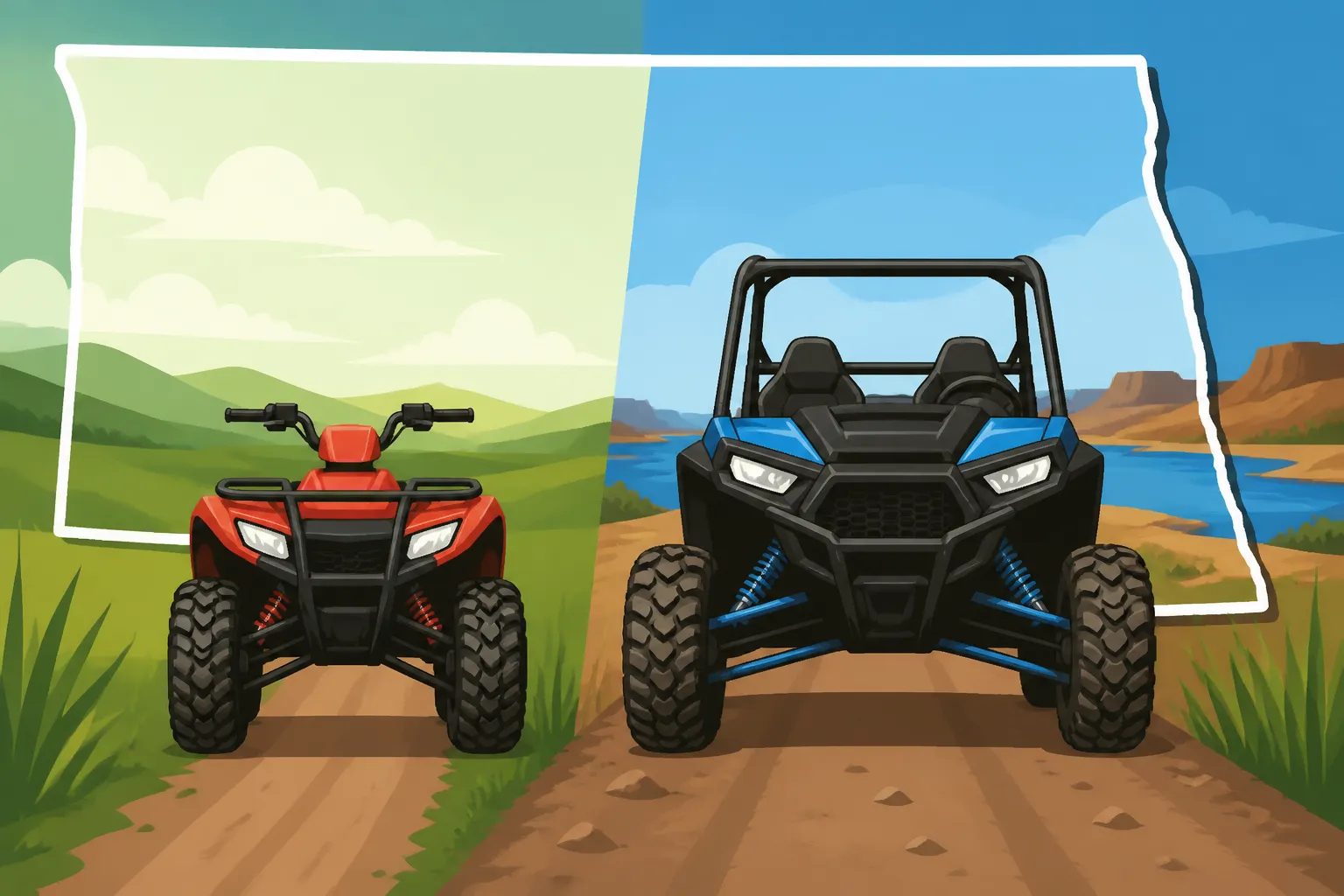
| Maximum Width | Not more than 65 inches | Not more than 80 inches |
| Primary Use Case | Recreational riding, general property use | Agricultural operations, Commercial work |
| Manufacturer's Spec | Typically manufactured under 65 inches | Manufacturer's width up to 80 inches |
| Road Use | General North Dakota OHV road rules apply | General North Dakota OHV road rules apply |
| Trail Access | Generally wider access on designated trails, always check specific trail rules | May face width restrictions on many recreational trails due to physical barriers |
| Registration Impact | No specific width-based registration restrictions beyond the classification | Use-case documentation may be required, but primary registration is as Class II |
Navigating the Regulations with Your Class II OHV
Understanding the two width options is one thing, but applying that knowledge to your real-world riding and ownership experience is another. From measuring your machine to getting it properly registered and knowing where you can legally take it, there are several practical steps to ensure you're always in compliance.
Measuring Your Machine and Verifying Classification
The first, and arguably most important, step is accurately measuring your OHV. Don't just eyeball it or rely solely on what the previous owner told you. Grab a tape measure and physically confirm the maximum width of your machine, from the outermost edge of one tire sidewall to the outermost edge of the other. This measurement is crucial. Once you have that, refer to your owner's manual or the manufacturer's specifications to verify the official "manufacturer's width." This is especially important for those machines hovering near the 65-inch or 80-inch thresholds, or if you're trying to prove your machine fits the wider agricultural/commercial Class II definition.
When you're buying or selling a Class II machine, it's incredibly wise to clearly document its dimensions on a bill of sale. Using a template from a reputable service like LawDepot can ensure you have a professional and legally sound document that covers all the necessary details, including accurate width specifications. This helps avoid any future misunderstandings or disputes about its classification, protecting both the buyer and the seller. An accurate record helps the next owner if they ever need to register the machine or clarify its use.
Registration and Titling Nuances for Class II Machines
Once you've confirmed your machine's width and its appropriate Class II designation, the good news is that the core registration and titling process in North Dakota is generally the same for all Class II OHVs. This means whether your machine is 60 inches wide for recreational use or 78 inches wide for farm work, you'll follow a similar path. You'll need to complete the necessary forms, like the title application [North Dakota Form SFN 2872 Explained], and pay the applicable fees, including excise tax.
However, the importance of correct classification can't be overstated. If you've got a wider machine that you intend to use for agricultural or commercial purposes, be prepared to potentially provide documentation or attest to that specific use during the registration process. While it doesn't fundamentally change the fact that it's a Class II, this detail solidifies its compliance under the 80-inch rule. Incorrectly classifying your machine, either intentionally or by oversight, can lead to registration delays, rejection of your application, or even penalties down the line. Ensuring all your documentation, from the title application to any necessary affidavits or statements of ownership, is correctly completed is crucial. Resources like LawDepot can provide templates for various legal documents, giving you a solid starting point for gathering your paperwork and ensuring consistency. For a complete walkthrough of the process, you can refer to [How to Register an ATV in North Dakota].
Trail Access and Road Riding for Class II OHVs
This is where the rubber meets the road—literally. Your machine's width, even within the Class II designation, significantly impacts where you can and cannot ride. Many public OHV trails in North Dakota, particularly those maintained for recreational use, have explicit width restrictions. It's not uncommon to find gates or narrow sections designed to limit access to machines no wider than 60 or 65 inches. So, if your side-by-side measures 72 inches wide, even if it's legally classified as a Class II for agricultural purposes, it might physically be unable to enter or navigate certain recreational trails. You might find valuable information on this in [North Dakota's 60-Inch Trail Width Cap].
It's absolutely essential to check the specific rules and regulations for any trail system or riding area you plan to visit. Don't assume that just because your machine is registered as a Class II that it automatically has access everywhere. Trail systems like Pembina Gorge, for instance, have defined width limits that apply to all riders.
When it comes to road riding, North Dakota has specific rules for OHVs, which can be explored in [North Dakota ATV Road Rules by Surface Type]. While the general classification as Class II allows for certain road use, the width itself doesn't typically create additional restrictions beyond what's defined for the class. However, a wider machine might require greater caution on narrower public roads and could affect visibility for other motorists, emphasizing the need for responsible and safe operation at all times.
Avoiding Common Pitfalls and Ensuring Compliance
Nobody wants to deal with fines, denied access, or legal hassles when all they want to do is enjoy their off-road machine. Understanding the nuances of Class II width options is your best defense against these frustrations. By being proactive and informed, you can ensure a smooth ownership experience.
The Risk of Misclassification
One of the biggest pitfalls for North Dakota OHV owners is misclassifying their machine or misunderstanding the specific conditions attached to their classification. If your side-by-side is wider than 65 inches and you try to register it as a general recreational Class II without meeting the agricultural or commercial use requirements, you could be setting yourself up for trouble. This could lead to your registration being denied, being ticketed for operating an improperly registered vehicle, or even having your machine impounded. Beyond the legal ramifications, misclassification can simply mean you show up to a trail or riding area only to be turned away because your machine doesn't fit the physical or regulatory criteria. It's a waste of time, effort, and fuel.
Whether you're selling a machine or dealing with a new purchase, accurately stating its classification and intended use on formal documents, perhaps drafted with the assistance of a platform like LawDepot, can protect both buyer and seller. Transparency and accuracy from the beginning can prevent headaches and ensure compliance for everyone involved.
When to Consult the Experts
The world of OHV regulations can be complex, and laws do evolve. While this guide aims to provide clarity, it's always wise to consult official sources for the most current information, especially if you have a unique situation or a machine that falls close to a classification boundary. The North Dakota Department of Transportation (NDDOT) and the North Dakota Parks and Recreation Department are your primary official resources. Their websites often have detailed FAQs, downloadable pamphlets, and contact information for specific questions.
Don't hesitate to reach out to a local OHV dealer, as they are often very knowledgeable about current regulations and can offer practical advice based on their experience with various models. If you have specific legal questions or need to draft formal agreements related to your OHV (like a co-ownership agreement or a lease if you're using it for commercial purposes), online legal document providers like LawDepot offer customizable templates that can help you structure these arrangements legally and clearly. Taking the time to get clarification now can save you significant time, money, and stress in the future, ensuring your Class II OHV adventures are always fun and compliant.
Disclaimer
This article is for general informational purposes only and does not constitute professional advice. Laws, prices and regulations vary by location and change over time. Consult a qualified professional for guidance on your specific situation.