Buying From a Private Seller in North Dakota
Buying an ATV or UTV from a private seller in North Dakota can feel like a maze, especially when you're trying to snag a good deal without the dealership overhead, but you're not sure what paperwork you actually need to protect yourself. This guide is here to untangle the whole process, walking you through everything from verifying ownership and inspecting the machine to handling payment and getting your new-to-you off-highway vehicle legally titled and registered in your name.
Understanding the Paperwork You'll Need
When you're looking at a sweet deal on a quad or side-by-side from a private seller, the excitement can sometimes overshadow the crucial step of making sure all the legal ducks are in a row. Skipping steps here can lead to big headaches down the road, so let's break down the essential documents you need to secure your purchase.
The Bill of Sale: Your Foundation
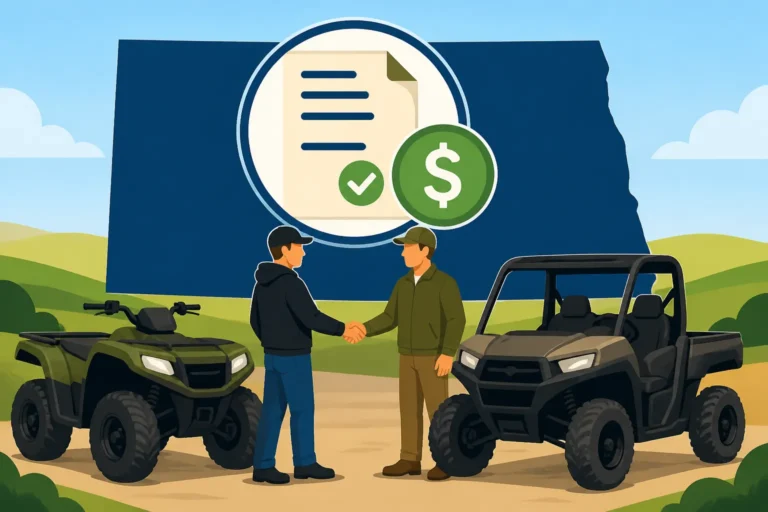
Think of the bill of sale as your receipt and your first line of defense. It's proof that a transaction occurred, detailing who sold what to whom, for how much, and when. This isn't just a handshake agreement; it's a legally binding document that protects both you and the seller. It should always include the full legal names and addresses of both the buyer and the seller, a detailed description of the ATV or UTV (make, model, year, color, and most importantly, the Vehicle Identification Number or VIN), the purchase price, and the date of sale. Both parties absolutely need to sign it, and you each should keep an original copy.
Many people wonder if a bill of sale needs to be notarized. In North Dakota, for an OHV sale between private parties, notarization of the bill of sale isn't strictly mandated by state law for titling purposes. However, it's often a really good idea, especially for higher-value machines. A notary simply verifies the identities of the signers, adding an extra layer of authenticity and preventing disputes later on. If you want to be extra careful, bringing a notary to the signing or meeting at a bank where notary services are available can offer peace of mind. You can find robust templates for a bill of sale from resources like LawDepot, ensuring you cover all the necessary information. Having a complete and accurate [North Dakota Bill of Sale Form SFN 2888] is your best bet for a smooth transaction.
The Existing Title: The Key to Ownership Transfer
This is arguably the most critical document in a private sale. The title is the legal proof of ownership. If the seller doesn't have a clean, clear title in their name, or can't produce one, that should be a massive red flag. A clean title means there are no liens against the machine – like a bank still owning a portion of it from a loan. Always inspect the title carefully. Look for the seller's name matching the name on the title, any previous lienholders marked as "released," and ensure the VIN on the title matches the VIN on the machine perfectly. Even one digit off could mean you're looking at a completely different vehicle or a fraudulent sale.
If there's no title, you're venturing into risky territory. While it might be possible to get a [North Dakota Registration Without a Title] under certain circumstances, it's a complex process that often involves proving prior ownership, getting a surety bond, or waiting for a long period. This usually means the machine's history is murky, or it was never legally titled in the first place, which is a major red flag for a private sale. It's generally best to walk away from a deal where a clear title cannot be produced. Once you've verified the title, the seller will sign it over to you, transferring legal ownership. You typically have [North Dakota Ownership Transfer in 15 Days] to complete your part of the titling process with the Department of Transportation (DOT).
Statement of Ownership and Other Supporting Docs
In some less common scenarios, particularly if the title has been lost, damaged, or if the machine is very old and perhaps predates titling requirements, the state might require a [North Dakota Statement of Ownership Form SFN 2903]. This form essentially declares who owns the vehicle and explains why a traditional title isn't available. It's not a substitute for a title, but a supporting document that helps the DOT understand the chain of ownership. This can happen with very old machines or if you're buying something that was never officially tracked through the system, though these situations are rare for newer ATVs and UTVs.
As the buyer, you'll also need to provide proof of North Dakota residency when you go to title and register the machine. This could be your North Dakota driver's license or another official document showing your address. Before you even agree to purchase, it's a smart move to perform some due diligence. You can use the VIN to request a vehicle information report from the North Dakota DOT. This can tell you if the machine has ever been reported stolen, if there are any active liens, or if there are other red flags that the seller might not disclose. Understanding [What a Vehicle Information Request Tells a Buyer] can save you from a costly mistake.
| Document | Purpose | Buyer's Action Needed |
|---|---|---|
| Bill of Sale | Proof of purchase, details transaction, protects buyer/seller. | Ensure all details are accurate, signed by both, retain original. |
| Existing Title | Legal proof of ownership, confirms no liens, shows VIN. | Verify seller's name, check for liens, confirm VIN match, get signed over. |
| Statement of Ownership | Required in specific cases (e.g., lost title, older machines) to explain ownership history. | Provide if requested by DOT, usually in conjunction with other docs. |
| Proof of Residency | Verifies you live in North Dakota for titling and registration. | Have your ND driver's license or other valid proof ready. |
| Vehicle Info Request | Uncovers stolen status, liens, or other issues not disclosed by seller. | Strongly recommended pre-purchase to verify machine history. |
Navigating Payment and Financial Considerations
Once you've confirmed the machine's identity and reviewed the paperwork, the next big hurdle is the financial side of things. It's not just about agreeing on a price; you also have to factor in taxes and ensure a secure transaction for everyone involved.
Agreeing on a Price and Proving Fair Market Value
This is where your negotiation skills come into play. Before you even start talking numbers, do your homework. Look at comparable ATVs and UTVs for sale in North Dakota and surrounding states. Factor in the machine's age, condition, mileage/hours, and any aftermarket accessories. Knowing the fair market value is crucial, not just for negotiation, but also for understanding your tax obligations. When you register your privately purchased OHV, the state will assess [North Dakota Excise Tax on a Private Sale]. This tax is typically based on the agreed-upon purchase price, but the state has the right to assess it based on their determination of the machine's fair market value if they believe the sale price is significantly undervalued.
So, if you agree to a suspiciously low price with a private seller, be prepared for the North Dakota DOT to question it. They want to ensure they collect the correct amount of the [North Dakota's 5 Percent Motor Vehicle Excise Tax]. If the price on your bill of sale seems too low, they might ask you to provide proof of value, which could mean getting [Proving Fair Market Value With a Dealer Appraisal] even for a private sale. It's a bit of a wrinkle, but it ensures fairness and prevents people from dodging taxes by simply putting a nominal value on the bill of sale. Remember, while you might not pay local sales tax on an OHV purchase, you will pay the state excise tax. For more clarity on this distinction, you can read up on [North Dakota Sales Tax Versus Excise Tax].
The Excise Tax: Don't Forget It!
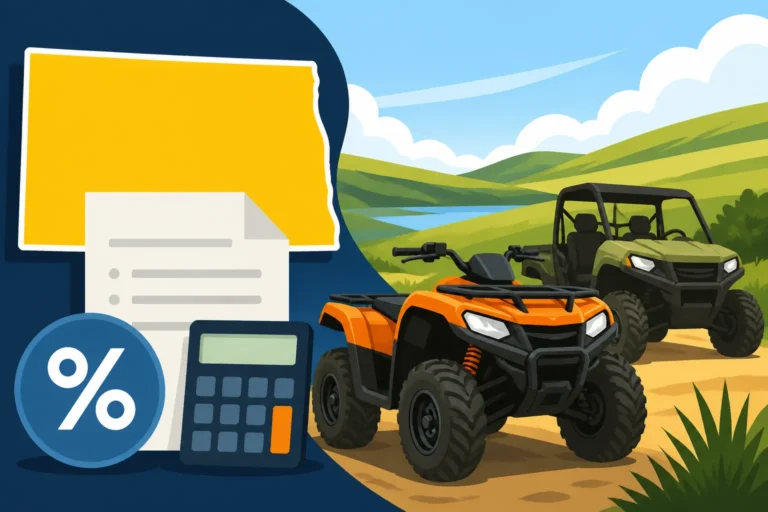
Let's clear this up: just because you're buying from your neighbor instead of a dealership, it doesn't mean you get out of paying taxes. North Dakota charges a 5 percent motor vehicle excise tax on the purchase of all ATVs and UTVs, whether new or used, and whether from a dealer or a private seller. This tax is collected when you title the machine in your name at a motor vehicle branch office. It's essential to budget for this when you're calculating your total out-the-door cost for your new ride.
For example, if you buy a side-by-side for $8,000 from a private seller, you'll owe $400 in excise tax when you go to title it. This is in addition to the titling fee and registration costs. Many buyers forget about this and are surprised by the extra cost at the DOT office. So, when you're haggling over the price, remember that you'll have an additional 5 percent on top of that amount. The excise tax is a one-time fee paid at the time of titling.
Safe Payment Methods for Both Parties
When it comes to the actual exchange of money, safety is paramount for both buyer and seller. Carrying a large amount of cash can be risky, and a personal check might bounce. Here are some common methods:
- Cash: It's instant and untraceable, which some people prefer. However, it's risky to carry large sums, and you'll need to confirm the authenticity of the bills. If you choose cash, meet at a secure location, like a bank, where you can withdraw the money and potentially even complete the transaction inside.
- Cashier's Check/Certified Check: These are generally safer than personal checks as they are drawn against the bank's own funds. However, counterfeit cashier's checks are a common scam. The best practice is for the buyer to obtain the check from their bank and for both parties to go to the seller's bank to verify the check's legitimacy before the seller releases the machine and title.
- Bank Transfer/Wire Transfer: This can be a secure option as funds move directly between accounts. However, wire transfers are irreversible, so ensure all conditions of the sale are met before initiating the transfer. Many people find meeting at their respective banks to be the safest way to handle this.
Always prioritize your safety. Meet in a public place during daylight hours, ideally with a friend or family member. Never feel rushed or pressured into a payment method you're uncomfortable with.
Inspecting the Machine and Completing the Sale
You've got the paperwork sorted, the money planned out, now it's time to make sure the machine itself is everything it's cracked up to be, and then officially seal the deal.
Thorough Pre-Purchase Inspection
This step is non-negotiable. Don't let the seller rush you. A comprehensive inspection can uncover hidden problems that could cost you hundreds or thousands down the line. Here’s a checklist:
- Fluids: Check engine oil, coolant, and brake fluid levels. Look for leaks around seals and hoses.
- Tires: Inspect tread depth, sidewall condition, and overall wear. Uneven wear can indicate alignment issues.
- Frame and Suspension: Look for cracks, bends, or repairs, especially in critical areas. Check shocks and springs for leaks or damage. Bounce the machine – does it feel solid or loose?
- Engine: Listen for unusual noises during startup and idle. Check for excessive smoke from the exhaust (blue, black, or white smoke can indicate problems).
- Brakes: Test both front and rear brakes. Do they feel firm? Is there enough pad material?
- Electrical: Test lights, horn, winches, and any other accessories.
- Test Ride: If the seller allows, take it for a short, gentle ride. Listen for transmission issues, feel for steering play, and assess overall performance. Note any vibrations or strange noises.
Crucially, always match the VIN on the machine to the VIN on the title and bill of sale. This sounds obvious, but in the excitement, it can be overlooked. The VIN is usually stamped on the frame in an easily visible spot. This ensures you're buying the exact machine legally represented by the title. The North Dakota DOT also has [North Dakota VIN Inspection Requirements] for certain titling situations, so it's good to be familiar with that. Finally, do a quick online search for any recalls related to the make and model. You might uncover known issues that aren't apparent during a visual inspection.
Post-Sale Registration and Titling for the Buyer
Once the sale is complete, the ball is now in your court to get the machine legally transferred and ready to ride. As the new owner, you are responsible for titling and registering the OHV with the North Dakota DOT. You'll head to your nearest motor vehicle branch office with the signed-over title, the bill of sale, your proof of North Dakota residency, and payment for the applicable fees and taxes.
The process of [How to Register an ATV in North Dakota] involves submitting the necessary forms, paying the [North Dakota OHV Registration Cost] (which includes the trail tax), and the [North Dakota Title Fee of $5]. Remember that North Dakota uses a [North Dakota's Two-Year OHV Registration] cycle, so your registration will be valid for two years from the date it's issued. The DOT clerk will process your paperwork, collect the 5 percent excise tax you've budgeted for, and issue you a temporary registration. Your new title and permanent registration decal/plate will typically arrive in the mail a few weeks later.
What to Do with the Old Plate or Decal
This is a common question for both buyers and sellers. When you purchase an OHV from a private seller in North Dakota, the seller retains their old registration plate or decal. It does not transfer with the machine to you. You, as the new owner, will be issued a brand new registration decal or plate when you complete the registration process. The seller can either dispose of their old decal/plate or, if they purchase a new OHV later, they might be able to transfer the old registration to a new machine, though it's typically easier to get a new one. Knowing [What Happens to the Seller's Plate or Decal] prevents confusion and ensures both parties handle the registration details correctly.
Disclaimer
This article is for general informational purposes only and does not constitute professional advice. Laws, prices and regulations vary by location and change over time. Consult a qualified professional for guidance on your specific situation.