Crossing an Approach Safely
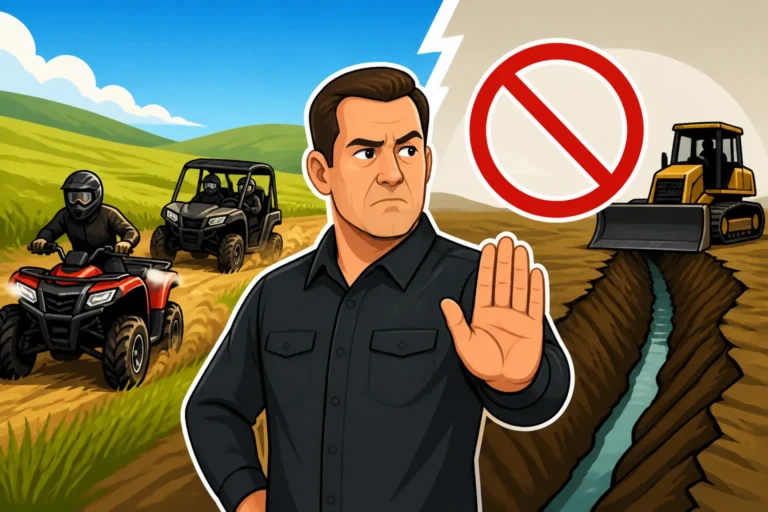
We've all been there: enjoying a peaceful ride along a North Dakota ditch bottom or section line, feeling the freedom of the prairie, only to come face-to-face with an approach. These unassuming cuts in the landscape, whether for a farm field or a private driveway, can instantly turn a relaxed cruise into a moment of anxiety. They interrupt your flow, demand your full attention, and frankly, can be downright hazardous if not navigated correctly. This guide is all about helping you master the art of safely crossing those tricky approaches, ensuring your North Dakota OHV adventures remain fun and free from unnecessary stress.
Understanding the "Approach" in North Dakota Riding
When you're out on your quad or side-by-side exploring North Dakota's vast landscapes, you're bound to encounter a myriad of different terrains. From open fields to gravel roads, the experience is ever-changing. But one consistent interruption to continuous ditch riding is the "approach." This isn't just a simple dip; it's a specific feature that demands respect and a strategic approach (pun intended!). Understanding what these are, and why they're challenging, is the first step to safer riding.
What Exactly Is an Approach?
In North Dakota, an "approach" refers to the graded access point that connects private property (like a farm field, a homestead, or even a local business) to a public road or highway. Think of it as a driveway, but often less formal and specifically designed to bridge the gap between private land and the public right-of-way. They can be made of anything from packed earth and gravel to concrete or even rough-cut asphalt, depending on their purpose and how heavily they're used. You'll find them constantly breaking up the ditches you might be legally riding, presenting a continuous series of transitions.
Legally, these approaches generally fall within the public right-of-way, but their primary function is for private access. This dual nature is what makes them so unique. While you might be enjoying your ride legally in the ditch, the approach itself acts as a gateway where private and public traffic can intersect. It's not just a change in terrain; it's a potential intersection point you need to be acutely aware of every single time you encounter one. Recognizing this distinction is crucial for understanding the rules of engagement.
Why Approaches Pose a Unique Challenge for OHV Riders
Riding in the ditch is one thing, but crossing an approach adds several layers of complexity. For starters, visibility can be severely limited. Tall crops in the summer, snowdrifts in the winter, dense brush, or even the natural topography of a rolling prairie can obscure your view of oncoming traffic or vehicles exiting the approach. You might be tucked down in a ditch, giving you a very different perspective than someone in a car on the main road. This reduced sightline means you can't rely solely on a quick glance, and it's a primary reason why accidents occur.
Another major challenge is the potential for unexpected vehicle traffic. While you might be legally riding the ditch, the vehicles using the approach might not expect an OHV to suddenly appear. Farmers pulling out with large equipment, delivery trucks accessing a property, or even a family car heading home – they all represent a collision risk. These vehicles might be moving slowly, but their size and momentum far outweigh your OHV's. The sudden change in terrain, from soft ditch bottom to hard gravel or pavement, also demands a quick adjustment from you and your machine, which can throw off your balance or traction if you're not prepared.
Many riders, especially those new to North Dakota's unique rules, often underestimate the sudden need to shift gears mentally and physically. You're transitioning from a "trail riding" mindset to a "road crossing" mindset in a matter of seconds. This shift requires immediate assessment of your surroundings, potential hazards, and the appropriate action to take. It's a key reason why staying vigilant is paramount, and why this guide exists. If you're looking for more general info on where you can legally ride, check out [North Dakota Ditch Riding: The Legal Right Explained].
Essential Safety Protocols Before You Cross
Preparation is key when you’re out on the trails, and it’s absolutely non-negotiable when it comes to approaches. It's not enough to just see the approach; you need a ritual, a set of actions that you perform every single time, without fail. This isn't about being overly cautious; it's about being proactively safe and understanding the risks.
The "Stop, Look, and Listen" for OHV Riders
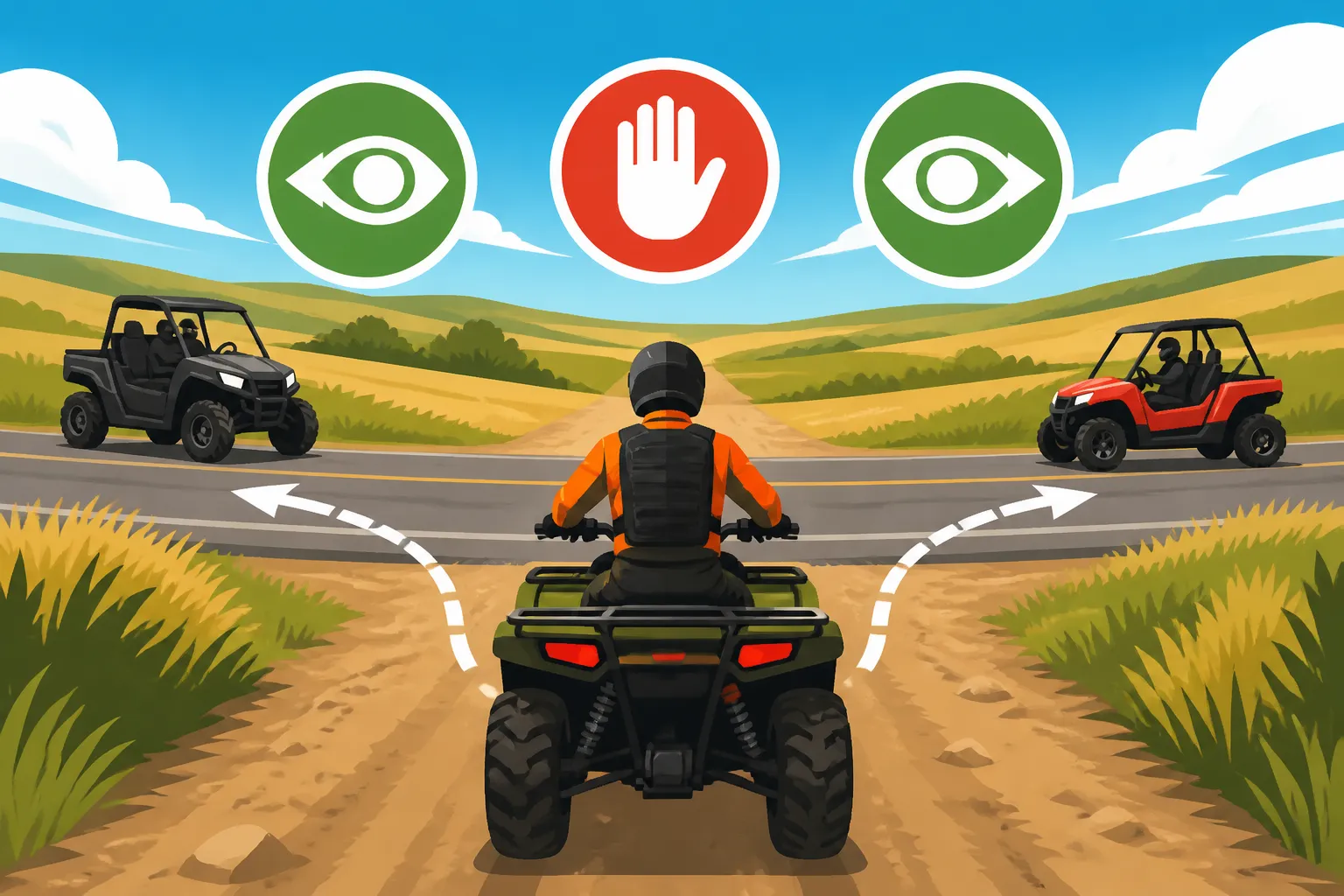
You probably learned "stop, look, and listen" as a kid before crossing the street, and it's even more vital for OHV riders at approaches. First and foremost, always come to a complete stop. I know, I know, it feels like it breaks your rhythm, but rushing an approach is an open invitation for trouble. A rolling stop just isn't sufficient when your life could be on the line. Plant your feet, bring your machine to a full halt, and take a breath. This gives you the precious seconds needed to properly assess the situation.
Once stopped, truly look for traffic from both directions on the main road. Your position in the ditch might limit your view, so you might need to lean forward, lean back, or even briefly stand on your machine to get a clear line of sight around any obstructions. Pay attention to not just the immediate road, but also farther down for faster-moving vehicles. Don't forget to glance at the approach itself – is there a car waiting to pull out? Is there a semi truck backing into a field? And finally, listen. Turn off your radio if you have one, take off one earbud, or even turn off your engine for a moment. Modern vehicles can be surprisingly quiet, and large farm equipment might be approaching from a field, not the road. Wind can also play tricks on your ears, so be extra diligent. For an understanding of what's expected for lights on your machine, read up on [North Dakota Headlamp Distance Standards] and remember that visibility is a year-round concern, especially if you find yourself out as the sun sets, as detailed in [North Dakota Night Travel Direction Rule].
Signaling Your Intent and Communicating with Others
Even if specific hand signals aren't legally mandated for OHVs in North Dakota (they often aren't in the same way they are for cars), it's a smart practice to use them. If you see a vehicle approaching, extend your arm to indicate you're waiting or planning to cross. Make eye contact with drivers whenever possible – it's a universal sign of acknowledgment and helps ensure they've seen you. Don't assume they have; actively seek that visual confirmation. If a vehicle is waiting to turn onto or exit the approach you're about to cross, give them a clear signal that you see them and will either wait or proceed cautiously. This simple act of communication can prevent misunderstandings and potential accidents.
Proper lighting on your OHV is also a huge contributor to your visibility, not just for you to see, but for others to see you. This is especially true near dawn, dusk, or in adverse weather conditions like fog or blowing snow. Make sure your headlights and taillights are clean and functioning. If you have auxiliary lighting, consider using it. Some riders even add reflective tape to their helmets or machines for extra passive visibility. Think about how you would want a driver to see you – and make yourself as noticeable as possible. Your goal is to be seen, understood, and to minimize any ambiguity about your intentions. Having the right mirrors can also make a big difference, so take a look at [North Dakota Mirror and Horn Requirements].
Executing the Safe Crossing Maneuver
Once you've stopped, looked, and listened, and confirmed the coast is clear, it's time to actually cross the approach. This isn't a drag race or an obstacle course. It's a calculated, deliberate action that requires control and a steady hand. The type of surface you're crossing and how you manage your machine will determine the safety and success of your maneuver.
Navigating Different Approach Surfaces
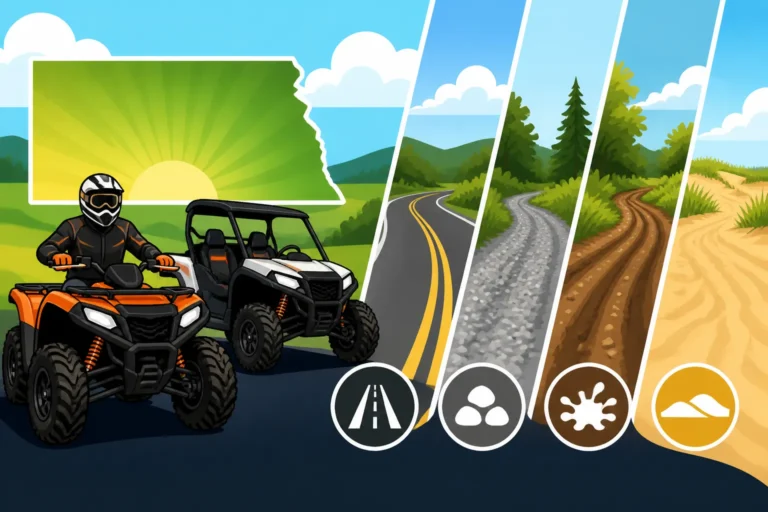
North Dakota approaches are rarely uniform. You might encounter loose gravel, packed dirt, smooth concrete, or even a muddy rutted mess. Each of these surfaces demands a different approach (again, pun intended!). On loose gravel approaches, reduce your speed even further and avoid sudden steering inputs or aggressive braking. The front tires can easily wash out, especially on a steep incline or decline. Smooth, consistent throttle and steering are your friends here. Dust can also be an issue, so if you're riding with a group, give plenty of space between riders.
Paved or concrete approaches, while offering more grip, present their own challenges. The sudden change from soft earth or gravel to a hard surface can feel jarring. Watch out for oil slicks or spilled fuel, especially near farm entrances, as these can make the surface incredibly slick. If the approach is steep, maintain a stable body position to prevent lifting a wheel or tipping. And finally, the infamous muddy or wet approaches: these require extreme caution. Slow way down, engage four-wheel drive if your machine has it, and try to pick the path of least resistance, avoiding the deepest ruts. Your tires are crucial here; an aggressive tread pattern from a brand like SuperATV can make a world of difference in maintaining traction and preventing you from getting stuck. Sometimes, the best strategy is to avoid crossing a particularly nasty muddy approach altogether if there's an alternative or if you're not confident in your machine's or your own ability.
Speed, Gear, and Body Position for Control
When crossing an approach, slow and steady truly wins the race. You want to maintain a speed that allows you to react to any unexpected changes in terrain or sudden appearance of a vehicle. This usually means a controlled crawl, not a sprint. Select a low gear that provides ample torque and engine braking. This gives you fine control over your speed without having to rely heavily on your brakes, which can be unpredictable on varied surfaces. You don't want to be caught in too high a gear, bogging down, or too low, revving uncontrollably.
Your body position is equally important. Stay centered and prepared to shift your weight. If you're going up a steep approach, lean forward to keep weight on the front wheels. If you're descending, lean back. On side slopes or uneven ground, lean into the uphill side to maintain balance. Avoid sudden turns or abrupt throttle changes while you're actually on the approach. You want a smooth, continuous motion across the hazard. Think of it as a carefully choreographed dance with your machine, minimizing any jerky movements that could upset your balance or traction. And speaking of roads, don't forget the general rules for [North Dakota ATV Road Rules by Surface Type] to keep you informed.
What to Do If Things Go Wrong (and How to Avoid It)
Even the most experienced riders can find themselves in a pickle. The unpredictable nature of off-road riding, coupled with the potential for human error or mechanical issues, means you need a plan for when things don't go exactly as expected. Being prepared for these scenarios is just as important as knowing how to execute a perfect crossing.
Common Mistakes and How to Prevent Them
One of the most common mistakes is rushing the crossing. It's easy to get impatient, especially if you're on a long ditch ride and approaches seem to pop up every quarter-mile. But giving in to that urge is a huge risk. Always adhere to your stop, look, and listen protocol, no matter how much you want to "just get it over with." Another pitfall is assuming right-of-way. Even if you're technically allowed to be there, never assume that a driver in a car or truck sees you or will yield. Always assume they don't see you and act accordingly. Your safety is not worth proving a point about right-of-way.
Target fixation is a powerful and dangerous psychological phenomenon where you inadvertently steer towards an obstacle you're trying to avoid. Instead of focusing on the pothole or the steep edge of an approach, focus on the safe path you want to take around or through it. Look where you want to go. Finally, never ride beyond your skill level or your machine's capabilities, especially when approaching these tricky spots. If an approach looks too steep, too muddy, or too treacherous, it probably is. There's no shame in turning around or finding an alternate route. Remember, a safe ride home is always the best ride. Also, avoid riding under the influence; if you need a reminder, consult [North Dakota DUI Rules for OHV Riders].
Dealing with Unexpected Situations
Despite all your precautions, sometimes things just happen. What if a vehicle suddenly appears as you're halfway across an approach? Your first reaction should be to brake safely and predictably, steering away from the approaching vehicle if there's a clear path. Don't swerve wildly; try to maintain control. If you have to bail, do it safely, away from traffic. It’s a split-second decision, but knowing you might have to make it mentally prepares you.
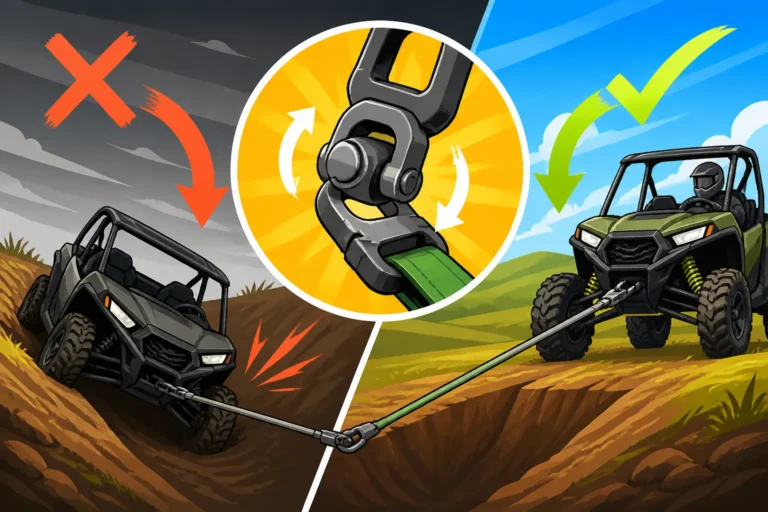
Getting stuck on an approach, particularly a muddy or steep one, is frustrating but manageable. First, ensure you're visible to any oncoming traffic. If possible, have a spotter to warn others. Safely dismount your machine, assess the situation, and if you have a winch (a wise investment, perhaps from SuperATV), use it. If not, you might need to try and dig yourself out or get help. Always carry basic recovery gear like a tow strap and a small shovel. If your machine breaks down on an approach, push it to a safe, visible location immediately, and signal for help. Having the right safety gear, as outlined in [North Dakota Equipment Required on a Roadway], is essential not just for riding, but for these unexpected moments. You can also refer to [North Dakota Rules for Crossing a Highway] for general guidance on crossing major thoroughfares.
| Approach Type | Typical Surface | Key Challenge | Crossing Strategy |
|---|---|---|---|
| Farm/Field | Gravel, Dirt, Mud | Large equipment, ruts, dust | Slow, low gear, wide turn radius for large vehicles. Watch for field access. |
| Private Drive | Gravel, Paved | Residential traffic, mailboxes, children | Stop, look, listen extra carefully. Assume unseen vehicles. |
| Culvert/Bridge | Concrete, Metal | Slippery when wet, narrow, sudden drop/rise | Controlled speed, avoid sudden braking, maintain straight line. |
| Undulating/Blind | Dirt, Grass | Poor visibility over crests, hidden dips | Extreme caution, approach slowly, be prepared to stop instantly. |
Disclaimer
This article is for general informational purposes only and does not constitute professional advice. Laws, prices and regulations vary by location and change over time. Consult a qualified professional for guidance on your specific situation.