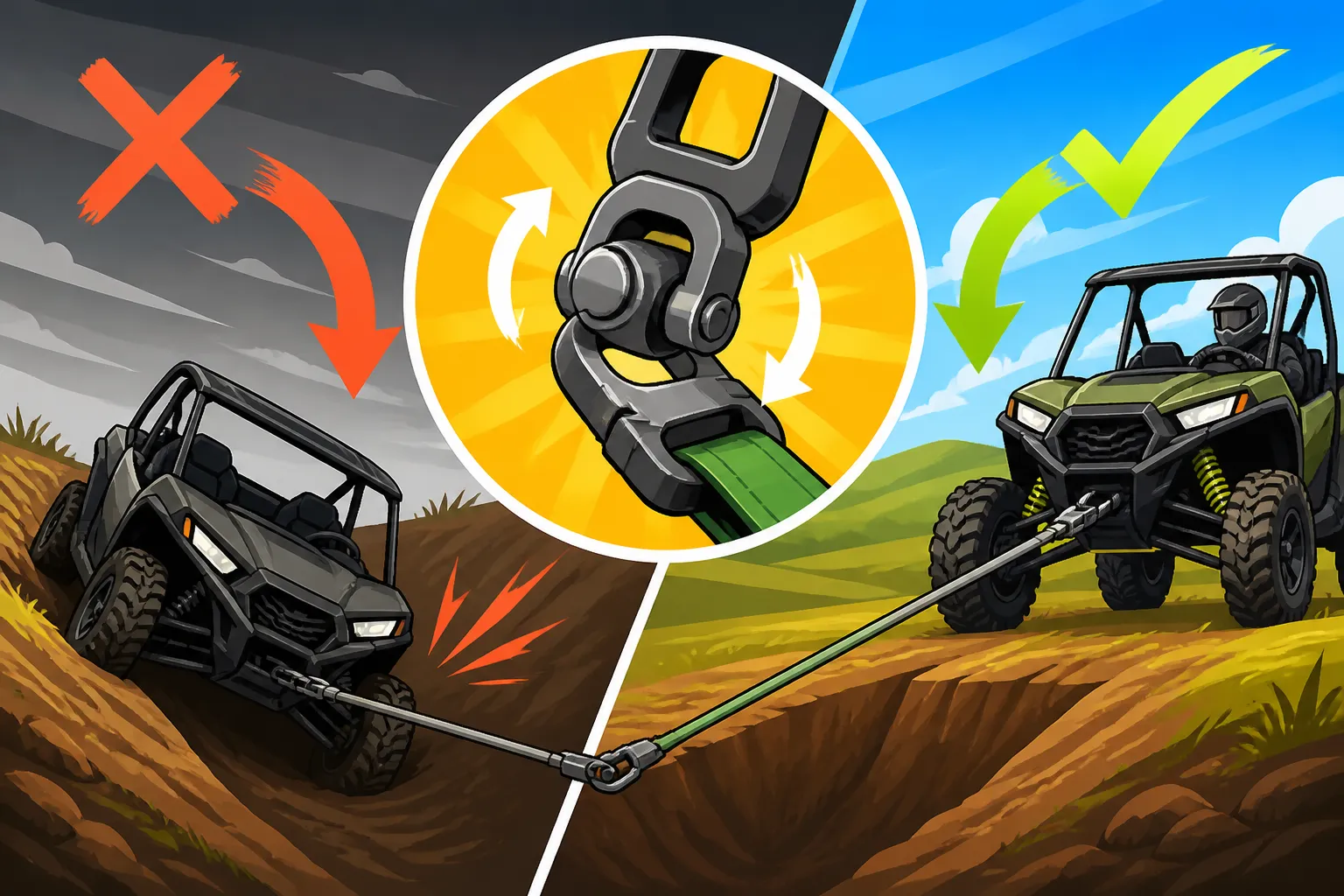
Why Towing in a Ditch Needs a Hinged Swivel
It's happened to the best of us: you're out on a beautiful North Dakota day, enjoying some time on your ATV or UTV, and suddenly, a mechanical issue or an unfortunate run-in with some deep mud leaves you stranded. Your buddy comes along to pull you out, but trying to tow a disabled machine, especially in the uneven terrain of a ditch, can quickly turn a bad situation into a dangerous one. This guide will walk you through exactly why a hinged swivel hitch isn't just a convenience, but a critical piece of equipment for safe and effective towing in North Dakota's unique off-road environments.
The Unique Challenges of Ditch Towing in North Dakota
Riding an ATV or UTV in North Dakota often means navigating varied and unpredictable terrain, and nowhere is this more true than when you're in a ditch. What might look like a smooth path from a distance can quickly reveal itself to be a gauntlet of bumps, dips, and soft spots.
Understanding North Dakota's Ditch Environment
North Dakota ditches aren't uniform. They can range from relatively flat, grassy areas alongside fields to deep, rutted gulleys filled with hidden rocks, sudden changes in elevation, and patches of thick, clinging mud. These aren't manicured trails; they're dynamic environments that change with the seasons, the weather, and agricultural activity. Imagine trying to pull a heavy UTV through a section that's got a drainage culvert, a hidden field approach, and a patch of gumbo mud all within a few hundred feet. The ground beneath your tires is constantly shifting, and the angles change dramatically with every foot.
Because of this constant variability, the forces exerted on a towing setup can be extreme. One moment you're going over a small hump, the next you're dropping into a depression, and the towed machine might be experiencing something completely different at the same time. This kind of independent movement creates significant challenges for any rigid connection between two vehicles. It's why understanding the nuances of [North Dakota Ditch Riding: The Legal Right Explained] also means understanding the physical realities of the ground you're on.
The conditions might be dry and dusty in late summer, but after a spring thaw or a heavy rain, those same ditches can become treacherous with sticky, heavy mud that grabs at tires and makes forward progress a struggle. The constant battle against traction loss and unexpected obstacles means that both the tow vehicle and the disabled machine are under immense stress, demanding a towing solution that can adapt to these rapid changes without jeopardizing stability.
Why Standard Towing Methods Fall Short
When you use a standard, fixed tow bar or a conventional ball hitch to pull an ATV or UTV in the ditch, you're essentially creating one long, rigid unit out of two separate machines. On a flat, paved surface, this might work fine. However, in an off-road ditch environment, this rigidity becomes a major liability. There's no allowance for the independent up-and-down or side-to-side movement that each machine needs as it navigates the uneven ground.
Consider a scenario where the tow vehicle hits a dip while the towed machine is still on an incline. A rigid connection will immediately create immense torsional stress on both hitches and frames. This can lead to bent receiver hitches, damaged frames, or even worse, it can leverage the tow vehicle in a way that causes it to lose traction, tip, or become unstable. It's like trying to walk on stilts across a rocky creek bed – any misalignment can cause a dramatic and sudden loss of balance.
The lack of independent articulation also severely limits maneuverability. If you need to make a sharp turn to avoid an obstacle or follow the contour of the ditch, a rigid connection will force the towed machine into unnatural angles, often leading to it dragging sideways or putting dangerous side load on its tires and suspension. This not only makes steering incredibly difficult for the tow vehicle but significantly increases the risk of jackknifing, where the towed machine swings wildly to the side, potentially colliding with the tow vehicle or other obstacles. This is why a simple rope or chain often becomes a tangled, dangerous mess in these situations.
The Mechanics and Benefits of a Hinged Swivel Hitch
Thankfully, there's a piece of equipment designed specifically to tackle these challenges: the hinged swivel hitch. It fundamentally changes the dynamic of towing in difficult terrain, making the process much safer and more efficient.
How a Hinged Swivel Works
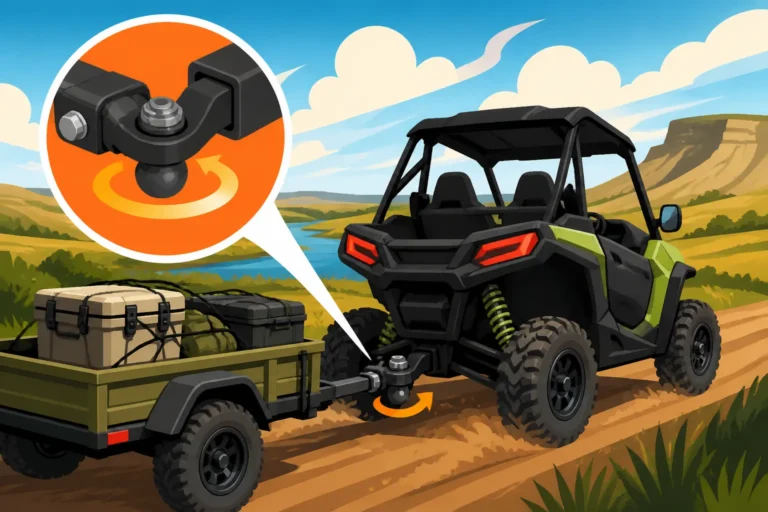
A hinged swivel hitch, at its core, is a towing device that incorporates a pivot point (or multiple pivot points) designed to allow independent vertical and, in some cases, horizontal articulation between the towing vehicle and the towed machine. Think of it like a flexible joint. Instead of a solid, unyielding bar, the swivel allows the connection to flex and adapt to the different angles and movements of each vehicle. If your tow rig goes over a mound and your disabled UTV is still in a rut, the swivel allows that difference in height and angle to be absorbed and distributed, rather than rigidly transferred.
Typically, these hitches are robustly constructed from heavy-duty steel, featuring strong pins and a well-engineered pivot mechanism. This design ensures that while the connection remains secure, it can freely move up, down, and sometimes side-to-side, preventing the direct transfer of jarring forces. It essentially creates a buffer zone, isolating the machines from each other's violent movements, protecting both their frames and their occupants.
Many high-quality hinged swivel hitches are built with the rigors of off-road use in mind. Brands like SuperATV, for instance, are known for producing heavy-duty accessories that can stand up to the abuse of rough terrain, often featuring reinforced pivot points and durable finishes to resist corrosion and wear. When you're dealing with the demanding conditions of a North Dakota ditch, you need equipment that won't fail under pressure, and a well-designed hinged swivel provides that crucial reliability.
Enhanced Safety and Control
The primary benefit of a hinged swivel hitch in ditch towing is the dramatic increase in safety and control. By allowing independent movement, the swivel drastically reduces the risk of rollovers and jackknifing that are so common with rigid towing setups in uneven terrain. As the tow vehicle traverses a bump or dip, the towed machine can react independently, preventing sudden jerks or violent shifts in weight that could destabilize either vehicle. This means fewer heart-stopping moments and a much calmer towing experience.
Beyond preventing accidents, a swivel hitch significantly improves the maneuverability of the tow vehicle. When the towed machine isn't rigidly fighting every turn or contour, the driver of the tow vehicle has much better steering response and control. You can navigate tight turns, weave around obstacles, and follow the natural curves of the ditch with greater ease, without feeling like you're constantly wrestling with the weight behind you. This improved control is invaluable when you're trying to extract a [North Dakota Class I Machines Defined] from a deep, muddy rut or move a heavy [North Dakota Class III Machines Under 8,000 Pounds] that has lost power.
Moreover, using a hinged swivel protects your investment in both machines. The torsional stress, jarring impacts, and bending forces that a rigid connection imposes can cause long-term damage to frames, suspension components, and even axles. A swivel hitch absorbs and distributes these stresses, reducing wear and tear on critical parts. It's about ensuring that the rescue doesn't create new problems for your vehicles, keeping them in better condition for their next adventure.
Choosing and Using the Right Hinged Swivel for North Dakota
Selecting the right hinged swivel hitch and knowing how to use it properly are key to maximizing its benefits, especially when you're dealing with North Dakota's diverse and often challenging off-road conditions. It's not just about having the tool, but using it effectively and safely.
Key Features to Look For
When you're shopping for a hinged swivel hitch, durability and strength should be at the top of your list. Look for hitches made from heavy-gauge, high-strength steel that can withstand the significant forces involved in off-road towing. Checking the load capacity ratings is crucial; ensure the hitch is rated for a weight that comfortably exceeds that of your heaviest ATV or UTV, including any gear or accessories. A good rule of thumb is to look for something with a capacity at least 1.5 to 2 times your machine's weight to account for dynamic loads and resistance from being stuck.
Consider the design of the pivot mechanism itself. Is it smooth and free-moving? Does it have grease zerks for easy maintenance? Some designs offer a single pivot point, while others might provide multi-axis articulation for even greater flexibility. Universal fitment is often a plus, allowing you to use the hitch with various machines and receiver types, but sometimes a machine-specific design can offer superior integration. Look for hitches that attach securely and easily, often with heavy-duty pins and clips that won't come loose on rough terrain.
Finally, think about the overall construction quality. A reputable brand like SuperATV will often include robust construction, durable powder coating for corrosion resistance – essential for battling North Dakota's elements – and clear instructions for installation and maintenance. Don't skimp on this purchase; a cheap, flimsy hitch could be a dangerous liability when you're far from help.
Best Practices for Ditch Towing with a Swivel
Even with the best hinged swivel hitch, proper technique is paramount for safe towing. Before you even start moving, conduct a thorough pre-tow inspection. Double-check all connections: ensure the swivel hitch is securely attached to both the tow vehicle and the disabled machine, that all pins are fully engaged and clipped, and that any safety chains are properly crossed and secured. Test the swivel's range of motion to ensure it's moving freely and isn't binding. Also, make sure the towed machine is cleared of any loose items that could fly off or get caught during transit.
Once you're hooked up, the golden rule for ditch towing is slow and deliberate. Resist the urge to yank or speed through rough sections. Maintain a low speed, especially when navigating turns, bumps, or soft spots. Anticipate changes in the terrain and adjust your speed and steering accordingly. A hinged swivel makes it safer to tow, but it doesn't eliminate the need for caution. Keep a watchful eye on the towed machine in your mirrors (if applicable) or have a spotter if possible, particularly when pulling a buddy out of notorious [North Dakota Gumbo Mud and What It Does].
Finally, practice makes perfect. If you're new to using a hinged swivel, try it out in a less challenging environment first. Get a feel for how your rig handles with the added articulation. Understand the limits of your setup – every machine and hitch combination will behave slightly differently. Always prioritize safety over speed or trying to force a tough recovery. Remember, North Dakota has specific rules for operating an OHV, including guidelines for [Towing With a Swivel Hitch in North Dakota]. Familiarizing yourself with these regulations can prevent a citation and keep your towing operations within legal bounds.
Common Scenarios and the Swivel's Advantage
Let's look at a couple of real-world scenarios where a hinged swivel hitch truly shines and provides a significant advantage over traditional towing methods. These are the moments when you'll be glad you invested in one.
Retrieving Stuck Machines
Picture this: it's early spring, and you and your riding group are exploring some of North Dakota's more remote areas, perhaps on some private land or near a permitted riding zone. Your friend, eager to test a new line, finds themselves high-centered and sinking fast in a patch of thick, wet gumbo – their side-by-side is completely buried. If you try to pull them out with a rigid tow bar or a basic strap, your tow vehicle will almost certainly get bogged down itself, or worse, the immense, uneven forces created by the struggling, stuck machine could cause your own vehicle to tip or sustain damage. The constant, hard jerking and the severe angle differences are a recipe for disaster.
This is where the hinged swivel hitch becomes a lifesaver. Your tow machine can stay on relatively firmer ground, maintaining better traction and stability. As you apply power, the swivel allows your friend's stuck side-by-side to articulate through the mud and over obstacles, absorbing the jarring movements. This means a smoother, more consistent pull, reducing the likelihood of breaking something or getting both machines stuck. Instead of a dangerous, uncontrolled struggle, you get a methodical, manageable extraction.
Whether you're dealing with a friend stuck deep in a field approach or bogged down after heavy rains around popular riding areas like [Pembina Gorge: North Dakota's OHV Trail Park], the swivel's ability to maintain a flexible connection under extreme stress is invaluable. It transforms a potentially disastrous recovery into a successful and safer operation, getting your buddy back on solid ground without further drama.
Moving Disabled Machines Between Locations
Sometimes, an ATV or UTV doesn't just get stuck; it suffers a breakdown far from home. Maybe you blew a belt or had an axle snap miles down a dirt road or a section of [North Dakota Grassland Roads Open to OHVs]. You need to get that machine back to your truck or trailer, which might be several miles away, and the terrain between you isn't going to be a flat, paved highway. You might encounter rolling hills, uneven gravel, and rough tracks.
Attempting to tow a disabled machine over this kind of varied terrain with a rigid setup is an exercise in frustration and risk. Every bump, every turn, and every slight incline will create a constant battle against the towed machine wanting to go its own way or leverage the tow vehicle precariously. It's exhausting for the driver, stressful for the equipment, and incredibly slow. There's a high chance of causing more damage to the disabled machine – or even the tow vehicle – as it's bounced and dragged along without the ability to independently absorb the terrain.
A hinged swivel hitch changes this dynamic entirely. It allows for controlled, stable transit over longer distances and mixed terrain. The swivel accommodates the undulations of the ground, letting each machine move independently without transferring jarring forces to the other. This means you can maintain a more consistent speed, the tow vehicle remains more stable, and the disabled machine is transported without taking a beating. It transforms what could be an hours-long, white-knuckle ordeal into a much more manageable and less damaging retrieval, ensuring you get your expensive equipment back to safety without compounding the original problem.
| Feature | Rigid Tow Bar / Ball Hitch | Hinged Swivel Hitch |
|---|---|---|
| Terrain Suitability | Primarily flat, even surfaces | Uneven, challenging off-road |
| Articulation | None (fixed connection) | Allows independent vertical/horizontal movement |
| Risk of Rollover/Jackknife | High in uneven terrain | Significantly reduced |
| Stress on Machines | High torsional stress on frames/hitches | Stress absorbed by swivel's pivot |
| Maneuverability | Limited, difficult turns | Improved, more natural steering |
| Speed in Off-Road | Very slow, precarious | Slower than normal, but controlled |
| Damage Prevention | Minimal, can cause further damage | High, protects both machines |
| Typical Use Case | Roadside breakdown, gentle pulls | Deep mud recovery, long off-road transits |
Disclaimer
This article is for general informational purposes only and does not constitute professional advice. Laws, prices and regulations vary by location and change over time. Consult a qualified professional for guidance on your specific situation.