North Dakota ATV Road Rules by Surface Type
Navigating the myriad of rules for riding your ATV or UTV in North Dakota can feel like trying to decipher an ancient map written in hieroglyphs. It's frustrating when you just want to enjoy your machine but are constantly worried about where you can legally ride without running afoul of the law. This comprehensive guide is here to untangle the complexities, offering clear insights into North Dakota's ATV and UTV road rules, broken down specifically by the type of surface you'll encounter.
The Foundation: Understanding North Dakota's General OHV Road Laws
Before we dive into the specifics of different road surfaces, it’s crucial to understand the baseline requirements for operating any Off-Highway Vehicle (OHV) on North Dakota’s public roads. Think of these as the absolute essentials, the non-negotiables that apply almost everywhere. Without these basics covered, no amount of surface-specific knowledge will keep you in the clear. Many riders, especially those new to the state or new to the sport, often overlook these foundational elements, leading to unnecessary headaches down the line.
Who Can Even Ride a Road? Age and Machine Requirements
North Dakota has specific rules about who can operate an OHV on a public road and what kind of machine qualifies. It’s not a free-for-all where any rider on any quad can hit the pavement. First off, for machines operating on designated roadways, there's a minimum engine size. You’ll need a motor of at least [North Dakota's 350cc Minimum for Road Riding] to be considered for road use, which means those smaller youth quads or highly specialized track bikes are generally out of luck for anything beyond private land or dedicated trails. This rule is in place to ensure machines can keep up with traffic flow to a certain extent and are robust enough for road conditions.
Beyond engine size, the operator's age and licensing play a significant role. Generally, if you're operating an OHV on a public roadway, you need to be a licensed driver. This isn't just about knowing how to drive; it's about having the legal standing and understanding of road etiquette that comes with a driver's license. For younger riders, or those operating on private land or within specific designated areas, the rules can differ. Always double-check the age and licensing requirements before allowing anyone to take an OHV onto public property, as violations can carry stiff penalties and even impact future driving privileges. It's about safety first, for everyone sharing the road.
Essential Equipment for Road-Legal OHVs
So, you’ve got the right engine size and the right driver. What about the machine itself? North Dakota doesn't just wave you onto the road because your ATV or UTV has wheels. There are specific safety equipment requirements that transform an off-road beast into a road-worthy vehicle. Think about it: a machine designed for tearing through mud isn't inherently ready for sharing lanes with cars and trucks. You'll need things like proper headlamps and taillamps that meet visibility standards, ensuring you can see and be seen, especially during dawn, dusk, or nighttime operation. A proper brake light is also non-negotiable, signaling your intentions to other drivers behind you.
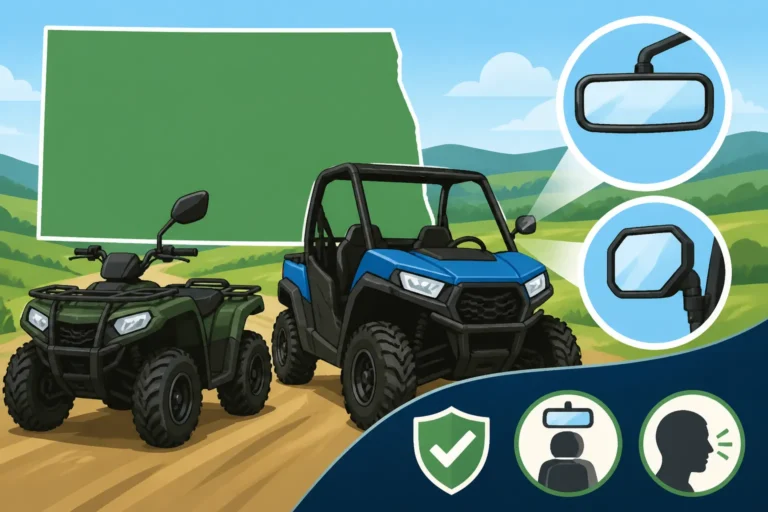
Furthermore, a functional horn is essential for warning pedestrians or other vehicles, and mirrors are crucial for maintaining situational awareness, especially when changing lanes or pulling over. We're talking about a mirror that meets a minimum square inch requirement, not just a small accessory mirror. For many machines, especially those primarily designed for aggressive off-road use, these features might not come standard or might not meet the exact specifications for road legality. This is where aftermarket parts, like those from a company like SuperATV, become really valuable. They offer robust, road-legal mirrors, turn signal kits, and lighting solutions that can help bring your machine up to snuff without sacrificing its off-road capability. It's an investment in both safety and compliance, which ultimately makes your riding experience far less stressful.
The Importance of Registration and Insurance
Let's talk paperwork, because even the coolest OHV won't get far on North Dakota's roads without it. Just like your car or truck, your ATV or UTV needs to be properly registered with the state if you plan to operate it on public lands, which includes many of the roads we'll discuss. This isn't just a suggestion; it's a legal mandate that ties your machine to you and ensures that you're contributing to the state's trail system through a portion of your fees. The registration process itself involves submitting the necessary forms and paying a fee, which typically covers a two-year period. You'll then receive a decal or a small plate to display on your machine, signaling to law enforcement that you're in compliance.
Beyond registration, insurance is another critical layer of protection and a legal requirement for road use. While many off-road riders might think of insurance as something only for their truck, it's just as vital for your ATV or UTV, especially when you venture onto public roads. North Dakota mandates liability insurance coverage, meaning if you're involved in an accident and found at fault, your policy can help cover the costs of damages or injuries to others. This minimum coverage is crucial, but many riders opt for additional comprehensive or collision insurance to protect their own machine as well, especially given the significant investment these vehicles represent. Always carry proof of insurance with you when you ride, as an officer can request to see it, and not having it can lead to penalties. Understanding [North Dakota Insurance Requirements at Registration] is a key step in responsible OHV ownership.
Gravel Roads: Your Go-To for Off-Pavement Travel
For many North Dakota OHV enthusiasts, gravel roads are the bread and butter of road riding. They offer a perfect compromise between rugged off-road terrain and smoother paved surfaces, providing access to vast areas of the state’s beautiful landscape, from agricultural fields to remote hunting spots. These are the roads where you often feel most at home on an ATV or UTV, as the machines are inherently designed for navigating less-than-perfect surfaces. However, "open" doesn't mean "unregulated," and knowing the specific rules for these aggregate routes is paramount to avoiding fines and ensuring safety.
The Rules of the Ruts: What's Allowed on Aggregate
Generally speaking, [North Dakota Gravel Roads Open to Registered Machines] are indeed open to OHVs. This is a huge benefit for riders in a state with so much open country and agricultural land. These roads, often maintained by counties or townships, connect communities and provide essential access to rural properties. The key here is "registered machines." As discussed, your ATV or UTV must have up-to-date registration to legally operate on these public gravel roads. Without it, even if you’re just driving down the road to check fence lines, you're technically in violation.
However, "open" doesn't equate to "reckless abandonment." While gravel roads might feel more natural for an OHV, you are still operating a motor vehicle on a public thoroughfare. This means all the general rules of the road apply: obey stop signs, yield to oncoming traffic, and drive defensively. The loose surface of gravel can be unpredictable, especially if you encounter soft spots, washboards, or freshly graded sections. Maintaining control, especially around curves or over crests, is absolutely critical. Think of it as a low-traction environment where caution is your best friend, even if your machine feels perfectly capable.
Speed Limits and Safe Operation on Gravel
Just because a gravel road is open to OHVs doesn't mean you can open up the throttle without consequence. Speed limits, while often higher on paved roads, still apply rigorously on gravel. In many rural areas, gravel roads might have a posted speed limit, or default to a statutory limit if none is posted. It's your responsibility to know and adhere to these limits. Excessive speed on gravel roads not only makes you a hazard to yourself and others but can also lead to citations for reckless driving, which carry significant penalties. The dust kicked up by speeding vehicles is also a major concern, reducing visibility for everyone.
Safe operation on gravel means understanding the unique dynamics of the surface. Braking distances are longer, cornering traction is reduced, and sudden movements can easily lead to a loss of control. Always be on the lookout for other vehicles, especially farm equipment, which often moves slowly and can be very wide. Residential areas along gravel roads require extra vigilance due to children, pets, and driveways. Maintaining a safe following distance from other vehicles is also crucial, not just for safety but to minimize the amount of dust you send billowing into someone else's windshield. Riding within your skill level and your machine's capabilities on these surfaces is far more important than trying to set any speed records.
Sharing the Road with Other Vehicles
Gravel roads are shared spaces, and you'll encounter a variety of other users, from other OHVs to pickups, cars, and massive farm machinery. Understanding that you are just one part of the ecosystem is key to courteous and safe riding. Farm equipment, in particular, deserves a wide berth. These vehicles are slow, often very wide, and can have limited visibility for their operators. Never assume they see you. Slow down, give them plenty of room, and pass only when it's absolutely safe and legal to do so.
When encountering other vehicles, whether they're coming towards you or you're approaching from behind, exercise common sense and courtesy. If you're creating a dust cloud, consider slowing down or pulling over to let visibility clear, especially for those following you. Being a good steward of the road and respectful of other users helps foster a positive reputation for OHV riders. Remember, while gravel roads are often a joy to ride, they are public thoroughfares with diverse users. Your actions impact not just your safety but the perception of all OHV riders in North Dakota.
Paved Roads: Navigating the Blacktop Safely
While gravel roads are often the preferred playground for OHVs, there will be times when you need or want to venture onto paved surfaces. This could be to connect between trails, access a gas station, or simply get from one rural property to another. However, paved roads present a different set of challenges and much stricter rules for OHVs in North Dakota. These aren't the surfaces your machine was primarily designed for, and the law reflects that, with greater emphasis on visibility, stability, and speed.
When Paved Roads Are Open: Conditions and Restrictions
The general rule for [North Dakota Paved Roads Posted at 55] mph or less is that they can be open to OHVs. This is a critical distinction: if a paved road has a speed limit higher than 55 mph, it's generally off-limits for most OHVs. This restriction is primarily due to the inherent design limitations of ATVs and UTVs when it comes to sustained high-speed operation on hard surfaces, as well as their stability compared to traditional road vehicles. You won't be cruising down major highways or interstates on your quad – those are simply too fast and too dangerous for OHV use.
Even on paved roads with speed limits of 55 mph or less, you must ensure your machine is fully road-legal, which means having all the required lighting, mirrors, and horn, as well as a minimum engine displacement. The expectation is that your OHV can maintain a minimum speed to avoid impeding traffic. If your machine struggles to keep up, or if you feel unsafe at the posted speed, it’s best to find an alternative route or stick to gravel and trails. The aim is to integrate OHVs into traffic flow as seamlessly and safely as possible, and that means adhering to the same principles of roadway operation that apply to cars.
Class III Machines and Higher Speed Limits
North Dakota does make a special allowance for certain larger, more robust OHVs, specifically [North Dakota Class III Machines at 65 mph Roads]. Class III machines are typically larger utility terrain vehicles (UTVs) or side-by-sides that are designed with greater stability and a higher top speed capability, often resembling small off-road trucks. These machines can sometimes be permitted on paved roads with speed limits up to 65 mph, offering greater flexibility for travel. This distinction acknowledges that not all OHVs are created equal, and some are better equipped for faster, harder surfaces.
However, even with a Class III machine on a 65 mph road, the same principles of road safety apply, if not more so. You're sharing the road with vehicles traveling at higher speeds, demanding even greater vigilance and defensive driving. Make sure your UTV has the proper tires for paved road use – knobby off-road tires can wear quickly and reduce handling on asphalt. Confirm that your specific Class III machine meets all the legal requirements for this expanded access, as not every UTV will automatically qualify. It’s a privilege for these specific machines, not a blanket permission for all OHVs, so ensure you understand the exact definition and limitations of Class III machines.
Equipment Upgrades for Paved Road Riding
If you're planning on doing any significant amount of paved road riding, even at 55 mph, you might consider some specific equipment upgrades beyond the minimum legal requirements. While your off-road tires are fantastic in the mud, they can be loud, wear quickly, and offer less grip on pavement, especially in wet conditions. Investing in a set of road-specific or hybrid tires can dramatically improve your ride quality, handling, and safety on paved surfaces. Companies like SuperATV offer a range of tires that bridge the gap between aggressive off-road performance and smoother on-road capability, allowing you to optimize for mixed terrain.
Additionally, ensuring your lighting is robust and highly visible is paramount. On paved roads, especially during the day, your machine can be harder for other drivers to spot compared to larger vehicles. Bright LED headlights, taillights, and even amber turn signals are vital. Many riders also install a rearview mirror that provides a wider field of view than the typical small factory mirror, further enhancing safety. A properly functioning speedometer and odometer are also required, helping you monitor your speed accurately and meet legal obligations. These aren't just about compliance; they're about enhancing your safety and confidence when sharing the blacktop with faster-moving traffic.
Crossing Highways and Interstates: Strict Rules to Know
The vast majority of North Dakota's road network is connected by state highways and, of course, the major interstate system. While many roads are open to OHVs, there are very strict limitations when it comes to these high-speed, high-traffic arteries. It's an area where riders often get confused, sometimes to their detriment, so understanding the "do's and don'ts" of crossing these critical routes is non-negotiable for anyone venturing out on an ATV or UTV.
The "Crossing Only" Rule for State Highways
When it comes to most state highways in North Dakota, the rule for OHVs is clear and restrictive: you can generally cross them, but you cannot ride along them for any sustained distance. This means if a highway intersects your chosen gravel road route, or if you need to get from one section of ditch to another, you are allowed to proceed directly across the highway at a 90-degree angle. This "crossing only" rule is in place to minimize the exposure of slower-moving OHVs to high-speed traffic. Think of it as a momentary transit, not a part of your journey.
When crossing, utmost caution is required. You must yield to all oncoming traffic on the highway, ensuring there is a clear and safe gap before you proceed. This isn't the time to rush or assume other drivers see you. Make eye contact if possible, and be predictable in your movements. Never attempt to cross at a blind spot or over a hill crest where visibility is limited for you or oncoming vehicles. This rule is designed to be a necessary evil, allowing you to bridge gaps in your route without making your machine a persistent hazard on a road it's not designed for. For more details, always refer to [North Dakota Rules for Crossing a Highway].
Interstate Highways: Absolutely Forbidden
Let's be crystal clear on this one: Interstate highways in North Dakota are absolutely, unequivocally closed to OHVs. There are no exceptions for crossing, riding along the shoulder, or any other form of operation. These are high-speed, controlled-access roadways designed for large volumes of fast-moving vehicle traffic, and an ATV or UTV simply does not belong there. Attempting to ride an OHV on an interstate highway is not only incredibly dangerous but also a serious violation of the law that will likely result in a significant citation and potential impoundment of your machine.
This prohibition extends to entrance and exit ramps as well. These are considered part of the interstate system and are just as off-limits. There's no backroads shortcut or creative interpretation of the law that allows OHVs on these major routes. If your route plan involves an interstate, you must find an alternative, OHV-legal path that completely bypasses it. Planning your rides carefully to avoid these areas is a fundamental part of responsible OHV use in North Dakota. Don't risk your safety or a hefty fine by even contemplating interstate travel on your quad or UTV.
Safe Crossing Techniques
Since crossing state highways is sometimes a necessity, it's vital to perform these maneuvers as safely as possible. First, approach the highway intersection cautiously, looking both ways multiple times for oncoming traffic. If there's a stop sign, obey it fully. Position your machine so you have a clear view down the highway in both directions. Never block traffic on the intersecting road while waiting to cross.
Once you have a clear opening, execute the crossing quickly and directly. Maintain a 90-degree angle to the highway, minimizing the time you spend exposed to traffic. Accelerate smoothly across the lanes, making your intentions obvious. Avoid sudden turns or swerving. If you're riding in a group, cross one machine at a time, ensuring each rider has a clear window before proceeding. Communication within your group is key here. These precautions, while seemingly basic, are critical for mitigating the inherent risks of temporarily sharing a high-speed environment with vehicles far larger and faster than your OHV.
Section Lines and Township Roads: Accessing the Back Forty
North Dakota's landscape is famously gridded with section lines and crisscrossed by township roads, which are essential for accessing vast agricultural areas and private properties. For OHV riders, these routes offer unparalleled opportunities to explore and connect different areas. However, while they may seem less formal than state highways, they still operate under specific legal frameworks, and understanding those rules is key to responsible riding, especially when private land abuts these routes.
Understanding Section Line Rights
Section lines are a unique feature of the prairie states, representing the survey lines that divide land into square-mile sections. In North Dakota, there’s generally a public right-of-way along section lines, meaning that even if the adjacent land is private, there’s often a legal avenue for public passage, sometimes referred to as "section line rights." For OHV riders, this can be a valuable way to navigate the landscape, particularly for hunting access or reaching remote areas. However, this right-of-way is often unmaintained and can be overgrown, making passage challenging at times.
It's crucial to understand that while a section line might offer a public right-of-way, it doesn't automatically mean it's a developed road or trail suitable for all OHVs. In many cases, it might just be a grassy strip, a fence line, or even cut through a cultivated field. Riders must still adhere to general OHV laws regarding registration and equipment. Also, the public right-of-way typically applies to the section line itself, not the private land on either side. Straying off the section line and onto adjacent private property without explicit permission from the landowner is trespassing, even if the land isn't fenced or posted.
Navigating Township Roads and Local Access
Township roads, also known as county roads, are generally maintained by local authorities and form the backbone of rural transportation. These are often gravel, but some might be paved, and they are typically open to registered OHVs, much like the general gravel road rules discussed earlier. These roads are vital for accessing farms, homes, and public lands, and OHV riders can utilize them for similar purposes. They are usually well-marked and offer a more predictable riding surface than undeveloped section lines.
When riding on township roads, all standard traffic laws apply, including speed limits, stop signs, and yielding rules. While these roads might see less traffic than major highways, they are still public thoroughfares and must be treated with respect and caution. Be mindful of dust control near residences and farmsteads, and always be on the lookout for slow-moving farm equipment. These roads are a privilege for OHV riders, and maintaining a good reputation through safe and courteous riding is important for ensuring continued access. Remember that [North Dakota Rules for Riding a Township Road] are similar to those for other county roads.
Respecting Private Property on and Near Section Lines
This point cannot be stressed enough: just because you're riding a section line or township road doesn't give you carte blanche to wander onto private property. North Dakota has strict [North Dakota Posted Land Rules for Riders], and trespassing is a serious offense. Many landowners have their property posted with "No Trespassing" signs, or use electronic posting systems that clearly delineate private land. It's your responsibility as a rider to know where you are and to respect private property boundaries.
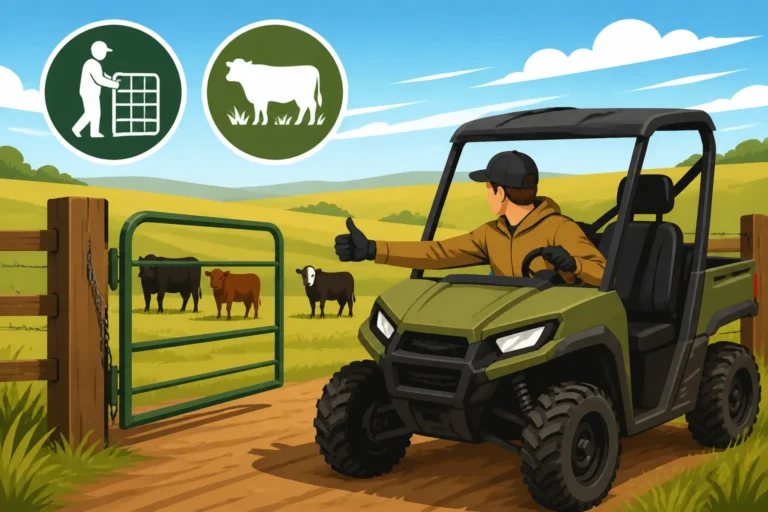
If you need to access private land, whether it’s for hunting, fishing, or visiting, always obtain explicit permission from the landowner before you ride. A friendly conversation can go a long way, and many landowners are happy to grant access if you ask respectfully. Without permission, even a momentary deviation from the section line onto private property can be considered trespassing. It's about being a good neighbor and a responsible recreationist, ensuring that you preserve access for yourself and future generations of riders by respecting the rights of private property owners.
Riding in the Ditch: North Dakota's Unique Highway System Feature
One of the most distinctive aspects of OHV riding in North Dakota is the legal right to operate in the ditches alongside many public roads. For riders new to the state, this concept can be perplexing, even seemingly counterintuitive. However, it's a long-standing provision in North Dakota law that provides extensive access for ATVs and UTVs. While it opens up a vast network for exploration and travel, it's not a free-for-all, and understanding the nuances of "ditch riding" is critical for staying legal and safe.
The Legal Right to the Ditch Bottom and Back-Slope
North Dakota law specifically permits the operation of OHVs on the "ditch bottom" and "back-slope" of most public roads and highways. This is a huge benefit, as it essentially creates a parallel, statewide trail system where OHVs can travel without directly interfering with road traffic. The "ditch bottom" is exactly what it sounds like: the lowest point of the ditch, where water would typically drain. The "back-slope" is the rise from the ditch bottom up to the adjacent private property line or fence. This legal allowance provides tremendous flexibility for riders, enabling travel between towns, to hunting spots, or simply for recreational touring. For a full breakdown, check out [North Dakota Ditch Riding: The Legal Right Explained].
However, this privilege comes with responsibilities and limitations. Your OHV must still be registered, and you must adhere to all general OHV laws. While you're not on the paved or gravel surface of the road, you are still within the highway right-of-way, and thus subject to certain rules. The beauty of this system is its extensive reach, allowing riders to traverse long distances across the state, often on varied terrain within the ditch itself. It provides an excellent alternative to direct road use, keeping OHVs off the main travel lanes where they might pose a greater risk to themselves and others.
Restricted Areas: Inslope, Shoulders, and Obstructions
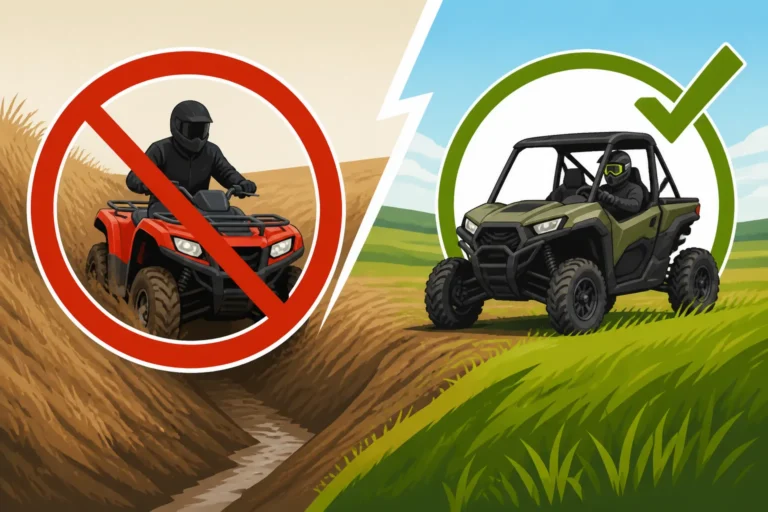
While the ditch bottom and back-slope are generally open, there are specific areas within the highway right-of-way that are strictly forbidden for OHV use. These include the "inslope" (the slope from the paved or gravel road surface down to the ditch bottom) and the "shoulder" of the road. These areas are considered too close to active traffic lanes and are not safe for OHV operation. The intent of the law is to keep OHVs separated from faster-moving vehicles as much as possible, and these zones violate that principle. Riding on the inslope or shoulder can lead to immediate citations and is a significant safety risk.
Furthermore, you generally cannot ride on private land that abuts the ditch without explicit permission from the landowner, even if it looks like an extension of the ditch. The legal right to the ditch only applies to the public right-of-way. You also cannot obstruct the flow of water in the ditch or cause damage to the ditch itself. There is a specific exception for passing obstructions, where you can briefly re-enter the road surface or cross the inslope to get around something like a culvert or an impassable mud hole, but you must return to the ditch as soon as safely possible. This "transitory operation" is a narrow exception, not a loophole for sustained road use.
Seasonal Considerations and Safety in the Ditch
Riding in the ditch presents its own unique safety considerations, heavily influenced by the seasons. In spring, ditches can be incredibly wet and muddy, with "gumbo" mud being a notorious challenge in North Dakota. This heavy, sticky mud can quickly clog wheels, bog down machines, and make travel extremely difficult and messy. After heavy rains, many ditches may be impassable, or present hidden hazards like deep ruts or submerged obstacles. It’s crucial to use good judgment and avoid areas that are excessively wet, as getting stuck or causing environmental damage can lead to fines and frustration.
During winter, ditches can be filled with deep snow, presenting different challenges. While some riders enjoy snow riding, deep drifts can hide culverts, fences, or other dangers. Visibility can also be severely reduced during blowing snow conditions. Even in dry conditions, ditches can hide hazards like old fence wire, rocks, or uneven terrain. Always ride at a speed that allows you to react to unexpected obstacles. Your OHV should also be equipped with proper lighting for visibility, especially if riding near dusk or dawn. Awareness of your surroundings and adjusting your riding style to the conditions are paramount to safe ditch riding.
City and County Ordinances: The Local Layers of the Law
Just when you think you've got North Dakota's statewide OHV laws down, you hit another layer of complexity: local ordinances. While the state provides a broad framework for OHV operation, individual cities and counties retain the authority to enact their own, often more restrictive, rules within their jurisdictions. This means that a road that's perfectly legal for your OHV in one county might be off-limits just a few miles down the road in another, or completely prohibited within city limits. Ignoring these local laws is a common pitfall for riders and can lead to unexpected tickets.
The Power of Local Jurisdictions to Restrict Riding
North Dakota law grants cities and counties the power to regulate OHV operation within their boundaries, and many have exercised this power. This can lead to a patchwork of rules that can be incredibly confusing for riders, especially those traveling through different areas. For example, a county might outright ban OHVs on all paved roads within its limits, or restrict ditch riding to certain hours, even if state law allows it elsewhere. Cities are almost universally more restrictive, with many banning OHV use on all city streets, sidewalks, and parks, except for specific permitted events or emergency services. For a general overview, see [North Dakota County and City ATV Ordinances].
The rationale behind these local restrictions often centers on public safety, noise complaints, and maintaining peace in residential areas. While an OHV might be a fantastic tool on a farm or a fun recreational vehicle in the countryside, its noise and presence can be disruptive in a densely populated urban or suburban environment. It's not about being anti-OHV; it's about balancing the rights of riders with the quality of life for residents. This local control means that knowing the state law is only half the battle; the other half is understanding the specific rules for your immediate riding area.
Common Local Restrictions and How to Find Them
Local ordinances can vary widely, but some common restrictions you might encounter include:
- Total bans on OHV operation on all public roads within city limits. This is quite common, meaning you often need to trailer your machine to designated riding areas outside of town.
- Time-of-day restrictions. Some areas might allow OHV use only during daylight hours or prohibit it after a certain evening hour.
- Specific street closures. Certain streets might be permanently closed to OHVs due to traffic volume, school zones, or other safety concerns.
- Noise limits. While state law has muffler requirements, local ordinances might impose stricter decibel limits, especially in residential areas.
- Prohibition in parks or on specific public lands. Many city or county parks, nature preserves, or other public spaces are off-limits to OHVs.
Finding these rules requires a bit of detective work. The best approach is to contact the local sheriff's office or city police department for the area you plan to ride in. Many local governments also publish their ordinances online on their official websites. Don't rely on word-of-mouth or assume that because your buddy rode there once, it's still legal. Laws change, and enforcement can vary. Checking with local law enforcement first, as mentioned in [Checking With Local Law Enforcement First], is always the safest bet.
Why Checking Local Rules is Non-Negotiable
Failing to check local ordinances is one of the quickest ways to ruin a good day of riding. You could find yourself facing a citation, a fine, or even having your machine impounded, all because you were unaware of a local rule. Imagine planning a long-distance ditch ride, only to find out that the next county over has a complete ban on ditch riding within its borders. It’s a frustrating scenario that's entirely avoidable with a bit of proactive research.
This is especially true for visitors to North Dakota. While the state's generous ditch riding laws are a major draw, coming from a state with different rules might lead to assumptions that simply don't apply locally. Before you even unload your trailer, take the time to call the local authorities or visit their website for the specific cities and counties you intend to traverse. This small effort upfront can save you significant trouble and expense, ensuring your OHV adventures in North Dakota remain enjoyable and hassle-free.
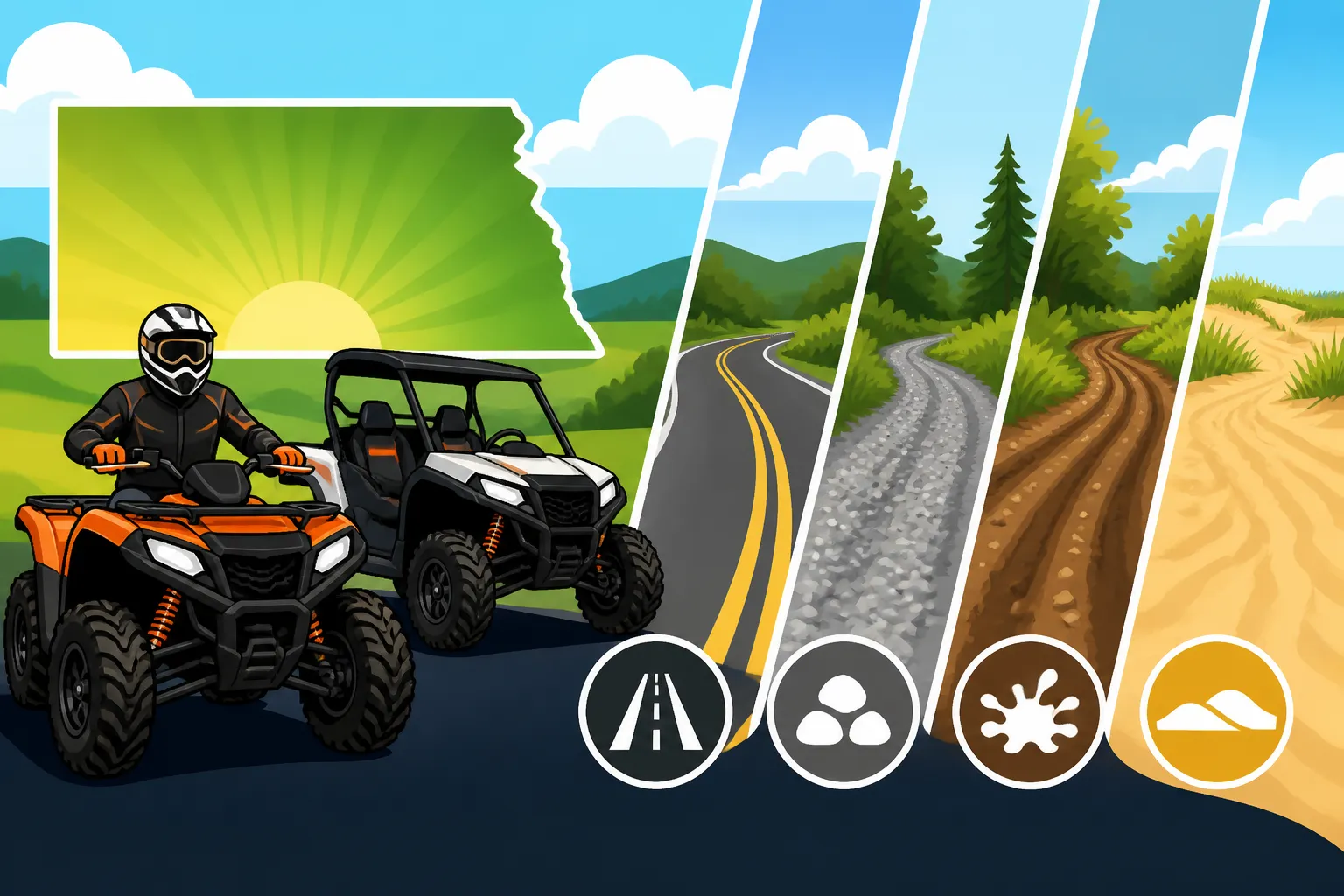
Here's a quick overview of North Dakota's OHV road rules by surface type:
| Road Surface Type | General OHV Rule | Key Requirements/Considerations |
|---|---|---|
| Gravel Roads | Generally open to registered OHVs. | Must be a registered OHV with required equipment (head/taillamps, brake light, horn, mirrors). Operator must be licensed. Adhere to speed limits. Share with other vehicles (especially farm equipment) respectfully. Dust control near residences is courteous. |
| Paved Roads (<= 55 mph) | Open to registered OHVs, if posted at 55 mph or less. | Must be a registered OHV with full road-legal equipment (head/taillamps, brake light, horn, mirrors, speedometer, odometer). Operator must be licensed. Maintain minimum speed to avoid impeding traffic. Increased wear on off-road tires. Class III machines may have exceptions up to 65 mph. |
| Paved Roads (> 55 mph) | Generally closed to OHVs. | High-speed roads are not suitable for most OHVs. Class III machines may operate on 65 mph roads if specific requirements are met. Always verify local and state laws. |
| Interstate Highways | Absolutely Forbidden for all OHVs, including ramps. | Extremely dangerous and illegal. Plan routes to completely bypass interstates. |
| State Highways | Crossing Only permitted at a 90-degree angle; no sustained riding along the highway. | Yield to all highway traffic. Cross quickly and safely. Visibility is paramount. Avoid crossing at blind spots. |
| Section Lines | Public right-of-way generally exists, allowing OHV passage. | Often unmaintained. Stay strictly within the section line right-of-way. Do not trespass on adjacent private land without explicit permission. Can be challenging terrain (overgrown, muddy). |
| Township Roads | Generally open to registered OHVs. | Similar rules to gravel roads. Adhere to all traffic laws. Be mindful of dust, farm equipment, and residential areas. |
| Ditches (Bottom & Back-slope) | Generally open to registered OHVs, creating a parallel trail system. | Not permitted on the "inslope" (from road to ditch bottom) or "shoulder." Only permitted for transitory operation past obstructions. Avoid private land. Adjust for seasonal conditions (mud, snow). Always maintain safety and separation from road traffic. |
| City/County Ordinances | Local jurisdictions can impose stricter rules or bans. | Always check local city and county laws before riding in a new area. Common restrictions include total bans in city limits, time-of-day limits, or specific street closures. Local rules supersede state rules if stricter. Contact local sheriff/police for current info. |
Disclaimer
This article is for general informational purposes only and does not constitute professional advice. Laws, prices and regulations vary by location and change over time. Consult a qualified professional for guidance on your specific situation.