North Dakota Rules for a 13-Year-Old Rider
A 13-year-old may be ready to ride an ATV or UTV, but age is only one part of the decision. North Dakota’s safety-certificate rules, the place being ridden, the machine, and any permit requirements all matter. Here’s how to sort out the rules before a young rider heads onto public ground or a roadway.
The safety certificate is the first question
North Dakota’s rules for young OHV operators are not the same as rules for getting a driver’s license. A 13-year-old does not need a regular driver’s license simply to ride an ATV or UTV off-road, but the state’s OHV safety-training requirements may apply.
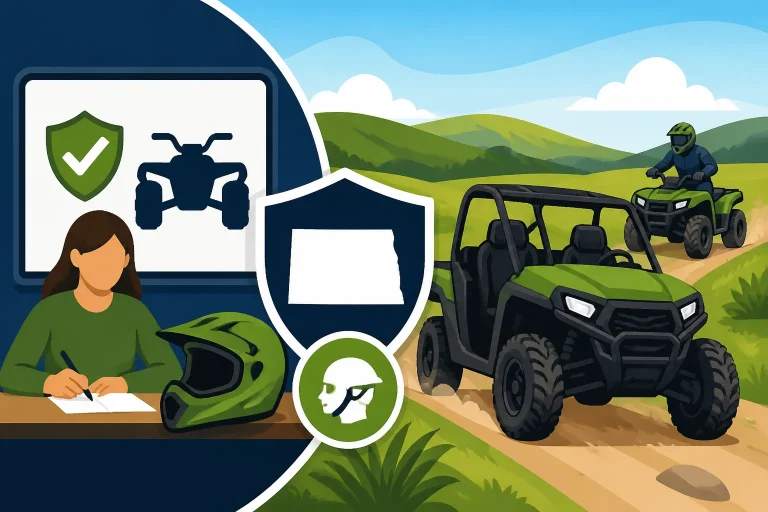
For riders under 16, an approved safety course and certificate are the key requirements to check before riding on public land. North Dakota offers OHV safety training, and the course age threshold is relevant to a 13-year-old. Review North Dakota OHV Safety Certificates at Age 12 and North Dakota Safety Course Online for details on training and certification.
A parent should confirm that the young rider has completed the course and that the certificate is valid and available to show if requested. Don’t assume that signing up for a class, completing only part of it, or having a certificate from another state automatically satisfies North Dakota’s rules. If the rider trained elsewhere, check whether North Dakota recognizes that credential before relying on it.
| Question | What a parent should check |
|---|---|
| Is the rider under 16? | Check the state’s safety-training rules for young operators. |
| Has the rider completed an approved course? | Confirm that the course is complete and the certificate has been issued. |
| Is the ride on public land? | Verify the certificate requirement and any site-specific rules. |
| Is the ride on a road or road right-of-way? | Check the separate roadway rules; a safety certificate does not make every road legal to ride. |
| Is the machine registered or permitted? | Determine whether it is a North Dakota machine or a visiting machine, and follow the applicable requirements. |
| Is the rider wearing a helmet? | North Dakota has helmet rules for riders under 18; confirm the required helmet standard. |
A safety certificate does not take the place of machine registration, a visitor permit, landowner permission, or a helmet. Each addresses a different part of the ride. A certificate demonstrates safety training; registration or a permit addresses the machine’s legal status; permission determines whether the rider may use the land.
It is also sensible for a parent or guardian to supervise a 13-year-old, even when supervision is not the specific legal requirement for the riding area. That’s a safety choice, not a substitute for checking the certificate rule. The detail matters because rules can differ between private property, public riding areas, and roadways.
For a fuller explanation of age-related requirements, see North Dakota Rules for Riders Under 16. If a young rider will be operating on a road or in a road ditch, also read North Dakota ATV Road Rules by Surface Type. The fact that someone is old enough to operate an OHV in one setting does not mean they can operate it in every setting.
Permits and registration depend on the machine and the rider’s status
A 13-year-old does not usually obtain a separate youth riding permit just because of their age. The paperwork question is generally about the machine and whether it is owned and registered in North Dakota or visiting from elsewhere.
North Dakota residents generally need to follow the state’s OHV registration requirements for machines used where registration is required. A North Dakota resident does not need a separate state trail permit just to ride as a resident, but that does not remove the need to register the machine or comply with the rules of a particular riding area.
For a machine registered outside North Dakota, the rider’s family should check the non-resident permit rules and any exemption that applies to the machine. A home-state registration or sticker should not be treated as a universal substitute for North Dakota’s requirements. The visitor rules can also depend on how long the machine is in the state. Read North Dakota’s Non-Resident OHV Permit and North Dakota Registration Versus a Non-Resident Permit before traveling.
A permit or registration is attached to the machine, not to the child’s safety training. In practical terms, a family may need to verify both the machine’s paperwork and the 13-year-old’s certificate before the ride.
| Situation | What to verify before riding |
|---|---|
| North Dakota-owned machine | Whether it has the required North Dakota registration for the planned use. |
| Out-of-state machine brought for a visit | Whether a North Dakota non-resident permit is required or an exemption applies. |
| Machine used at a particular park or trail | Whether the riding area has separate access, operating, or land-use rules. |
| Youth operator | Whether the safety certificate requirement is met, regardless of the machine’s registration status. |
| Machine used on private property | Whether the landowner has allowed the ride and whether any relevant exception applies. |
Do not assume that a park entrance permit for a tow vehicle gives an OHV permission to ride, or that an OHV permit covers every type of public land. The rules for vehicle access and OHV operation can be separate. Likewise, a registered machine is not automatically allowed on every trail, wildlife area, grassland road, or road right-of-way.
If the family is visiting from another state, check the machine’s status before departure rather than waiting until reaching a trailhead. The distinction between registration and a visitor permit is explained in North Dakota Registration Versus a Non-Resident Permit. For a visitor coming from Minnesota, North Dakota Rules for a Visiting Minnesota Rider may help identify the questions to confirm.
A 13-year-old’s riding location changes the answer
The most important practical distinction is where the teenager will ride. A private farm, a designated OHV trail, a public road ditch, and a paved roadway are not interchangeable settings.
On private land, get clear permission from the landowner and check whether a specific private-property exception applies to the safety-certificate or registration rule. An exception for use on a parent’s land should not be stretched to cover a neighbor’s property, a public trail, or a road. If a young rider expects to ride only on family ground, review North Dakota Riders on a Parent’s Land and verify what the exception covers.
At a designated public riding area, check both general state rules and the site’s own restrictions. A trail can have access rules, operating hours, closures, width limits, or surface conditions that affect whether a particular ATV or UTV may enter. The rider’s age and certificate are only part of that check. Wet or recently closed trails deserve particular care: riding when a route is closed can damage the surface and create a separate compliance problem.
Road use requires a separate review. North Dakota has specific rules for riding on different kinds of road surfaces and rights-of-way. A 13-year-old should not assume that a ditch is open just because it looks passable, or that a road is legal to ride because an adult can use it. Machine class, road type, equipment, speed capability, signage, and local restrictions can all matter.
The roadway rules are detailed enough that parents should verify the exact route, not just the general area. Start with North Dakota ATV Road Rules by Surface Type, and check local ordinances and restrictions before riding near a town. A certificate does not grant roadway access, and a permit does not override a road closure or local rule.
A responsible pre-ride check should include:
- Identify the exact land or route and confirm that OHV use is allowed.
- Check whether the ride involves a public trail, a road ditch, a roadway, or private property.
- Verify the 13-year-old’s safety certificate requirement for that setting.
- Confirm that the machine’s registration or visitor permit is in order.
- Check posted signs, closures, local restrictions, and trail-specific limits.
- Make sure the machine is appropriate for the rider and that required protective equipment is in place.
If any part of the route is unclear, choose a confirmed legal riding area instead. “It’s only a short distance” is not a reliable way to judge whether a road or parcel is open to OHVs.
Set the rider and machine up for a safer ride
Meeting the paperwork requirements does not mean a 13-year-old is ready for every machine or terrain. An ATV or UTV that fits an adult may be too large or powerful for a teenager to control comfortably. Consider the rider’s strength, reach, experience, judgment, and ability to operate the controls, not age alone.
Follow the manufacturer’s age and passenger guidance for the specific machine. A youth rider should be able to reach the controls, steer, brake, and stop without stretching or losing a secure position. For a UTV, confirm that the rider can use the seat belt and remain properly seated. Never carry a passenger unless the machine is designed for one and the passenger can sit in a designated seat. See North Dakota Rules for a Child Passenger for the state-specific passenger questions.
Helmet use matters even when a ride is short or familiar. North Dakota has helmet requirements for riders under 18, so parents should check North Dakota Helmet Law for Riders Under 18 and use a properly fitted helmet that meets the required standard. A helmet that shifts, sits too high, or has damaged components may not offer the intended protection. Other protective gear, including eye protection, gloves, sturdy footwear, and clothing that covers the skin, can help reduce injuries from debris, branches, and contact with the machine.
Before each ride, inspect the machine and explain the plan. Check the brakes, throttle, tires, steering, lights where required, fuel, and any visible damage. Tell the young rider which areas are off-limits, what to do if separated from the group, and how to stop safely if conditions change. On a first ride or unfamiliar route, keep the pace conservative and stay close enough to intervene.
Weather and terrain are part of the safety decision. Mud, standing water, loose gravel, steep slopes, tall grass, and poor visibility can make a familiar machine harder to control. Stop or turn back if the rider is tired, uncomfortable, or unable to maintain control. A certificate teaches useful skills, but it does not replace adult judgment about the rider, machine, and conditions.
Before taking a 13-year-old out, verify three things separately: the rider meets the applicable safety-training requirement, the machine has the required registration or permit, and the chosen land or route is open to that kind of riding. Confirm details with the relevant state agency or land manager when a rule or local restriction is uncertain.
Disclaimer
This article is for general informational purposes only and does not constitute professional advice. Laws, prices and regulations vary by location and change over time. Consult a qualified professional for guidance on your specific situation.