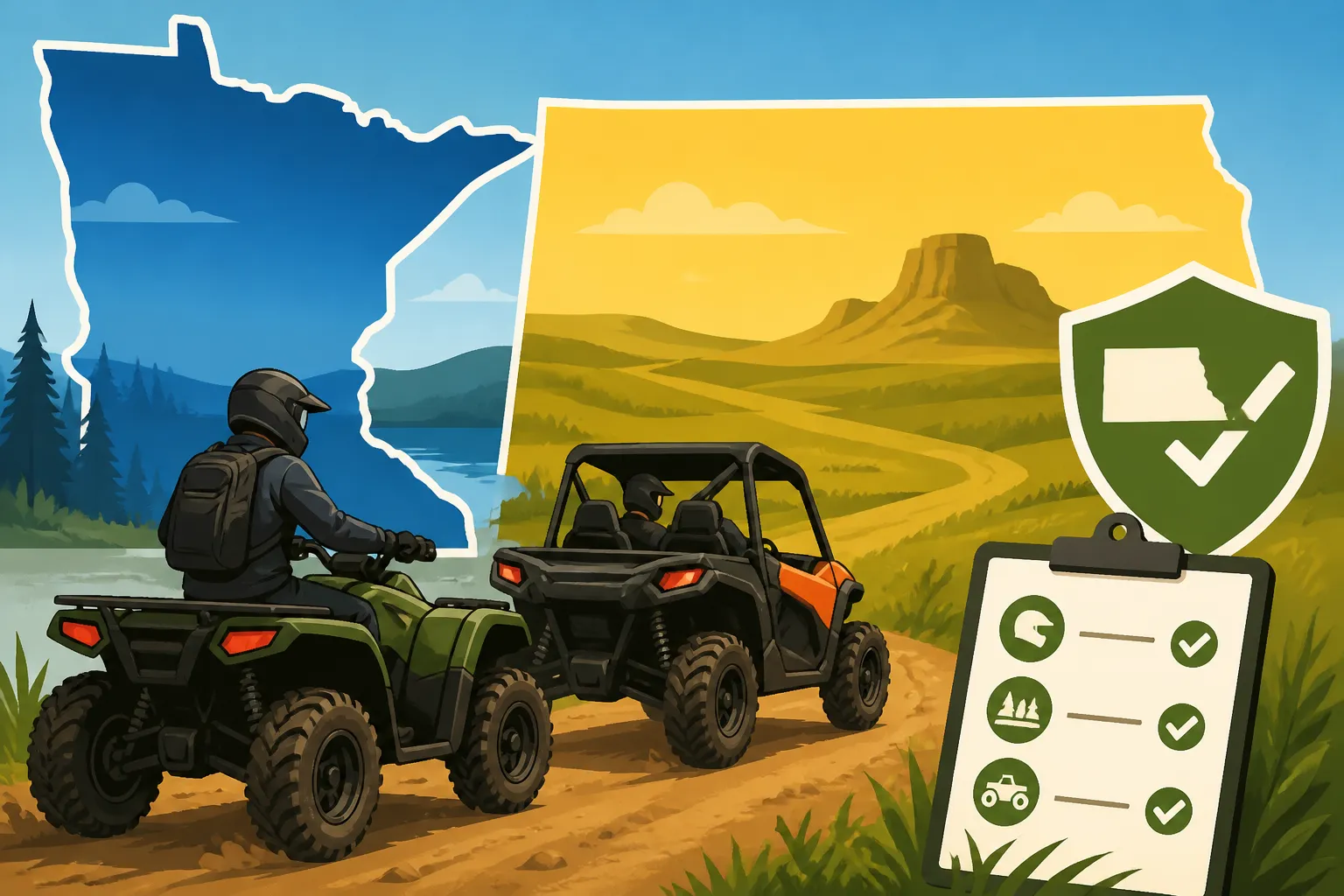
North Dakota Rules for a Visiting Minnesota Rider
Riding your ATV or UTV across state lines can feel like stepping into a whole new world, especially when you're used to Minnesota's familiar rules and suddenly find yourself wanting to explore the vast, open spaces of North Dakota. It's easy to assume that if your machine is legal at home, it's legal everywhere, but that's a common misconception that can lead to unexpected fines and frustration. This guide will clarify North Dakota's specific requirements for visiting riders, making sure your adventure goes smoothly and legally.
Navigating North Dakota's Visitor Permit System
One of the biggest questions Minnesota riders have when planning a trip to North Dakota is about registration. You're likely already registered in Minnesota, so do you need to do it all over again? The good news is, for short visits, North Dakota has a non-resident permit system that can save you a lot of hassle and expense compared to a full registration. It's designed specifically for folks like us, who just want to come over and enjoy the trails and ditches without permanent paperwork.
Understanding the North Dakota Non-Resident OHV Permit
North Dakota doesn't expect you to title and register your machine in their state if you're just passing through or staying for a limited time. Instead, they offer a non-resident OHV permit. This permit covers your machine for off-highway use within North Dakota and essentially acts as your temporary "permission slip" to ride legally. It's a much simpler process than a full registration, which often involves title transfers, excise taxes, and more. This permit is especially handy if you're planning a weekend trip to places like Pembina Gorge or exploring the miles of ditch riding opportunities across the state.
However, there's a crucial time limit to remember. Your out-of-state registration and titles are honored for up to 30 consecutive days. If your visit extends beyond that, then you are expected to fully register your machine in North Dakota. This rule is often overlooked, so if you're planning an extended stay—say, for a month-long hunting trip or if you're working seasonally in the oil fields and brought your side-by-side along—you'll need to look into a full [North Dakota Registration for a New Resident]. For most recreational visitors, though, the permit is your go-to.
Where to Obtain Your Permit and What it Costs
Getting your non-resident permit is fairly straightforward. You can usually purchase these permits online through the North Dakota Game and Fish Department website, which is often the most convenient option before you even leave Minnesota. Alternatively, many state park offices and some vendors within North Dakota also sell them. It's a good idea to secure yours before you arrive, or at least early in your trip, to avoid any delays or potential issues with law enforcement right off the bat. Imagine getting pulled over on day one because you just "forgot" to get the permit – not the best start to a vacation!
The cost of a North Dakota non-resident permit is quite reasonable, especially when you consider it grants you access to so much of the state's riding opportunities. It's a small investment for peace of mind and legal compliance. Keep in mind that these permits typically run for a calendar year, from January 1st to December 31st, regardless of when you purchase them. So, if you buy one in September, it's still good until the end of December of that year. Make sure you check the current [North Dakota Non-Resident Permit Cost] before you plan your trip. Some riders with special machines, like tracked dirt bikes, will also need a separate [North Dakota Tracked Dirt Bike Permit at $25] in addition to the standard non-resident permit if they plan to ride on designated snowmobile trails during the winter season.
Here’s a quick overview of the differences between a non-resident permit and full North Dakota registration for those staying longer:
| Feature | North Dakota Non-Resident OHV Permit | Full North Dakota OHV Registration |
|---|---|---|
| Eligibility | Out-of-state residents | North Dakota residents / >30-day visitors |
| Duration of Stay | Up to 30 consecutive days | Over 30 consecutive days / Permanent |
| Cost | Specific permit fee (e.g., $10) | $20 registration + $15 trail tax |
| Validity | Calendar year (Jan 1 – Dec 31) | Two-year cycle |
| Required Documents | Proof of home state registration | Title, bill of sale, application |
| Primary Use Case | Short-term recreational visits | Long-term residency, permanent use |
| Ease of Acquisition | Online, state park offices | Motor vehicle branches, more paperwork |
This table clearly illustrates why most Minnesota visitors will opt for the permit, but it's vital to remember that 30-day threshold. Don't push your luck and risk a citation because you didn't switch to a full registration when required.
Understanding North Dakota's Road Riding Laws
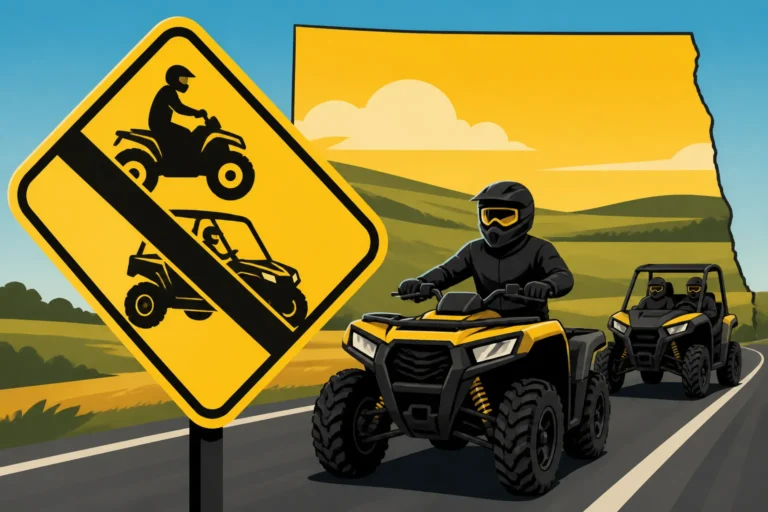
Beyond the permit, one of the biggest differences Minnesota riders will encounter in North Dakota is the approach to riding on public roads, especially ditches. While Minnesota has its own rules, North Dakota's are particularly distinct and offer more opportunities for ditch riding, which often surprises and delights visiting riders. However, these privileges come with specific responsibilities and equipment requirements.
Ditch Riding: North Dakota's Unique "Trail System"
Many North Dakotans consider the extensive network of road ditches to be their primary "trail system." Unlike some states where ditch riding is strictly prohibited or heavily restricted, North Dakota generally permits it, provided you follow a strict set of rules. This means you can often travel between towns, access hunting land, or connect to other riding areas using these ditch bottoms and back-slopes. It truly opens up a vast amount of navigable terrain that might be off-limits back home.
However, "generally permitted" doesn't mean "anything goes." You must always ride in the ditch bottom or on the back-slope. The inslope and shoulder of the road are typically off-limits, and you should never ride on the roadway itself unless specific conditions are met, such as crossing a highway. Furthermore, you must always yield to agricultural machinery, be aware of hidden culverts, and avoid disturbing landowners. Getting caught riding on the main roadway or ignoring private property signs will quickly turn your fun trip into a costly one. Make sure you're familiar with [North Dakota Ditch Riding: The Legal Right Explained] to avoid any missteps.
Rules for Paved, Gravel, and Township Roads
While ditch riding is common, riding directly on the actual roadways in North Dakota, whether paved or gravel, has its own set of regulations. These rules are generally stricter than ditch riding and often depend on the type of road, the speed limit, and your machine's capabilities. It's not like simply cruising your UTV down a city street in some other states; North Dakota has very specific conditions.
For instance, most gravel roads are open to registered OHVs, but paved roads are much more restrictive. If you're on a paved road posted at 55 mph or less, your machine might be allowed if it meets certain criteria, including a minimum engine size of 350cc and the ability to maintain at least 30 mph. For Class III machines (generally larger, car-like UTVs), they might be allowed on roads posted up to 65 mph. However, interstates are always off-limits. You also need to ensure your machine is properly equipped with items like mirrors, a horn, and appropriate lighting for road use. Many stock machines, especially ATVs, might not meet all these requirements right out of the box. This is where companies like SuperATV can be a huge help, offering a wide range of aftermarket accessories like DOT-approved mirrors, horns, and lighting kits to ensure your machine is compliant with North Dakota's road-riding standards. Don't assume your trail setup is also street-legal; it's a quick way to get a ticket. You'll want to review [North Dakota Rules for Riding a Gravel Road] and [North Dakota ATV Road Rules by Surface Type] before you head out.
Safety Equipment and Age Requirements for Visiting Riders
Safety is paramount, and North Dakota has specific requirements for riders and their machines, regardless of where they're from. While some rules might align with Minnesota's, there are important distinctions, especially regarding helmets and youth operation, that every visiting rider should be aware of.
Helmets and Personal Protective Equipment
When it comes to helmets, North Dakota has a specific age mandate. Any rider or passenger under the age of 18 is required to wear a DOT-approved helmet while operating or riding as a passenger on an OHV, both on public lands and roads. This rule is non-negotiable and applies to all riders, including those visiting from out-of-state. If you're traveling with kids or teenagers who enjoy riding, make sure they have properly fitted, certified helmets. It’s not just about avoiding a fine; it’s about their safety, especially in unfamiliar terrain. For adult riders (18 and over), helmets are strongly recommended but not legally mandated. However, given the unpredictable nature of off-road riding, particularly in ditches where hidden obstacles can appear, wearing one is always a wise choice. You can find more details on [North Dakota Helmet Law for Riders Under 18].
Beyond helmets, while not always legally required, it's always smart to have proper riding gear. This includes eye protection (goggles or a helmet visor), sturdy over-the-ankle boots, long pants, and a long-sleeved shirt or jacket. North Dakota weather can be unpredictable, from dusty summer days to chilly, windy conditions, so dressing appropriately is key for comfort and safety.
Machine Equipment: Mirrors, Horns, and Lights
If you plan to utilize North Dakota's road-riding privileges, even just for ditch access or short road crossings, your machine needs to be equipped to specific standards. This isn't just a suggestion; it's a legal requirement.
- Mirrors: Your OHV must have at least one rearview mirror that provides a clear view of the roadway to the rear for at least 200 feet. Many stock ATVs don't come with mirrors, and even some UTVs might have smaller, less compliant mirrors. This is an area where investing in quality aftermarket mirrors from a reputable brand like SuperATV can make all the difference, ensuring you meet the minimum surface area (typically 10 square inches for road-legal mirrors) and visibility standards.
- Horn: A working horn, audible for at least 200 feet, is also mandatory for road use. This is crucial for signaling other vehicles or pedestrians, especially when navigating blind corners or approaches in the ditch.
- Lighting: For riding after dark or in low-visibility conditions, your machine needs at least one headlamp (visible from 300 feet) and a taillamp/brake light combination. These need to be operational and clearly visible. If you've upgraded your lighting for trail riding, double-check that it meets these specific distance and visibility requirements for road use.
- Speedometer and Odometer: North Dakota also requires a functional speedometer and odometer if you're riding on roads where speed limits are a factor. This helps you comply with posted limits and track your mileage.
These requirements ensure that OHVs, when sharing space with traditional vehicles, can do so safely and predictably. Ignoring these can lead to tickets and endanger yourself and others. Many riders choose to equip their machines with robust accessories from companies like SuperATV to ensure they meet or exceed these safety and legal standards.
Youth Operation and Safety Certificates
North Dakota has rules regarding the age at which children can operate OHVs and whether they need a safety certificate. Generally, anyone under 16 years of age needs to have successfully completed an approved OHV safety course and carry the certificate while riding. There are exceptions for riding on private land owned by a parent or guardian, but for public land access or road use, the certificate is usually mandatory.
If you're bringing younger riders from Minnesota, check if their Minnesota safety certificate is recognized. While many states have similar programs, North Dakota explicitly states that it has no reciprocity with any other state regarding OHV safety certificates. This means a Minnesota safety certificate may not fulfill North Dakota's requirement for riders under 16. It's often best to plan for your child to complete a North Dakota-approved safety course, which can sometimes be done online, before your visit. You can find more information on [North Dakota OHV Safety Certificates at Age 12].
Accessing North Dakota's Trails and Public Lands
North Dakota might not be as widely known for its dedicated OHV trail systems as some other states, but it offers diverse riding experiences, particularly within its state parks and designated recreation areas. Understanding where you can and cannot ride is essential for any visiting rider.
Designated OHV Trail Systems and State Parks
While the ditches offer vast informal riding opportunities, North Dakota does have dedicated OHV trail systems that cater to a range of skill levels. The most prominent is the [Pembina Gorge: North Dakota's OHV Trail Park] located near Walhalla, which boasts 16 miles of trails and is a popular destination. Another notable area is the [Roughrider OHV Trail Links Fort Abraham Lincoln and Fort Rice], offering a longer, more scenic ride along the Missouri River. There's also some riding available in the Turtle Mountains and Kimball Bottoms near Bismarck.
When visiting these official trail systems, your North Dakota non-resident permit is usually all you need to ride. However, remember that if you plan to enter a state park where a trailhead is located, your tow vehicle might require a separate state park entrance permit. This is typically a daily or annual pass, similar to what you might find in Minnesota state parks. Don't confuse your OHV permit with a park entrance pass; they serve different purposes. Check specific park rules before you go, as some areas might have width restrictions (e.g., a 60-inch cap at Pembina Gorge) that could affect larger UTVs or side-by-sides, even if you’ve outfitted yours with robust protection and accessories from SuperATV.
Riding on Grasslands and Corps of Engineers Land
Beyond the designated trails, North Dakota also offers riding opportunities on federal lands, primarily the National Grasslands and lands managed by the U.S. Army Corps of Engineers, especially around the Missouri River. These areas can be incredibly rewarding for exploration, but they come with their own set of rules.
On National Grasslands, riding is generally restricted to existing roads and designated trails as shown on Motor Vehicle Use Maps (MVUMs). Cross-country travel is typically prohibited to protect fragile ecosystems. It's vital to consult these maps, which are often available online from the U.S. Forest Service, before venturing out. Similarly, Corps of Engineers lands, such as those around Lake Sakakawea or the Missouri River bottoms, often have specific regulations regarding OHV use, including open and closed areas, and seasonal restrictions. Always look for signage and check with the local land management office if you're unsure.
Avoiding Common Pitfalls
Many visiting riders get into trouble by making assumptions or not doing their homework. Here are a few common mistakes to avoid:
- Trespassing: Always respect private property. North Dakota has strict trespass laws, and electronic posting is becoming more common, so just because you don't see a physical sign doesn't mean the land isn't posted. When in doubt, stay on clearly marked public roads, ditches, or trails. Getting written landowner permission is always the safest bet if you want to ride off the designated public access.
- Environmental Impact: Be mindful of your impact, especially in wet conditions. North Dakota's "gumbo" mud can be extremely challenging and destructive to trails and ditches when wet. Stick to designated routes and avoid creating new ruts, which can lead to trail closures.
- Alcohol and Drugs: Just like driving a car, operating an OHV under the influence of alcohol or drugs is illegal and carries severe penalties, including DUI charges. North Dakota's rules are clear: save the celebrating for after the ride. [North Dakota DUI Rules for OHV Riders] apply to all public riding areas.
- Noise: Be respectful of local communities and wildlife. North Dakota has muffler requirements, and excessive noise can lead to complaints and citations. Your aftermarket exhaust might sound great to you, but ensure it's compliant with local sound limits.
By understanding these regulations and preparing your machine and yourself accordingly, your trip from Minnesota to experience North Dakota's unique ATV and UTV riding opportunities will be safe, legal, and incredibly enjoyable. Happy riding!
Disclaimer
This article is for general informational purposes only and does not constitute professional advice. Laws, prices and regulations vary by location and change over time. Consult a qualified professional for guidance on your specific situation.