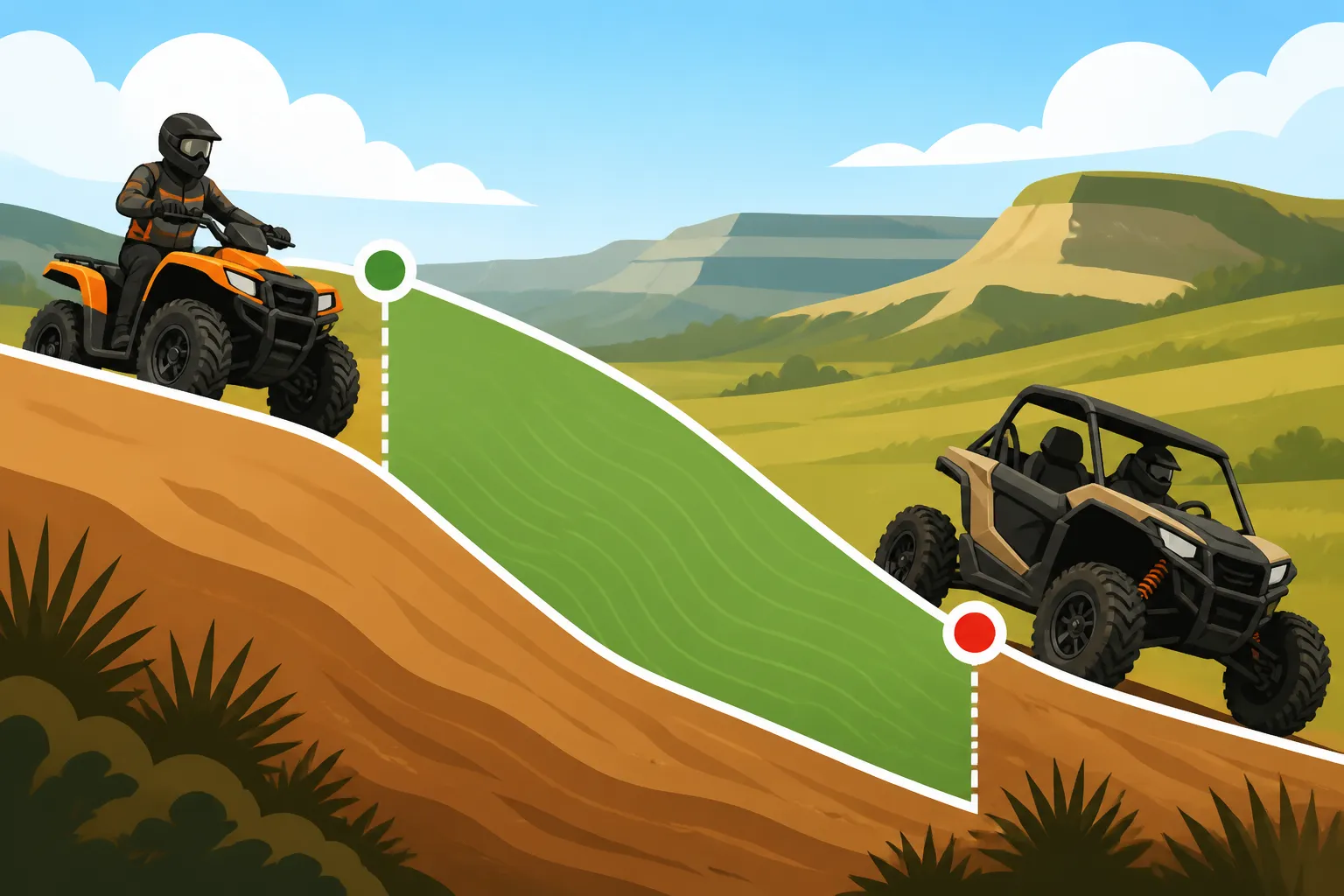
Where the Inslope Begins and Ends
Ah, North Dakota ditch riding! It sounds so simple, doesn't it? Just hop on your ATV or UTV and cruise along the roadside. But as any seasoned rider knows, the legal landscape of ditch riding in North Dakota is far from straightforward. One of the most common points of confusion, and frankly, a source of major frustration for riders, revolves around understanding exactly where you can and cannot ride. Specifically, nailing down the precise boundaries of the "inslope" is crucial, because this seemingly small detail can mean the difference between a fantastic ride and an unexpected citation. This guide is going to strip away the legal jargon and clearly explain where the inslope begins and ends, helping you stay on the right side of the law while enjoying our beautiful prairie.
Understanding the Anatomy of a North Dakota Road Ditch
Before we can even begin to talk about where the inslope starts and stops, we need to have a clear picture of what a road ditch actually is in the eyes of the law and highway engineers. It's not just a big hole next to the road; it's a carefully designed piece of infrastructure, and each part has a name and a function. For ATV and UTV riders, understanding these individual components is absolutely vital, as they dictate your legal riding areas.
Imagine you're driving down a North Dakota highway in your truck, looking out the window at the landscape. Immediately to the side of the paved or gravel road is the shoulder. Beyond that, the ground slopes down, then flattens out, and then slopes back up before meeting the fence line or open field. Each of these distinct sections plays a role in highway drainage, snow management, and, yes, off-highway vehicle (OHV) regulations. Many riders mistakenly believe that if they are "in the ditch," they're automatically good to go. This couldn't be further from the truth. The law draws very specific lines, and those lines often surprise people who haven't delved into the details.
Breaking Down the Ditch: Shoulder, Inslope, Ditch Bottom, and Back-Slope
Let's walk through the typical cross-section of a North Dakota public highway right-of-way, moving from the roadway itself outward to the private land beyond:
- The Roadway: This is the obvious part – where cars and trucks drive. It includes the paved or graveled surface. OHVs generally have very restricted access here, often limited to [North Dakota ATV Road Rules by Surface Type] and specific crossing procedures.
- The Shoulder: Immediately adjacent to the roadway, the shoulder is usually a relatively flat, stable area designed for emergency stops, allowing broken-down vehicles to pull over, or providing space for maintenance crews. Think of it as the "edge" of the road. For OHV riders, the shoulder is generally a no-go zone. You should not be riding here.
- The Inslope: This is the first downward slope you encounter after the shoulder. It's the section of the ditch that descends from the shoulder down to the lowest point of the ditch – the ditch bottom. This area is critical for directing water away from the roadway. It's also the section that causes the most confusion for OHV riders.
- The Ditch Bottom: This is the lowest, often flattest, part of the ditch, where water collects and flows. It can be wet, muddy, or even have standing water depending on recent weather.
- The Back-Slope: After the ditch bottom, the ground starts to slope back upward, moving away from the roadway towards the outer boundary of the public right-of-way. This slope leads to the fence line or the edge of the adjacent private property.
- The Outer Right-of-Way Boundary: This is the legal limit of the public land associated with the road. Beyond this, you're on private property, and that means [North Dakota Posted Land Rules for Riders] apply.
Understanding these distinct segments is the first step to becoming a legal and responsible ditch rider in North Dakota. Without this foundation, it's almost impossible to correctly interpret the specific rules that apply to OHV operation.
Why These Definitions Matter for OHV Riders
You might be thinking, "Why all this fuss about different parts of a ditch?" The answer is simple: North Dakota law explicitly permits OHV riding only in certain parts of the ditch, while prohibiting it in others. Ignoring these distinctions isn't just a minor infraction; it can lead to fines, damage to the road infrastructure, and potentially dangerous situations for both riders and motorists.
The legal framework is designed to protect both the public infrastructure (the roads and ditches) and public safety. Riding on the shoulder or inslope, for example, can contribute to erosion, damage the integrity of the road, or create a hazard by putting OHVs too close to high-speed vehicle traffic. The intent of the law is to allow OHV enthusiasts to utilize the public rights-of-way for travel, particularly for accessing fields, hunting land, or simply getting from point A to point B, without compromising road safety or maintenance. This is why a firm grasp of [Riding North Dakota's Ditch Bottom and Back-Slope] is so crucial. Without knowing where these zones begin and end, you're essentially riding blind regarding the law.
The Inslope: A Prohibited Zone for OHV Travel
Now, let's zoom in on the star of our show: the inslope. This is perhaps the most misunderstood and consequently, the most illegally ridden part of the North Dakota ditch. For OHV riders, it's critical to understand this: the inslope is generally off-limits for regular riding. This isn't just a suggestion; it's a legal restriction that carries penalties.
The law draws a very clear line, essentially stating that while the ditch bottom and back-slope are generally open for registered OHVs, the inslope and shoulder are not. This distinction is paramount for anyone planning to enjoy the extensive network of North Dakota's ditch routes. You absolutely cannot treat the entire area between the edge of the road and the fence line as one big, open riding playground.
Identifying the Inslope: What to Look For
So, how do you, as a rider, identify the inslope when you're out there? It's not like there are painted lines or signs saying "Inslope Starts Here!" You need to develop an eye for the natural topography and understand the legal definition.
The inslope is the downward slope immediately following the shoulder of the road. Visually, it's the section where the ground begins its descent from the relatively flat shoulder towards the lowest point of the ditch. Think of it as the transition zone where water starts to drain away from the road surface.
Here are some clues and characteristics to help you identify it:
- Proximity to the Roadway: The inslope is always the closest sloped section to the actual road surface. If you feel like you're still quite close to passing traffic, you're likely on the inslope or even the shoulder.
- Steepness: While "steep" is relative, the inslope is designed to move water efficiently, so it will have a discernible downward angle. This slope directly connects the shoulder to the ditch bottom.
- Vegetation Differences: Sometimes, the inslope might have different vegetation than the ditch bottom or back-slope due to drainage patterns, maintenance, or soil composition. For instance, it might be more regularly mowed or have sparser growth right near the shoulder.
- Culvert Entries: Where culverts pass under the road, the inslope leads directly into the culvert opening. If you're riding near a culvert entrance, you're almost certainly on the inslope.
The challenge comes in areas where the shoulder is very narrow, or the ditch is very shallow. In these cases, the inslope might seem almost indistinguishable from the shoulder. However, the legal definition still applies. It's the sloping ground that forms the immediate side of the roadbed, aiding in drainage. Equipping your machine with robust [North Dakota Mirror and Horn Requirements] and powerful [North Dakota Headlamp Distance Standards] can help you maintain situational awareness, not just of traffic but also of the ditch features as you ride.
The Legal Rationale Behind Inslope Restrictions
The prohibition against riding on the inslope isn't arbitrary. It's rooted in practical engineering and safety considerations:
- Roadbed Integrity: The inslope is a critical component of the road's foundation. Riding heavy OHVs on this part of the ditch, especially when wet, can cause rutting, erosion, and compromise the structural stability of the road shoulder and ultimately, the roadway itself. This leads to higher maintenance costs for taxpayers and potential safety hazards for all road users.
- Drainage Function: Ditches are built to drain water away from the road, preventing pooling and damage. The inslope is specifically designed to facilitate this flow. OHV traffic can disrupt this natural drainage, leading to water accumulation and further damage.
- Safety Buffer: The inslope acts as a safety buffer between the main flow of traffic and the ditch bottom. Allowing OHVs to ride on the inslope puts them in much closer proximity to fast-moving vehicles, significantly increasing the risk of accidents. This is particularly true on roads with higher speed limits or limited visibility.
- Emergency Access: The shoulder and the very top of the inslope are sometimes used by emergency vehicles or road maintenance equipment. Keeping these areas clear ensures uninterrupted access for critical services.
While it might seem inconvenient, these rules are in place for good reasons. They ensure that the infrastructure remains intact and that everyone, including OHV riders, can use the public right-of-way safely. Understanding these reasons can help riders appreciate the law, rather than just seeing it as an obstacle.
Riding Legally: The Permitted Ditch Bottom and Back-Slope
Now for the good news: while the inslope is generally off-limits, the ditch bottom and back-slope are, by and large, where North Dakota OHV riders are legally allowed to operate their machines when traversing public road rights-of-way. This is where you can truly enjoy the expansive prairie landscape from the seat of your ATV or UTV.
The distinction might seem subtle on paper, but when you're out there, it makes a world of difference in your legal standing and your safety. Knowing that you're in the right zone brings peace of mind and allows you to focus on the ride itself. This is the heart of what [North Dakota Ditch Riding: The Legal Right Explained] truly means for OHV enthusiasts.
Embracing the Ditch Bottom and Back-Slope for Your Adventures
The ditch bottom is the flat, often widest, part of the ditch. It's where you'll typically find the main flow of water after a rain or during spring melt. Beyond that, the back-slope is the upward slope moving away from the ditch bottom towards the edge of the public right-of-way. Both of these areas are generally considered permissible for OHV travel, provided your machine is properly registered and equipped.
Riding in these areas offers several advantages:
- Increased Safety Margin: By keeping a greater distance from the traveled portion of the highway, you reduce your exposure to fast-moving vehicle traffic. This is a critical safety consideration, especially on roads with higher speeds.
- Reduced Environmental Impact: By staying off the inslope, you minimize the risk of causing erosion or damage to the critical drainage components of the road system. This helps preserve the very pathways you enjoy riding.
- Legal Compliance: Most importantly, riding in the ditch bottom and on the back-slope ensures you're operating within the bounds of North Dakota law, reducing your risk of receiving a citation.
It's important to remember that even within these permissible zones, common sense and courtesy apply. Always ride responsibly, be aware of your surroundings, and respect private property lines. While the ditch bottom and back-slope are generally open, landowners adjacent to the right-of-way may still have concerns or specific requests.
Practical Tips for Staying in the Legal Zone
Identifying the inslope, ditch bottom, and back-slope might sound easy in theory, but it can be challenging when you're moving at speed, especially in areas with varying terrain or heavy vegetation. Here are some practical tips to help you stay in the legal zone:
- Slow Down and Observe: When you're unsure, reduce your speed. Take the time to visually assess the contours of the ditch. Look for the distinct downward slope (inslope), the flat area (ditch bottom), and the upward slope away from the road (back-slope).
- Maintain a Safe Distance from the Shoulder: A good rule of thumb is to ensure there's a visible, distinct flat area (the shoulder) and then a clear downward slope (the inslope) before you enter the area you intend to ride. If you feel too close to the edge of the paved or gravel road, you're probably too high in the ditch.
- Look for Water Flow: The ditch bottom is where water naturally accumulates and flows. If you see signs of consistent water flow (even if it's dry at the moment), you're likely in the ditch bottom.
- Reference Fence Lines or Property Markers: The back-slope will typically lead up to the fence line or the edge of private property. Understanding the outer boundary of the public right-of-way can help you define the extent of the back-slope. Just remember that the public right-of-way extends beyond the fence in many cases, so always be mindful of crossing onto private land without permission.
- Consider Your Machine's Width: Wider UTVs, particularly those like some popular SuperATV models with wide A-arms or lift kits, need extra caution. A machine that is 60 inches wide or more might find itself encroaching on the inslope or shoulder simply due to its footprint, especially in narrower ditches. Make sure you understand [North Dakota Class II Width and Weight Limits] if you're riding a larger side-by-side.
- Carry a GPS or Map: While not specifically for ditch definitions, a GPS can help you track your location relative to roads and known boundaries, which can indirectly aid in understanding the terrain around you.
- Ride with Experienced Locals: If you're new to an area, riding with someone who knows the local regulations and typical ditch characteristics can be invaluable. They can point out these zones in real-time.
By being observant and understanding the key features, you can confidently navigate the ditches of North Dakota while adhering to the law.
Consequences and Best Practices for North Dakota Ditch Riding
Let's be realistic: understanding the inslope, ditch bottom, and back-slope isn't just an academic exercise. There are very real consequences for not following the rules, and a whole host of best practices that can make your ditch riding experience safer and more enjoyable for everyone. North Dakota's laws are there to ensure safety and preserve the landscape we all share.
Navigating the nuances of ditch riding safely and legally means not only knowing where to ride but also understanding the potential repercussions of mistakes and how to proactively avoid them. It's about being a responsible member of the OHV community.
What Happens If You Ride the Inslope Illegally
Riding on the inslope or shoulder, whether intentionally or accidentally, can lead to a citation. While specific fine amounts can vary and change, it's important to know that violating OHV laws is taken seriously. A basic OHV violation, such as riding in a prohibited area, could lead to a fine. Ignoring these rules also directly contradicts the spirit of the legislation that allows ditch riding, potentially jeopardizing these privileges for all riders in the future.
Beyond the legal penalties, there are practical consequences:
- Safety Hazards: As mentioned, riding too close to the roadway increases your risk of collision with other vehicles. A momentary lapse of attention could have severe consequences.
- Environmental Damage: Your machine's tires can create ruts and accelerate erosion, especially in soft or wet conditions. This damages the very environment you're trying to enjoy and creates extra work for road maintenance crews.
- Negative Public Perception: When OHV riders disregard rules, it unfortunately paints a negative picture of the entire riding community. This can lead to stricter regulations or reduced access in the future.
If you find yourself facing an issue, it's always wise to be polite and cooperative with law enforcement. Sometimes, if it's a first offense and you genuinely didn't understand the rule, an officer might give you a warning. However, ignorance of the law is generally not a valid defense. That's why being informed is your best defense. For a general overview of what citations can entail, you might look at [What a Class B Misdemeanor Means in North Dakota] for more serious infractions, or understand that [A Basic OHV Violation Now Costs $50] for simpler ones.
Equipping Your Machine for Safe and Legal Ditch Riding
Being informed about the rules is step one, but having the right equipment on your ATV or UTV is equally important for safe and legal ditch riding in North Dakota. Many of these requirements are not just about preventing tickets, but about enhancing your visibility, control, and overall safety.
Here's what to consider:
- Registration and Decals: First and foremost, your OHV must be properly registered with the North Dakota Department of Transportation. Ensure your [North Dakota OHV Plate or Decal: Your Choice] is current and properly displayed. Riding an unregistered machine on public rights-of-way will almost certainly lead to a penalty.
- Lighting: When riding after dark or in low visibility, proper lighting is non-negotiable. This includes working headlamps, taillamps, and brake lights. Consider upgrading to brighter LED lights for enhanced visibility, both for you to see the terrain and for others to see you. Companies like SuperATV offer a range of robust lighting solutions designed for off-road use, which can significantly improve your ability to discern ditch contours and avoid riding into prohibited zones in challenging light.
- Mirrors: North Dakota law requires at least one rearview mirror if your OHV is capable of speeds over 30 mph and you're operating on a highway. Having mirrors allows you to keep an eye on traffic behind you, which is crucial when operating near busy roads.
- Horn: A working horn, audible from at least 200 feet, is also a requirement for highway-capable machines. This is for signaling other vehicles or pedestrians if needed.
- Speedometer and Odometer: If your machine is legally capable of road travel, a working speedometer and odometer are required. This helps you monitor your speed and ensures you're abiding by posted limits.
- Spark Arrester: A U.S. Forest Service-approved spark arrester is a universal requirement for OHVs operating on public lands. This prevents sparks from escaping your exhaust and potentially starting prairie fires, especially in dry conditions.
- Tires: While not a legal requirement for ditch riding, choosing tires suitable for varied terrain, including potential mud and gravel, can greatly improve your control and safety. Products designed for all-terrain performance can help you maintain traction whether you're in a dry ditch bottom or a muddy back-slope.
- Safety Gear: Helmets are legally required for riders under 18 in North Dakota, but wearing one is a smart choice for all riders, regardless of age. Eye protection, gloves, and appropriate clothing (long sleeves, pants, sturdy boots) can protect you from debris, sun, and potential injuries.
- Winch: While not a legal requirement, a winch can be a lifesaver if you find yourself stuck in a muddy ditch bottom, helping you avoid prolonged exposure to traffic and potential recovery costs.
By preparing your machine and yourself, you're not just complying with the law; you're actively ensuring a safer, more enjoyable, and hassle-free experience every time you head out to explore the ditches of North Dakota. It's about being proactive and respecting the environment and the rules that allow us to enjoy this unique riding privilege.
Understanding Ditch Sections for OHV Use
Here's a quick summary to help you visualize the different parts of a North Dakota road ditch and their legality for OHV riders:
| Ditch Section | Description | OHV Riding Permitted? | Why? |
|---|---|---|---|
| Roadway | Paved or gravel driving surface for motor vehicles. | No (with rare exceptions) | Exclusively for licensed motor vehicles. OHVs have extremely limited legal access, primarily for direct crossings or brief "transitory operation past an obstruction." |
| Shoulder | Flat area immediately adjacent to the roadway. | No | Provides a safety buffer and emergency pull-off. Riding OHVs here poses a high risk of collision and can damage infrastructure. |
| Inslope | The downward slope from the shoulder to the ditch bottom. | No | Critical for roadway drainage and structural integrity. OHV use causes erosion, ruts, and proximity to traffic hazards. This is a key prohibited zone for general riding. |
| Ditch Bottom | The lowest, often flattest part of the ditch, where water collects. | Yes | Generally considered a legal and safer area for registered OHVs to operate, as it is further from direct traffic and part of the designated "ditch" for OHV travel. |
| Back-Slope | The upward slope from the ditch bottom towards the outer right-of-way. | Yes | Similar to the ditch bottom, this area is typically far enough from the roadway to be considered a legal riding zone for registered OHVs. Leads up to the outer boundary of the public right-of-way. |
| Private Land | Beyond the public right-of-way (often marked by a fence line). | No (without permission) | This is private property. Riding here without explicit, often written, permission from the landowner is trespassing and illegal. Always get permission. |
This article is for general informational purposes only and does not constitute professional advice. Laws, prices and regulations vary by location and change over time. Consult a qualified professional for guidance on your specific situation.