Riding North Dakota’s Ditch Bottom and Back-Slope
Riding your ATV or UTV in North Dakota offers a unique sense of freedom, but figuring out exactly where you can legally ride can feel like navigating a maze. One of the most common points of confusion for riders, especially those new to the state or just getting into off-roading, revolves around ditch riding. What exactly is a "ditch bottom" or a "back-slope," and can you actually ride there? This guide is here to cut through the jargon and give you a clear, realistic understanding of how to legally and safely enjoy North Dakota's vast ditch system, validating the real challenges you face when trying to understand these often-vague rules.
Understanding North Dakota's Ditch Anatomy for OHVs
When we talk about "ditch riding" in North Dakota, we're not just referring to any old depression alongside the road. The law has specific definitions that are crucial to understand. It's not always intuitive, and sometimes what looks like a ditch to the casual observer might actually be a prohibited area for OHVs. Getting this right is the first step to avoiding a citation and ensuring your ride is enjoyable and legal.
Where the Ditch Bottom Begins and Ends
Imagine you're driving down a county road. To your immediate right, you'll often see the paved or graveled travel lane, then perhaps a mowed area, and then a gradual slope down. The absolute lowest, flattest part of that depression, running parallel to the road, is generally what's considered the "ditch bottom." It's the natural drainage channel. This area typically starts where the shoulder or inslope ends its descent and extends to the point where the terrain begins to rise again towards the adjacent land. It's often the part that collects water during heavy rains, and while it might not always be perfectly flat, it's the distinct lowest point before the terrain starts to angle upwards again. Many riders find this area attractive because it offers a clear, relatively unimpeded path, but it's essential to understand its boundaries to stay legal.
Identifying the Back-Slope
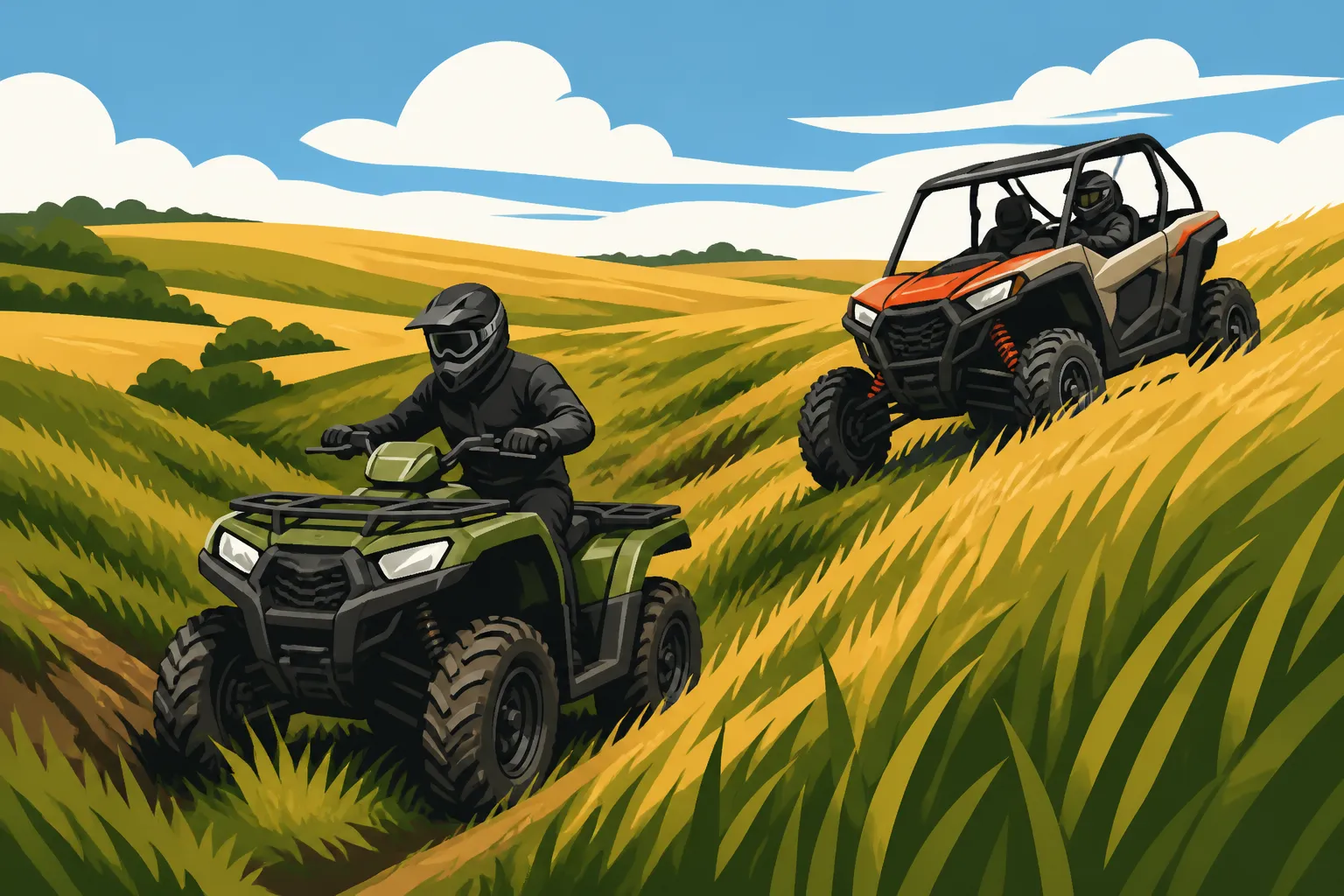
Now, once you've crossed that ditch bottom and the ground starts to rise away from the road, you're usually on what's called the "back-slope." This is the part of the ditch that slopes upward from the ditch bottom towards the boundary of the adjacent private property, often ending at a fence line or property marker. Think of it as the opposite side of the ditch from the main roadway. The back-slope can vary greatly in steepness, length, and vegetation. Some back-slopes are gentle grassy inclines, while others can be quite steep and covered in brush or even small trees. The important distinction here is that while the back-slope is part of the overall ditch right-of-way, its legal status for riding is tied directly to the ditch bottom. You're generally permitted to ride on both, as long as you're within the designated public right-of-way and not venturing onto private land or the prohibited inslope. It's this continuous flow from the ditch bottom up the back-slope that allows for longer, more varied ditch runs.
The Legal Framework for Ditch Riding in North Dakota
North Dakota law offers a degree of freedom for OHV riders that isn't always found in other states. The general rule allows for riding in ditches, but like most things, there are crucial exceptions and specific areas where you absolutely cannot venture. It's critical to understand these nuances to avoid issues, as an uninformed ride can quickly turn into a costly mistake.
Permitted Operation and the General Rule
The good news for North Dakota OHV enthusiasts is that the state generally permits the operation of registered off-highway vehicles in the ditch bottoms and back-slopes of public roads. This means that, for the most part, those wide-open spaces alongside the roadways are fair game for your ATV or UTV. This broad permission is a big part of why ditch riding is such a popular activity here, providing miles of access that might not be available as dedicated trails. However, this permission isn't a free-for-all. It's contingent on your machine being properly registered and titled, as well as following all other operating rules. For example, your machine needs to be street-legal in terms of equipment if you ever intend to cross or briefly operate on the main roadway. Understanding your machine's classification, whether it's [North Dakota Class I Machines Defined] or [North Dakota Class III Machines Under 8,000 Pounds], can also impact specific road riding rules. The core idea is that if you're in the ditch bottom or on the back-slope, you're generally within your rights to ride, provided you're adhering to the fundamental rules of operation.
Prohibited Areas: Inslope, Shoulders, and Obstructions
Now for the critical exceptions. While ditch bottoms and back-slopes are generally open, there are specific parts of the road right-of-way that are strictly off-limits to OHVs, no matter how tempting they might look. The most important areas to avoid are the "inslope" and the "shoulder" of the roadway.
- The Inslope: This is the portion of the ditch that slopes down from the shoulder of the roadway to the ditch bottom. Essentially, it's the side of the ditch closest to the road. The inslope is considered too close to active traffic and isn't permitted for OHV operation. Think of it as a safety buffer between the road and the permitted ditch riding area. Even if it looks like a nice, smooth path, stick to the ditch bottom and back-slope. You can find more details about this in [North Dakota Inslopes and Shoulders Are Closed].
- The Shoulder: This is the improved, usually graveled or paved, area immediately adjacent to the main travel lane of the road. It's designed for vehicles to pull over in an emergency, not for OHV recreation. Riding on the shoulder is strictly prohibited.
- Main Travel Lanes and Interstates: This should go without saying, but OHVs are not allowed on the main paved or graveled travel lanes of roads unless specifically permitted for crossing or very brief, designated use, and certainly never on controlled-access highways like interstates. [North Dakota Interstates Are Never Open] to OHVs.
- Posted Private Property: Remember, the ditch right-of-way has limits. Once you cross the invisible line from public right-of-way onto private land, even if it's still part of the ditch, you are trespassing unless you have explicit permission from the landowner. Always be aware of signs indicating private land or agricultural fields. [North Dakota Posted Land Rules for Riders] are serious, and respecting them prevents conflicts.
Understanding these prohibited zones is just as important as knowing where you can ride. Straying into these areas, even accidentally, can lead to fines and other legal consequences, making your fun day out a real headache.
Navigating Obstructions and Exceptions
Life on the trail (or in the ditch!) is rarely a perfectly smooth ride. You're going to encounter fences, driveways, culverts, or other obstacles that make continuous ditch riding impossible. North Dakota law, thankfully, accounts for these scenarios with specific exceptions that allow you to temporarily leave the ditch bottom or back-slope to bypass an obstruction. However, these exceptions come with strict rules to ensure safety and minimize disruption to traffic.
When Transitory Operation Past an Obstruction is Allowed
This is where the "obstruction exception" comes in handy. North Dakota law understands that ditches aren't always perfectly clear. If you encounter an obstruction in the ditch bottom or back-slope that prevents continuous OHV operation—such as a large culvert, a utility box, or an approach to a private driveway—you are generally allowed to temporarily leave the ditch to go around it. This is called "transitory operation." The key here is "transitory," meaning it's a brief, temporary deviation from your permitted path. You're not meant to use this as an excuse to ride on the shoulder or main roadway for extended periods. The intent is solely to bypass the obstacle and immediately return to the ditch. You can learn more about this specific rule in [North Dakota's Obstruction Exception].
Here's how to think about it in practice:
- Assess the obstruction: Is it truly blocking your path in the ditch bottom or back-slope?
- Prioritize safety: Before you even think about moving, check for oncoming traffic. You're about to enter an area closer to active road users. Use common sense and caution.
- Minimal deviation: Move onto the adjacent part of the right-of-way (e.g., the inslope or briefly the shoulder) only as far as necessary to clear the obstruction. Don't take a wide, sweeping turn if a tight, safe one will suffice.
- Immediate return: As soon as you are past the obstruction, you must return to the ditch bottom or back-slope promptly and safely. This isn't an invitation to ride the shoulder for a quarter-mile.
This exception is designed for practicality, allowing riders to maintain their flow without getting stuck, but it demands careful and responsible execution. Equipping your UTV with a reliable winch, perhaps from a brand like SuperATV, can also be a game-changer if you find yourself needing to clear smaller, movable obstructions or if you get bogged down in challenging ditch terrain.
Returning to the Ditch After Passing
Once you've safely navigated around an obstruction, the law requires you to return to the permitted ditch bottom or back-slope as quickly and safely as possible. This isn't an optional step; it's a core component of the "transitory operation" rule. Failing to return promptly could be interpreted as operating in a prohibited area, which could lead to a citation.
Consider these points for a smooth return:
- Look for a safe entry point: Don't just dive back into the ditch blindly. Ensure the terrain is safe, and you're not going to cause damage to your machine or get stuck.
- Yield to traffic: If returning to the ditch requires crossing a small portion of a road or an approach, always yield to any vehicle traffic. Your safety, and the safety of others, comes first.
- Maintain awareness: Even after passing the obstruction, keep an eye out for further obstacles or changes in the ditch terrain. North Dakota ditches can be unpredictable, especially after heavy rains or during spring thaw. Having robust suspension components, like those offered by SuperATV, can help absorb the shocks of uneven ditch terrain during these transitions.
The essence of this rule is to allow for practical movement while ensuring OHVs remain primarily within the designated ditch areas, away from the immediate dangers of active road traffic. Always exercise caution and good judgment when making these temporary deviations.
Important Considerations for Responsible Ditch Riding
Beyond knowing the letter of the law, being a responsible OHV rider in North Dakota's ditches means understanding the practicalities and etiquette. The landscape itself presents challenges, and respecting both the land and other users is paramount to keeping these riding opportunities open for everyone.
Safety and Awareness While Riding Ditches
Riding in ditches might seem straightforward, but it comes with its own set of unique challenges and hazards that demand your full attention. Unlike purpose-built trails, ditches are dynamic environments shaped by weather, water, and agricultural activity.
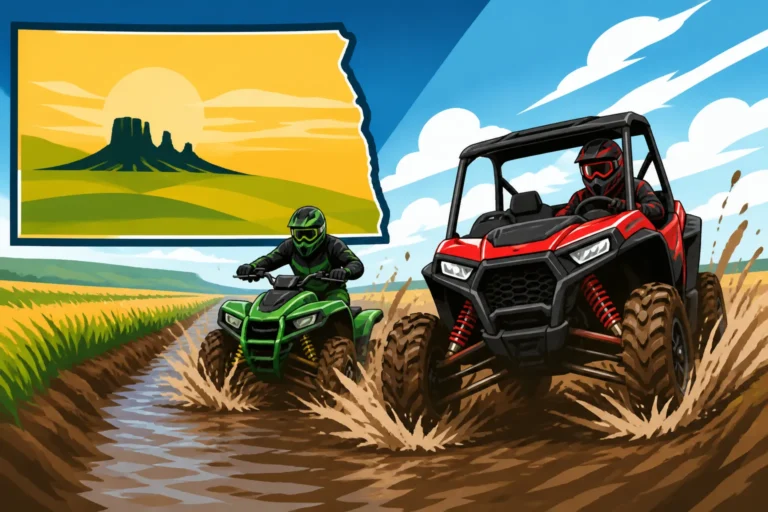
- Varying Terrain: One minute you might be on smooth, packed dirt, and the next you could encounter deep ruts from water flow, unexpected soft spots, or even hidden rocks and debris. [North Dakota Gumbo Mud and What It Does] is a very real thing that can quickly bog down a machine and make riding treacherous. Be prepared for sudden changes in surface conditions.
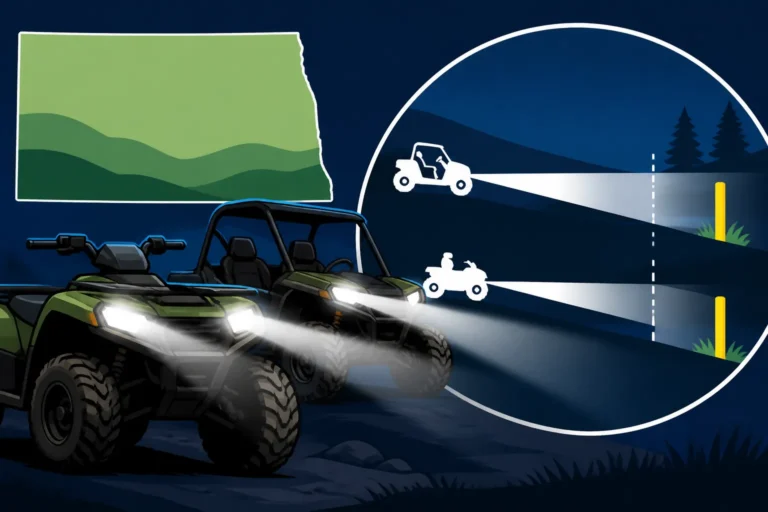
- Visibility: While ditch riding can offer open views, your visibility can be limited by tall grasses, crops in adjacent fields, or even the slopes themselves when cresting a rise in the ditch. Be especially cautious when approaching road intersections, farm approaches, or blind curves, as you might not see oncoming vehicles or pedestrians until the last minute. Equipping your machine with bright LED lighting can significantly improve your visibility, especially when dust is an issue or during low-light conditions.
- Wildlife: North Dakota is rich with wildlife, and animals—from deer to pheasants—can unexpectedly dart across your path. Remain alert, especially at dawn and dusk, to avoid collisions.
- Weather Conditions: The weather on the prairie can change rapidly. Rain can quickly turn dirt ditches into slick, muddy traps, and wind can kick up dust, reducing visibility. Always check the forecast before you head out, and be prepared to cut your ride short if conditions deteriorate. Reliable tires with a good tread pattern, potentially from a supplier like SuperATV, are crucial for maintaining traction in varied ditch conditions.
Always wear appropriate safety gear, including a helmet, eye protection, gloves, and sturdy footwear. Riding alone in remote areas carries extra risk, so consider riding with a buddy or at least letting someone know your planned route and expected return time. A [North Dakota Safety Course Cost] is a minor investment compared to the safety it provides, especially for younger riders.
Respecting Private Land and Posted Boundaries
While North Dakota's ditch riding rules are quite generous, they do not grant you unlimited access. One of the most common issues that arise is unintentional trespassing onto private land. The ditch is part of the public right-of-way, but that right-of-way has a boundary, often marked by a fence line, property stakes, or simply a change in vegetation where agricultural fields begin.
- Know Your Boundaries: It is your responsibility as the rider to know where the public right-of-way ends and private land begins. Always assume land adjacent to the ditch is private unless it's clearly marked as public access. This is particularly true for [North Dakota Posted Land Signs and Riders]. Look for "No Trespassing" signs, colored paint on fence posts, or explicit property lines.
- Farm Operations: Be incredibly respectful of active farm operations. Farmers often use adjacent fields, and their equipment may be near or even in the ditch. Give them a wide berth, and do not disrupt their work. Never enter a field to ride unless you have explicit, written permission from the landowner.
- Gates and Livestock: If you encounter a gate across a ditch or leading into a field, assume it's there for a reason (often related to livestock or property access). Do not open gates unless absolutely necessary and you know it's permissible; if you do open one, close it behind you. [Gates and Livestock Etiquette] is crucial for good landowner relations.
- Noise and Disturbances: While OHVs are designed for adventure, be mindful of noise levels, especially near homes, farms, or livestock. Your actions reflect on the entire OHV community, and responsible riding helps maintain these access privileges.
Remember, the vast majority of North Dakota land is privately owned. Misunderstanding or disrespecting private property boundaries can lead to legal issues, strained relationships with landowners, and ultimately, a reduction in the riding opportunities available to all of us. When in doubt, err on the side of caution and stay clearly within the public ditch bottom and back-slope.
Summary of Ditch Riding Rules
To help you keep track of what's allowed and what's not, here's a quick reference table. This isn't an exhaustive list, but it covers the core aspects of riding in North Dakota's ditches.
| Aspect | Permitted | Prohibited | Notes |
|---|---|---|---|
| Location | Ditch Bottom and Back-Slope | Inslope, Shoulder, Main Travel Lanes, Interstates, Posted Private Land | Always yield to traffic when crossing or temporarily exiting the ditch. [North Dakota Inslopes and Shoulders Are Closed]. [North Dakota Interstates Are Never Open]. |
| Obstructions | Transitory operation around genuine obstacles | Prolonged riding on shoulders/roadways to avoid ditches | Return to ditch bottom/back-slope immediately after passing obstruction. [North Dakota's Obstruction Exception]. |
| Registration | Required for public land/ditch use | Riding unregistered OHV on public land/ditches | Ensure your machine is properly registered with the state. [North Dakota OHV Registration Cost] is minimal for the access it provides. |
| Equipment | Basic safety equipment, working brakes, muffler | Riding without required equipment, excessive noise, spark arrestor bypass | Check specific requirements if riding on gravel or paved roads (mirrors, horn, etc.). [North Dakota Muffler Requirements]. |
| Private Land | With landowner's explicit permission (ideally written) | Any entry onto private land without permission | Always assume land is private unless clearly marked otherwise. Respect [North Dakota Posted Land Signs and Riders]. |
| Speed/Manner | Reasonable and prudent, safe for conditions | Reckless operation, impaired driving, creating a public nuisance | Always prioritize safety and respect others. [North Dakota DUI Rules for OHV Riders] apply to OHVs too. |
| Passengers | Only if machine is designed for it | Carrying more passengers than manufacturer's design, or in unsafe manner | Ensure passengers have a proper seat and handholds. [North Dakota Passenger Rules on an OHV]. |
| Age | Age-appropriate riding, safety certificate for <16 | Unsupervised riding by minors under 16 without a safety certificate | Riders under 16 typically need a safety certificate unless on private land with parental supervision. North Dakota Safety Certificates at Age 12. |
This article is for general informational purposes only and does not constitute professional advice. Laws, prices and regulations vary by location and change over time. Consult a qualified professional for guidance on your specific situation.