Emergencies and the Only Exception
It’s happened to all of us who ride ATVs and UTVs in North Dakota: you’re out enjoying the open country, maybe checking fence lines, or simply adventuring, when suddenly, an unexpected emergency rears its head. Whether it’s a medical crisis, a critical piece of farm infrastructure failing, or a sudden threat to livestock, these moments can throw you into a panic, especially when the quickest route to a solution involves roads where your off-highway vehicle (OHV) isn't typically allowed. This guide is all about navigating those stressful situations, diving deep into North Dakota's "emergencies and the only exception" clause, so you know exactly what your rights and responsibilities are when urgent circumstances demand you take your OHV where it normally can't go.
Understanding North Dakota's General OHV Road Restrictions
Let's be honest, the rules about where you can and can't ride your ATV or UTV in North Dakota can feel like a tangled ball of yarn. One minute you're legally cruising a ditch bottom, and the next you're looking at a paved road where your machine is strictly forbidden. It's a common frustration for riders who just want to understand the lay of the land without constantly worrying about legal pitfalls.
The Standard Rule: Off-Limits for Most Roads
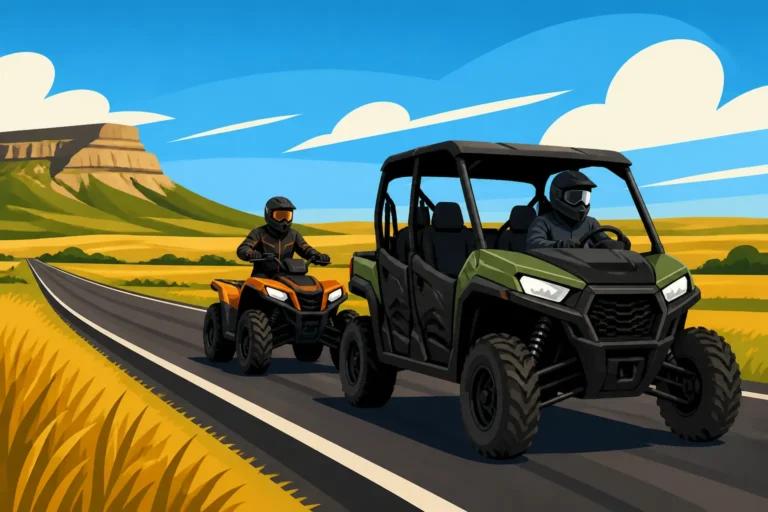
For the most part, North Dakota law keeps off-highway vehicles off of paved highways, interstates, and other controlled-access roadways. This isn't just a suggestion; it's a hard rule designed to keep everyone safe. Imagine a full-sized semi-truck barreling down I-94 at 75 mph and encountering a side-by-side doing 40 mph on the shoulder—it's a recipe for disaster. While you might have some flexibility on gravel roads or within certain ditch lines, particularly the back-slopes and ditch bottoms, getting onto a main thoroughfare without a legitimate reason is generally a no-go. You can find more specific details about this in our guide on [North Dakota ATV Road Rules by Surface Type]. The state has carved out specific areas where OHVs can be operated, often for utilitarian purposes like farm work or accessing remote hunting spots, but these allowances come with their own set of rules and limitations. For instance, traveling along a [North Dakota Section Line] might be permitted under certain conditions, but crossing a busy paved highway is an entirely different matter, often requiring specific maneuvers and precautions.
Why Strict Rules Exist for Public Roadways
It's easy to feel singled out when you see regular cars and trucks zipping along, and your powerful off-road machine is relegated to the dirt paths. But these rules aren't arbitrary; they stem from significant safety considerations. OHVs are designed differently than street-legal vehicles. They often have different tire compounds, suspension systems, and braking capabilities that aren't optimized for high-speed, paved road travel. They also lack many of the safety features found in cars, such as airbags and crush zones, making collisions with heavier, faster vehicles incredibly dangerous. The speed differentials alone are a huge factor, as is visibility, especially for smaller ATVs. The state's goal is to prevent accidents and ensure that all road users, whether on four wheels or two, can share the space safely. It's a tough pill to swallow when you're just trying to get from point A to point B, but the regulations aim to protect riders from the inherent dangers of mixing off-road performance with on-road traffic.
Defining an Emergency for OHV Operation in North Dakota
So, when does the law make an exception? North Dakota statutes understand that life isn't always neat and tidy, and sometimes, desperate times call for different measures. This is where the "emergencies and the only exception" clause comes into play, offering a narrow, yet crucial, window for OHV use on otherwise restricted public ways.
What Constitutes a Legitimate Emergency?
The key here is "legitimate." This isn't about running out of gas and taking the quickest paved route to town for fuel, nor is it about taking a shortcut to your favorite fishing spot because the gravel road is too bumpy. A legitimate emergency, in the eyes of the law, generally involves an immediate and critical threat to life, limb, or property.
Think about these scenarios:
- Medical Emergency: Someone, perhaps a family member on your property or a fellow rider on a remote trail, is seriously injured and you need to get them to an accessible road for an ambulance as fast as possible. You might use your UTV to transport them or to quickly reach a phone signal.
- Infrastructure Failure: A main water line bursts on your property, threatening to flood your home or barn, and the quickest way to the shut-off valve across a short stretch of paved public road is with your ATV. Or perhaps a major fence line has been breached by a storm, and livestock are about to escape onto a busy highway, requiring immediate repair. You're using your OHV to carry tools and materials or to herd animals back quickly.
- Imminent Danger to Livestock or Property: A wildfire is approaching your ranch, and you need to move animals quickly, or access a remote pump to start a fire break. Or perhaps a snowstorm has trapped machinery, and you need to reach it with your OHV to clear a path.
- Search and Rescue: While often handled by official agencies, if you are directly involved in a personal search for a lost child or an elderly family member in a rural area, and every second counts, an OHV can be critical.
The underlying principle is immediacy and necessity. The action you take with your OHV must be directly related to mitigating the emergency, and there should be no reasonably safer or quicker alternative. If you have time to drive your truck around, that's likely not an emergency justifying OHV use on a prohibited road. This exception is not a license for convenience; it's a shield for genuine urgency.
The "Only Exception" Clause in Practice
North Dakota law specifically carves out allowances for using OHVs on certain public lands or rights-of-way when it is "reasonably necessary to save life, limb, or property." This phrase is vital. It means you must be able to articulate why your use of the OHV in a restricted area was the only reasonable way to address the immediate danger.
Consider a scenario where heavy rains have caused a wash-out on a gravel road, and the only way to quickly reach a neighbor whose power has gone out and relies on medical equipment is to momentarily cross a short section of paved highway. In such a situation, the "obstruction exception" (which allows temporary deviation from rules to pass an obstruction) might come into play, but if the situation is truly life-threatening, the emergency clause takes precedence. For more on the obstruction rule, you can read [North Dakota's Obstruction Exception].
When an officer stops you in such a situation, your ability to clearly and calmly explain the immediate threat and why your OHV was the best or only tool for the job is paramount. You might not have written proof in the moment, but the circumstances should speak for themselves. This isn't an excuse to go joyriding; it's a recognition that sometimes, our machines are the fastest, most effective tools for handling urgent, unforeseen problems in our vast rural landscapes.
Where and How the Emergency Exception Applies
Understanding what constitutes an emergency is just one piece of the puzzle. You also need to know where this exception might apply and how you should conduct yourself to remain as compliant as possible, even in a high-stress situation. This isn't a free pass to ignore all safety rules, but rather a temporary suspension of specific prohibitions.
Navigating Restricted Roadways During an Emergency
If you find yourself in a legitimate emergency that requires you to use your OHV on a road typically off-limits, your priority shifts from recreational riding to emergency response. This means you might temporarily operate on a paved county road or even quickly cross a state highway if it's the most direct and necessary path to address the urgent situation.
Here's how this might look in practice:
- Paved Roads and Highways: While normally forbidden, if a severe medical emergency requires you to transport an injured person to a waiting ambulance that can only access a paved road a short distance away, you may use the OHV for that direct, critical transport. The emphasis is on directness—no detours, no sightseeing, just the most efficient path to resolve the emergency. You should operate your OHV at a safe speed, below the posted limit for cars, and with extreme caution, being mindful of other traffic.
- Visibility and Signaling: During an emergency operation, make yourself as visible as possible. Turn on your headlights, taillights, and any auxiliary lights. If your machine has hazard lights, use them. Hand signals can also be crucial, especially if you're making a turn or pulling over. The goal is to alert other drivers to your presence and unusual operation.
- Minimal Impact: The exception allows for necessary use. This means you should aim to minimize your time on the restricted roadway. Get to where you need to go, address the emergency, and then return your OHV to legal operating areas as quickly and safely as possible. This isn't about extended travel; it's about critical access.
Remember, this exception is for emergencies, not convenience. An officer observing your actions will be looking for clear evidence that your OHV use on a restricted road was directly and urgently tied to saving life, limb, or property.
The Role of Law Enforcement Discretion
It’s important to acknowledge that when you're operating an OHV under the emergency exception, you might still encounter law enforcement. While the law provides the framework, individual officers often have discretion in how they interpret a situation. Your cooperation and ability to explain the circumstances calmly can make a huge difference.
Here are a few tips:
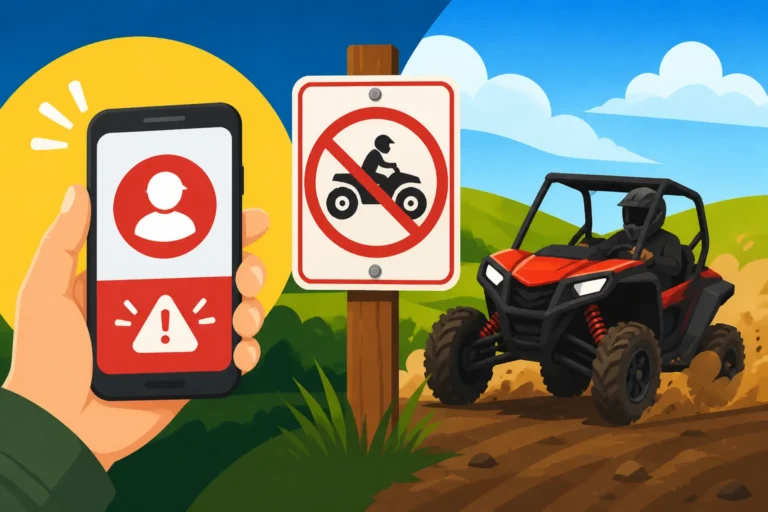
- Be Prepared to Explain: If stopped, immediately and clearly articulate the nature of your emergency. Don't be defensive or angry; just state the facts. "Officer, I'm heading to my barn right now because my water pipe just burst, and it's flooding. My UTV is the only way to get the tools there fast enough to prevent major damage."
- Provide Evidence if Possible: If you have photos of the damage on your phone, a call log from someone who alerted you to the emergency, or any other tangible evidence, offer it. This can help an officer quickly assess the legitimacy of your claim.
- Stay Calm and Respectful: Even in a stressful situation, maintaining a respectful demeanor with law enforcement is always the best approach. They are there to enforce the law and ensure public safety, and your calm explanation of a genuine emergency will go a long lot farther than an agitated argument.
- Understand the Limits: While the emergency exception provides a necessary carve-out, it doesn't excuse reckless behavior. You still need to operate your OHV safely and responsibly, even when hurrying. Speeding excessively or endangering others will likely negate the protections of the emergency clause.
In the end, this exception is a recognition of real-world challenges in a state like North Dakota, where vast distances and specific land uses mean OHVs are often critical tools for quick response when things go wrong.
Practical Scenarios and Best Practices for Emergency OHV Use
So, what does this look like on the ground? Let's walk through some common situations where the emergency exception often comes into play, especially for those who rely on their OHVs for more than just recreation.
Farm and Ranch Operations Requiring Immediate Action
For many North Dakotans, an ATV or UTV isn't just a toy; it's an indispensable piece of farm equipment. These machines can navigate rough terrain, haul small loads, and allow quick access to remote areas of vast properties. This makes them perfectly suited for responding to agricultural emergencies.
Consider these common scenarios:
- Livestock Crisis: A sudden blizzard strands a herd, or a predator is threatening young calves. You might need to quickly access a remote pasture that's usually only reachable by a section line that includes a short, restricted paved crossing. Your UTV, perhaps equipped with a winch from SuperATV to pull a downed tree out of a path, becomes your fastest way to reach and save those animals. The law understands that the immediate threat to livestock can represent a significant financial and emotional loss, thus justifying urgent action.
- Equipment Breakdown: A critical piece of irrigation equipment fails in the middle of a vital watering cycle, and you need to get tools or a specific part out to the field now. Taking a short cut across a normally forbidden road might be the only way to prevent widespread crop damage.
- Fencing Emergencies: A heavy windstorm or an errant vehicle takes out a section of perimeter fence, and your cattle are suddenly free to roam onto neighboring property or even a busy road. The ATV allows you to quickly get to the breach with fencing supplies and make temporary repairs, preventing a much larger problem.
In these situations, your OHV isn't for fun; it's for mitigating a genuine threat to your livelihood and property. It's an extension of your farm equipment, and its rapid deployment is often crucial. For more on how these machines fit into farm life, check out [North Dakota Rules for Farm Use on a Road].
Recreational Emergencies: When Your Ride Goes Sideways
Even when you're out purely for recreation, emergencies can strike, and your OHV might be your best bet for getting help. We all hope for smooth rides, but accidents happen, especially on challenging trails.
- Injured Rider: Imagine a scenario where a fellow rider takes a spill in a remote part of [Pembina Gorge: North Dakota's OHV Trail Park] and sustains a serious injury. Hiking out for help might take hours, exacerbating the injury. Using a UTV to carefully transport the injured person to the nearest accessible road where an ambulance can meet you could be a life-saving decision.
- Stranded Vehicle: Your truck and trailer get stuck on a muddy access road, blocking others or creating a hazard. Your ATV might be the only machine capable of traversing the challenging terrain to fetch help or a recovery vehicle from a nearby town.
- Getting to Safety: A sudden, severe thunderstorm rolls in, or a wildfire starts nearby, and the fastest way to get yourself and your party to a safe, developed area is to briefly use a road that you wouldn't normally. The threat to personal safety would justify this.
In these cases, the "emergency" is personal safety or assisting others in distress. Carrying essential items like a comprehensive first-aid kit, a fully charged cell phone (though service can be spotty in remote parts of the state), and even a satellite communication device like a Garmin inReach is always a good idea. Having a portable air compressor and a tire repair kit can also turn a minor flat into a quick fix, preventing it from escalating into a roadside emergency.
What to Do (and Not Do) When Operating Under Emergency Exception
Knowing your rights in an emergency is one thing; executing them properly is another. Here’s a quick guide to best practices:
DO:
- Act Decisively and Directly: If it's a true emergency, address it. Take the most direct route to resolve the situation.
- Use Hazard Lights/Signals: Make yourself as visible as possible to other motorists. Use your turn signals and brake lights appropriately.
- Maintain Safe Speed: Even in an emergency, don't drive recklessly. Maintain a speed that allows you to control your machine and react to road conditions and other traffic.
- Be Prepared to Explain: If stopped, calmly and clearly state the emergency and why your OHV is being used.
- Carry Essential Gear: A communication device, first-aid kit, and basic tools can often prevent a minor issue from becoming a full-blown emergency. A robust recovery strap or even a portable winch could be your best friend when you’re out on the prairie.
DON'T:
- Abuse the Exception for Convenience: This is NOT a loophole for taking shortcuts or avoiding gravel roads because you prefer pavement. If it's not a genuine threat to life, limb, or property, don't do it.
- Ride Recklessly: An emergency doesn't excuse dangerous operation. You still have a responsibility to yourself and others on the road.
- Take Detours: Your path should be the most direct route necessary to address the emergency. No stopping at the convenience store or taking a scenic detour.
- Fail to Return to Legal Areas: Once the immediate emergency is addressed, or you've reached an area where the OHV is no longer the necessary tool (e.g., an ambulance arrives), revert to operating your OHV in legally permitted areas.
The "emergencies and the only exception" clause is a vital safety valve in North Dakota's OHV laws, recognizing that common sense and urgent needs sometimes must take precedence. Understanding its scope and limitations ensures you can act responsibly when it matters most.
| Feature | Normal OHV Road Use in North Dakota (General) | Emergency OHV Road Use in North Dakota (Exception) |
|---|---|---|
| Paved Highways | Generally Prohibited | Permitted if reasonably necessary to save life, limb, or property |
| Gravel Roads | Permitted (with specific conditions) | Permitted (same conditions apply) |
| Interstates | Strictly Prohibited | Very limited, only if absolutely critical for life/limb/property |
| Speed | Governed by road type, generally lower | Safe and controlled, appropriate for urgent situation, not reckless |
| Purpose | Recreation, Utility, Farm Use | Immediate mitigation of critical threat |
| Duration | Ongoing, as per regulations | Temporary, for the duration of the emergency only |
| Visibility | Required lighting, safety gear | Maximize visibility (hazards, lights, signals) |
| Law Enforcement | Expect compliance checks | Be prepared to explain circumstances calmly and clearly |
Disclaimer
This article is for general informational purposes only and does not constitute professional advice. Laws, prices and regulations vary by location and change over time. Consult a qualified professional for guidance on your specific situation.