What Non-Highway Tires Means
If you've ever owned an ATV or UTV in North Dakota, you've probably heard the term "non-highway tires" tossed around, often in hushed tones that suggest something illegal or confusing. It can feel like a riddle, especially when you're just trying to figure out where you can legally ride your machine without running afoul of the law. This guide is here to clear up that confusion, diving deep into what "non-highway tires" truly means for North Dakota off-road vehicle owners, why this distinction is so crucial, and how it directly impacts your riding opportunities and responsibilities.
The Core Definition: What Are Non-Highway Tires?
Let's cut through the jargon and get right to it. When North Dakota law, or really any off-road enthusiast, talks about "non-highway tires," they're referring to a specific type of tire designed, as the name suggests, for anything but paved highways. These aren't just regular tires that happen to be on an ATV; they're fundamentally different in their construction and purpose.
Design and Purpose
Imagine the difference between a sleek sports car tire and a monster truck tire. Non-highway tires for ATVs and UTVs fall firmly into the latter camp, albeit scaled down. They are engineered with aggressive tread patterns, featuring deep, widely spaced lugs or knobs that dig into soft, loose, or uneven terrain. This design maximizes grip and traction in conditions like mud, sand, gravel, snow, and dirt trails, where street tires would simply spin hopelessly. The rubber compound used in these tires is often softer and more pliable, allowing the tire to conform to obstacles and provide better shock absorption when riding off-road.
This specialized design is brilliant for tearing up trails or navigating tough farm fields. The deep lugs shed mud and debris efficiently, preventing the tires from caking up and losing traction. They provide the bite needed to climb steep inclines and navigate rocky terrain. However, these very features that make them champions off-road are precisely what make them ill-suited, and often illegal, for highway use. They're built for grip in the muck, not for smooth, sustained contact on asphalt.
Legal Implications in North Dakota
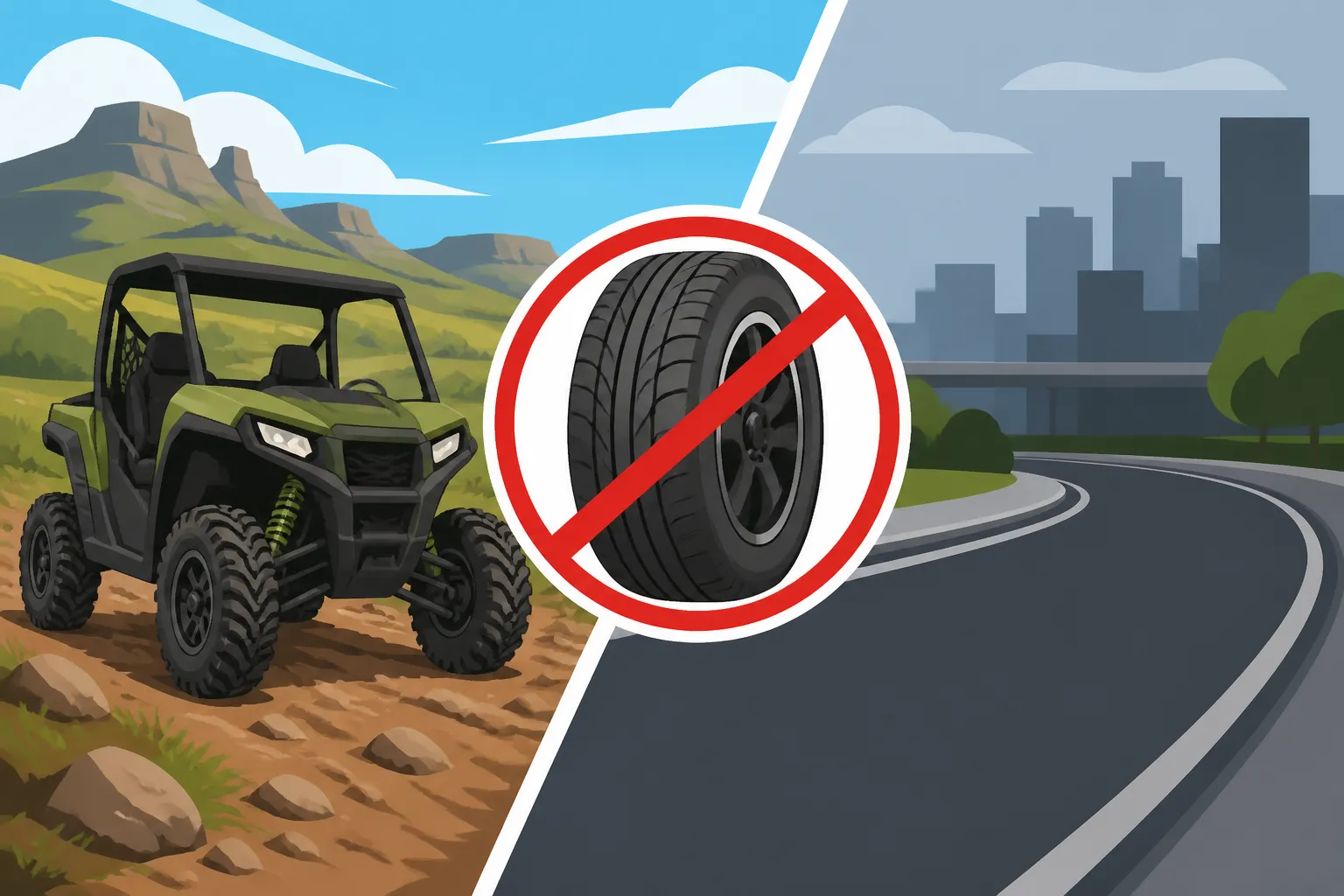
In North Dakota, the presence of non-highway tires on your OHV is a key factor in determining where you can legally operate. The law recognizes that these tires behave differently and present unique safety and wear concerns when used on paved surfaces. For this reason, machines equipped with these specialized off-road tires are generally restricted from regular paved roads, county highways, and state interstates. It's not an arbitrary rule; it's rooted in safety and the preservation of road infrastructure.
Essentially, if your ATV or UTV has tires with aggressive, knobby treads clearly designed for off-road traction rather than smooth pavement performance, the state considers them "non-highway." This legal distinction drives the rules about [North Dakota ATV Road Rules by Surface Type] and dictates that your primary riding areas will be designated trails, private land, and, under specific conditions, ditches and certain gravel roads. It’s a foundational concept that informs much of North Dakota's OHV legislation, impacting how you register your machine and where you can take it once it's legally on the books. Understanding this distinction is the first step in responsible and legal riding in our beautiful state.
Why the Distinction Matters: Safety and Wear
The legal distinction between non-highway and highway-legal tires isn't just bureaucratic red tape; it's grounded in very real safety concerns and the practical lifespan of your tires and machine. Many riders, especially those new to the sport, might wonder why they can't just cruise down the highway on their beefy knobbies. The reasons become clear when you understand the physics at play.
Safety Concerns on Pavement
Picture those aggressive, widely spaced lugs trying to make consistent contact with a smooth, hard surface like asphalt. They can't. Instead of a broad, flat contact patch, you're essentially riding on the tips of those lugs. This dramatically reduces the amount of rubber touching the road, leading to dangerously poor grip. When you try to brake, especially in an emergency, those lugs struggle to find purchase, significantly increasing your stopping distance. What might be a controlled stop on dirt becomes a terrifying slide on pavement.
Cornering is another major issue. On pavement, the lugs can squirm and deform, leading to instability and a feeling of "wandering." Your ATV or UTV won't handle predictably, making quick maneuvers hazardous. Imagine hitting a wet patch; the deep grooves designed to shed mud can't effectively channel water on a smooth surface, increasing the risk of hydroplaning. Furthermore, the softer rubber compound, which is great for flexibility off-road, heats up much faster on pavement, especially at higher speeds. This increased heat can lead to rapid tire degradation, tread separation, and even blowouts, posing a severe risk to the rider and others on the road. This isn't just about getting a ticket; it's about preventing serious accidents.
Rapid Wear and Tear
Beyond the immediate safety concerns, using non-highway tires on pavement is a surefire way to quickly wear them out, and it's not a cheap fix. Those aggressive lugs are designed to dig in, not to roll smoothly and uniformly. When they’re constantly grinding against abrasive asphalt, they wear down at an alarming rate, often unevenly. You’ll notice the center lugs wearing much faster than the sides, as they bear the brunt of the contact.
This rapid, uneven wear doesn't just look bad; it compromises the tire's performance where it's actually meant to excel – off-road. Once those sharp edges and deep lugs are rounded down, your traction in mud, sand, or snow is significantly reduced. You’ll find your machine slipping and struggling in conditions it used to conquer with ease. This means you'll be replacing tires far more frequently than if you kept them strictly off-road, adding significant and avoidable costs to your OHV ownership. Given the investment in quality off-road tires, protecting them from pavement abuse just makes good financial sense.
North Dakota's Rules for Off-Highway Tire Use
Understanding what "non-highway tires" means is one thing, but knowing exactly where those tires can legally take you in North Dakota is where the rubber meets the road—or, more accurately, where it stays off the road. North Dakota has specific statutes that delineate where OHVs, particularly those with non-highway tires, can and cannot operate on or near public thoroughfares.
Permitted Roadways and Surfaces
While it might seem restrictive, North Dakota does offer avenues for OHV use that accommodate machines with non-highway tires. The most prominent example is ditch riding. Yes, you heard that right! Many of us spend a lot of time riding the ditches, and it’s generally permissible. [North Dakota Ditch Riding: The Legal Right Explained] allows for operation in the ditch bottom and back-slope adjacent to public roadways, offering a vast, unofficial network of trails across the prairie. This is where those aggressive treads truly shine, handling the varying terrain, tall grasses, and occasional mud without a hitch.
Furthermore, OHVs with non-highway tires can generally operate on unpaved or aggregate surface roads, like gravel roads, township roads, and section lines, provided they meet certain criteria and local ordinances don't prohibit it. This includes specific allowances for purposes like agricultural work or accessing private property. Riders must always operate these machines in a safe manner, following all traffic laws and yielding to other vehicles. It's important to remember that these allowances are for transit rather than casual joyriding down a gravel road for miles. Always check [North Dakota Rules for Riding a Gravel Road] before heading out, as county and city rules can sometimes add another layer of complexity.
Restricted Roadways and Surfaces
Now, for the "cannot do" list. North Dakota law is quite clear: OHVs equipped with non-highway tires are generally prohibited from operating on paved state highways, county roads (unless specifically designated otherwise), and especially interstates. This is a hard line. [North Dakota Interstates Are Never Open] to OHVs, regardless of tire type, due to high speeds and safety concerns. Trying to take your quad with its knobby tires onto a paved state highway is not only dangerous due to the tire limitations we discussed earlier but will also likely result in a citation.
Local ordinances also play a significant role here. While state law provides a framework, individual counties and cities have the authority to impose further restrictions or even outright bans on OHV operation on their roads, regardless of tire type. Before planning a route that involves any public road section, even a gravel one, it is absolutely essential to check with local law enforcement or municipal offices. For example, [North Dakota County and City ATV Ordinances] can vary wildly, and what's legal in one county might be prohibited just across the line. Ignorance of these local rules is no excuse, and a little research upfront can save you a lot of hassle and potential fines down the road.
The Path to Road Legality: When Tires Can Change the Game
So, if non-highway tires largely keep you off the asphalt, does that mean your ATV or UTV is forever banished from even the shortest stretch of paved road? Not necessarily. North Dakota law does provide a pathway for certain OHVs to gain limited road-legal status, but it's a journey that involves more than just swapping out your tires. It requires meeting specific equipment standards and, crucially, selecting the right kind of rubber.
The 350cc Minimum and Equipment
Before you even think about putting highway-legal tires on your machine, your ATV or UTV needs to meet a fundamental set of requirements in North Dakota. First and foremost, the engine must be [North Dakota's 350cc Minimum for Road Riding]. Machines smaller than this simply don't have the capability to maintain safe speeds on public roads. This isn't just about horsepower; it's about the vehicle's overall design and stability at speeds typically encountered on roads.
Beyond engine size, a truly road-legal OHV must be equipped with a range of safety features that mimic those found on conventional automobiles. This includes a functioning horn, adequate lighting (headlamps visible at specific distances, tail lights, and brake lights), and mirrors. You'll need at least one rearview mirror, and often two, to meet [North Dakota Mirror and Horn Requirements] and [North Dakota Headlamp Distance Standards]. These aren't just suggestions; they're legal mandates for any OHV venturing onto public roadways beyond the ditch or designated aggregate trails. Getting your machine up to snuff on these basics is the first hurdle to clear before considering a tire change for road use.
Highway-Legal Tire Options (and the Trade-offs)
Once your machine meets the engine and equipment requirements, then, and only then, can you consider tires that will allow for limited road use. This means investing in DOT-approved (Department of Transportation) tires. These are specifically designed and tested to meet federal safety standards for use on public roads. Unlike your aggressive knobbies, DOT-approved tires have a more uniform tread pattern, shallower lugs, and a harder rubber compound that can withstand the heat and friction generated on pavement. They provide a much larger and more consistent contact patch with the road, improving grip, handling, and braking performance.
This conversion, however, comes with significant trade-offs. While you gain the ability to legally traverse certain paved roads (still subject to state and local rules like [North Dakota Rules for Riding a Paved Road]), you will inevitably sacrifice some of your off-road prowess. The less aggressive tread means less bite in deep mud, loose sand, or thick snow. Your machine might not climb that steep, rocky trail as confidently as it once did. It’s a classic compromise: gaining capability in one area often means giving up a little in another. For riders who primarily use their OHV for utility, such as farm work that involves road crossings, or those who want to connect trails via short paved sections, DOT-approved tires can be a game-changer. But for the hardcore mudder or rock crawler, the loss of off-road performance might be too great.
Practical Advice for North Dakota Riders
Navigating the rules and choices around OHV tires in North Dakota can feel a bit overwhelming. But with a clear understanding of what "non-highway tires" means and how it impacts your riding, you can make informed decisions that keep you safe, legal, and enjoying the vast North Dakota landscape. It's all about balancing your passion for riding with responsibility and local regulations.
Assessing Your Riding Needs
Before you even consider tire types or road legality, sit down and honestly assess how you primarily use your ATV or UTV. Are you a dedicated trail rider who spends 99% of your time in the dirt, mud, and grass of [Pembina Gorge: North Dakota's OHV Trail Park] or on private land? Or do you frequently need to travel short distances on paved or gravel roads to get from your farm field to the next, or to connect two off-road areas? Perhaps you're a hunter who needs to cross a paved county road to reach a prime spot, or someone who uses their machine primarily for snow plowing and other utility tasks around your property.
Your primary use case should be the biggest factor in your tire choice. If you're almost exclusively off-road, sticking with dedicated non-highway tires is likely your best bet for optimal performance and safety in those conditions. If you have significant and frequent needs for limited road travel, then exploring DOT-approved options might be worthwhile. Don't let the desire for occasional road access compromise your main riding experience or lead to unnecessary expenses. This careful consideration aligns with [What North Dakota's OHV Law Requires of Owners] by ensuring your equipment is appropriate for your intended use.
The Importance of Local Ordinances and Maps
I cannot stress this enough: North Dakota's OHV laws provide a framework, but local jurisdictions often have the final say on where and how you can ride. What's perfectly legal under state law might be prohibited by a city ordinance or county resolution. Always, and I mean always, check with the relevant local authorities—the county sheriff's office, city hall, or park rangers—before riding in a new area, especially if you plan on using any public roads or ditches. Many riders have been caught off guard by a local rule they didn't know existed.
For example, while state law allows ditch riding, a particular county might have an ordinance restricting it in certain zones. Similarly, while gravel roads might generally be open, a city might prohibit OHV travel on all roads within its limits. Look for official maps, online resources, or even physical postings. When dealing with private land access, having a clear, documented understanding of permission is vital; resources like LawDepot can provide templates for landowner permission forms if you need to formalize agreements, ensuring you're not trespassing and the landowner's expectations are clear. [North Dakota Posted Land Rules for Riders] are critical here; look for signs or check electronic posting databases. A little proactive research can save you a significant headache and a potential fine.
Maintenance and Inspection
Regardless of whether you run non-highway or DOT-approved tires, proper maintenance is crucial for safety and longevity. Regularly inspect your tires for damage—cuts, punctures, cracks, or excessive wear. Pay close attention to tire pressure. Off-road tires typically run at much lower pressures than highway tires, but incorrect pressure can still lead to poor handling, increased wear, and greater risk of damage. Always follow the manufacturer's recommended pressures for your specific tires and riding conditions.
If you do decide to run DOT-approved tires for mixed use, be diligent about checking pressure, as road travel can build heat and change pressures more dynamically. Rotate your tires if recommended by the manufacturer to promote even wear. Remember, tires are your only contact with the ground, so keeping them in top condition is paramount for your safety and the performance of your ATV or UTV. Don't forget to perform a general inspection of your machine before every ride, especially if you haven't been out for a while. Think of it as part of your ritual, like ensuring [North Dakota Registration Before Your First Ride] is all squared away.
Tire Type Comparison for North Dakota OHV Riding
To help visualize the key differences and implications for riding in North Dakota, here's a comparison of typical non-highway tires versus highway-legal (DOT-approved) tires for ATVs and UTVs.
| Feature | Non-Highway Tires (Typical OHV) | Highway-Legal Tires (DOT Approved) |
|---|---|---|
| Primary Use | Off-road trails, mud, sand, snow, utility | Limited paved/gravel roads, some off-road |
| Tread Pattern | Aggressive, deep lugs, open spacing for grip | Less aggressive, shallower tread, tighter for pavement contact |
| Rubber Compound | Softer, for maximum off-road flexibility | Harder, for durability and heat resistance on asphalt |
| Road Safety | Poor grip, unstable, high wear on pavement | Good grip, stable, durable on pavement (when properly equipped) |
| Off-Road Grip | Excellent on varied terrain | Fair to good, depending on specific design and terrain |
| Noise on Pavement | Very noisy due to aggressive tread | Quieter, more similar to light truck tires |
| Legality ND Roads | Restricted (ditches, designated gravel) | Permitted on designated roads (requires 350cc+, mirror, horn, lights, etc.) |
| Wear on Pavement | Rapid, uneven wear; short lifespan | Normal wear; longer lifespan on pavement |
| Cost | Varies widely, often specific to segment | Can be higher due to DOT certification and construction |
Disclaimer
This article is for general informational purposes only and does not constitute professional advice. Laws, prices and regulations vary by location and change over time. Consult a qualified professional for guidance on your specific situation.