North Dakota Registration for an Auction Buy
Buying an ATV or UTV at an auction can feel like hitting the jackpot – the thrill of the bid, the potential for a great deal, and the excitement of bringing home a new machine for your North Dakota adventures. But here's the kicker: that initial rush can quickly turn into a headache when you realize the pile of paperwork you thought would be simple is anything but. This guide will walk you through the often-confusing process of registering and titling an off-highway vehicle (OHV) purchased at an auction here in North Dakota, helping you navigate the hurdles so you can get out and ride legally.
The Unique Hurdles of an Auction Purchase
Let's be real, buying an OHV at an auction isn't like buying a brand-new machine from a dealership where all the paperwork is neatly handled for you. There are specific challenges that crop up with auction buys, and understanding them upfront is half the battle. You’re often dealing with machines that come from various sources – bank repossessions, estate sales, or even government surplus – and that means their paper trail can be anything from perfectly clear to practically nonexistent.
Missing Paperwork and Unknown Histories
One of the biggest frustrations with auction purchases is the potential for missing paperwork. You might get a bill of sale, but a title? That's often a big question mark. Many times, these machines have changed hands multiple times, or they've been sitting for a while, and the original owner's meticulous record-keeping went out the window. This can leave you, the new owner, with the unenviable task of trying to piece together a history that simply isn't there. It's a common scenario where folks get a great deal on a side-by-side only to find themselves scratching their heads when it comes to proving ownership.
Before you even raise your paddle, if possible, try to do some due diligence. Can you get the Vehicle Identification Number (VIN) beforehand? Running a VIN check can sometimes reveal past ownership or lien information, though even this can be difficult with auction machines that might not have been previously registered in North Dakota, or even titled in another state. Without a clear chain of ownership, North Dakota's Motor Vehicle Division (MVD) is going to ask some pointed questions, and rightfully so. It's their job to ensure the machine isn't stolen and that you are its rightful owner.
The Urgency of Post-Auction Steps
Once the auctioneer declares "Sold!" and you've paid up, a metaphorical clock starts ticking. North Dakota law is pretty clear about the timeframe for getting your newly acquired OHV registered and titled. You don't have forever to get your ducks in a row. It’s a common misconception that because you bought it at an auction, you get a pass on these deadlines, but that’s simply not the case. The state wants to know who owns what, and they want to know it promptly.
Specifically, the state expects you to transfer ownership and apply for a new title within a certain number of days after the purchase. You can find more details on this expectation in resources like [North Dakota Ownership Transfer in 15 Days]. This tight turnaround means you can't just let that auction machine sit in your garage for months before tackling the bureaucracy. Delaying the process can lead to complications and, potentially, even penalties down the road. Unlike a dealership that submits all your forms for you, an auction house's responsibility often ends the moment you drive your purchase away.
Essential Documents You'll Need From the Auction
Securing the right paperwork from the auction house is absolutely critical for a smooth registration process in North Dakota. Think of these documents as your golden tickets; without them, you're starting an uphill battle. It's not always easy, but knowing what to ask for and what to scrutinize can save you a world of trouble later on. Don’t be afraid to be a little pushy if needed – this is your legal proof of ownership!
The Bill of Sale: Your Proof of Purchase
At the very least, any legitimate auction will provide you with a bill of sale. This document is your primary proof that you actually bought the OHV, and it's indispensable for establishing ownership and calculating taxes. A good, solid bill of sale should contain several key pieces of information: the full legal names and addresses of both the buyer (you) and the seller (the auction house or previous owner), a detailed description of the machine including its make, model, year, and most importantly, the Vehicle Identification Number (VIN). It also needs to clearly state the purchase price and the date of sale. Without this, you really don't have much to go on.
Sometimes, auction bills of sale can be a bit generic. If you feel like the document provided is lacking, or if you're engaging in a private sale after an auction (which can happen if you bid through a third party), you might want to use a more comprehensive form. Tools like those found on LawDepot can help you generate a detailed bill of sale if you need one, although for direct auction purchases, you'll generally use their standard form. Remember, the purchase price listed here is what North Dakota will typically use to calculate your excise tax. For official state guidance, you can also look into resources like [North Dakota Bill of Sale Form SFN 2888].
Securing the Title, If One Exists
Now, this is where auction purchases can get tricky. Ideally, if the OHV has a title, the auction house will provide it to you, properly signed over by the previous owner or the entity that consigned the machine. This could be a bank if it was a repossession, or an estate executor. Before you leave the auction lot, carefully inspect the title. Make sure the VIN on the title matches the VIN on the machine, and that all the ownership transfer sections are correctly filled out and signed. Check for any listed liens that haven't been released; if there's a lien, you could inherit someone else's debt.
In some cases, the title might be physically missing, even if the auction house assures you it exists somewhere in their system. They might tell you it will be mailed to you later. Get this promise in writing, along with a timeframe. If a physical title is provided, ensure it's not defaced or damaged to the point where the MVD might reject it. An improperly endorsed title, or one with white-out and scribbles, will likely send you back to square one, causing frustrating delays.
Navigating North Dakota's Titling and Registration Process
Once you have your bill of sale and any other documents from the auction, it's time to officially put your OHV on the books with the state of North Dakota. This process involves a few key steps, especially when you’re dealing with the unique circumstances of an auction purchase, which often means an absent title. Don't worry, it's manageable, but it does require attention to detail.
When a Title is Absent: Statement of Ownership and Appraisals
This is perhaps the most common scenario for auction buyers: you've got a fantastic new-to-you OHV, but no official title to go with it. North Dakota understands that not every machine comes with a perfectly clear title, especially older ones or those from unique sale situations like auctions. In these instances, the state often allows you to apply for a title using a [North Dakota Statement of Ownership Form SFN 2903]. This form is essentially your sworn statement that you are the rightful owner, backed by your bill of sale.
Along with the statement of ownership, you might also need to prove the fair market value of your OHV. This isn't just for curiosity; it helps the state assess the correct amount of excise tax, especially if the auction price seemed unusually low. You might need to get an appraisal from a licensed dealer to establish this value. Think of it as an extra layer of verification to ensure everything is legitimate. Additionally, even without a prior title, a VIN inspection is typically required to verify the identity of the machine. This inspection helps confirm the VIN is legitimate and matches the machine, preventing fraud. More details on this can be found in [North Dakota VIN Inspection Requirements].
Calculating and Paying Excise Tax
One unavoidable part of acquiring an OHV in North Dakota, whether from an auction or a dealer, is the excise tax. This tax is typically 5 percent of the purchase price or the fair market value, whichever the MVD determines is appropriate. So, that "great deal" you got at the auction will still have this tax added on. It's collected at the time you title the machine, not at the auction itself. You'll definitely want to budget for this, as it can add a significant amount to your total cost.
The MVD will use your bill of sale as the primary document to determine the purchase price for the excise tax calculation. However, if they suspect the declared price is significantly below market value (perhaps to reduce the tax), they may lean on an appraisal or their own valuation guides. This is a topic that can sometimes catch buyers off guard, so it’s good to be prepared. For more context on this, you can look into resources like [North Dakota Excise Tax on an Auction Buy] and [North Dakota's 5 Percent Motor Vehicle Excise Tax].
Completing the Application and Fees
Once you have all your supporting documents – the bill of sale, statement of ownership (if needed), appraisal (if needed), and VIN inspection – it's time to fill out the actual application for title and registration. This is usually done on North Dakota Form SFN 2872, which you can often get from the MVD or their website. This form asks for all the nitty-gritty details about you and your OHV. Understanding [What the Title Application SFN 2872 Asks For] will help you complete it accurately and avoid delays.
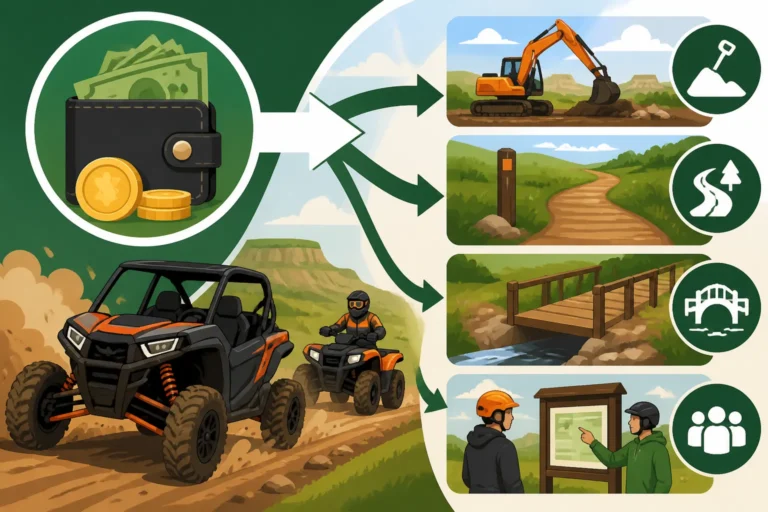
When you submit your application, you'll also pay the associated fees. This typically includes a nominal title fee and the two-year registration fee. North Dakota OHV registrations run on a two-year cycle, and the total often includes a trail tax. For instance, [North Dakota Charges $5 Registration Plus $15 Trail Tax] explains how these costs break down. That trail tax is vital, as it contributes to the upkeep of the state's OHV trails and riding areas, something every rider benefits from. Understanding [Why Two Agencies Split One Fee] helps clarify where your money goes. In total, the registration is quite affordable on a per-year basis; you can review [North Dakota Registration Cost Per Year] for more detailed current cost information.
What to Expect Post-Submission and Staying Legal
You've gathered your paperwork, filled out the forms, paid your fees, and submitted everything to the North Dakota Motor Vehicle Division. Now what? The final leg of the journey involves a bit of patience and understanding what you can and can't do while your application is being processed. It's crucial to remain compliant with state laws to avoid any unnecessary fines or complications.
The Waiting Game: Bismarck Central Office Review
For many auction purchases, especially those lacking a clear prior title, your application won't be processed immediately at the local MVD branch. Instead, it often gets forwarded to the central office in Bismarck for review. This "Bismarck Central Office Review" is a standard procedure designed to meticulously examine complex cases, verify ownership, and ensure all legal requirements are met. It’s a necessary step to protect against fraud and properly document your OHV.
This review process can take some time, so it's essential to manage your expectations. It won't be an instant turnaround like renewing a driver's license. The waiting period can vary, sometimes several weeks, depending on the complexity of your case and the volume of applications the central office is handling. You can learn more about general processing times in [North Dakota Registration Processing Time]. While it might be frustrating to wait, remember that this thoroughness ultimately benefits all OHV owners by maintaining accurate records and legitimate ownership chains.
Temporary Permits and Legal Riding
While your application is under review and you're waiting for your official title and registration decal, you might be wondering: can I ride my new machine? The short answer is, generally, no, not on public lands or trails without proper authorization. North Dakota law is pretty clear: an OHV needs to be registered to operate legally on public property. Riding an unregistered OHV can lead to fines and other penalties, which you definitely want to avoid after going through all this effort. For a deeper dive into the repercussions, check out [North Dakota Penalties for Riding Unregistered].
There isn't a widely available "temporary permit" specifically for OHV registration pending in North Dakota, unlike what you might find for passenger vehicles. Your best bet is to wait until your permanent registration is complete and you have your decal. This ensures that if you're stopped by law enforcement, you have all the necessary proof of compliance. An officer will expect to see proof of registration, and without it, you could face a citation. Knowing [What an Officer Can Ask to See] is good practice for any rider. Resist the urge to hit the trails until everything is squared away – it's just not worth the risk.
The Benefits of Proper Registration
All this paperwork and waiting might feel like a hassle, but there are genuine, tangible benefits to properly registering your auction-bought OHV in North Dakota. First and foremost, it means you can legally enjoy the state's designated riding areas and approved public routes without worry. This opens up a world of adventure, from the Pembina Gorge trails to specific ditch riding opportunities. For more on where you can ride, see [North Dakota Registration and Trail Access].
Beyond simply staying legal, having your OHV properly titled and registered makes future transactions much smoother. If you decide to sell your machine down the line, a clear title and registration history will make it a more attractive and trustworthy purchase for the next owner. It also provides a clear record of ownership in case of theft or an accident. Keeping good records of your ownership documents, perhaps even digitizing them using a service like LawDepot, can give you peace of mind and simplify any future paperwork needs. It really is an investment in your stress-free riding future.
| Document Type | Typical Source | Required for Auction Buy (No Title) | Required for Auction Buy (With Title) | Purpose |
|---|---|---|---|---|
| Bill of Sale | Auction House / Seller | Yes | Yes | Proof of purchase, basis for excise tax |
| Original Title | Previous Owner / Auction | No (or missing) | Yes | Establishes ownership chain (if available) |
| Statement of Ownership | ND MVD Form SFN 2903 | Yes | No | Sworn statement of ownership when no prior title exists |
| Dealer Appraisal | Licensed Dealer | Potentially (for fair market value) | No | Determines fair market value for excise tax (if needed) |
| VIN Inspection Form | Law Enforcement / MVD | Yes | Potentially (if VIN check needed) | Verifies VIN, machine identity, and origin |
| Application for Title & Reg. | ND MVD Form SFN 2872 | Yes | Yes | Official request for title and registration |
| Proof of Identity/Residency | Driver's License | Yes | Yes | Confirms applicant's identity |
Disclaimer
This article is for general informational purposes only and does not constitute professional advice. Laws, prices and regulations vary by location and change over time. Consult a qualified professional for guidance on your specific situation.