Do You Need to Register an ATV in North Dakota?
It's a common question that pops up in North Dakota's vibrant off-road community: "Do I really need to register my ATV or UTV?" The answer, like many things involving laws and regulations, isn't always a straightforward "yes" or "no," and that can be incredibly frustrating. Many riders just want to hit the trails or use their machine on their land without jumping through hoops, but misunderstanding the rules can lead to unexpected fines or denied access. This guide will cut through the confusion and explain exactly when and why your off-highway vehicle (OHV) needs to be registered in North Dakota.
The Short Answer: Yes, Mostly!
Let's get right to it: for the vast majority of riders who want to enjoy North Dakota's scenic landscapes or use their machine for work off their private property, the answer is a resounding yes, you absolutely need to register your ATV or UTV. The state of North Dakota views these machines, once they leave private land and enter public areas, as vehicles that require proper identification and a contribution to the upkeep of the riding infrastructure. It's not just about having a title; it's about active registration for operational use.
Think of it like this: your car needs plates and registration to drive on the highway, right? While OHVs aren't cars and public roads have different rules, the principle of registration for public use is very similar. The state needs a way to identify the machine and its owner, ensure compliance with various laws, and collect fees that support the very trails and programs many riders want to utilize. Without that registration, you're essentially operating "off the books" in the eyes of the law, and that can lead to some significant headaches, regardless of how short your ride might be.
This requirement isn't just a bureaucratic hurdle; it's part of a system designed to manage and maintain the opportunities we have to ride. When you see a well-maintained trail or a designated riding area, a portion of your registration fees often contributes directly to those resources. So, while it might feel like another step in a long process, it's usually a necessary one for the health of the sport in North Dakota.
When You Absolutely Need That Sticker
If you plan on riding your ATV, UTV, or dirt bike anywhere that isn't your own privately owned or leased property, you're going to need that North Dakota registration decal or plate. This includes any designated OHV trails, state lands, federal lands, public ditches, or even if you're just crossing a short stretch of a public road to get from one private parcel to another. The state's definition of an "off-highway vehicle" is broad, encompassing most recreational machines not designed for highway use. If it's got an engine and four wheels (or two, or three), and you're taking it beyond your fence line, it's highly likely to require registration.
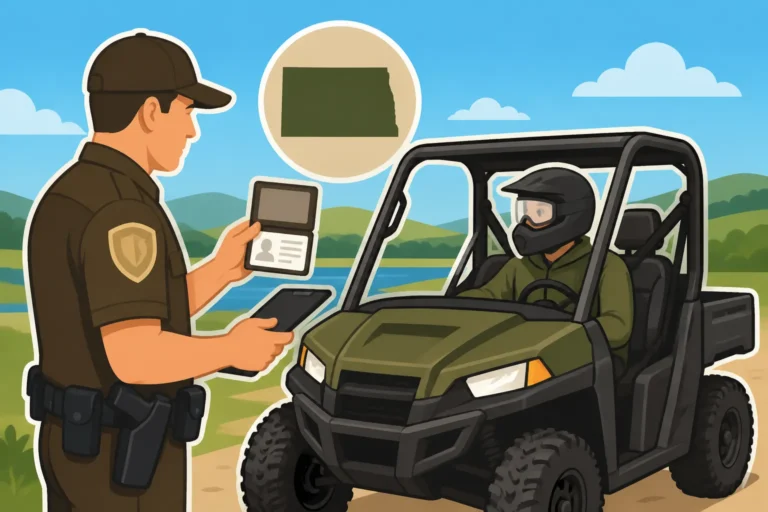
Consider a common scenario: you bought a new side-by-side and want to take it out to Pembina Gorge for a weekend ride. You’ve got your gear, your snacks, and your sense of adventure. But if you pull up to the trailhead without that current North Dakota OHV registration, you’re not getting very far legally. Park rangers and local law enforcement often patrol these areas, and they will check for proper registration. It’s not a question of if, but when, you might be asked to show your paperwork. This also applies to events like poker runs or charity rides that take place on public or permitted lands; event organizers usually require proof of registration for all participants. You can find more details about the fees and process in [North Dakota OHV Registration Cost].
Why the Confusion Lingers: Private vs. Public Land
A lot of the lingering confusion about registration stems from the fundamental difference between riding on private land and riding on public land. If you own a sprawling ranch and your ATV or UTV never leaves that property – not even to cross the road to a neighbor's field – then you might be exempt from registration. However, this is a very narrow exception, and it's where many people trip up. Most riders, even those who primarily use their machines for farm work, occasionally need to travel on public roads, ditches, or cross property lines. The moment you touch public land, those registration rules kick in.
Another source of confusion comes from machines used for agriculture. While farm vehicles have some specific exemptions regarding road use, a recreational ATV or UTV, even if it’s used to check fences or haul tools, still falls under the OHV registration umbrella if it's operating on public rights-of-way. The line between a purely "farm machine" and an "off-highway vehicle" can be blurry, which is why it’s always safest to register if there's even a slight chance it will leave your immediate private property. It's better to be compliant than to face a citation. For additional insights, check out [North Dakota's Exemption for Machines Used on Private Land].
What Exactly Counts as an OHV in North Dakota?
Before we dive deeper into the exceptions, it's crucial to understand how North Dakota defines an "Off-Highway Vehicle" (OHV). This isn't just about ATVs and UTVs; the definition is quite broad and includes a range of machines designed for off-road travel. Knowing if your specific machine falls under this classification is the first step in determining your registration obligations. The North Dakota Department of Transportation (NDDOT) is the primary agency that oversees this, along with other state and federal entities for trail use.
The state's legal definition ensures that all types of recreational off-road vehicles are accounted for, whether they have a straddle seat or a steering wheel. This comprehensive approach helps in managing usage, ensuring safety, and funding the infrastructure that supports these activities. It's not meant to be overly restrictive but rather to create a clear framework for operating these machines responsibly. If you're unsure if your particular machine fits the bill, a good rule of thumb is to assume it does if it's primarily designed for off-road use and is not licensed for street travel like a car or truck.
Classifications: What's Your Machine?
North Dakota categorizes OHVs into three main classes, and while all generally require registration for public use, understanding these classes helps clarify specific rules and potential use restrictions.
- Class I Machines: These are your traditional ATVs (All-Terrain Vehicles) with three or more wheels, typically a straddle seat, and handlebars for steering. They are designed to travel on unpaved surfaces. Think of the classic quad you see on trails. [North Dakota Class I Machines Defined] explains this in more detail.
- Class II Machines: This category primarily covers utility-type vehicles (UTVs) or side-by-sides. These machines usually have four or more wheels, a non-straddle seat (like a bench or bucket seats), a steering wheel, and often a roll-over protective structure. They tend to be larger and heavier than Class I machines and are increasingly popular for both recreation and utility work.
- Class III Machines: This class is for off-highway motorcycles, often referred to as dirt bikes, or other specialty off-road vehicles. They are two-wheeled machines designed specifically for off-road conditions.
Regardless of the class, if your machine is going to be used anywhere other than strictly private land, it's going to need that registration. The classification primarily impacts things like width restrictions on certain trails or specific equipment requirements for road crossing, not the fundamental need for registration itself.
Not Just ATVs and UTVs: The Broader Definition
It’s easy to think of "OHV registration" as only applying to the popular ATVs and UTVs, but North Dakota's definition is more inclusive. Off-road motorcycles, sometimes tracked vehicles (though these have their own specific permit rules, see [North Dakota Tracked Dirt Bike Permit at $25]), and even some specialized golf carts that are modified for off-road use can fall under the OHV umbrella if they are used on public lands. The key is their design intent: if it's built primarily for off-road travel and isn't street-legal from the factory, chances are it's considered an OHV in North Dakota.
This broad scope ensures consistency in how off-road recreation is managed across the state. It prevents loopholes where certain types of machines might bypass safety or funding regulations simply due to their specific design. If you're building a "homemade" machine or have a unique vehicle, you might still need to pursue registration. In such cases, the NDDOT will often look at the machine's characteristics and intended use to determine its classification and registration requirements. For documenting ownership of such custom builds, templates from services like LawDepot can be helpful for creating a detailed statement of ownership for your records.
Exemptions: When You Can Ride Without Registration
While the general rule is "register your OHV," North Dakota does have specific, albeit narrow, exemptions where registration isn't required. These are important to understand, as they apply to particular circumstances or types of use. Misinterpreting these exemptions is a common reason riders unknowingly break the law. It’s always better to be fully informed than to assume you're exempt when you’re not.
Knowing these specific carve-outs can save you time and money, but it also highlights just how many situations do require registration. For most recreational riders, the exemptions simply won't apply. However, for those with very specific needs or uses, these exceptions are vital.
Staying on Your Own Land
This is arguably the most common and widely understood exemption: if your ATV or UTV never leaves your own privately owned property, it generally does not need to be registered with the state. This means if you have a large farm, ranch, or acreage, and you only use your machine within the boundaries of that property, you can technically operate it without a state registration sticker. However, the operative word here is "never." The moment you take it out onto a public road, even a gravel section line, or onto state land, the exemption vanishes.
Many North Dakotans use their ATVs and UTVs exclusively for chores around their property, like hauling feed, checking fences, or plowing snow in their driveway. For these uses, as long as the machine stays strictly within your property lines, registration is typically not required. However, if you ever lend it to a neighbor who might take it across a public road, or if you decide to take it to a local riding park, you'll need to make sure it's properly registered first. This distinction is critical and often overlooked. For details, you can consult [North Dakota Registration Exemptions Explained].
Special Circumstances: Racing, Government, and Non-Residents
Beyond private land use, there are a few other specific scenarios where an OHV might be exempt from North Dakota registration:
- Organized Track Racing: Machines used exclusively for competition on a closed course or track, and not otherwise operated on public lands or highways, are usually exempt from general OHV registration. These events typically have their own insurance and operational rules.
- Government-Owned Machines: OHVs owned and operated by the United States, the State of North Dakota, or any political subdivision thereof are generally exempt from registration. These are machines used for official business, such as by park rangers or law enforcement.
- Non-Resident Visitors (Limited Time): If you're visiting North Dakota from another state or province and your OHV is properly registered in your home jurisdiction, you are usually exempt from North Dakota registration for a period of up to 30 consecutive days. However, if you plan to stay longer than 30 days, or if your machine isn't registered back home, you'll need to get a North Dakota non-resident permit. This is a common situation for folks coming up from Minnesota or down from Manitoba for a long weekend. For more on this, check out [North Dakota's 30-Day Out-of-State Rule].
It's vital to remember that these exemptions are quite specific. If your situation doesn't precisely fit one of these categories, assume that registration is required. When in doubt, it’s always best to contact the NDDOT or a local motor vehicle branch office. They can provide definitive guidance based on your unique circumstances.
The Nuance of Farm Use
While we touched on private land use, it's worth expanding on the nuance of machines used for agriculture. Many farmers and ranchers rely heavily on ATVs and UTVs for daily tasks. If a machine is used primarily for bona fide agricultural purposes and is occasionally driven on public roads (like a section line or township road) to travel between fields or to move equipment, it might qualify for certain exemptions or different rules regarding road use than a purely recreational machine. However, this is distinct from the general OHV registration requirement. A machine used for farm work that also leaves private property for recreational riding, or for travel on paved or higher-speed roads, would still typically need to be registered as an OHV.
The key distinction often lies in the purpose and frequency of public road use. A machine dedicated solely to agricultural operations and only using public roads as an incidental part of that work might have different compliance pathways. However, a "farm machine" that also sees regular use on public trails, or is trailered to a different location for recreational riding, would almost certainly need the standard OHV registration. This is a complex area, and it's best to confirm with the NDDOT or a legal professional if you're solely relying on a "farm use" exemption for public road travel. Creating clear records, perhaps with forms from a service like LawDepot, can also help demonstrate the primary use of your machine if ever questioned.
Why Registration Matters: Beyond Just the Law
Alright, so we've established that for most of us, registration is a necessity. But beyond simply following the law, why does it really matter? The truth is, North Dakota's OHV registration system serves several important purposes that directly benefit riders, promote safety, and help maintain the very resources we cherish. It’s not just about a fee; it's about being a responsible part of the off-road community.
Ignoring registration can lead to frustrating and costly consequences, turning what should be a fun day of riding into a stressful encounter with law enforcement. Understanding the "why" behind the rules can often make the process feel less like a burden and more like a contribution to a shared passion.
Avoiding Tickets and Fines
Let's be blunt: riding an unregistered OHV on public land in North Dakota is against the law, and you can get a ticket. Law enforcement officers, including county sheriffs, state park rangers, and game wardens, have the authority to pull you over and issue citations. A basic OHV violation can carry a significant fine, and nobody wants to spend their hard-earned money on a penalty that could have been easily avoided. These fines can escalate, and repeated offenses can lead to even more severe consequences.
Think of the cost of registration versus the cost of a ticket. The registration fee, including the trail tax, is a small investment compared to the potential financial hit of a citation, not to mention the time and hassle of dealing with court appearances if necessary. It’s a simple equation: register your machine, display the decal, and ride with peace of mind. For more on the consequences, see [North Dakota Penalties for Riding Unregistered].
Here's a quick look at some common violations and their implications:
| Violation Type | Legal Ramifications | Practical Impact |
|---|---|---|
| No OHV Registration | Citation, Fine, Potential impoundment of machine | Financial loss, Interrupted ride, Record of offense |
| Expired Registration | Citation, Fine, Expected to register on the spot | Same as above, but often seen as less severe |
| Improper Decal Placement | Warning or Citation | Minor inconvenience, easy to correct |
| No Title (if required) | Issues proving ownership, reselling machine | Future hassles with sales or legal challenges |
Gaining Access to North Dakota's Trail System
One of the biggest benefits of registering your ATV or UTV is the legal access it grants you to North Dakota's limited but growing network of public OHV trails and riding areas. Places like Pembina Gorge, Roughrider OHV Trail, Turtle Mountain, and Kimball Bottoms are fantastic resources, but they are only open to properly registered machines. Your registration fees, specifically the "trail tax" portion, directly contribute to the maintenance, development, and management of these valuable public lands. Without that revenue, these trails would quickly fall into disrepair or even be closed.
Imagine showing up to a trailhead, eager to explore, only to be turned away because your machine isn't registered. It’s not just a hypothetical; it happens. The rangers and land managers who work at these sites are there to ensure everyone follows the rules, which includes proper registration. Being registered means you’re doing your part to keep these areas open and enjoyable for everyone. It's an investment in the future of OHV riding in the state. [North Dakota OHV Trails: All Four Riding Areas] provides a good overview of where you can ride.
Contributing to the OHV Community
Beyond the immediate legal and access benefits, registering your OHV is also a way of contributing to the larger off-road community in North Dakota. The funds generated from registrations help support safety programs, educational initiatives, and advocacy efforts for OHV riders across the state. It shows that you’re a responsible owner and participant in the sport, recognizing the importance of managed use and environmental stewardship.
When you register your machine, you're not just paying a fee; you're supporting the ecosystem of trails, responsible riding, and future opportunities for off-road enthusiasts. This collective contribution is essential for maintaining positive relationships with landowners, environmental groups, and government agencies, ensuring that OHV riding remains a viable and respected activity in North Dakota for years to come. For specifics on how to complete the process, refer to [How to Register an ATV in North Dakota].
Disclaimer
This article is for general informational purposes only and does not constitute professional advice. Laws, prices and regulations vary by location and change over time. Consult a qualified professional for guidance on your specific situation.