Tires That Work in Gumbo
Gumbo can turn a fun North Dakota ride into a slow, slippery struggle, coating tires until the tread stops doing its job. The right setup helps your ATV or UTV steer and clear mud more predictably, but no tire can make saturated ground safe or open. This guide explains what to look for, how to adjust your riding, and when to turn back.
Why North Dakota gumbo is hard on ATV and UTV tires
What happens when clay packs into the tread
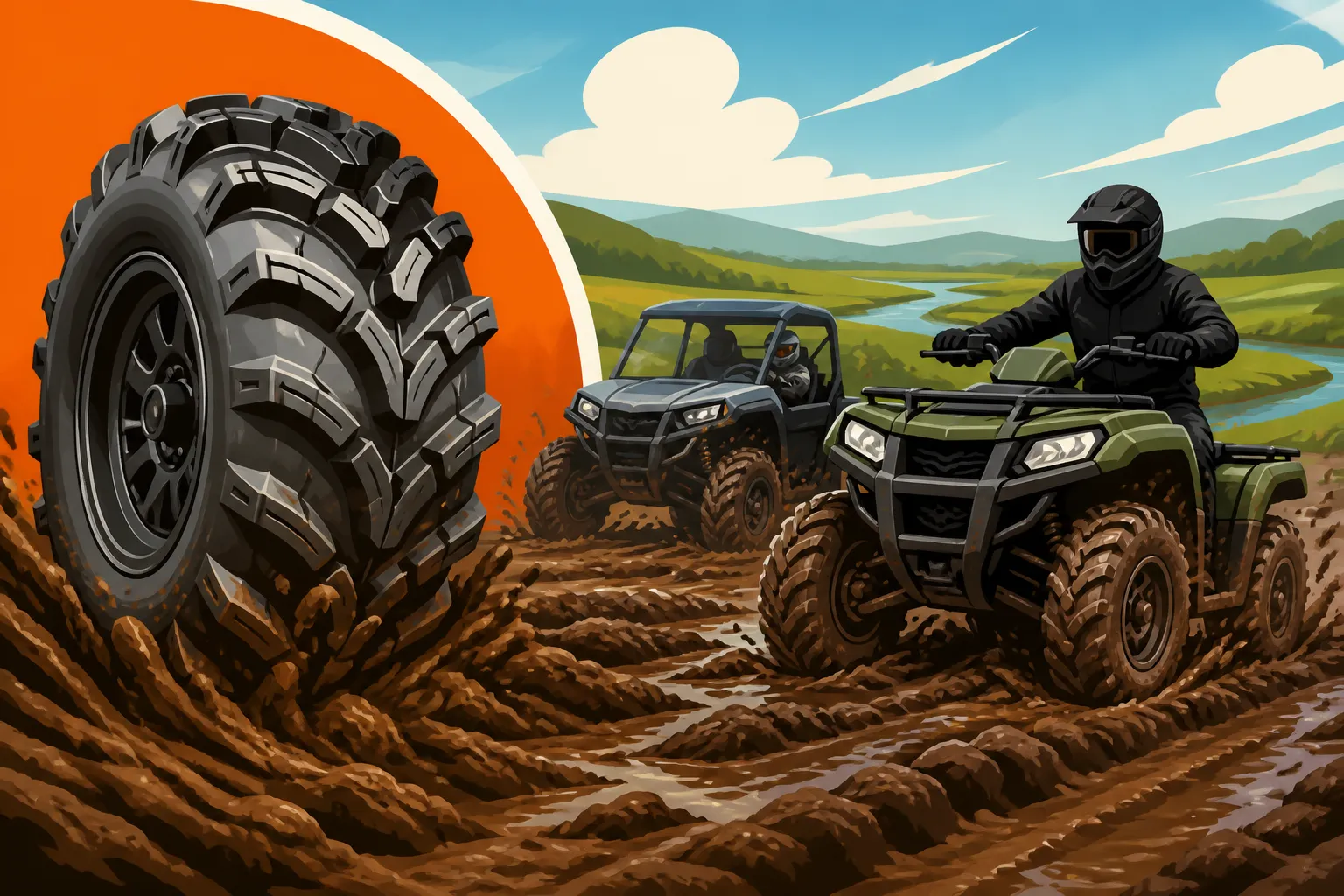
Gumbo is sticky, fine-grained soil that can cling to tires rather than shedding cleanly. Once it fills the spaces between tread lugs, those lugs have less room to bite into the ground. The result can feel like riding on smooth, slick tires—even when the tread looked aggressive before the ride.
It can be especially frustrating when a machine feels capable on one stretch, then suddenly loses traction in a low spot or a shaded section that has stayed wet. A spinning tire may polish the surface, dig a deeper rut, and pack in even more mud. That can make steering and climbing harder, while putting extra strain on the drivetrain.
Gumbo conditions also change quickly. A trail that was firm earlier may soften after rain, snowmelt, or repeated traffic. For a closer look at why the soil behaves this way, see North Dakota Gumbo Mud and What It Does. If the ground is wet enough to rut, riding gently—or choosing a different day—may do more for your machine and the trail than a more aggressive tire.
Why tread pattern matters more than an extreme look
Tread needs open space between the lugs so packed mud has somewhere to go. That doesn’t mean the biggest, sharpest-looking lugs are automatically best. A tire designed mainly for deep, loose mud may feel less predictable on firm ground, gravel, or hard-packed trail. It may also encourage a rider to push farther into conditions where turning around would be wiser.
For mixed North Dakota riding, think about the surfaces you actually encounter. A machine used on a variety of trails may benefit from a balanced tread that can clear some mud without feeling overly harsh or skittish on firmer ground. A dedicated mud tire may make sense for a rider who regularly faces deep, soft conditions, but it comes with trade-offs in handling and ride feel elsewhere.
The key is not to buy tires based on a single dramatic photo or a short stretch of mud. Consider your machine’s use, the terrain you ride most, and the conditions you’re willing to avoid. Trail conditions still matter: even well-chosen tires can lose their advantage when the ground is saturated.
Choosing tires for gumbo and mixed terrain
Compare tread, width, and construction
Before replacing tires, compare the features that affect how your machine behaves, not just the overall lug height. Tire construction and dimensions should also be appropriate for your ATV or UTV. Follow the vehicle manufacturer’s requirements and the tire maker’s recommendations; a tire that doesn’t suit the machine can create handling or clearance problems.
| Tire feature | Potential benefit in gumbo | Trade-off to consider |
|---|---|---|
| Open tread with space between lugs | Gives mud room to clear from the tread | Very open patterns may feel less settled on firm surfaces |
| Moderate, well-spaced lugs | Offers a compromise for mixed riding | May not be ideal for deep, consistently soft mud |
| Very aggressive mud tread | Can offer more bite in soft conditions | Can feel harsher or less predictable on hard ground |
| Wider tire | Spreads contact over a broader area in some conditions | May not suit every machine or every type of terrain |
| Tire construction matched to the machine | Helps maintain intended fit and handling | Requires checking the machine and tire specifications |
Width is not a simple “wider is better” decision. A broader tire may change how the machine floats or steers, and the result depends on the soil, vehicle, tire design, and setup. Likewise, a narrower tire might cut through some soft material but can also dig in or feel unstable in other conditions. Ask a knowledgeable tire dealer to compare options for your exact make, model, and usual terrain.
Construction matters too. Some riders prefer a softer, more compliant ride; others prioritize durability for rougher use. There isn’t one universal answer for every North Dakota route. If you ride gravel, hard ground, and muddy stretches in the same outing, a balanced tire may be more practical than a specialist design that excels in only one situation.
Set pressure carefully and check it often
Tire pressure affects how a tire contacts the ground, but changing it without a plan can cause new problems. Too much pressure can make the ride feel harsh and reduce the tire’s ability to follow uneven ground. Too little can increase the risk of damage, poor handling, or a tire coming off its rim, especially if you’re carrying a load or traveling at speed.
Start with the vehicle and tire manufacturers’ guidance for your specific setup. Don’t assume that a pressure that worked on a friend’s machine is right for yours. ATV and UTV weight, tire size, passenger or cargo load, and terrain all matter.
Check pressure when the tires are cool and use a gauge rather than judging by appearance. If you make a change based on manufacturer guidance, test the machine cautiously on suitable ground before heading into a remote area. Keep a way to check and restore pressure if your ride includes varied terrain. Low pressure is not a cure for gumbo: a tire that is too soft can deform, handle poorly, or become vulnerable to damage.
Riding techniques that help when the trail turns sticky
Keep momentum controlled and steering deliberate
When the ground is slick, sudden inputs often make things worse. Rapid acceleration can spin the tires and dig holes. Abrupt braking or sharp steering can make a machine slide or lose its line. Aim for steady throttle and smooth, gradual turns, leaving plenty of room to stop or change direction.
If traction fades, ease off rather than repeatedly flooring the accelerator. Look for a firmer line only when it is safe and permitted to use it. Do not create a new route around a muddy patch if that means leaving the designated trail or crossing vegetation. At a riding area such as Pembina Gorge, check local conditions and rules before setting out; North Dakota Trails Closed by Wet Weather is also a useful reminder that access can depend on ground conditions.
A route-planning tool such as onX Offroad can help you review mapped routes and plan alternatives before you leave. Use it as one part of trip planning, not as proof that a particular trail is open or dry. Conditions can change after a map is updated, so check applicable park or land-manager notices as well. Planning a shorter loop with a clear turnaround option can reduce the temptation to push through a bad section.
Know when to turn around
A little mud on the tire is different from a trail that is becoming damaged or unsafe. Turn back if you are repeatedly spinning without forward progress, sliding toward a hazard, digging deep ruts, or needing another vehicle to pull you through every soft patch. A tow strap may help in an appropriate recovery, but it does not make a closed, damaged, or unsafe route suitable for riding.
If you ride after rain or during spring thaw, take extra care with low areas, shaded ground, and approaches where water collects. Before planning a trip, review North Dakota Riding in Spring Mud and North Dakota Riding After Heavy Rain. When the ground is soft enough that tires leave deep tracks, waiting for it to dry is often the better choice.
Use onX Offroad or another mapping resource to prepare a route and identify alternatives, then confirm access with the relevant land manager. Don’t rely on a trail line alone to tell you whether riding is allowed that day. If closures or wet-weather guidance are posted, follow them. Turning around is not a failed ride; it can prevent a minor traction issue from becoming a recovery, repair, or trail-damage problem.
Care and preparation for gumbo rides
Prevent mud buildup from becoming a maintenance problem
Gumbo is easier to manage when it is still wet. Once it dries, it can cling to tires, wheels, suspension parts, and the underside of a machine. After a ride, remove packed mud carefully and inspect the areas that can hide debris, including around the wheels and suspension. Avoid using a tool or spray method that could damage seals, electrical connections, or other components.
Check the tires for cuts, embedded stones, missing chunks, and packed material between the lugs. Look for mud buildup that could affect clearance or balance. If the machine handled differently during the ride, inspect it before the next outing rather than assuming the problem was only the trail.
A practical recovery kit may include gloves, a suitable tow strap, basic tools, and a way to communicate if your route takes you beyond reliable service. Carry equipment appropriate to your machine and know how to use it safely. Carrying a Tow Strap on the Prairie offers another useful preparation topic, while Washing Gumbo Off Before It Sets covers why post-ride cleanup is worth doing promptly.
Plan around conditions, not just the tire you bought
Good tires can improve traction, but they cannot replace judgment. Check the route, weather, and access information before leaving, and have a backup plan if rain or thaw makes the ground unsuitable. The North Dakota Trail Closures After a Storm guide can help frame why conditions after bad weather deserve special attention. Keep in mind that a mapped route may not reflect a fresh closure or a newly soft section.
When you use onX Offroad to explore possible routes, treat the map as a planning aid. Confirm current access and restrictions through the relevant land manager, and avoid riding where signs or closures prohibit it. If the route crosses private land, make sure you have permission. A useful plan includes a turnaround point, enough fuel for the return, and a way to tell someone where you expect to ride.
Finally, be realistic about what you want from a tire. For mixed riding, a balanced tread and careful setup may be more useful than chasing the most aggressive pattern available. For persistent deep mud, a specialized tire might be worth considering—but only if it suits your machine and the places where you ride. The safest choice is the one that matches the terrain while leaving you willing to stop when conditions turn poor.
Disclaimer
This article is for general informational purposes only and does not constitute professional advice. Laws, prices and regulations vary by location and change over time. Consult a qualified professional for guidance on your specific situation.