Carrying a Tow Strap on the Prairie
A tow strap can turn a prairie ride from a long walk back to the trailer into a manageable recovery, but only if it is the right strap and everyone knows how to use it safely. Mud, soft shoulders, hidden approaches, and changing weather can catch ATV and UTV riders off guard. This guide covers what to carry, how to plan a recovery, and when not to pull.
Why a Tow Strap Belongs in a Prairie Riding Kit
North Dakota ground can change quickly
A route that feels firm on the way out may be greasy or deeply rutted on the return. In North Dakota, gumbo soil can cling to tires and reduce traction, while wet grass may hide soft ground beneath it. A machine can lose momentum at a low spot, a muddy approach, or the edge of a trail without anything dramatic happening first. That is one reason it helps to understand North Dakota Gumbo Mud and What It Does before heading out.
The prairie also exposes riders to wind, long distances between stops, and weather that can change the feel of a ride. A machine that is only a short distance off a road or trail can still be difficult to reach if the ground is soft or the route back is unfamiliar. A strap is a small, relatively simple piece of equipment to carry compared with the inconvenience of being stuck without a safe recovery option.
Conditions matter as much as the map. Rain can make some trails unsuitable for riding and can increase the risk of damaging the surface while trying to get free. Check conditions before you leave and be willing to change plans; North Dakota Trail Closures After Rain is a useful reminder that a closed or wet route is not an invitation to find another way across the ground.
A strap is useful, but it is not a recovery plan by itself
A strap can help one machine pull another over a short, passable distance. It cannot make unsafe terrain safe, provide a secure anchor where none exists, or guarantee that a bogged machine will move without damage. If a rider is injured, a vehicle is unstable, or the machine is lodged near a steep bank, culvert, water, or traffic, stop and assess the situation before attempting a pull.
A sensible recovery plan starts before the wheels stop turning. Keep the group together, avoid riding beyond the known route, and make sure someone can contact help if the recovery becomes more complicated than expected. A map app such as onX Offroad may help riders review a route before leaving, but a digital map is not a substitute for checking access rules and conditions or carrying a backup means of navigation.
Choosing a Strap and Carrying It Properly
Know the difference between a tow strap and a recovery strap
The word “strap” is used loosely, but products designed for towing and products designed for dynamic vehicle recovery are not always interchangeable. A basic tow strap is generally intended for a steady pull. A kinetic recovery strap is designed to stretch under load, which can create a strong pulling force. That stored energy can make a difficult recovery more hazardous if the strap, attachment point, or technique is wrong.
Read the product label and the machine’s owner’s manual rather than guessing from appearance. Check the strap’s rated capacity, intended use, condition, and compatibility with the machines involved. A strap that is frayed, cut, badly abraded, knotted, or showing damaged stitching should not be used. Avoid tying straps together with knots or improvising extensions from whatever happens to be in the cargo box.
| Item | What it is for | What to check |
|---|---|---|
| Tow strap | A controlled, steady pull over a short distance | Label, rated capacity, wear, and approved attachment points |
| Kinetic recovery strap | A recovery that relies on controlled stretch | Product instructions, compatible recovery points, and adequate space |
| Soft shackles or rated connectors | Connecting a strap to approved recovery points | Rating, wear, and whether the manufacturer permits their use |
| Strap damper or heavy blanket | Reducing the risk from a strap under tension if it fails | Placement and instructions for the recovery setup |
| Gloves | Handling muddy, wet, or dirty gear | Fit and grip, especially in cold or windy conditions |
The table is a starting point, not a universal equipment prescription. Machine weight, load, attachment design, and the recovery product all affect what is appropriate. If the manual does not identify a safe recovery point, do not assume a bumper, rack, frame tube, or trailer ball can take a loaded pull.
Pack the strap so it is ready when you need it
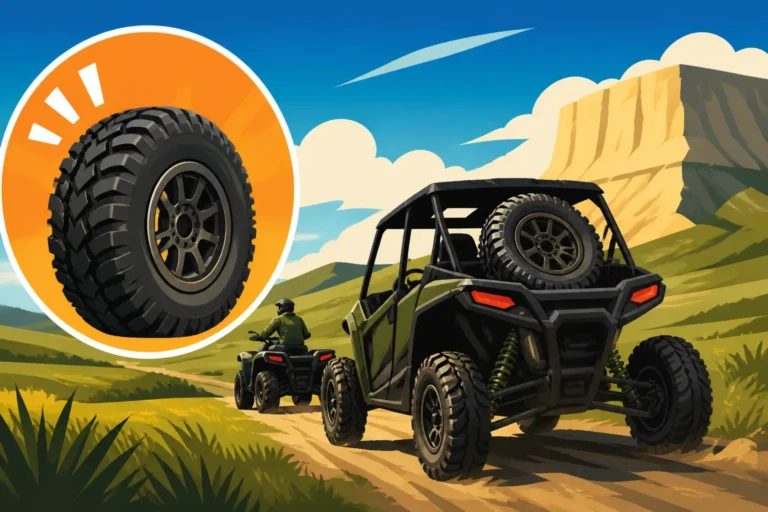
A strap buried beneath tools, food, and wet riding gear may as well be at home when someone is stuck. Keep it accessible but secured so it cannot drop into moving parts or become a projectile over rough ground. Store it clean and dry when possible, and inspect it after use. Mud and grit can hide damage, so rinse and examine the strap before putting it away.
Make sure the person carrying the strap also knows where it is and how to check it. A quick pre-ride review can prevent the frustrating moment when the group discovers the strap is missing a connector, has a questionable repair, or is too short for the situation. For a wider look at preparing for remote riding, see First Aid on a Remote Loop and Fuel Range Between Small Towns.
A map and route plan belong in the same preparation conversation. Riders using onX Offroad can use it to help plan where they expect to ride and orient themselves if the group needs to stop, but should verify trail access and current conditions through appropriate local sources. Save or carry whatever route information is available offline, and bring a paper backup when a dead zone or low battery could leave the group without navigation.
How to Handle a Tow Strap Recovery
Stop, inspect, and agree on the plan
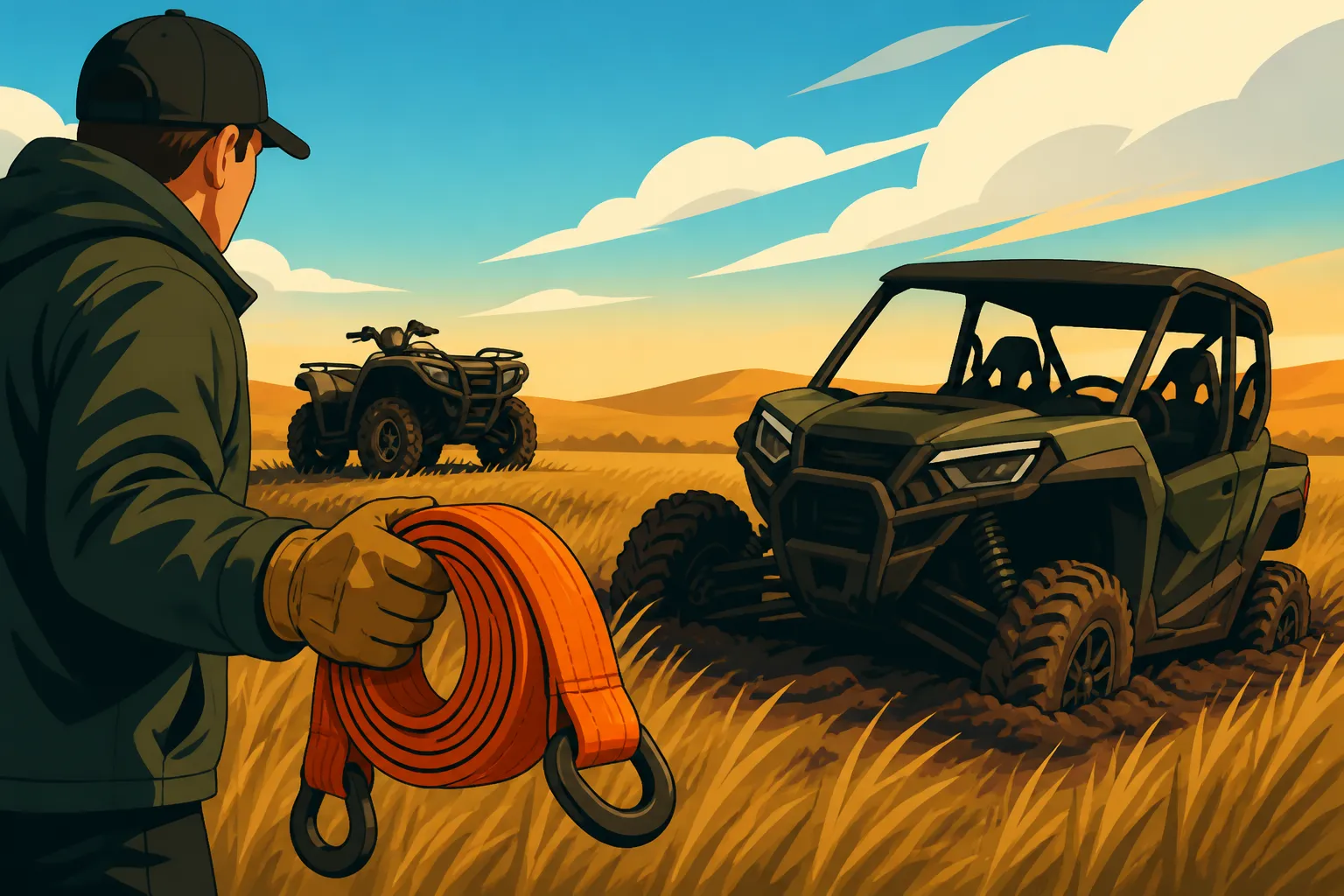
When a machine bogs down, the first instinct may be to give it more throttle. That can dig the tires deeper, bury the belly, or worsen damage to the terrain. Stop spinning the wheels. Have the rider dismount if it is safe to do so, and look at the machine, the ground around it, and the route the pulling vehicle would have to take.
Before connecting a strap, agree on who is directing the pull, who is operating each machine, and what signal means “stop.” Check that both machines are stable and that the pulling machine has a clear path. Keep bystanders well away from the strap and its line of pull. No one should stand between the machines, beside a taut strap, or in the likely path of a machine if a connection fails.
A strap recovery should be slow and controlled. Avoid sudden jerks unless the product is specifically designed for dynamic recovery and the operators have followed its instructions. Even then, do not treat a kinetic strap as a way to overpower a buried or dangerously positioned machine. The safest decision may be to stop and seek a more suitable recovery method.
Use approved recovery points and protect everyone nearby
Attach the strap only to recovery points the manufacturer identifies for that purpose. Do not attach it to a tow ball, a rack, a handlebar, a steering component, or a random part of the frame. Those parts may not be designed to withstand pulling loads, and a failure can send hardware or strap components toward people.
Use connectors that are rated and intended for the setup, and follow the strap maker’s directions. Do not wrap a strap around a sharp edge or let it rub against a tire, exhaust, or moving component. A strap damper may reduce the risk of a whipping strap if something fails, but it does not make an unsafe attachment or recovery safe.
Once everyone is clear, the operators should make a gentle, coordinated pull and stop at the first sign that something is shifting unpredictably. If the stuck machine does not move with a controlled attempt, do not keep increasing force. Reassess the ground, attachments, and angle. In prairie terrain, pulling from the wrong direction can turn a minor rut into a damaged bank or a machine sliding toward an obstacle.
Know when a strap is the wrong tool
A strap is not suitable for every stuck machine. Avoid a pull if the machine is on a steep or unstable slope, partly submerged, close to water, near traffic, or positioned where it could roll or slide onto someone. A strap should not be used to pull a person, and riders should never use a moving machine to drag someone who is holding the strap.
If the stuck ATV or UTV is high-centered, has a mechanical problem, or is buried in a way that leaves no stable line of pull, a strap may not solve the problem. A winch, shovel, traction aid, or professional assistance may be more appropriate, depending on the circumstances and equipment. If there is doubt about the machine’s recovery point or the force required, stop rather than improvising.
Reducing the Chances of Getting Stuck
Read the surface and turn around early
Prairie ground can be deceptive. A grassy stretch may look firm while concealing mud, and a shallow-looking approach can have a soft bottom or an abrupt edge. Slow down near drainage features, low spots, and areas where water has recently pooled. Do not assume that a route is passable because another machine has crossed it; soil conditions can differ across a short distance.
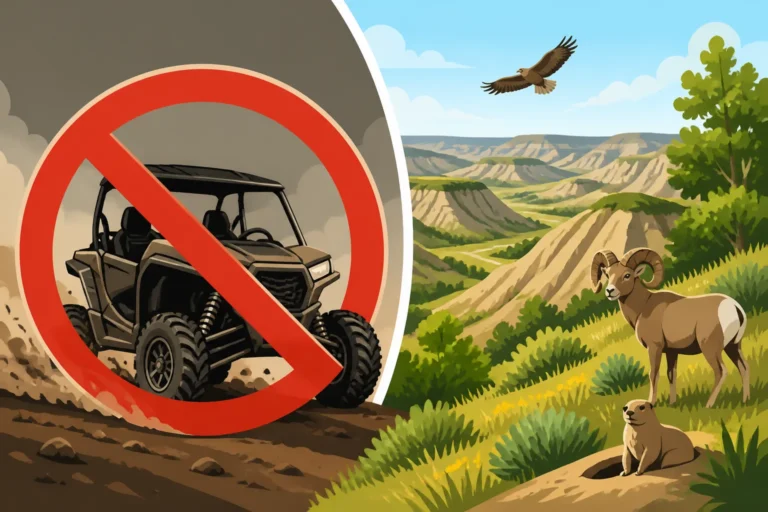
Rain should change the plan, not just the tire pressure or throttle technique. Avoid pushing onto wet ground when the trail is soft, and do not create a new route around a muddy section. That can damage vegetation, widen ruts, and put riders onto land they are not authorized to cross. The advice in North Dakota Riding After Heavy Rain and Tread Lightly on Wet Clay can help riders think through when waiting is the better choice.
Weather and wind also affect how much effort a group can safely manage. A long recovery in cold, wet, or windy conditions can exhaust riders and make small mistakes more likely. Build enough time into the ride to turn back before daylight or weather becomes a concern. North Dakota Prairie Wind and Long Rides offers more context for planning around exposed conditions.
Stay on authorized routes and keep your navigation usable
A tow strap is for getting a machine out of trouble; it is not permission to leave a route and cross a field, ditch, or private parcel. Check land access before riding and respect posted restrictions. A route that appears open on a screen may not be open to motorized travel, and local access rules can differ. Review North Dakota Posted Land Rules for Riders before assuming that a shortcut or recovery route is allowed.
Use a mapping tool, such as onX Offroad, as one part of route planning—not as proof that every line on the screen is an authorized trail. Confirm that the intended riding area is open, make note of trailheads and exit options, and tell someone where the group expects to be. If a machine is disabled, this preparation makes it easier to explain where you are and choose a safe way to get help.
Pack for the distance and conditions, not just the planned duration. A phone battery, paper map, water, basic first aid supplies, and a working communication plan matter when a recovery takes longer than expected. Keep the tow strap accessible, inspect it before rides, and make sure each rider knows the agreed stop signal. A few minutes of preparation can prevent a roadside problem from becoming a much harder day.
Respect the trail and the rest of the group
Recovery work can damage a trail if riders spin tires or pull across soft ground. Choose the least damaging safe option, avoid widening the route, and stop if the attempt is making the surface worse. When riding at a designated area, follow posted directions and closure notices. For broader guidance on sharing riding areas, see North Dakota Trail Etiquette Locals Expect and North Dakota OHV Trails: All Four Riding Areas.
After a recovery, check the machine and strap before continuing. Look for damage around the approved attachment points, loose parts, leaking fluids, or a strap that has been cut or abraded. If a machine feels different or has a new warning light or noise, do not assume it is fine just because it made it out of the mud. A brief inspection is easier than discovering a problem farther from the trailhead.
Keep the group together and reassess whether the planned route still makes sense. If rain is increasing, visibility is dropping, or another machine is showing signs of trouble, turn back or use a safer exit where permitted. The best tow strap recovery is often the one that stays controlled, protects the trail, and ends with everyone deciding not to repeat the same risky crossing.
Disclaimer
This article is for general informational purposes only and does not constitute professional advice. Laws, prices and regulations vary by location and change over time. Consult a qualified professional for guidance on your specific situation.