North Dakota Non-Resident Permit Cost
North Dakota’s non-resident OHV permit costs $10 per machine for the calendar year. That can be easy to mistake for a trail pass or state park entrance permit, but they serve different purposes. Here’s what the permit covers, when you need one, how its cost adds up, and what to check before hauling an ATV or UTV into the state.
North Dakota non-resident permit cost and coverage
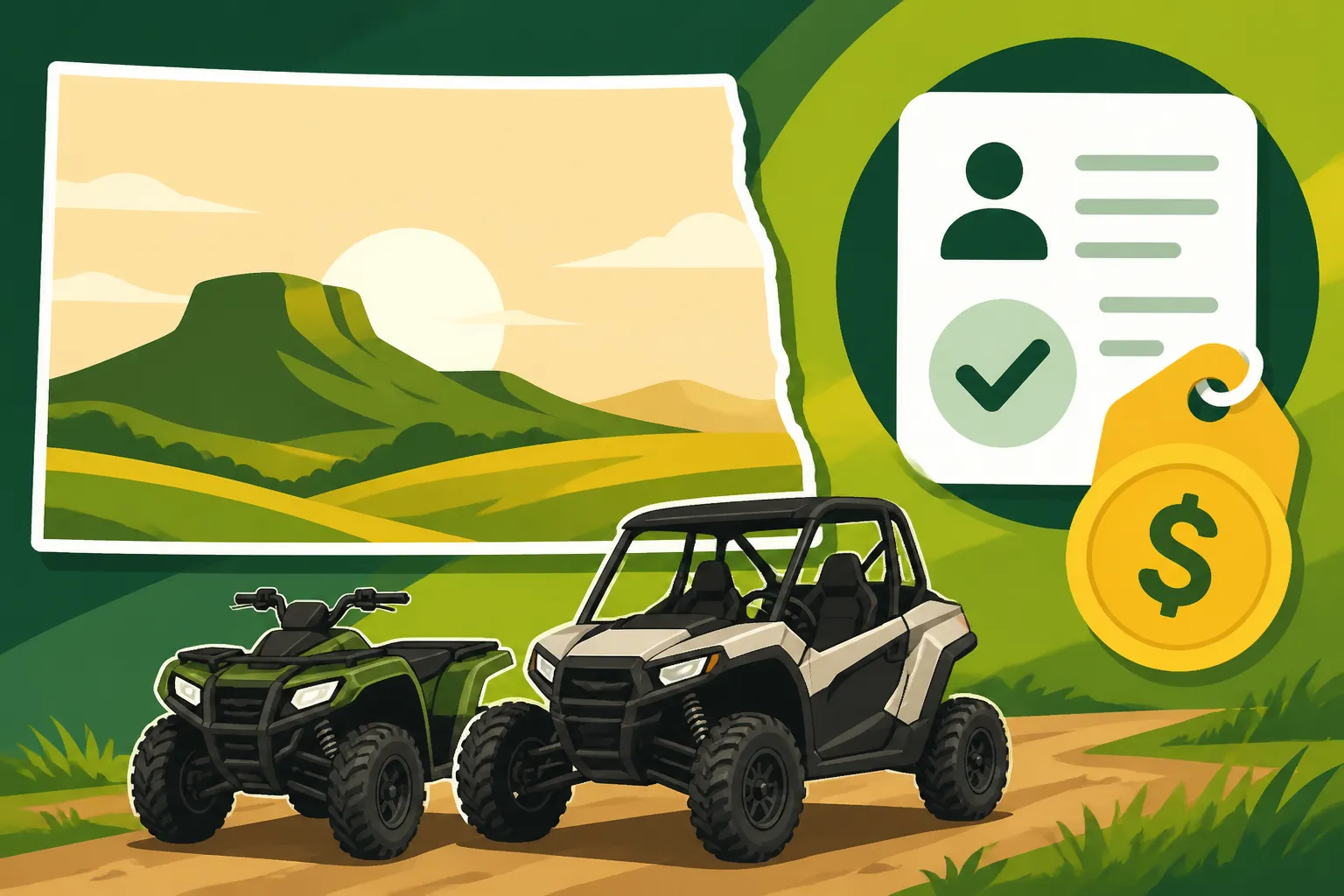
The non-resident OHV permit costs $10 for each machine and is valid for the calendar year, from January 1 through December 31. It is not a rolling 12-month permit: buying one late in the year does not extend it into the following year. Confirm the current fee and permit terms with the state before traveling, since fees and requirements can change.
North Dakota requires the permit because it does not have reciprocity with other states for OHV registration. A current registration, plate, or decal from your home state does not automatically replace North Dakota’s non-resident permit. If you are bringing machines registered elsewhere, check North Dakota Has No Reciprocity With Any State and North Dakota’s Non-Resident OHV Permit before setting out.
The permit is associated with the machine, not simply with the person or vehicle towing it. If two people bring two ATVs, budget for two permits. Likewise, bringing an ATV and a UTV means checking the requirement for each machine rather than assuming one permit covers the group. A passenger in a single machine does not need a separate machine permit just for riding along.
The permit is authorization for a visiting machine under North Dakota’s OHV rules. It is not a general pass to ride anywhere. You still need to follow the rules for the specific ground you use, including landowner permission where required, posted-land restrictions, trail closures, and local limits. For the broader distinction between visitor permits and resident registration, see North Dakota Registration Versus a Non-Resident Permit.
| Item | What to budget or check |
|---|---|
| Non-resident OHV permit | $10 per machine for the calendar year; verify the current amount before travel |
| Permit period | January 1 through December 31, not 12 months from purchase |
| Multiple machines | Check and budget separately for each ATV or UTV |
| Tracked dirt bike | A separate permit may be required; see the tracked-bike section below |
| State park entrance | Separate from the OHV permit |
| Home-state registration | Does not, by itself, replace North Dakota’s permit requirement |
| Riding access | The permit does not override closures, posting, or landowner restrictions |
The $10 permit is often the main state permit cost a visitor considers, but it is not necessarily the entire cost of a riding trip. If you use a state park, a park entrance permit may also apply to the vehicle entering the park. That is a different charge from the OHV permit. The distinction matters because paying for park entry does not automatically satisfy the OHV permit requirement, and having an OHV permit does not necessarily cover park entry.
There may also be a separate requirement for a tracked dirt bike. The tracked-bike permit is listed at $25 and is not simply another name for the standard visitor permit. If your machine has tracks rather than conventional wheels, review North Dakota Tracked Dirt Bike Permits and confirm which permits apply to that particular machine.
When visitors need a permit
If you live outside North Dakota and plan to operate an ATV or UTV in the state, do not assume that your home-state registration makes the machine exempt. North Dakota’s visitor permit requirement exists specifically because the state does not rely on another state’s registration through reciprocity. See Visiting North Dakota With Only a Home-State Sticker for the practical difference between carrying your own registration and meeting North Dakota’s requirement.
The permit question is only one part of deciding whether a ride is lawful. A valid permit does not create access to private land or turn a closed route into an open one. Before choosing a destination, check whether machines are allowed there and whether the route is open for your machine’s type and width. For instance, a permitted machine may still be barred from a trail with a width limit it exceeds.
North Dakota’s riding options include designated OHV areas, some public roads and other routes subject to specific rules. A visitor planning to ride public roads should review the road requirements separately; trail or visitor-permit paperwork does not make an otherwise ineligible machine road-legal. The same applies to age, safety training, equipment, and passenger rules. A permit is not a substitute for any of those requirements.
A useful way to avoid a last-minute surprise is to think in terms of four separate questions:
- Does the machine need a North Dakota permit? For a visiting ATV or UTV, plan on the non-resident permit unless an applicable exemption is confirmed.
- Where will you ride? Check the destination’s rules, access status, posted boundaries, and any route-specific restrictions.
- Will you enter a state park? Check park entrance requirements separately from OHV permit requirements.
- Does the machine have unusual features or use? Tracks, road use, rental arrangements, or special events can bring additional rules into play.
Private property is not a blanket way to ignore the rules. The answer can depend on who owns or operates the land and what activity is taking place. If you plan to ride only on private land, check North Dakota’s Exemption for Machines Used on Private Land rather than relying on a broad assumption that any private-land ride is exempt.
Similarly, visitors staying for an extended period should not treat the permit as an indefinite alternative to state registration. The visitor threshold and what follows it are covered in North Dakota Visitors Staying Over 30 Days. If the machine will remain in North Dakota or the stay is longer than a short trip, check the applicable registration requirements before riding.
Buying the permit and planning the total
North Dakota non-resident permits are available through state channels, including online and at state parks. A permit may also be available through participating sellers. Check the state’s current purchase options before travel, especially if you expect to arrive when offices or sales locations are closed. The official buying details are explained in How to Buy a North Dakota OHV Permit.
When buying, have the information needed to identify the machine and make sure the permit is for the right machine. If you are carrying several ATVs or UTVs, handle each one individually rather than assuming a group purchase covers the whole trailer. Keep the purchase confirmation or other proof of the permit with your trip documents, and follow the state’s directions for carrying or displaying it.
For a rental, ask the rental provider whether the machine already has the required North Dakota permit. Do not assume that renting includes it: rental terms and permit arrangements can vary. If you will be responsible for purchasing it, confirm the requirement before picking up the machine. See [North Dakota Permit for a Rented Machine] for the rental-specific issue.
A simple trip budget can help keep the $10 figure in context:
- One visitor’s ATV: budget for one non-resident permit.
- Two machines: check and budget for two permits.
- A tracked dirt bike: check whether its separate tracked-bike permit is also required.
- A state park visit: check park entrance charges separately.
- A long stay: confirm whether visitor-permit rules still fit your situation.
- An organized event or guided ride: ask the organizer whether any additional paperwork or permissions apply.
The key is not to combine unrelated charges into one vague “trail fee.” North Dakota’s resident registration includes a trail tax, while a non-resident visitor buys a permit under a different system. A resident’s registration receipt and a visitor’s permit are not interchangeable. For an explanation of the resident charge, see The $15 Trail Tax Inside Your Registration.
If you are bringing a machine from another state, keep your home registration information available, but treat that as supporting documentation rather than a substitute for the North Dakota permit. Visitors may also want to confirm that the machine’s identification number is legible and that the registration matches the machine being transported. Clear records make it easier to resolve questions if a permit or machine detail is checked.
Before you ride in North Dakota
Use this short checklist before loading the trailer:
- Count the machines. Plan on a permit for each visiting ATV or UTV, and check separate requirements for tracked machines.
- Confirm the fee and validity dates. The standard non-resident permit is $10 for the calendar year, ending December 31. Verify current details before purchase.
- Buy through an available state channel. Check whether online purchase or a state park sales location suits your arrival plans.
- Check access, not just paperwork. Verify that your chosen trail, road, or riding area is open to your type and width of machine.
- Separate the park question. If your route includes a state park, check its entrance permit requirements independently.
- Review rider and machine rules. Permit possession does not waive safety, equipment, age, passenger, or road-use requirements.
- Keep proof handy. Carry the permit confirmation and the machine’s registration information, and follow any display instructions.
Visitors can avoid most confusion by treating the permit as one part of the trip plan, not a pass that unlocks every riding area. The standard cost is straightforward: $10 per machine for the calendar year. The less obvious parts are the per-machine basis, the December 31 expiration, the lack of reciprocity, and the separate charges or rules that can apply to parks, tracked bikes, and particular riding locations.
Before departure, confirm the current permit cost and buying process with North Dakota’s official program, then check the rules for the exact place you intend to ride. That small bit of preparation helps prevent a permit purchase from being mistaken for trail access or park admission.
Disclaimer
This article is for general informational purposes only and does not constitute professional advice. Laws, prices and regulations vary by location and change over time. Consult a qualified professional for guidance on your specific situation.