Organized Rides and Their Paperwork
An organized ATV or UTV ride in North Dakota can involve more paperwork than a casual day on a familiar trail. The route may cross land managed by different owners, and riders may arrive with different registrations, permits, and safety credentials. Use this checklist to identify what the organizer should confirm before advertising the ride or unloading machines.
Start with the route and land access
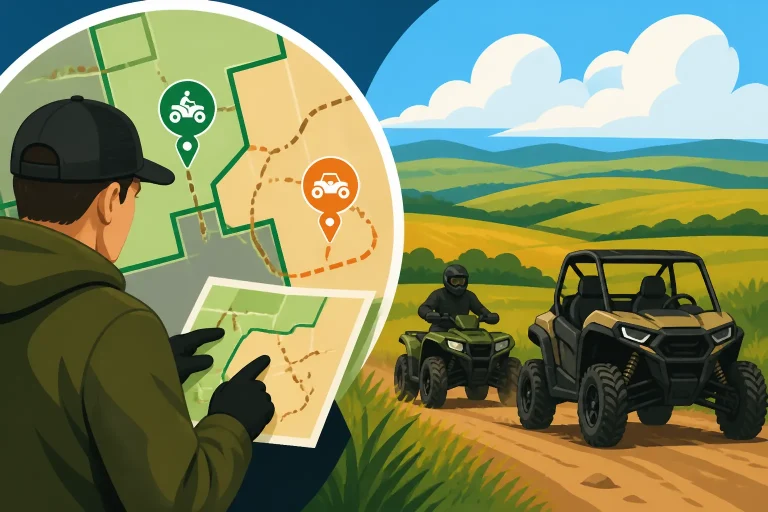
There is no single piece of paperwork that automatically authorizes an organized ride everywhere in North Dakota. Requirements depend on where the route goes, who manages the land, what kind of riding is planned, and whether the event affects roads, trails, or other users. Start by mapping the route, then contact each landowner or land manager whose property or facilities the group will use.
A public riding area being open to OHVs does not necessarily mean an organized event is approved. A manager may have rules for groups, staging, parking, temporary signs, or special activities. Ask about those details before you publish a date or collect registrations. If the ride includes timed competition, a race, or another organized activity, describe it clearly when requesting permission.
Private land requires the owner’s permission. Get it in writing and make sure the permission covers the event itself, not just casual riding. Confirm the date, route boundaries, access points, parking area, expected group size, and any restrictions on speed, noise, fires, or overnight use. A landowner may also ask for proof of liability insurance or require participants to follow specific conditions. For a closer look at permission and postings, see North Dakota Posted Land Rules for Riders and North Dakota Landowner Permission Forms.
Check every land manager along the route
A route that looks continuous on a map may cross land under different control. A trailhead, connecting road, campsite, or staging area can have a different manager from the riding area itself. Verify each part of the plan, including where trailers will park and where participants will gather before and after the ride.
Ask the relevant manager or landowner:
- Is an organized group ride allowed on the proposed date?
- Is written event approval required, and how far in advance should it be requested?
- Are there limits on group size, vehicle type, or trail width?
- Can the ride use the planned staging and parking areas?
- Are temporary signs, check-in tables, or marked routes allowed?
- Are there seasonal closures or weather-related restrictions?
- Does the event need separate insurance or an emergency plan?
For an event on public land, contact the agency responsible for that specific property rather than assuming that permission from one office covers the whole route. Public land can include areas with different rules and managers. If the ride uses a state park or another managed recreation site, ask the park or site office about event approval and vehicle access. For general permit questions, North Dakota Event Permits for a Ride is a useful starting point.
Ditch rides need particular care. North Dakota has specific restrictions on where OHVs may travel along a roadway and how they may operate. A permitted organized ditch race is not the same as an ordinary group ride, and special written authorization may be required. Do not treat a landowner’s informal approval as a substitute for any required permit from the appropriate authority. See Getting a Written Permit for an Organized Ditch Race before planning a race or similar event.
Keep the route legal for every machine
Check that the route is open to the types and widths of machines invited. An ATV route may not accommodate every side-by-side, and public roads or trails can have their own restrictions. Confirm the route rather than relying on a general map or an old event description. North Dakota’s Class I, II and III Machines explains why machine classification can matter when checking where a vehicle may ride.
Do not assume that a route can use a road shoulder, ditch, or section line simply because it is near the riding area. Rules vary by roadway and location, and local restrictions may apply. Confirm each proposed connection with the responsible road authority or land manager. The overview in North Dakota ATV Road Rules by Surface Type can help organizers identify questions to resolve before they put a road segment on the route.
Confirm each rider’s machine registration or permit
The organizer should explain what riders need to bring, but each participant is responsible for having the documents required for their own machine. A group sign-up form is not a registration, and an event waiver does not replace a state permit.
For North Dakota residents, confirm that machines requiring registration are properly registered. If a participant is unsure whether a machine qualifies for an exemption, direct them to North Dakota Registration Exemptions Explained rather than making a blanket promise in the event announcement. Exemptions depend on how and where the machine is used; they do not automatically extend to every group ride.
Visitors should check their own situation before traveling. North Dakota’s rules distinguish between a machine with qualifying out-of-state registration and one that needs a North Dakota non-resident permit. The visitor rule is not simply “bring any home-state sticker.” Explain that riders should verify their eligibility and length of stay using North Dakota’s 30-Day Out-of-State Rule and North Dakota’s Non-Resident OHV Permit. North Dakota does not offer broad reciprocity that makes every other state’s paperwork interchangeable.
A simple document check can help the organizer avoid confusion at check-in:
| Rider or machine situation | What to ask the participant to verify |
|---|---|
| North Dakota resident | Whether the machine is registered or qualifies for an applicable exemption |
| Visitor with an out-of-state machine | Whether the machine’s registration qualifies under North Dakota’s visitor rules |
| Visitor who needs a state permit | Whether the required North Dakota non-resident permit has been obtained |
| Tracked dirt bike | Whether the separate tracked-bike permit applies |
| Machine with uncertain ownership or paperwork | Whether the owner has resolved title or registration questions before the event |
The table is a screening aid, not a legal determination. Organizers should avoid promising that a particular machine is eligible based on its appearance, brand, or the rider’s home-state documents. For a visitor-specific overview, see North Dakota Registration Versus a Non-Resident Permit. Riders bringing tracked dirt bikes should also review North Dakota Tracked Dirt Bike Permits.
Give riders time to fix paperwork problems
Include permit and registration reminders in the event listing, confirmation email, and pre-ride briefing. Tell participants to check their documents well before the event, especially if they are traveling from another state. That gives them time to contact the issuing agency or buy a permit through an authorized channel instead of trying to sort it out at the trailhead.
Ask riders to carry whatever proof they are required to have while operating. An organizer may choose to check documents at registration, but a check-in desk cannot guarantee compliance for the full ride. A rider could switch machines, leave the group, or discover a problem after check-in. Keep the policy clear: participants are responsible for their machine and paperwork, and the organizer can turn away a machine that does not meet the event’s stated requirements.
Avoid collecting more personal information than the event needs. If the ride does not need copies of titles or identification, do not ask riders to send them. A checklist or a confirmation that required documents are in order may be enough for event planning. If copies are necessary for a specific permit or venue requirement, explain who will handle them and how they will be stored.
Prepare for youth riders, insurance, and event operations
Youth riders can bring additional requirements, so do not assume that a parent’s registration covers a child or that every young rider can operate any machine. Check North Dakota’s safety-certificate rules and any age, supervision, or machine-related conditions that apply. The event announcement should state the requirements plainly and ask families to confirm that each young rider is eligible before arriving. Relevant starting points include North Dakota OHV Safety Certificates at Age 12 and North Dakota Rules for Riders Under 16.
Make sure the route and ride plan fit the abilities and machines of the group. A youth participant may need a suitable machine, appropriate supervision, and a route that matches their experience. Confirm passenger rules as well: a child should not ride as a passenger unless the machine is designed and equipped for passengers and the ride complies with applicable rules. North Dakota Rules for a Child Passenger can help families check that issue.
Ask an insurer what the event policy actually covers
A personal OHV policy may not cover every activity connected with an organized event. Coverage can depend on the type of event, whether it is competitive, where it takes place, whether participants pay a fee, and who is named as an insured party. Ask the insurer or a qualified insurance professional to review the actual event plan; do not infer coverage from a policy summary or from another group’s experience.
Questions worth asking include:
- Does the policy cover an organized group ride on the proposed land?
- Are volunteers, landowners, sponsors, or the event organization covered?
- Are competition, timed sections, or demonstrations excluded?
- Does coverage apply to participants’ own machines?
- Are there requirements for participant waivers, safety briefings, or emergency procedures?
- Is proof of coverage required by the land manager?
A participant waiver may document that a rider received information and acknowledged risks, but it is not a substitute for insurance, land permission, or legal compliance. Have any waiver reviewed by a qualified professional, and use the land manager’s required forms when applicable. Do not present a waiver as a guarantee that an organizer or landowner cannot be held responsible.
Put the operations plan in writing
Even a small ride benefits from a written plan. Keep it practical and share the relevant parts with ride leaders, volunteers, and the land manager. Include:
- The approved route, start and finish points, and any restricted areas.
- The event date, schedule, check-in process, and expected group size.
- A lead and sweep rider, plus a plan for regrouping or handling a separated rider.
- Emergency contacts, the nearest access points for responders, and a process for reporting an incident.
- Weather and closure checks, including who can delay, reroute, or cancel the ride.
- Rules for speed, passing, noise, litter, fires, and staying on the approved route.
- A process for notifying participants if conditions or access change.
Keep copies of land permissions, event approvals, insurance documents, and the final route plan where the event leads can reach them. The organizer does not need to carry every participant’s private paperwork, but should be able to show the documents that authorize the event and explain its operating plan.
Use a pre-event paperwork checklist
A good checklist helps catch gaps while there is still time to solve them. Assign a person to own each item and record when it is confirmed. Do not mark something complete just because a request was sent; wait for the approval or answer.
Before announcing the ride:
- Map the route and identify every property, road, trail, staging area, and campground involved.
- Confirm that the ride is allowed on the planned date and that the route fits the machines invited.
- Get written landowner permission or the required event authorization.
- Ask about group-size limits, parking, signs, fees, insurance, and seasonal conditions.
- Confirm that the ride is not being described as a race unless the required race-related approval is in place.
Before accepting final registrations:
- Tell riders which registration or permit documents they must verify.
- Explain that out-of-state registration does not automatically establish eligibility in North Dakota.
- Give families a clear reminder about youth safety certificates and age-related rules.
- Confirm insurance expectations with the land manager and the event’s insurer.
- Share cancellation, weather, route-change, and conduct policies.
At check-in and before departure:
- Confirm participants received the route and safety briefing.
- Make sure riders understand that they must stay on the approved route.
- Identify the lead and sweep riders and confirm the emergency plan.
- Check that event approvals and land permissions are accessible to the organizers.
- Record incidents or major changes and notify the land manager when required.
If you need a reusable checklist, a waterproof document pouch or simple clipboards can keep the event’s approvals and route notes together; choose supplies that suit the weather and check-in setup rather than treating a particular product as a compliance requirement.
The most important distinction is between paperwork for the event and paperwork for each machine. The organizer secures access and any event-specific approvals; each rider verifies that their machine and credentials meet North Dakota requirements. When those responsibilities are clear before the ride, check-in is smoother and the group is less likely to arrive at a closed gate or discover an avoidable permit problem.
Disclaimer
This article is for general informational purposes only and does not constitute professional advice. Laws, prices and regulations vary by location and change over time. Consult a qualified professional for guidance on your specific situation.