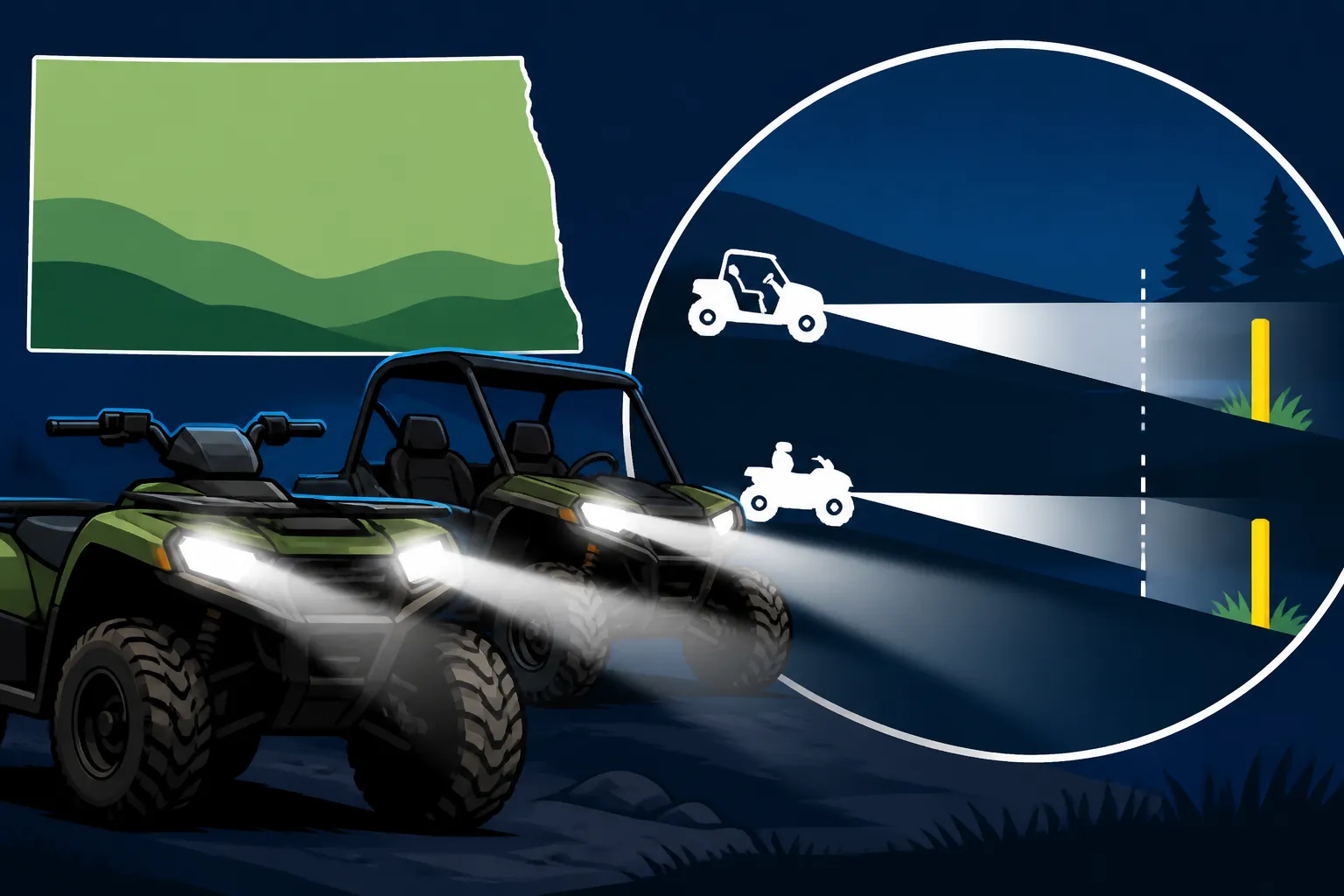
North Dakota Headlamp Distance Standards
Riding your ATV or UTV in North Dakota, especially when you venture onto public roads, means adhering to some very specific rules designed to keep everyone safe. One area that often leaves riders scratching their heads, or worse, facing a citation, is headlamp standards. It's frustrating to think you're street-legal only to find your lights don't cut it. This guide is here to shed some much-needed light on North Dakota's headlamp distance standards, helping you understand exactly what's required and how to ensure your machine is compliant for safer, worry-free journeys on the open road.
Why North Dakota Cares About Your Headlamps
Picture this: you're cruising down a gravel township road just after sunset, enjoying the vast North Dakota landscape. Suddenly, you realize that oncoming vehicle's lights are blinding you, or maybe you can barely see the deer about to dart across your path. This isn't just a minor inconvenience; it's a genuine safety hazard that the state takes very seriously. North Dakota's laws regarding headlamp distance standards aren't just bureaucratic red tape; they're vital for protecting everyone on the road, including you and your passengers.
The Safety Imperative on Roads
When you bring an off-highway vehicle (OHV) onto a public road, you're entering a shared space with cars, trucks, and other vehicles that operate under strict lighting regulations. Your ATV or UTV, by its very nature, might not be designed with these same highway-grade standards in mind. This creates a potential mismatch in visibility that can lead to dangerous situations. The state's headlamp requirements are a direct response to this, aiming to bridge that gap and ensure that all vehicles, including OHVs, can be seen and can see effectively. It's all about reducing the risk of collisions, especially during those low-light conditions when accidents are more prone to happen.
Beyond just seeing what's in front of you, the quality and reach of your headlamps also dictate how well other drivers can see you. Imagine driving a semi-truck down a highway and suddenly coming across an ATV with dim, improperly aimed lights. That split-second of confusion could be disastrous. North Dakota wants to make sure your machine isn't a surprise on the road, but rather a clearly visible presence that other drivers can anticipate and react to appropriately. This is particularly true when you're riding after dusk or before dawn, or even during inclement weather where visibility is naturally reduced.
Preventing Accidents and Ensuring Visibility
The core purpose of any lighting standard is accident prevention. Good headlamps illuminate the road ahead, revealing potholes, gravel washouts, wildlife, and other hazards that could otherwise take you by surprise. They also ensure that your vehicle stands out from its surroundings, making it visible to other motorists, pedestrians, and cyclists. Without adequate lighting, you're essentially riding partially blind and, more importantly, making yourself an invisible hazard to others. This isn't a scenario any responsible rider wants to be in.
Consider the diverse conditions you might encounter while riding in North Dakota: from vast, open prairie roads with no ambient light to tree-lined section lines where shadows can play tricks on your eyes. Your headlamps need to cut through these conditions, providing a consistent beam of light that travels far enough to give you ample reaction time. It’s not just about having a light; it’s about having the right light that meets a specific performance threshold. This proactive approach by the state helps mitigate the risks inherent in mixing different types of vehicles on shared roadways, ultimately making the riding experience safer for everyone involved. [North Dakota Rules for Riding After Dark] highlights just how crucial proper lighting is for these varied scenarios.
Understanding North Dakota's Specific Headlamp Requirements
So, what exactly does North Dakota demand of your OHV's headlamps when you take it off the trail and onto the pavement? It's not just a matter of having a light turn on; there are performance benchmarks that must be met. These standards are put in place to ensure that whether you're on a country road or crossing a highway, your lighting provides adequate illumination and makes your presence known.
The Crucial 300-Foot Visibility Standard
The key takeaway for North Dakota headlamp standards is the 300-foot visibility rule. This means your headlamps, when working correctly and aimed properly, must project a beam of light capable of illuminating persons and vehicles at least 300 feet ahead of your OHV. This isn't a suggestion; it's a legal requirement. For many stock ATVs and UTVs, especially older models or those not specifically designed with road use in mind, meeting this 300-foot standard can be a challenge. It's an easily overlooked detail that can lead to an unexpected conversation with law enforcement.
This 300-foot distance is critical because it gives both you and oncoming drivers enough time to react. At typical road speeds, 300 feet translates to several seconds of warning, which can be the difference between a near miss and a serious accident. If your lights only illuminate 100 or 200 feet, you're severely limiting your reaction time, especially when traveling at legal road speeds on a North Dakota gravel road. Always remember, the brighter and farther-reaching your headlamps, the safer you'll be. This particular standard is outlined in detail in various state vehicle codes, emphasizing its importance for all road-going vehicles. North Dakota Headlamp Distance Standards further elaborates on this specific requirement.
Proper Mounting and Aiming
It's not enough to simply have bright headlamps; they also need to be mounted and aimed correctly. An improperly aimed headlamp, even a very powerful one, can be just as dangerous as a dim one. If it's aimed too high, you'll be blinding oncoming traffic, which is not only rude but also illegal and incredibly dangerous. If it's aimed too low, you're not getting the full benefit of its reach, effectively reducing that crucial 300-foot visibility distance. The state expects headlamps to be mounted securely, free from excessive vibration, and positioned to provide a steady, consistent beam.
Think about how you'd aim the headlights on your car; the same principles apply here. Generally, headlamps should be aimed straight ahead, with a slight downward tilt to illuminate the road without dazzling drivers coming from the opposite direction. You might need to consult your OHV's owner's manual or a qualified technician to ensure your lights are aimed correctly. Sometimes, aftermarket light bars, while powerful, aren't designed for road use because they lack a proper cutoff beam, making them unsuitable as primary legal headlamps on public roads. It's a fine line to walk, ensuring maximum visibility for yourself while being considerate and safe for others sharing the road.
Legal Consequences of Non-Compliance
Ignoring North Dakota's headlamp distance standards isn't just a matter of risking your safety; it also carries legal repercussions. Law enforcement officers are trained to spot non-compliant vehicles, especially during evening patrols. Getting pulled over for inadequate lighting can quickly escalate into fines, and in more severe cases, other legal troubles. It’s an easy fix to avoid, but if neglected, it can definitely put a damper on your riding plans and your wallet.
The Cost of a Citation
A basic violation for insufficient or improperly aimed headlamps will typically result in a monetary fine. While not catastrophic, it's certainly an unwelcome expense that could have been avoided with a simple check of your lighting system. These fines can vary, but generally, you can expect a base fee. [A Basic OHV Violation Now Costs $50] is a good indicator of the general range for such infractions. Beyond the initial fine, there might also be court costs or administrative fees tacked on, further increasing the total. These citations often require you to prove that you've corrected the issue, sometimes necessitating a follow-up inspection or proof of repair, adding another layer of inconvenience.
Repeated offenses or operating with blatantly inadequate lighting could lead to more severe penalties, especially if the officer deems it a significant hazard. It’s not unheard of for riders to have their vehicle impounded if it's considered unsafe for road use, forcing them to arrange for pickup and further expenses. The financial burden alone is a good enough reason to make sure your headlamps are up to snuff. It's a lot cheaper to install a new bulb or adjust your aiming than to pay multiple fines and deal with the hassle of a legal process.
Impaired Operation and Increased Risk
Beyond the fines, operating an OHV with non-compliant headlamps puts you at a significantly higher risk of an accident. If your lights don't reach 300 feet, you're simply not seeing hazards soon enough to react, particularly at road speeds. This can lead to collisions with wildlife, unexpected obstacles, or even other vehicles. Should an accident occur, and your lighting is found to be deficient, you could face enhanced liability. This means you might be held more responsible for damages or injuries simply because your machine was not legally equipped for road use.
In serious cases, an accident caused by inadequate lighting could even lead to charges beyond a simple traffic violation. While not a direct impaired operation charge like a DUI, demonstrating a willful disregard for safety standards that results in harm could move into more serious legal territory, even a misdemeanor depending on the outcome. [What a Class B Misdemeanor Means in North Dakota] describes the types of offenses that can fall into this category. The legal and personal ramifications of such an incident far outweigh the cost or effort of ensuring your headlamps meet North Dakota's standards. It's about being a responsible rider and protecting yourself and others.
Upgrading Your OHV's Lighting System
If your stock headlamps aren't cutting it, or you're just looking for better visibility and safety, upgrading your OHV's lighting system is a smart move. Modern aftermarket lighting solutions offer significant improvements over older factory setups, but it's crucial to choose options that are not only bright but also compliant with North Dakota's road legal requirements.
Assessing Your Current Setup
Before you dive into buying new lights, take a moment to assess what you currently have. Park your ATV or UTV on a level surface facing a wall or garage door about 25 feet away. Turn on your headlamps and observe the beam pattern and intensity. Do they look dim? Is the beam scattered or does it have a clear cutoff? Can you clearly see a consistent light pattern reaching out a good distance? If you drive slowly at night down a quiet road, how far ahead can you realistically see distinct objects? This simple test can give you a baseline understanding of your current headlamp's performance.
Also, check the condition of your existing lights. Are the lenses clear or yellowed and hazy? Are the bulbs old or burnt out? Sometimes, just cleaning oxidized lenses or replacing old, weak bulbs with fresh, standard replacements can make a noticeable difference. Ensure all connections are secure and free from corrosion, as poor electrical contact can reduce light output. Understanding your starting point will help you determine if you need a simple bulb swap or a complete headlamp housing replacement.
Choosing Compliant Aftermarket Options
When it comes to aftermarket lighting, the market is flooded with options, from basic LED bulbs to full-blown light bars. However, not all aftermarket lights are suitable for street-legal use. Many powerful off-road light bars, while excellent for trail riding, produce a flood beam or a very wide spot beam that lacks the precise cutoff required for road use. These can blind oncoming drivers and are generally not legal as primary headlamps on public roads.
Look for aftermarket headlamp assemblies or bulbs that are specifically labeled as "DOT compliant" or "street legal." These lights are designed to meet specific beam pattern and intensity standards to avoid dazzling other motorists while still providing ample illumination for you. Brands like SuperATV offer a range of lighting solutions, including replacement headlamp assemblies and specific LED bulbs, that are often designed with compliance in mind. While SuperATV has many options for aggressive off-road lighting, they also understand the need for practical, legal solutions. Always double-check the product specifications to ensure it explicitly states compliance for highway or road use. If it doesn't mention DOT compliance, it's best to assume it's for off-road use only, or at least research further before purchasing for road legality.
DIY Installation Tips and Professional Help
For many riders, upgrading headlamps can be a DIY project. Start by gathering the right tools: screwdrivers, wrenches, wire strippers, and perhaps a multimeter. Disconnect your battery before starting any electrical work. Pay close attention to wiring diagrams if you're installing entirely new assemblies. Ensure all connections are waterproofed to protect against North Dakota's harsh weather conditions. After installation, always test your lights in a dark area and adjust their aim. You can usually find aiming guides online or in your OHV's service manual. The general rule of thumb is that the beam should drop about an inch for every 25 feet of distance, but always confirm the precise recommendations.
If you're not comfortable with electrical work or feel unsure about achieving the correct aim, don't hesitate to seek professional help. A reputable powersports dealer or an automotive shop specializing in accessories can install and properly aim your new headlamps, ensuring they meet all legal requirements. While it might cost a bit more, the peace of mind knowing your lights are safe and compliant is invaluable. Remember, proper installation is just as important as choosing the right compliant lights.
Beyond the Headlamps: Other Essential Lighting for Road Use
While headlamps are paramount for seeing and being seen at night, North Dakota's road-legal requirements extend to other crucial lighting components on your ATV or UTV. These additional lights play specific roles in communicating your intentions to other drivers and enhancing your overall visibility from all angles. Neglecting these can be just as problematic as having inadequate headlamps. [North Dakota Equipment Required on a Roadway] details these various components.
Tail Lamps and Brake Lights
Just as important as seeing what's ahead is ensuring that vehicles behind you can see you. This is where tail lamps and brake lights come into play. Your ATV or UTV must have at least one red tail lamp mounted on the rear, visible from at least 500 feet away under normal conditions. This continuous red light marks your presence, especially after dark. Think of those long, flat North Dakota roads where a vehicle can appear out of nowhere; a visible tail lamp is critical.
Brake lights are equally vital. These bright red lights, typically integrated into the tail lamp assembly, must illuminate when you apply your brakes. This warns drivers behind you that you're slowing down or stopping, giving them precious seconds to react and avoid a rear-end collision. Your brake lights should be noticeably brighter than your regular tail lamp. Like headlamps, ensure your tail and brake lights are clean, functioning correctly, and not obscured by mud, cargo, or anything else. A quick pre-ride check of these lights is always a good habit to prevent a potential accident or a ticket. [North Dakota Brake Light Requirement] emphasizes this critical safety feature.
Reflectors and Side Marker Lights
While not active lights, reflectors and, in some cases, side marker lights significantly enhance your OHV's visibility, particularly from the sides and during low-light conditions when your active lights might be obscured or your engine is off. North Dakota generally requires your vehicle to be equipped with red reflectors on the rear and amber reflectors on the sides, especially if it's a larger UTV. These passive safety features bounce light back from other vehicles' headlamps, making you visible even if your own electrical system fails.
Side marker lights, often amber, can be found on larger UTVs or those specifically designed for road use. They help delineate the length and width of your vehicle from a side profile, which is particularly important for vehicles that might not fit neatly into a single lane or appear smaller than they are. When approaching intersections or pulling out of driveways, these side lights and reflectors help cross-traffic gauge your position. Ensuring all reflectors are clean, intact, and properly positioned is a simple yet effective way to boost your OHV's overall safety profile on North Dakota roads.
Practical Tips for Riding Safely After Dark in North Dakota
Riding an ATV or UTV after dark in North Dakota can be an incredible experience – the quiet, the open sky, the stars. But it also comes with increased risks and demands extra vigilance. Beyond just having compliant headlamps, there are practical steps you can take to make your night rides as safe and enjoyable as possible.
Pre-Ride Checks and Maintenance
Before you even think about heading out after sunset, perform a thorough pre-ride check, paying special attention to your lighting system. This means more than just kicking the tires. Walk around your OHV with the engine running and all lights on (headlamps, tail lamps, brake lights, turn signals if equipped). Confirm every light is working, bright, and clean. Tap the lenses to dislodge any mud or dirt that could reduce light output. Check the aiming of your headlamps. Do they illuminate the path adequately, or are they pointing too high or too low?
Beyond lights, ensure your battery is fully charged, as operating all your lights draws more power. Check your tires, brakes, and fluid levels – all things that become harder to address or notice in the dark. Carry a small flashlight or headlamp with you for roadside emergencies, and make sure your cell phone is charged, especially if you're heading into areas with spotty service. A little preventative maintenance and a quick once-over can save you a world of trouble when you're miles from home after dark.
Adapting to Changing Conditions
North Dakota's weather can change in an instant, and those changes are magnified after dark. Fog, mist, rain, or even just heavy dew can significantly reduce visibility and make roads slick. Adjust your riding style accordingly. Slow down. Increase your following distance behind other vehicles. Be extra cautious around curves, hills, and intersections. Use high beams only when absolutely necessary and always dim them for oncoming traffic.
Watch out for wildlife; deer, pheasants, and other critters are often more active at dawn, dusk, and night. Their eyes can reflect in your headlamps, but they might dart out unexpectedly. Be particularly mindful when you are riding on county or township roads, and especially in areas bordering fields or shelterbelts. The prairie wind, a constant companion in North Dakota, can also kick up dust or loose gravel, further obscuring your vision. Riding at night demands a heightened sense of awareness and a willingness to adapt your speed and technique to whatever conditions Mother Nature throws your way. Even if your machine is street-legal, remember that [North Dakota Ditch Riding as the Real Trail System] will present unique hazards at night that you don't find on paved roads, reinforcing the need for constant vigilance.
| Component | North Dakota Requirement | Key Benefit | Maintenance Tip |
|---|---|---|---|
| Headlamps | Illuminate 300 feet ahead | See obstacles, be seen by others | Check aiming, clean lenses, replace dim bulbs |
| Tail Lamps | Red, visible 500 feet from rear | Marks your presence from behind | Ensure continuous glow, clean dirt/mud |
| Brake Lights | Red, brighter than tail lamp on braking | Warns following vehicles of slowing/stopping | Test activation, verify distinct brightness |
| Reflectors | Red (rear), Amber (sides) | Passive visibility, especially from sides | Keep clean and intact, replace if cracked or missing |
| Horn | Audible at 200 feet | Alerts others to your presence | Test functionality, ensure clear sound |
| Mirrors | At least one rearview mirror, 10 sq in | See traffic behind you | Keep clean, adjust for optimal rear view |
| Speedometer | Operational | Monitor legal speed limits | Check for accurate readings |
Remember, safety is paramount. Taking the time to understand and adhere to North Dakota's headlamp distance standards, along with other lighting requirements, will ensure your time on the roads is safe, legal, and enjoyable. Don't let a simple lighting issue turn a fantastic ride into a costly or dangerous one.
Disclaimer
This article is for general informational purposes only and does not constitute professional advice. Laws, prices and regulations vary by location and change over time. Consult a qualified professional for guidance on your specific situation.