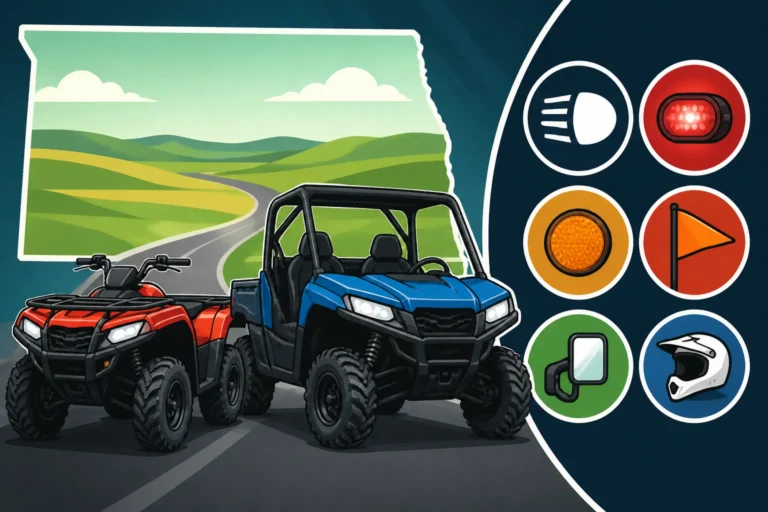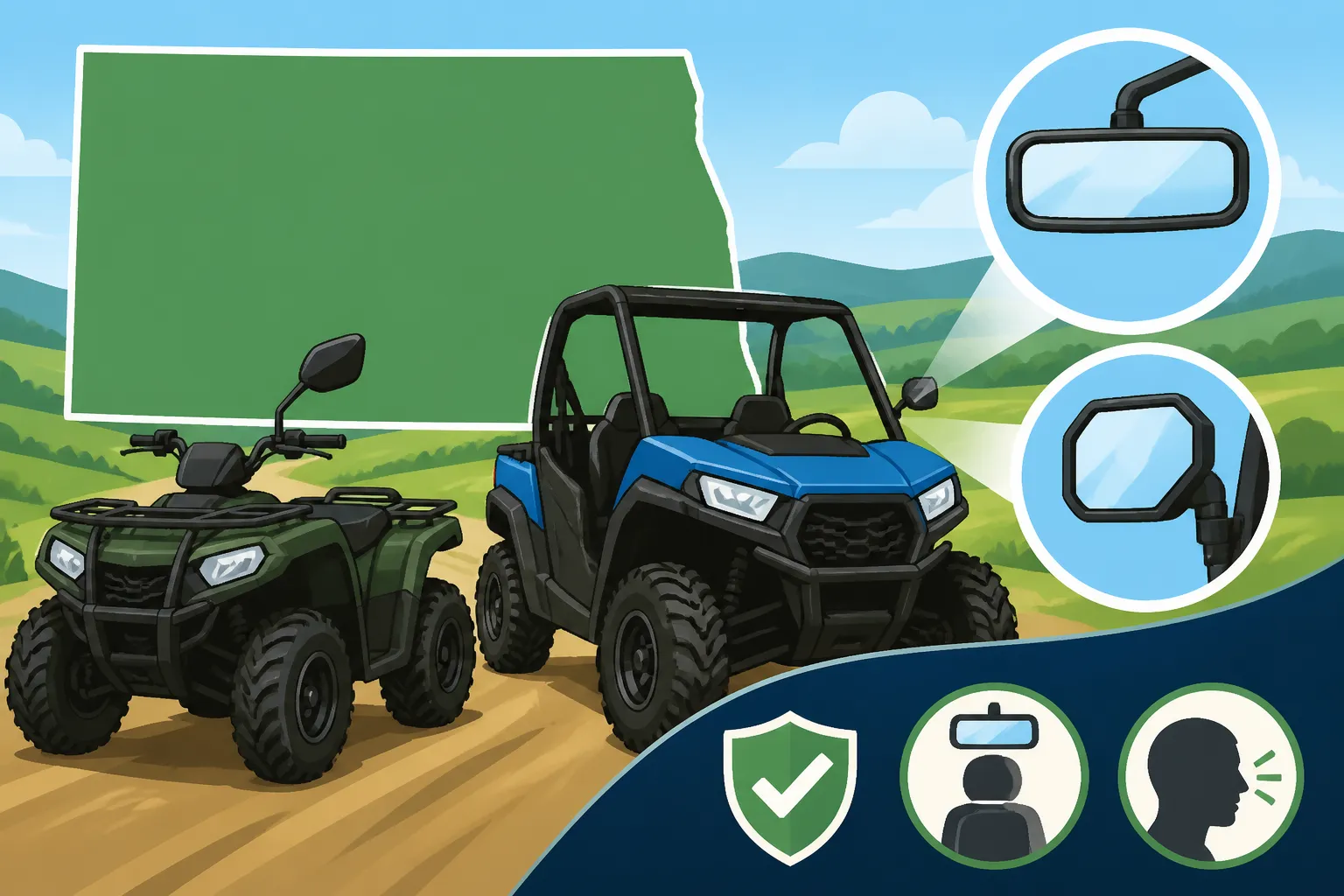
North Dakota Mirror and Horn Requirements
Navigating the specific rules and regulations for riding your ATV or UTV on North Dakota's roads can feel like trying to find your way through a blizzard without a map. It’s not just about having the right machine; it’s about equipping it properly to comply with state law, especially when it comes to essential safety features like mirrors and horns. This guide is here to cut through the confusion, helping you understand exactly what North Dakota requires so you can ride confidently and legally.
Why Mirrors and Horns Matter on North Dakota Roads
It's easy to think of mirrors and horns as just another item on a long checklist of accessories for your off-highway vehicle (OHV). However, when you decide to take your ATV or UTV onto a public roadway in North Dakota, these aren't just suggestions; they become crucial pieces of safety equipment and legal necessities. Ignoring them can lead to more than just a minor inconvenience; it can put you and others at risk, and certainly put a dent in your wallet.
Safety First: More Than Just a Legal Box to Check
Let's be real, out on the trails or exploring the wide-open prairie, you might not feel the urgent need for a rearview mirror or a booming horn. Your head is usually on a swivel, and other riders often communicate with hand signals. But public roads are a different beast entirely. You're sharing space with cars, trucks, and even semi-trucks, all moving at much higher speeds and often with less awareness of smaller, slower-moving OHVs. A mirror becomes your lifeline, allowing you to see traffic approaching from behind without having to crane your neck constantly, which can be particularly dangerous on a paved road. It helps you make safe lane changes, pull over, or simply be aware of a faster-moving vehicle closing in. Similarly, a horn isn't just for expressing frustration; it's a vital warning device. Imagine a situation where a child darts into the road, or a deer jumps out from the ditch. A quick, audible blast from your horn can be the difference between a close call and a serious accident. It's about proactive safety, not just reactive.
The Legal Mandate: When They Become Non-Negotiable
North Dakota law is quite clear: if you intend to operate your OHV on certain public roads, it needs to be equipped like any other motor vehicle, at least in some key aspects. This isn't some arbitrary bureaucratic rule; it's rooted in the principle of ensuring all vehicles sharing the road can operate safely and communicate effectively. For instance, North Dakota Mirror and Horn Requirements are specifically designed to align OHVs with the visibility and warning standards expected of other vehicles. This means that while your UTV might be a beast off-road, on a gravel road, it needs to play by a similar set of rules. The state wants to ensure that you can see what's behind you and that you can alert others to your presence or an impending hazard. This mandate kicks in whenever you venture beyond private property or designated off-road areas and onto any road where other traffic might be present.
Avoiding Penalties and Hassles
Nobody wants to get pulled over, especially when you're just trying to enjoy a ride. But failing to meet North Dakota's equipment requirements, including those for mirrors and horns, can lead to citations and fines. What might seem like a minor oversight to you could be a Class B misdemeanor depending on the specific violation, or at least a basic OHV violation, which now costs $50. An officer conducting a routine stop, perhaps for a different reason, will often check for these basic compliance items. Imagine the frustration of having your fun cut short, facing a fine, and then having to scramble to get the correct equipment installed. It's much simpler, and certainly less stressful, to make sure your machine is up to snuff before you even hit the pavement or gravel. Taking the time to properly equip your OHV means you can focus on the ride, not on looking over your shoulder for flashing lights.
North Dakota's Specific Mirror Requirements for OHVs
When it comes to mirrors on your ATV or UTV in North Dakota, the law isn't just asking for "a mirror." There are specific criteria that your mirror needs to meet to be considered compliant for road use. This is where many riders can get tripped up, thinking any old mirror will do. It's essential to understand the details to ensure your machine is truly road-legal.
What "Road-Legal" Really Means for Your Mirror
North Dakota law specifies that if an OHV is to be operated on roadways, it must have at least one mirror that provides a clear view of the roadway to the rear of the vehicle for a distance of at least 200 feet. Furthermore, this mirror needs to be located so that it reflects a view of the highway to the driver's rear and must have a surface area of not less than 10 square inches. This isn't just about having a mirror, but having one that is effective and appropriately sized. A tiny helmet mirror, while useful for a cyclist, won't cut it for an ATV or UTV. The intent is to give the operator the same level of rearward visibility as someone driving a car or truck, making it safer for everyone on the road. You can usually find mirrors specifically designed to meet this legal requirement, often branded as "DOT compliant" or "road legal" by manufacturers. When looking for these, make sure the mirror face itself measures at least 10 square inches, which is generally about 3×3.5 inches or similar dimensions. Don't forget that North Dakota Mirror and Horn Requirements are part of a larger set of rules about how and where you can ride your OHV on public thoroughfares.
Placement and Visibility: Where to Put It
The legal requirements for a mirror's surface area and its ability to show 200 feet to the rear are only effective if the mirror is placed correctly. Typically, this means mounting it securely to your handlebars for an ATV, or to the roll cage or windshield frame for a UTV. The key is that the mirror must be adjustable and stable enough to maintain its position, even over bumps and vibrations. It needs to be positioned so that the operator can easily glance at it without significant head movement, much like a car's rearview or side mirror. If you have to lean or contort yourself to use it, it's not effectively placed for safe road use. For ATVs, handlebar-mounted mirrors are common, often clamping directly onto the bar. For UTVs, a central rearview mirror is a popular choice, providing a wide field of vision, or you can opt for side mirrors mounted on the roll cage, similar to those on a truck. Many riders find that side mirrors offer a better perspective, especially for larger UTVs, giving them a good view of their blind spots.
When Multiple Mirrors Are a Good Idea
While North Dakota law only mandates at least one mirror of a specific size, that doesn't mean you should limit yourself to just one. For many riders, especially those in UTVs, having multiple mirrors significantly enhances safety and visibility. A single rearview mirror, while compliant, might not give you the full picture, particularly on wider machines like a side-by-side. Adding a pair of side mirrors can drastically reduce blind spots and provide a more comprehensive view of traffic. Think about how cars have both rearview and side mirrors; this dual setup is for a reason. For example, a wider UTV from a brand like SuperATV, known for its accessory range, might benefit immensely from robust side mirrors in addition to a central rearview mirror. These accessories are designed to withstand the rigors of off-road use while providing the necessary visibility for on-road compliance. Having two or even three mirrors provides redundancy and a better sense of your surroundings, which is invaluable when sharing roads with fast-moving vehicles. It’s an investment in your safety that goes beyond mere compliance, giving you peace of mind whether you're cruising a section line or crossing a paved highway.
Honking Your Way Through North Dakota: Horn Regulations
Just like mirrors, a functional horn isn't merely an optional add-on when you're riding your OHV on North Dakota's public roads. It's a critical safety feature that serves as your voice on the road, allowing you to warn others and communicate in potentially hazardous situations. North Dakota's law specifies certain criteria for this essential piece of equipment, and understanding them is key to staying compliant and safe.
The "Audible at 200 Feet" Standard
North Dakota law clearly states that any motor vehicle, including an OHV operating on a public roadway, must be equipped with a horn that is in good working order and "capable of emitting sound audible under normal conditions from a distance of not less than 200 feet." This is the benchmark you need to meet. It means your horn can't be a tiny squeaker or a novelty item; it needs to be loud and clear enough to grab attention from a significant distance. Think about driving your car; you expect its horn to be heard. The same standard applies here. This "200 feet" rule ensures that your warning can reach other drivers, pedestrians, or even wildlife in time for them to react. When you're considering a horn for your ATV or UTV, you should absolutely test its audibility. Have a friend stand 200 feet away (that's about the length of two semi-trucks end-to-end, or roughly 60 meters) and see if they can clearly hear your horn when activated. If they can't, or if the sound is weak and easily missed, it's time for an upgrade. This crucial detail ensures that [A Horn Audible at 200 Feet] is not just a suggestion, but a requirement for safe operation.
Types of Horns: From Manual to Electric
When it comes to horns for your OHV, you've got a few options, each with its own pros and cons. The most common and generally recommended type for road-legal compliance is an electric horn. These are typically powered by your machine's 12V electrical system and produce a loud, consistent sound, often similar to a car horn. They're reliable, easy to activate with a push-button, and generally meet the 200-foot audibility standard without issue. Many aftermarket companies, including SuperATV, offer a variety of electric horn kits specifically designed for ATVs and UTVs, often including all the necessary wiring, mounting brackets, and a weatherproof switch.
On the other end of the spectrum, you might encounter manual horns, such as a squeeze-bulb horn or an air horn operated by hand. While these might be fun for certain applications, they are rarely sufficient to meet North Dakota's "audible at 200 feet" standard. A squeeze-bulb horn, for instance, often produces a whimsical, low-volume sound that would likely be drowned out by road noise, let alone audible from two football fields away. Hand-pumped air horns can be louder but are cumbersome to operate quickly in an emergency. For serious road use, an electric horn is almost always the way to go to ensure legal compliance and effective safety.
Testing Your Horn for Compliance
Once you've installed your horn, don't just assume it meets the legal standard. A quick test can save you a lot of grief down the road. Find an open, quiet area, ideally with a clear line of sight. Ask a friend or family member to walk approximately 200 feet away from your OHV. Now, activate your horn. Can they hear it clearly and distinctly? Is the sound robust, or does it sound weak and muffled? Consider the environmental factors, too. On a windy day or near other traffic, the sound needs to cut through ambient noise.
It's also a good idea to test the horn from the driver's seat. Is the button or switch easily accessible for quick activation? Does the horn function consistently every time you press it? Regular checks of your horn's functionality should become part of your pre-ride routine, especially before heading out onto public roads. Wiring can come loose, connections can corrode, or the horn itself can become damaged from trail vibrations or mud. Ensuring it's always in good working order means you'll always have that critical warning tool at your fingertips.
Equipping Your OHV: Practical Considerations and Products
Getting your ATV or UTV road-ready in North Dakota involves more than just knowing the rules; it's about making smart choices when it comes to the actual equipment. The market is flooded with accessories, and it can be overwhelming to pick out what's truly effective, durable, and compliant. Let's talk about how to choose and install the right mirrors and horns for your machine.
Choosing the Right Mirrors for Your Machine and Riding Style
When selecting mirrors, consider your specific OHV type (ATV vs. UTV), your primary riding environment, and North Dakota's legal requirements. For ATVs, handlebar-mounted mirrors are common. Look for models with sturdy clamps that resist vibration and offer good adjustability. Some designs incorporate folding mechanisms, which can be incredibly useful if you frequently ride through tight trails or store your ATV in compact spaces, helping to prevent accidental damage. However, ensure they can lock firmly into place for road use.
For UTVs, you generally have more options. A single center rearview mirror, mounted on the roll cage or windshield, offers a broad, unobstructed view behind you. Combine this with side mirrors for comprehensive visibility, especially for wider side-by-sides where a single rearview might not cover everything. Brands like SuperATV offer a range of robust, shatter-resistant side mirrors specifically designed for UTV roll cages, often featuring breakaway designs to minimize damage during impacts. When choosing, prioritize mirrors with durable housings, strong mounts, and glass that offers a clear, undistorted image. Convex mirrors can provide a wider field of view, but remember to ensure the actual reflective surface meets North Dakota's 10 square inch minimum. Always check the mirror's stability; you don't want a mirror that constantly shifts or vibrates into uselessness when you're riding.
Selecting a Reliable Horn System
As discussed, an electric horn is almost always the best choice for meeting North Dakota's "audible at 200 feet" requirement. Look for horn kits that are designed for powersports vehicles, as these will often be weatherproof and robust enough to handle exposure to dirt, dust, and moisture. Many kits include everything you need: the horn itself, a wiring harness, a relay, a fuse, and a handlebar or dash-mounted push-button switch.
Consider the sound output: while you need to meet the 200-foot rule, you don't necessarily need a blaring train horn (unless you really want one!). A standard car-style horn is usually more than adequate. Pay attention to the switch quality; it should be easy to reach and operate quickly in an emergency, and durable enough for repeated use. Waterproof or marine-grade switches are a definite plus for OHV applications. If you're not comfortable with electrical wiring, many dealerships or experienced mechanics can install a horn kit for you, ensuring it's safely and correctly integrated into your machine's electrical system. This ensures you're ready for any situation, whether you're alerting a driver to your presence or simply getting the attention of a distracted pedestrian.
Installation Tips and Best Practices
Proper installation is just as important as choosing quality components. A poorly installed mirror or horn can be useless or even dangerous.
For Mirrors:
- Location: For ATVs, mount handlebar mirrors to avoid interfering with controls or your riding posture. For UTVs, position rearview mirrors to offer a clear view without obstructing your forward vision. Side mirrors should be set to cover your blind spots effectively.
- Security: Ensure all clamps and bolts are tightened securely. Use thread-locking compound on bolts if recommended by the manufacturer, especially on components subject to vibration.
- Adjustability: Adjust the mirror(s) before each ride to ensure optimal rearward visibility from your riding position. If your mirrors are easily bumped out of alignment, they may not be suitable for road use.
For Horns:
- Mounting: Mount the horn unit in a location that is somewhat protected from direct impacts but still allows sound to project clearly forward. Avoid areas where it might collect excessive mud or water.
- Wiring: If you're doing the wiring yourself, use appropriate gauge wire, ensure all connections are clean and secure, and use waterproof connectors or dielectric grease to protect against corrosion. Route wires away from hot engine parts, moving components, and sharp edges. Always install an inline fuse as close to the power source as possible to protect your electrical system.
- Switch Placement: The horn switch needs to be easily accessible without taking your hands off the steering wheel or handlebars. Many riders opt for a push-button switch on the dash or handlebars for quick, instinctive activation.
Remember, the goal is not just to pass an inspection, but to genuinely enhance your safety and the safety of others when operating your OHV on public roadways. Taking the time to install these components correctly is an investment in your peace of mind.
Beyond Mirrors and Horns: Other Essential Road-Legal Gear in North Dakota
While mirrors and horns are crucial for legal and safe operation of your ATV or UTV on North Dakota's roads, they are just part of the puzzle. The state has a more comprehensive set of requirements for OHVs that venture onto public thoroughfares. Understanding these additional mandates is vital to ensure full compliance and avoid unexpected run-ins with law enforcement.
Lighting Up the Prairie: Headlamps and Tail Lamps
Riding on public roads, especially after dark or in low-visibility conditions, demands proper lighting. North Dakota law specifies that OHVs operating on highways must be equipped with at least one headlamp that produces a white light visible from a distance of 300 feet to the front. This isn't just a tiny trail light; it needs to be substantial enough to illuminate the road ahead and make your machine visible to oncoming traffic. Furthermore, your OHV must have at least one tail lamp, emitting a red light visible from 300 feet to the rear. This is absolutely critical for preventing rear-end collisions, particularly on gravel roads where dust can impair visibility, or on paved roads where speeds are higher.
Many modern ATVs and UTVs come from the factory with decent lighting, but it's always worth checking if they meet the "300 feet" visibility standard for both headlamps and tail lamps. If your machine's lights seem dim or poorly aimed, consider upgrading them to brighter LED units. Additionally, a brake light that illuminates when you apply the brakes is also typically required for road operation, functioning as an additional warning to drivers behind you. Ensuring all your lights are clean, functional, and properly aimed is a simple but incredibly effective safety measure. For those pondering [North Dakota Night Travel Direction Rule], proper lighting is foundational.
Braking and Speed: Other Critical Components
Beyond mirrors and horns, two other fundamental aspects of your OHV's road-worthiness are its braking system and its speed capabilities. Obviously, a functional braking system is non-negotiable for any vehicle on a road. North Dakota law generally requires that OHVs have at least one brake system, operated by hand or foot, that is capable of stopping the vehicle adequately. Ensure your brakes are regularly inspected, well-maintained, and responsive. Worn pads, low fluid, or spongy levers are not just dangerous; they make your machine illegal for road use.
Then there's the matter of speed. North Dakota law allows OHVs on certain paved roads posted at 55 mph or less, provided the OHV is "capable of attaining a speed of at least thirty miles per hour." For Class III machines, it goes up to 65 mph roads. This is a critical point: if your ATV or UTV cannot reliably maintain a speed of at least 30 mph, it cannot legally be operated on these types of roads. This rule exists to ensure that OHVs don't become rolling roadblocks, creating dangerous speed differentials with other traffic. While you might not always want to go 30 mph, your machine must be capable of it. So, if you're riding an older or smaller displacement machine, double-check its top-speed capabilities before planning a road trip. The idea here is to prevent slow-moving vehicles from creating hazards on roads intended for faster traffic. This capability is directly related to [North Dakota's 30 mph Capability Rule].
Registering and Titling Your Road-Ready Machine
Even with all the right equipment, your ATV or UTV isn't truly road-legal in North Dakota until it's properly registered and, in most cases, titled. This is the official recognition that your machine meets the state's requirements for ownership and operation. [How to Register an ATV in North Dakota] involves a trip to the Department of Transportation (DOT) or a motor vehicle branch office. You'll need proof of ownership, like a bill of sale or previous title, and sometimes proof of excise tax payment. The registration process ensures your vehicle is on record and that you've paid the necessary fees, including the state's OHV trail tax. This registration provides you with an official decal or plate, which must be displayed on your machine.
Without current registration and proper titling, even a fully equipped OHV is not legally allowed on public roads (except for very specific exemptions like private land operation). Getting caught riding an unregistered machine can lead to fines and other penalties. It's a fundamental step that often gets overlooked by new owners or those unfamiliar with road-use laws. Always keep your registration documents with you when riding, just like you would with your driver's license, as law enforcement may ask to see them. This paperwork proves your machine's legal status and your right to operate it in North Dakota.
Disclaimer
This article is for general informational purposes only and does not constitute professional advice. Laws, prices and regulations vary by location and change over time. Consult a qualified professional for guidance on your specific situation.