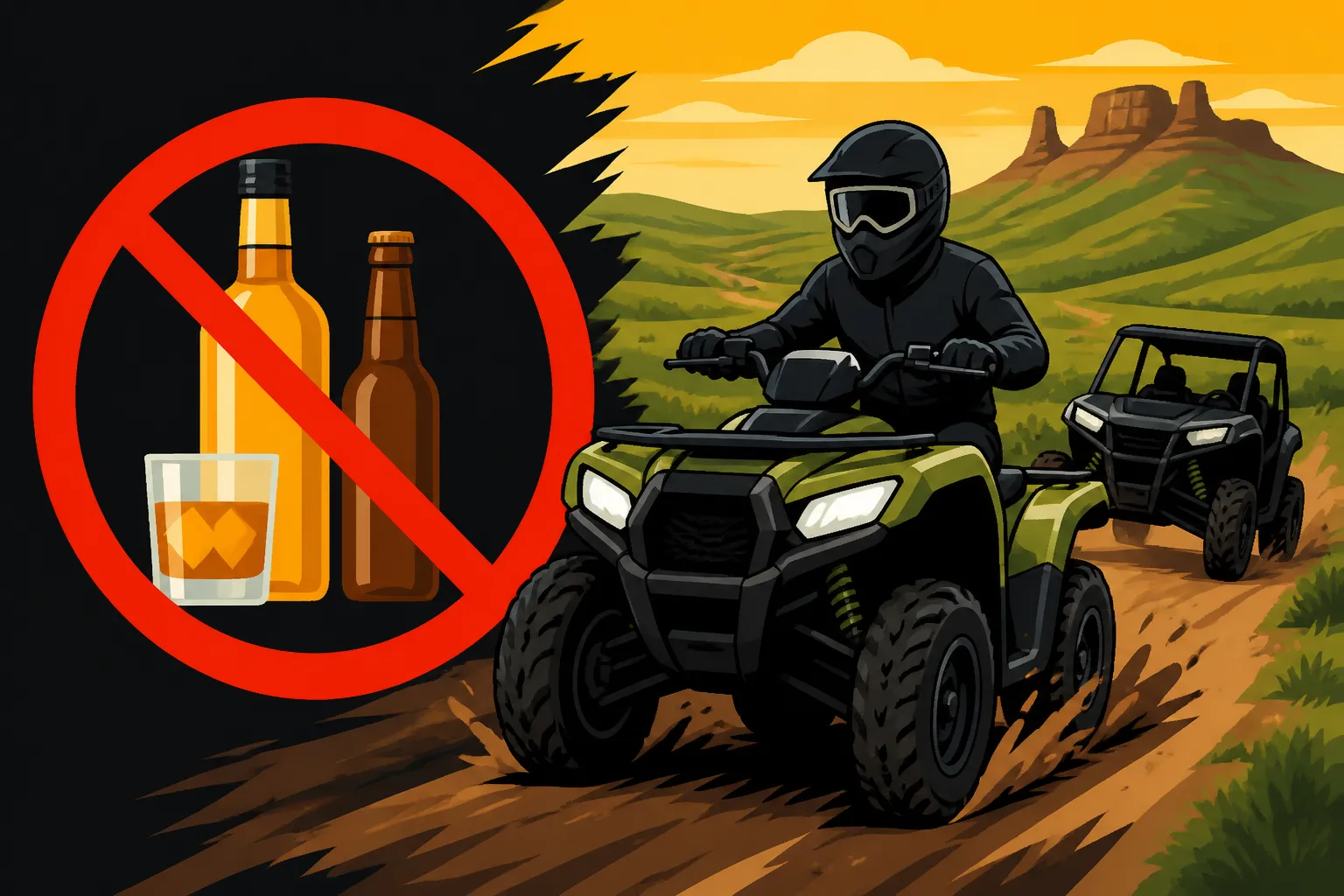
Impaired Operation on a Trail
There's nothing quite like the thrill of exploring North Dakota's vast and beautiful landscapes on an ATV or UTV. The open trails, the feeling of freedom, the camaraderie with fellow riders – it's an experience many of us cherish. However, that sense of freedom can sometimes lead to incredibly poor decisions, particularly when alcohol or other impairing substances enter the picture. The unfortunate reality is that impaired operation on an OHV trail isn't just a minor infraction; it's a dangerous gamble with your life, the lives of your riding companions, and your future. This guide aims to shed a bright, realistic light on the perils and severe legal consequences of operating an off-highway vehicle while impaired in North Dakota, offering crucial information to help you and your crew make smarter, safer choices.
The Perilous Reality of Impaired Riding on North Dakota's OHV Trails
Riding an off-highway vehicle demands your full attention, quick reflexes, and sound judgment. You're navigating unpredictable terrain, dealing with changing weather, and often sharing space with other riders, hikers, or even wildlife. When impairment enters the equation, every one of these factors becomes exponentially more dangerous. It's a recipe for disaster that far too many riders learn about the hard way.
How Impairment Erodes Your Judgment and Skills
Think about what it takes to operate your ATV or UTV safely. You need to be able to assess a tricky turn, gauge the depth of a water crossing, react to a sudden obstacle, or avoid another rider. Even a small amount of alcohol or a mild impairing substance can significantly dull these critical abilities. Your depth perception can become warped, your reaction time slows to a crawl, and your judgment – that crucial inner voice that tells you "this is too risky" – gets silenced.
It's not just about feeling tipsy; impairment means your brain isn't processing information as quickly or accurately as it should. What might seem like a fun, daring maneuver when you're impaired can easily become a catastrophic mistake in reality. You might misjudge a hill's steepness, fail to see a hidden rut, or simply not have the coordination to steer clear of trouble. This isn't just about avoiding a ticket; it's about avoiding life-altering injuries or worse.
The Ripple Effect: Endangering Your Group and Other Trail Users
When you choose to ride impaired, the danger doesn't stop with you. You immediately put anyone riding with you at immense risk. Whether they're a passenger on your side-by-side or a fellow rider following close behind, your compromised state jeopardizes their safety. A sudden swerve, a rollover, or a collision caused by your impaired judgment can have devastating consequences for everyone involved.
Consider a scenario where you're leading a group of friends through a challenging section of the Pembina Gorge trails. If you're impaired and misread the terrain, a simple mistake could send you and your machine tumbling, potentially causing a chain reaction for those behind you. Beyond your immediate group, you also share trails with other recreational users. Families with children, horseback riders, and hikers all use these public spaces. An impaired rider is a hazard to every single person encountered, and the thought of causing harm to an innocent bystander should be a powerful deterrent. Maintaining your machine with quality components, perhaps from a trusted brand like SuperATV, ensures optimal performance, but that performance means nothing if the operator is impaired.
Common Scenarios Leading to Impaired Riding Incidents
Many impaired riding incidents don't start with malicious intent; they often begin innocently enough. Maybe it's a few beers around a campfire that turns into a "quick ride back to camp." Perhaps it's a few too many at a roadside diner or bar near a trail system. Some riders mistakenly believe that because they're "off-road," the rules don't apply, or that the consequences are less severe than driving a car on a highway. This simply isn't true, especially in North Dakota.
Another common scenario involves riders who are used to having a few drinks while working around their farm or private land. They might think that extending this habit to public trails is acceptable. However, public trails are regulated, and the legal definition of impairment applies regardless of whether you're on a paved road or a dirt path. The lack of immediate law enforcement presence in remote areas can also create a false sense of security, but wardens and local deputies do patrol and are trained to spot signs of impaired operation. It's a dangerous mindset that can quickly lead to severe repercussions.
North Dakota's Stance: Legal Definitions and Penalties for OHV DUI
North Dakota takes impaired operation seriously, and that applies just as much to your ATV or UTV as it does to your pickup truck. The law is designed to protect everyone, and it extends its reach beyond paved roads to encompass the very trails we love to ride. Understanding what the law says and the immediate consequences is the first step toward avoiding these serious pitfalls.
What North Dakota Law Says About "Impaired" Operation Off-Road
In North Dakota, operating an OHV while under the influence of alcohol, drugs, or a combination of both is strictly prohibited. The legal standard for impairment, often referred to as DUI (Driving Under the Influence) or DWI (Driving While Intoxicated), generally aligns with the same blood alcohol content (BAC) limits as operating a motor vehicle on a highway. This means if your BAC is 0.08% or higher, you are legally considered impaired. For commercial drivers or those under 21, the limits are even stricter.
However, it's crucial to understand that you don't necessarily need to be over the 0.08% limit to be charged with impaired operation. If an officer observes that your mental or physical faculties are "appreciably impaired" to the extent that you cannot safely operate your OHV, you can still face charges. This means even a small amount of alcohol or a prescription medication that causes drowsiness could lead to an arrest if it affects your ability to control your machine. North Dakota's broad definition ensures that any substance affecting your judgment or motor skills while riding is a serious offense. You can learn more about the broader legal framework in [What North Dakota's OHV Law Requires of Owners].
Immediate Consequences: Arrests and Vehicle Impoundment
When law enforcement identifies an impaired OHV operator on a North Dakota trail, the consequences are swift and severe. The first thing you can expect is an immediate stop and investigation. If an officer determines there's probable cause for impairment, you will be arrested. This isn't just a slap on the wrist or a warning; it's a full arrest, which means being handcuffed, transported to a local jail or law enforcement center, and processed.
Along with your arrest, your OHV will almost certainly be impounded. Imagine being stranded on a remote trail, your machine towed away, and facing the hassle and expense of retrieving it later. This can include towing fees, daily storage charges, and the inconvenience of being without your vehicle. This immediate disruption to your ride and your freedom is just the beginning of a long and costly process. The experience of being arrested can be incredibly disorienting and stressful, a stark contrast to the enjoyable ride you started.
North Dakota DUI Penalties on an OHV
The penalties for impaired operation on an OHV in North Dakota mirror those for a standard vehicle DUI, which means they are significant. For a first offense, you could be facing substantial fines, a mandatory period of license suspension (even if it's for your regular driver's license), and potentially even jail time or community service. A first offense is typically classified as a Class B Misdemeanor, a serious criminal charge. To understand more about the severity of such a classification, you might want to read [What a Class B Misdemeanor Means in North Dakota].
Repeat offenses carry even harsher penalties, escalating to higher fines, longer jail sentences, and extended license suspensions. The goal of these penalties is clear: to deter impaired driving and ensure the safety of all who use North Dakota's roads and trails. These aren't just theoretical threats; they are real consequences that impact your life far beyond the trail. For a detailed breakdown, check out [North Dakota DUI Penalties on an OHV].
Here's a simplified look at potential consequences, though specific amounts and terms can vary greatly based on individual circumstances and judge's discretion:
| Consequence Type | First Offense (General Example) | Second Offense (General Example) | Third+ Offense (General Example) |
|---|---|---|---|
| Criminal Charge | Class B Misdemeanor | Class B Misdemeanor (higher penalties) | Class A Misdemeanor or Felony |
| Fines | Hundreds to over a thousand | Thousands of dollars | Multiple thousands of dollars |
| Jail Time | Possible 2-30 days | 30-365 days, mandatory minimums | 60 days to several years, mandatory |
| License Suspension | 91 days to 1 year | 1-2 years | 2 years or more, potential revocation |
| OHV Impoundment | Yes, for duration of case | Yes, often for longer periods | Yes, possible forfeiture |
| Ignition Interlock | Possible | Required | Required |
| Alcohol Evaluation | Required | Required | Required |
| SR-22 Filing | Required | Required | Required |
Note: This table is for illustrative purposes only. Specific penalties are determined by North Dakota law at the time of offense and by the presiding court.
Beyond the Trail: The Far-Reaching Impact of an OHV DUI Conviction
While the immediate consequences of an OHV DUI are severe, many people underestimate the long-term ripple effects that stretch far beyond the initial arrest and court appearance. A conviction can cast a long shadow over your finances, your driving privileges, and even your personal and professional life for years to come. It’s not just a momentary inconvenience; it’s a life-altering event.
Financial Burdens: Fines, Fees, and Legal Costs
The financial hit from an OHV DUI in North Dakota is often far greater than most people anticipate. Beyond the initial fines levied by the court, you'll encounter a cascade of other expenses. There are court costs, administrative fees, mandatory alcohol evaluation and education program fees, and potential probation supervision fees. If your vehicle was impounded, you'll pay towing and storage charges. These can add up quickly, often reaching into the thousands of dollars, even for a first offense.
Then there are the legal defense costs. Hiring an attorney to navigate the complexities of DUI law is highly recommended, but legal representation can be incredibly expensive. Depending on the specifics of your case, you might also face fees for expert witnesses, private investigators, or other legal services. These costs alone can put a significant strain on your financial well-being, potentially requiring you to dip into savings, take out loans, or even sell assets. All of this money that could have been spent on upgrading your machine with quality SuperATV accessories or planning more fun rides is instead funneled into legal battles.
Insurance Implications and Driving Privileges
An OHV DUI conviction will almost certainly have a dramatic and negative impact on your insurance rates, not just for your OHV, but for all your motor vehicles. Insurance companies view a DUI as a major risk factor, and as a result, your premiums will likely skyrocket for several years. You might even find it difficult to obtain coverage from your current provider, forcing you to seek high-risk insurance, which comes with significantly higher costs. This financial penalty can linger for three to five years, sometimes even longer, long after your fines are paid.
Beyond the financial hit, your driving privileges will be directly affected. Even if your DUI was on an OHV trail, North Dakota law typically applies the license suspension to your standard motor vehicle driver's license. This means you could lose the ability to drive to work, pick up groceries, or perform other essential daily tasks. While some states offer limited driving privileges during suspension, it's never a guarantee and comes with strict conditions. Losing your license, even temporarily, can severely disrupt your life and livelihood. For more information on what this means for your coverage, refer to [North Dakota Insurance Rules for OHV Riders].
Reputation and Future Opportunities
The consequences of an OHV DUI extend into your personal and professional reputation. A criminal conviction, even a misdemeanor, is a matter of public record. This can impact job prospects, as many employers conduct background checks. It might affect professional licensing for certain careers, making it difficult to maintain or obtain certifications. If you're involved in any community organizations or volunteer work, a conviction could lead to a loss of trust or even removal.
Furthermore, a DUI conviction can impact your ability to travel internationally, as some countries have strict entry requirements for individuals with criminal records. This might seem like an extreme consequence for an OHV incident, but it's a very real possibility. The stigma associated with a DUI can also strain personal relationships, leading to embarrassment, guilt, and a loss of respect from friends and family. The ripple effect of one bad decision can genuinely alter the course of your life, making it a critical choice to prevent impaired riding in the first place. When reporting accidents, which is crucial if one occurs, consider the implications outlined in [North Dakota Accident Reporting for an OHV].
Embracing Safe Practices: Preventing Impaired Riding in North Dakota
The good news is that preventing impaired OHV operation is entirely within your control. It comes down to making responsible choices, planning ahead, and fostering a culture of safety within your riding group. By taking proactive steps, you can ensure that every ride in North Dakota is memorable for all the right reasons, not for tragic mistakes or legal woes.
Designating a Sober Rider or Planning Alternative Transport
One of the simplest and most effective strategies for preventing impaired riding is to plan ahead. If your group anticipates consuming alcohol or other impairing substances during a ride or at your destination, designate a sober rider. This person commits to not drinking or using substances and is responsible for operating the OHV safely. Just like a designated driver for a car, a designated rider ensures everyone gets back to camp or their vehicle safely.
If a designated rider isn't feasible, then planning alternative transportation is paramount. This might mean having a sober friend or family member pick you up, arranging for a taxi or ride-sharing service, or simply staying put overnight if you're camping. Never assume that because you're "off the grid" on an OHV trail, you can bypass these crucial safety measures. Your safety, and the safety of others, always comes first. You can also review [North Dakota Group Ride Planning] for tips on organizing safe and fun outings.
Making Smart Choices About Alcohol and Substances
The most straightforward way to avoid impaired riding charges and the inherent dangers is to simply avoid alcohol and impairing substances entirely when you know you'll be operating an OHV. It's a fundamental safety rule that applies universally. If you choose to drink, do so responsibly and ensure your ride is long over, or that you have no intention of getting back on your machine. There's no such thing as being "a little bit impaired" and still being safe on an OHV.
Remember that certain prescription medications can also cause impairment, even if they're legally prescribed. Always read warning labels and understand how any medication might affect your ability to operate heavy machinery. If there's any doubt, err on the side of caution and refrain from riding. Your machine, whether it's equipped with rugged SuperATV parts for performance or a basic setup, requires a clear-headed operator to perform its best.
Group Accountability and Setting Expectations
Riding in a group offers incredible fun and shared experiences, but it also comes with a shared responsibility for safety. Before you even hit the trail, have an open conversation with your riding companions about expectations regarding alcohol and substance use. Establish a clear understanding that impaired riding will not be tolerated. This creates a culture of accountability where everyone looks out for each other.
If you see a friend or fellow rider attempting to operate their OHV while impaired, step in. It might feel awkward or uncomfortable in the moment, but intervening could literally save a life or prevent a serious accident. Offer to take their keys, find them alternative transportation, or encourage them to wait until they are sober. True friendship on the trail means prioritizing safety above all else. Remember that responsible riding also includes understanding general regulations like [North Dakota Posted Land Rules for Riders] and safety measures like [North Dakota Rules for Riding After Dark] and [North Dakota Rules for a Passenger]. For youth riders, education on safety, as outlined in [North Dakota OHV Safety Certificates at Age 12], is vital.
Disclaimer
This article is for general informational purposes only and does not constitute professional advice. Laws, prices and regulations vary by location and change over time. Consult a qualified professional for guidance on your specific situation.