North Dakota Trespass Law for Riders
There’s nothing quite like the freedom of exploring North Dakota's vast and beautiful landscapes on your ATV or UTV. Whether you’re chasing pheasants, checking fence lines, or just enjoying a weekend ride, our machines connect us to the land in a unique way. But that sense of freedom can quickly turn to anxiety when you're not absolutely sure where you're allowed to ride. The fear of accidentally crossing onto private property, facing an angry landowner, or worse, getting ticketed for trespassing, is a real concern for many riders. This guide is here to untangle the complexities of North Dakota's trespass laws for ATV and UTV enthusiasts, giving you the knowledge and confidence to ride responsibly and legally.
Understanding What "Posted Land" Really Means in North Dakota
It’s easy to assume that if you don’t see a "No Trespassing" sign, you’re in the clear. But in North Dakota, the rules around what constitutes "posted land" are specific, and ignorance of the law is never an excuse. Our state wants to protect both landowners and recreational users, which means there are clear guidelines about how land must be marked to be considered legally posted. This isn't just about a hastily scrawled note; it involves specific methods designed to give clear notice.
The Legal Definition and Your Responsibility
In North Dakota, land is generally considered legally posted if it has signs that are visible and clearly indicate that entry is forbidden. These signs aren't just decorative; they have to meet certain standards. We're talking about signs that are at least 11 inches by 14 inches, containing language like "No Trespassing" or "Private Property," and crucially, they need to be placed at regular intervals. Specifically, the signs should be no more than 880 yards apart, which is about a half-mile. If you're riding along a fence line or a boundary, those signs should be easily seen from any normal point of entry. It's not enough for a landowner to put up one tiny sign and expect it to cover hundreds of acres.
However, the burden isn't solely on the landowner. As riders, it's our fundamental responsibility to be observant and respectful. You can't claim you didn't see a sign if it was there and met the legal requirements. This means slowing down in unfamiliar areas, paying attention to fence lines, and always assuming that any land not explicitly marked for public access is private. There's no such thing as "implied permission" just because a gate is open or a field looks unkempt. The rule of thumb should always be: if you don't know, don't go. Taking a moment to double-check could save you a lot of grief. You can learn more about the specifics of these markings in [North Dakota Posted Land Signs and Riders].
Electronic Posting and How to Check Before You Ride
North Dakota has truly embraced technology to make things easier for both landowners and the public, including us riders, through its electronic posting system. This is a game-changer for anyone who wants to ensure they're riding legally. Instead of solely relying on physical signs, landowners can register their property as "electronically posted" through the state's Game and Fish Department website or apps. This digital method serves the same legal purpose as physical signs, but it gives you, the rider, a powerful tool for planning.
Before you even load up your rig, you can pull up the electronic posting map on your phone or computer. Imagine charting your course, seeing exactly which parcels are off-limits, and planning your route to stay on public land or areas where you have explicit permission. This system minimizes accidental trespass and fosters a better relationship between riders and landowners. It’s incredibly empowering to have this information at your fingertips, reducing that "what if?" anxiety. Taking the time to use this resource is a mark of a truly responsible rider, and it's something every ATV and UTV owner in North Dakota should be familiar with. You can find more details on this modern approach in [North Dakota Electronic Posting and Riders].
Common Misconceptions About Public vs. Private Land
One of the biggest sources of confusion and accidental trespass comes from misconceptions about what land is truly public. Many riders assume that certain areas, like undeveloped fields, old logging roads, or even some section lines, are fair game because they don't look private. However, appearances can be deceiving, and what looks like an abandoned trail could very well be a farmer's private access road or part of a rancher's grazing land. The "looks public, must be public" mindset is a fast track to trouble.
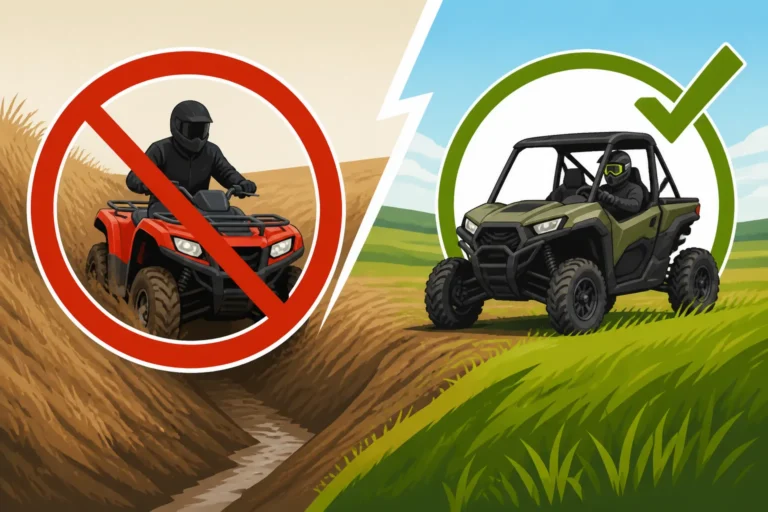
Section lines are a particularly tricky area. While many people believe section lines are always public access, the reality is more nuanced. While they represent a legal right-of-way for public travel, this doesn't automatically mean they are open to recreational OHV use without restriction. Often, the surface itself might be private, with the public right-of-way existing only on paper or for specific purposes like utilities. You might have the right to travel along a section line, but not necessarily to ride on it with your ATV, especially if doing so would damage crops or property, or if the landowner has taken steps to secure it. This is particularly relevant when you think about ditch riding; while some ditches are open, they often run alongside private property, and veering off can lead to problems. Always remember that roads and trails on private land, even if well-worn, are almost always private unless clearly marked otherwise or you have explicit permission. For more on this, check out [North Dakota Rules for Riding a Section Line].
The Different Ways to Get Permission to Ride
Navigating private land in North Dakota doesn't have to be a guessing game. The best way to avoid trespassing is to simply ask for permission. It sounds basic, but many riders either feel uncomfortable approaching landowners or don't know the best way to do it. Building a good relationship with landowners is not only respectful but also opens up incredible riding opportunities that you might never find on public trails.
The Importance of Written Permission
While a friendly handshake and a verbal "sure, go ahead" might feel good at the moment, it offers little protection if an issue arises. If a game warden or sheriff's deputy approaches you on private land, a verbal agreement won't hold up as easily as something in writing. That's why written permission is absolutely critical. A simple, clear letter or agreement signed by the landowner specifying who can ride, where they can ride, and when they can ride, is your best defense against a trespass charge.
This document doesn't need to be fancy or overly legalistic. It should clearly state the names of the riders, the dates or duration of the permission, and a description of the land or specific trails that are open for use. It should also include the landowner's contact information. This ensures there are no misunderstandings and provides concrete proof that you have permission. Think of it as your golden ticket to riding freely and without worry on private property. It protects both you and the landowner by setting clear boundaries. Always carry this document with you when riding on private land. You'll find templates and more information on what to include in [North Dakota Landowner Permission Forms].
Building Relationships with Landowners
Approaching a landowner can feel daunting, but a respectful attitude and a willingness to understand their concerns can go a long way. Start by introducing yourself and clearly stating your intentions. Explain what kind of riding you do, that you are safety-conscious, and that you will respect their land. Offer to help them out: maybe you can keep an eye on their property, report any suspicious activity, or even help with a small chore like clearing brush or closing gates. Showing that you're not just looking for a place to play, but are also a responsible member of the community, can build immense trust.
Many landowners are concerned about gate etiquette, litter, noise, and potential damage to crops or livestock. Address these concerns proactively. Promise to leave no trace, to close all gates behind you, and to be mindful of noise levels, especially near homes or livestock. Being a considerate rider can turn a reluctant "no" into a long-term "yes." Building these relationships takes time and effort, but the access to prime riding areas and the camaraderie it fosters are incredibly rewarding. A good reputation as a responsible rider can open many doors (and gates!) for you and your riding buddies.
Understanding Exceptions: Section Lines and Other Public Access Points
North Dakota's landscape is crisscrossed by section lines, which are essentially invisible boundaries that often correspond to roads or trails. As mentioned, while these are legal rights-of-way, their accessibility for OHVs can be a grey area. Generally, the public has the right to travel along section lines that have been developed as roads, usually township roads. However, if a section line is undeveloped or runs through cultivated land, your right to ride it as an OHV trail may be limited or non-existent without explicit landowner permission. The key distinction is usually between simple passage and recreational use.
Another exception might be certain public utility easements, but again, recreational riding typically isn't a guaranteed right. Always assume that if a path isn't a clearly marked public road or trail, it might be private. This applies to old railroad beds that have been converted to trails or even access roads on land managed by the Corps of Engineers; while some are open, many are not. Checking with local authorities or the appropriate land management agency is always a good idea. For example, some areas managed by the U.S. Forest Service or other federal agencies may have specific rules about OHV use on access roads that traverse private land. Never take an assumption about public access for granted; always seek clarification. For situations where a rider needs to [Check With Local Law Enforcement First] about access, the general advice is usually to err on the side of caution.
Consequences of Trespassing on an OHV in North Dakota
It’s easy to think of trespassing as a minor infraction, a slap on the wrist. But in North Dakota, especially when operating an ATV or UTV, the consequences can be much more severe than just being told to leave. The state takes property rights seriously, and for good reason—our agricultural lands and private property are vital to the livelihoods and privacy of many North Dakotans.
What Happens If You're Caught
If you're caught trespassing on your OHV in North Dakota, the initial encounter will likely be with a landowner, a game warden, or a sheriff's deputy. Your response in this moment is crucial. Remaining calm, respectful, and cooperative, even if you believe you haven't done anything wrong, is always the best approach. Arguing or being confrontational will only escalate the situation and make things worse. They will typically ask for your identification, vehicle registration, and proof of permission. If you cannot provide valid written permission for the land you're on, you're looking at a potential trespass citation.
Beyond the immediate citation, there can be additional implications. Depending on the severity, repeat offenses, or if damage occurred, your vehicle could potentially be impounded. This means not only a fine but also the hassle and expense of retrieving your ATV or UTV, which can include towing and storage fees. More importantly, getting caught trespassing can severely damage your reputation as a rider within the community. Word travels fast, and a reputation for disrespecting private property can close doors to future riding opportunities, making it harder to gain permission from other landowners. Someone might even [Report a Rider on Posted Land] long after you've left, initiating an investigation.
Financial Penalties and Beyond
North Dakota's trespass laws carry real financial penalties. A basic first-offense trespass charge is usually a non-criminal offense, but it still comes with a significant fine. These fines can be substantial and are designed to deter future violations. It’s not just a small inconvenience; it's a financial hit that can really sting. Furthermore, if your trespassing caused any damage to the landowner's property – whether it's rutting up a field, damaging a fence, or disturbing livestock – you could face civil lawsuits from the landowner to recover those damages. This means paying for repairs out of pocket, on top of any fines.
Consider the cumulative cost: the initial fine, potential court costs, possibly towing and impound fees, and then civil restitution for damages. A simple wrong turn could end up costing you hundreds, if not thousands, of dollars. These financial burdens are far greater than the few minutes it would have taken to check a map or ask for permission. For more details on potential costs, you can look into [North Dakota Ticket Cost for a Road Violation]. It's a stark reminder that responsible riding isn't just about courtesy; it's about protecting your wallet and your future access to riding areas.
How to Handle a Situation If You Accidentally Trespass
Even the most careful riders can make a mistake. You might miss a sign, your GPS could lose signal, or a trail could unexpectedly veer onto private land. If you realize you've accidentally trespassed, the absolute best thing you can do is stop immediately, turn around, and exit the private property the same way you came in, if safe and practical. Do not continue exploring, and do not try to find a different exit, as this might take you further onto private land.
If you are approached by a landowner or law enforcement, stay calm and be polite. Explain that you believe you may have made a mistake and were unaware you were on private land. Offer a sincere apology. Cooperate fully with any instructions they give you. Provide your identification and information if requested. Remember, your attitude can significantly influence the outcome. A polite, apologetic demeanor is much more likely to result in a warning or a minimal citation than an argumentative or defensive one. Learning from the experience and taking proactive steps to avoid future incidents, like using electronic posting maps more diligently, is key.
Practical Tips for Responsible Riding and Avoiding Trespass
Being a responsible ATV and UTV rider in North Dakota goes beyond just following the law; it's about adopting a mindset of respect for the land, landowners, and fellow outdoor enthusiasts. With a little planning and the right approach, you can greatly reduce your risk of accidentally trespassing and enjoy your rides with complete peace of mind.
Mapping Your Routes Carefully
In today's world, there's really no excuse for getting lost or accidentally riding onto private property. Advanced GPS units and smartphone apps have made navigation incredibly precise. Before you head out, take the time to plan your route meticulously. Use the electronic posting maps provided by the North Dakota Game and Fish Department. Cross-reference these with other detailed topographical maps or satellite imagery. Mark potential public access points, designated OHV trails, and clearly identified private parcels.
Even if you have a top-of-the-line GPS unit, always carry a physical map as a backup, especially in remote areas where cell service might be spotty. Familiarize yourself with landmarks and compass directions. When riding, periodically check your location against your planned route. Having a reliable GPS mount for your phone or a dedicated unit, perhaps from SuperATV, can make checking your position on the fly much easier and safer, allowing you to quickly verify you’re on the correct path. This proactive approach to navigation is your strongest defense against accidental trespass.
Gear Up for Awareness and Respect
Your choice of equipment can also contribute to responsible riding and minimizing your impact. Beyond the obvious safety gear like helmets and protective clothing, consider how your machine itself interacts with the environment. For example, ensuring your ATV or UTV has a properly functioning and quiet muffler is not just about legal compliance ([North Dakota Muffler Requirements]); it's about respect for landowners and wildlife. Excessive noise can be a major irritant for those living near riding areas and can lead to increased restrictions.
Furthermore, equipment that helps you maintain control and minimize impact, like appropriate tires for the terrain (to prevent unnecessary rutting) or a winch for self-recovery (to avoid getting stuck in sensitive areas), can be invaluable. Even small things, like a bright safety flag for visibility in open fields, contribute to a safer and more considerate riding experience. Thinking about these details helps you "tread lightly" and ensures that your passion for riding doesn't come at the expense of the land or its owners. SuperATV offers a wide range of accessories, from winches to robust skid plates, which not only protect your machine but also help you navigate challenging terrain responsibly.
Joining Local OHV Clubs and Riding Groups
One of the best resources for navigating North Dakota's riding landscape is joining a local ATV or UTV club. These groups are often composed of experienced riders who have a wealth of knowledge about legal riding areas, landowner contacts, and local ordinances. They often work directly with landowners to establish riding opportunities and maintain trails, giving you access that you might not find on your own. Many clubs organize group rides, which can be an excellent way to explore new areas safely and with knowledgeable guides.
Beyond practical access, these clubs are fantastic for staying informed. They often track changes in laws, local restrictions, and trail conditions. They also advocate for rider rights and responsible land use, playing a crucial role in preserving our access to the outdoors. Being part of such a community reinforces responsible riding ethics and helps ensure that ATV and UTV enthusiasts are seen as valuable, respectful members of the outdoor community. Consider exploring options for [North Dakota OHV Trails: All Four Riding Areas] with fellow club members to learn the ropes.
Disclaimer
This article is for general informational purposes only and does not constitute professional advice. Laws, prices and regulations vary by location and change over time. Consult a qualified professional for guidance on your specific situation.