North Dakota Prairie Wind and Long Rides
A calm morning on the prairie can turn into a tiring, dusty ride once the wind picks up. On long North Dakota ATV and UTV outings, wind affects comfort, visibility, temperature, fuel planning, and how much energy you have left at the end of the day. This guide explains how to prepare, choose routes, and make sensible decisions when conditions change.
Why prairie wind changes a long ride
Wind adds fatigue before you notice it
Wind can make a machine feel harder to control, especially across open ground or on a route with little shelter. You may find yourself bracing against gusts, adjusting your line, and gripping the handlebars more tightly than usual. In a UTV, the cab may block some of the direct blast, but noise, vibration, dust, and constant steering corrections can still wear you down.
That effort builds over time. A route that feels easy during a sheltered first hour can become draining after several hours of exposure. Riders may also get chilled even when the air temperature seems comfortable, particularly if they are sweaty, riding at speed, or stopping in a windy spot.
Plan the day around how you feel, not just the mileage you hoped to cover. If your shoulders are tense, your concentration is slipping, or you are making more small steering corrections than usual, take a sheltered break. Fatigue is a reason to shorten a ride, not something you have to push through to meet a plan.
Wind affects visibility and communication
Wind-blown dust can make it harder to see the trail, other riders, and approaching vehicles. On gravel or dry, exposed routes, dust from a group ahead may hang in the air or blow back across the trail. Leave more space between machines than you might on a calm day, and slow down when visibility drops.
Wind can also make conversation difficult. A rider may not hear a shouted warning, and a group can spread out without realizing it. Before setting off, agree on where to stop, how to regroup, and what to do if someone falls behind. A simple rule—such as stopping at the next safe junction if the group loses sight of one another—can prevent a minor separation from becoming a confusing search.
If your route takes you through more remote country, prepare for limited phone coverage as well as noisy conditions. Review Cell Dead Zones in the Badlands before relying on a phone as your only way to navigate or contact help. Download any maps you need before leaving service, and consider carrying a paper backup. Carrying a Paper Map Into the Badlands is a useful reminder that a battery-powered device is only one part of a navigation plan.
Wind can change what a route feels like
Not all North Dakota riding areas offer the same exposure. A wooded route can provide more shelter than an open stretch, while a ride beside broad river bottoms or across open prairie may leave you facing wind for long periods. The route itself matters, too: a loop that alternates between open ground and sheltered sections may feel very different from a long exposed out-and-back ride.
North Dakota’s riding areas also differ in terrain, access, and the kind of outing they suit. Review North Dakota OHV Trails: All Four Riding Areas while choosing where to go, then consider how exposed the route may be and where your group can pause safely. Do not assume that a familiar location will feel the same in every kind of weather.
Plan the route around conditions, not just distance
Choose a route with useful stopping points
A long ride is easier to manage when you can break it into sections. Before leaving, identify places where the group can safely stop, regroup, check on anyone who is tiring, and decide whether to continue. A trailhead, established rest area, or sheltered staging point is more useful than an exposed pull-off where machines or people could be vulnerable to traffic, dust, or loose debris.
Think about the return leg as carefully as the outbound ride. The wind may change, riders may be more tired, or the group may have spent longer on the trail than expected. A route that looks manageable in the morning can become a poor choice if it leaves no easy way to shorten the day.
Use a reliable map to understand junctions and landmarks before you start. onX Offroad can be one mapping reference for planning, but check trail access and current local information rather than treating a digital route line as permission to ride anywhere. Download the information you need in advance, and keep a second navigation option available if your phone loses service or power.
Match the ride to the group
A route that works for experienced adults may be a poor fit for a mixed group with newer riders, young passengers, or machines with different capabilities. Ask everyone about their comfort level and agree on a conservative pace. The slowest rider should not feel pressured to catch up through dust or rough sections.
For a group ride, keep the formation loose enough to preserve visibility and stopping distance. Avoid bunching up behind a machine that is throwing dust, and do not leave a rider alone at a turn or junction. If someone needs a break, let the whole group pause in a safe place rather than asking that person to push on.
Before the trip, review North Dakota Group Ride Planning and North Dakota Trail Etiquette Locals Expect. These planning habits matter more when wind makes it harder to see, hear, and communicate with one another.
Check access and trail conditions close to departure
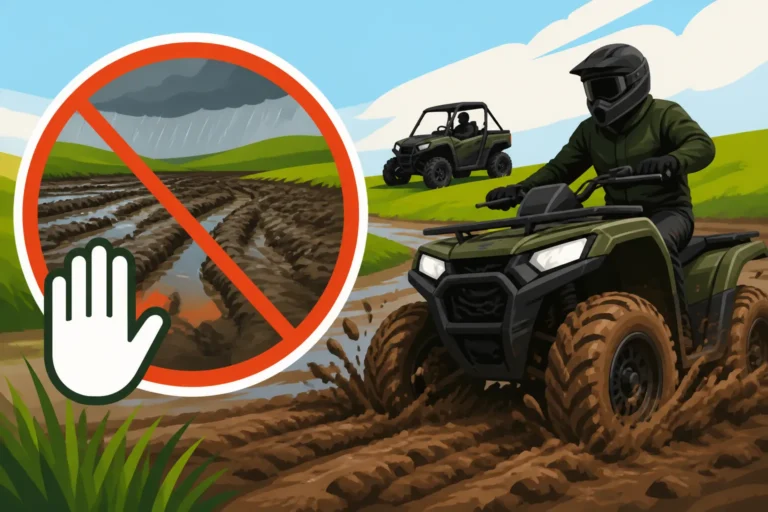
Weather is only part of the decision. Trail conditions and closures can affect whether a planned route is practical, even if the forecast seems manageable. After rain, for example, soft or muddy ground may be a bigger concern than the wind. A route that is open but in poor condition may be unsafe or damaging to ride.
Check the relevant official trail or land-manager information before travelling, and check again if the weather changes. A route shown on a map is not necessarily open, suitable for every machine, or accessible from every entrance. onX Offroad may help with route planning, but compare it with the information provided by the managing agency and posted signs on site.
For a broader seasonal planning perspective, read North Dakota Riding Season Month by Month and North Dakota Trail Status by App and Phone. Conditions can differ between areas, so a report for one trail should not be treated as a guarantee for another.
Prepare people and machines for an exposed ride
Dress for wind, dust, and changing temperatures
Wear layers that let you adapt as the day changes. A wind-resistant outer layer can make a noticeable difference during exposed stretches, while a base layer that moves moisture away from your skin helps if you warm up while riding and cool down during stops. Bring an extra layer even when the starting temperature feels pleasant.
Protect your eyes from dust and debris with suitable riding eyewear. A helmet visor or goggles can help, but make sure your gear is comfortable enough to wear throughout the day. If dust gets inside your eyewear, stop in a safe place to clean it rather than continuing with impaired vision.
Pack water and food where they are easy to reach during a break. Wind can make it harder to notice how much effort you are using, and stopping to drink may feel less appealing when the air is chilly. Do it anyway. A planned short break is often more useful than waiting until you feel exhausted, thirsty, or irritable.
Check the machine and carry practical supplies
Before a long ride, inspect the machine according to its owner’s manual. Pay attention to tires, brakes, steering, lights, fuel, and any loose cargo or accessories. Wind can make handling more demanding, so a problem that might seem minor in a sheltered yard may become more noticeable out on an exposed route.
Secure bags, loose clothing, and other gear so they cannot shift or catch on the machine. Carry basic repair and recovery items suited to your machine and the route, along with a first-aid kit. If your trip is remote, tell someone where you plan to ride and when you expect to return. First Aid on a Remote Loop offers a useful prompt for thinking beyond the ride itself.
Fuel planning deserves special attention on long outings. Estimate the whole trip, including detours, slow travel, and the return leg, rather than assuming the outward distance tells the whole story. Distances between services can be substantial in rural areas, so do not count on finding fuel at a small community or near a trailhead. See Fuel Range Between Small Towns when preparing for a route that crosses wide stretches of country.
Make the map work offline
Before leaving home or your lodging, review your route and save the maps or navigation information you expect to need. Check that your device is charged, bring a charging option if appropriate, and make sure you can still orient yourself if the screen becomes hard to read in bright light or dust.
A digital map can be helpful for following a planned route and identifying nearby roads or junctions, but it should not replace signs, local rules, or land-manager guidance. onX Offroad can serve as a supplemental planning tool; verify that the information you intend to use covers your route and download it ahead of time. Keep a paper map or written route notes as a backup, particularly when riding outside reliable cell coverage.
The table below is a practical way to match common wind-related problems with a response.
| What you notice | Why it matters | A sensible response |
|---|---|---|
| Dust obscures the machine ahead | You may miss a turn, hazard, or sudden stop | Increase spacing and slow down until visibility improves |
| Steering corrections feel constant | Gusts or fatigue may be affecting control | Reduce speed, take a safe break, or choose a sheltered route |
| Riders cannot hear one another | Warnings and regrouping instructions may be missed | Use agreed stopping points and check that the whole group is together |
| A rider is unusually quiet or tense | They may be cold, tired, or overwhelmed | Stop somewhere safe and ask directly how they are doing |
| The route is taking longer than expected | The return leg may become tiring or difficult | Shorten the ride while there is still a safe option |
| Phone service is unreliable | Navigation and emergency contact may be limited | Use downloaded maps and carry a backup plan |
Decide when to shorten or postpone the ride
Pay attention to the riders, not only the forecast
A forecast can help with planning, but your group’s actual experience matters too. If riders are struggling to hold a steady line, visibility is poor, or everyone is becoming cold and tired, reassess the plan. Do not wait for a dramatic problem before turning back. A route change or early finish is a normal part of responsible riding.
Set a few simple decision points before departure. For example, agree that the group will pause after a set period, check on each rider, and turn back if visibility or control has deteriorated. A pre-agreed plan can make it easier for someone to speak up without feeling that they are spoiling the outing.
If conditions become unsafe, stop in a place that does not block the route or expose people to passing traffic. Keep the group together, secure gear, and decide whether to wait, return, or seek help. If the situation involves injury or an immediate emergency, use the appropriate emergency service rather than trying to solve it through a group text or map app.
Keep the day flexible
Long rides are more enjoyable when the plan has room to change. Pick an alternate route or a shorter loop before you leave, and make sure everyone knows where the group can turn around. A flexible plan is especially valuable when wind, dust, temperature, or trail conditions shift during the day.
Keep your final destination and parking arrangements in mind as well. A tired group may need extra time to load machines, secure trailers, and travel home. Check North Dakota Trailhead Parking Limits before setting out with a large trailer or several vehicles, and avoid assuming there will be room to stage wherever the route begins.
The best prairie ride is not necessarily the longest one. It is the one where the group can see, communicate, manage the machines, and finish with enough energy to get home safely. Make the route fit the conditions, take breaks before fatigue takes over, and treat turning back as a smart decision when the day calls for it.
Disclaimer
This article is for general informational purposes only and does not constitute professional advice. Laws, prices and regulations vary by location and change over time. Consult a qualified professional for guidance on your specific situation.