A Headlamp Seen at 300 Feet
There's nothing quite like the freedom of exploring North Dakota's vast landscapes on your ATV or UTV, especially as dusk settles and the open sky transforms into a canvas of stars. But when you're transitioning from the trail to a public road, even a quiet gravel one, simply having lights isn't enough. North Dakota law is pretty specific about your machine's headlamps: they need to project a beam that's clearly visible from at least 300 feet away. This isn't just a suggestion; it's a critical safety and legal requirement that many riders overlook until they're pulled over or, worse, involved in an accident. This guide will walk you through what that 300-foot standard truly means, why it’s so important for every rider, and how to make sure your machine meets or even exceeds this vital safety benchmark.
Unpacking North Dakota's 300-Foot Headlamp Requirement
When the North Dakota Department of Transportation (NDDOT) talks about headlamp visibility, they're not just talking about whether your lights turn on. They're talking about effective illumination that can be seen by other drivers from a significant distance, giving everyone ample time to react. This rule is designed to ensure that your presence on the road, whether it's a [North Dakota Gravel Roads Open to Registered Machines] or a paved county route, is unmistakably clear, especially during those low-light conditions when visibility naturally drops.
What "Visible at 300 Feet" Actually Entails
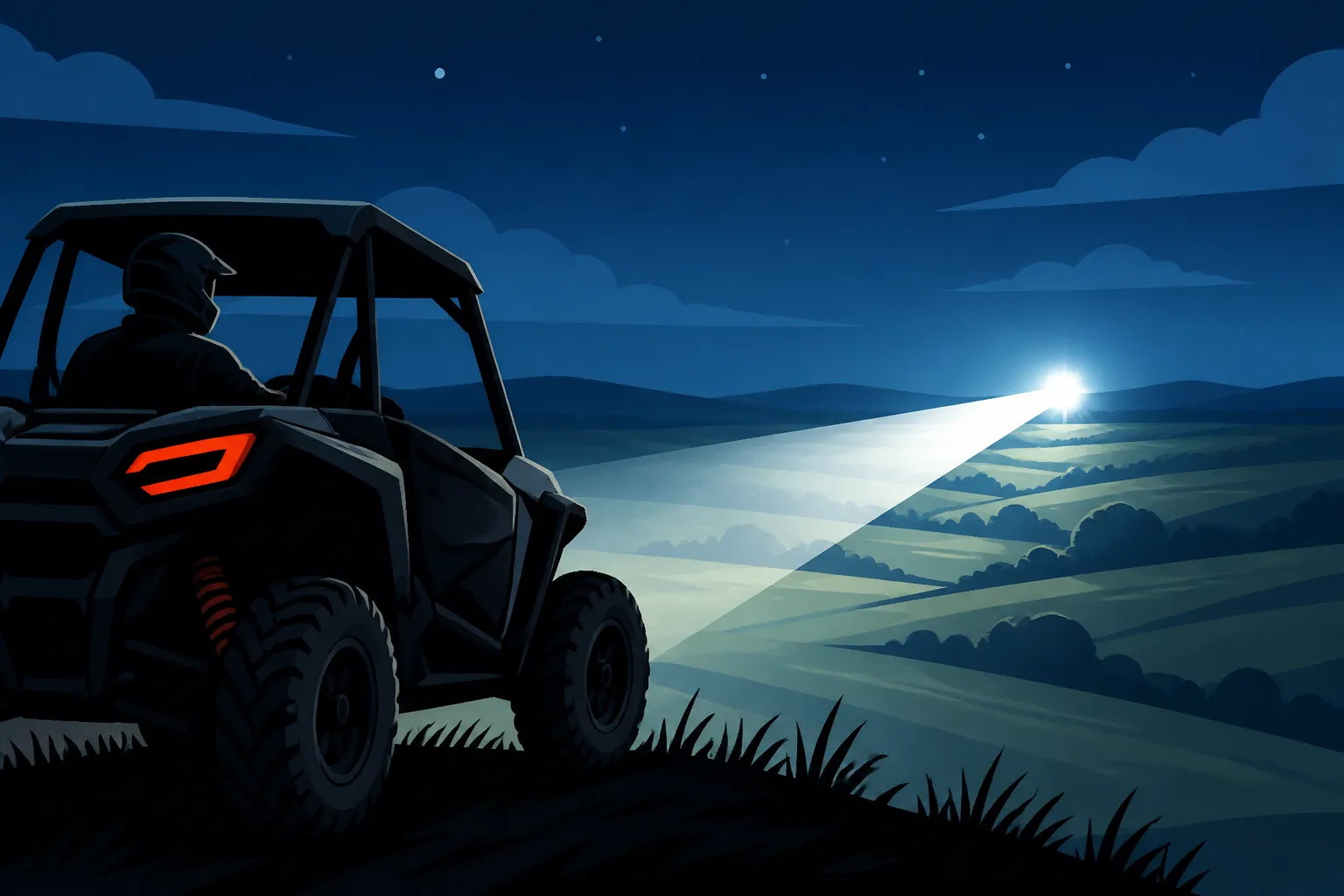
This 300-foot rule means that if another vehicle is approaching you, or you're approaching them, your headlamp's beam must be strong enough and focused enough that they can distinguish your machine as a light source from that distance. It's not about the light hitting an object 300 feet away; it's about the source of the light being visible to an observer. Think about it from a safety perspective: that 300 feet gives someone traveling at 55 mph roughly 3.7 seconds to see you, recognize you, and adjust their driving. On a winding back road, every fraction of a second counts.
It’s easy to assume your factory-installed headlamps are sufficient, but wear and tear, mud, dust, or even just older bulb technology can significantly diminish their effectiveness. Many older machines or even some newer, more basic models might struggle to meet this exact standard, especially after years of bumping around the countryside. It’s a common frustration for riders who just want to enjoy their machine but find themselves navigating a maze of regulations. This is why a simple "lights on" check in your driveway might not cut it; you really need to assess the reach of your illumination.
Legal Ramifications of Non-Compliance
Falling short of the 300-foot rule isn't just a theoretical problem; it carries real legal consequences. Operating an OHV on a public roadway in North Dakota with inadequate lighting is considered a violation of traffic laws. An officer isn't just checking if a light is emitting; they're assessing its effectiveness. If they determine your headlamps don't meet the visibility standard, you could face a citation. In North Dakota, violating OHV equipment rules can lead to fines, and these can really add up, especially with potential [North Dakota Fine Increase in 2025].
Beyond the immediate fine, repeated violations or involvement in an incident where inadequate lighting is a contributing factor could lead to more serious repercussions. Your ability to ride on public lands or even just cross a highway legally depends on adherence to these rules. It ties directly into your machine's overall legality for [North Dakota ATV Road Rules by Surface Type]. It's a reminder that being street legal isn't just about having the right permits or registration; it's about making sure your machine is equipped to be a safe participant in traffic, even if it's just for a short stretch.
Why Your Headlamp's Reach Matters for Safety and Legality
The 300-foot headlamp rule isn't some arbitrary bureaucratic hurdle; it's a foundational element of road safety for everyone sharing North Dakota's highways and byways. OHVs, by their nature, can be less visible than full-sized vehicles, and this rule aims to mitigate that risk, especially during critical low-light periods.
The Critical Role of Visibility in Preventing Accidents
Imagine you're driving your truck down a quiet township road after sunset. Suddenly, out of the fading light, an ATV appears. If its headlamp is dim, poorly aimed, or simply lacks the necessary projection, you might not see it until you're much closer than you'd like, leaving little time to react. This scenario is precisely what the 300-foot rule aims to prevent. It forces riders to ensure their machines are adequately lit, protecting not only themselves but also unsuspecting motorists, cyclists, or even pedestrians.
This is especially true on unlit rural roads, which make up a significant portion of North Dakota's riding areas. Without the ambient light of streetlamps, your headlamp is often the only thing signaling your presence. When you're out there, whether you're heading to a hunting spot or just enjoying a evening ride, you're not just riding for yourself. You're part of the overall flow of traffic, and clear visibility is your primary tool for communication with other road users. It’s a simple concept with profound implications for rider safety, reducing the chances of a sudden, dangerous encounter.
Special Considerations for Riding After Dark or in Poor Weather
[North Dakota Rules for Riding After Dark] introduces a whole new set of challenges for OHV riders. Even with powerful headlamps, depth perception changes, shadows lengthen, and other road hazards become harder to spot. During these times, your headlamps are not just for others to see you; they're for you to see the path ahead, identifying potholes, wildlife, or unexpected obstructions. The 300-foot visibility standard complements your own need for forward illumination, creating a safer environment all around.
Furthermore, weather conditions like fog, heavy rain, or blowing snow can drastically reduce visibility. While the 300-foot rule is a minimum, many riders find themselves needing far more powerful lighting to feel safe and comply with the spirit of the law in adverse conditions. This is where investing in higher-quality or auxiliary lighting can literally be a lifesaver. Riding in heavy snow, for instance, requires your machine to cut through flakes and illuminate the road ahead, a task that often demands more than basic factory lights can provide. Strong, clear headlamps help ensure you're not just seen, but also that you can navigate safely.
Ensuring Your OHV's Headlamps Meet the North Dakota Standard
Meeting the 300-foot headlamp standard isn't about guesswork; it's about assessment, maintenance, and sometimes, upgrading. Taking proactive steps can save you from a ticket and, more importantly, keep you safe.
Checking Your Current Headlamp Performance
The easiest way to check your headlamp's visibility is a simple, practical test. On a dark night, take your ATV or UTV to a quiet, unlit road or open area where you can safely measure distances. Park your machine and have a friend stand 300 feet away (you can use a measuring tape or an app for accuracy). With your headlamps on, ask your friend if they can clearly see the source of the light. Can they make out the shape of your machine from the illumination, or is it just a faint glow? If there's any doubt, your headlamps likely need attention.
It's also a good idea to inspect your headlamp lenses. Are they foggy, scratched, or caked with mud? Even a thin layer of grime can severely reduce light output. [North Dakota Decal Placement Rules] reminds us about visibility, and the same principle applies to your lights. Cleaning them regularly and even polishing hazy lenses can make a significant difference. Pay attention to the aiming of your lights too; a beam pointed too low or too high won't be as effective. Sometimes, a simple adjustment can bring an otherwise adequate headlamp into compliance.
Upgrading for Better Visibility and Safety
If your current headlamps aren't cutting it, or you simply want enhanced safety, upgrading is a smart move. Modern LED headlamps offer significant improvements in brightness, durability, and energy efficiency compared to older halogen bulbs. Many aftermarket companies specialize in OHV lighting solutions designed to exceed factory standards. For instance, brands like SuperATV offer a wide range of LED light bars, cube lights, and replacement headlamp assemblies that can dramatically increase your visible light projection. Choosing a reputable brand ensures you're getting quality and performance.
When considering an upgrade, think about both forward illumination and conspicuity. While the 300-foot rule focuses on visibility to others, you also need to see where you're going. A powerful LED light bar, for example, can flood the trail or road ahead with light, making it easier to spot obstacles and navigate safely. Many riders choose a combination of brighter main headlamps and auxiliary lighting, often mounted higher on the roll cage or bumper, to achieve maximum visibility and light spread. Remember to check local regulations regarding auxiliary lights on public roads, as some might have specific rules about their use.
Here's a quick comparison of headlamp types:
| Feature | Halogen Headlamps (Stock, Older Machines) | LED Headlamps (Aftermarket/Newer Machines) |
|---|---|---|
| Visibility | Good for basic function, often struggles at 300ft | Excellent, easily exceeds 300ft visibility |
| Brightness | Standard, can dim over time | Much brighter, clearer light |
| Energy Use | Higher power draw, generates more heat | Lower power draw, more efficient |
| Lifespan | Shorter, bulbs burn out | Longer, often lasts the life of the machine |
| Durability | Fragile filament, susceptible to vibration | Solid-state, highly resistant to vibration/shocks |
| Cost | Lower initial cost | Higher initial cost, but long-term savings |
| Maintenance | Regular bulb replacement | Virtually maintenance-free once installed |
Maintenance and Regular Checks for Optimal Performance
Even after upgrading, regular maintenance is key to keeping your headlamps performing at their peak. Dust, mud, and road grime are constant companions for OHV riders in North Dakota. Make it a habit to clean your headlamp lenses before and after every ride, especially if you plan to hit public roads. Inspect wiring for any fraying or loose connections, as these can lead to intermittent light or complete failure. If you've installed aftermarket lights, ensure they are securely mounted and properly aimed to avoid dazzling oncoming drivers.
Consider the harsh North Dakota weather. Extreme cold can sometimes affect older electrical systems, and moisture can seep into cracked housings, leading to fogging or short circuits. Proactive checks, especially before winter riding or after a particularly muddy spring day, are essential. If you notice any flickering, dimming, or a change in beam pattern, address it promptly. Sometimes, a simple bulb replacement is all that's needed, but other times it might indicate a deeper electrical issue. Staying on top of these small details ensures your headlamps are always ready to meet the [North Dakota Headlamp Distance Standards] and keep you safe.
Beyond the Headlamp: Other Essential Lighting Requirements
While the headlamp is paramount, North Dakota's laws regarding OHV operation on public roads cover a full spectrum of lighting and other safety equipment. It's not enough to have a brilliant headlamp if your tail lights are out or your turn signals aren't working.
Tail Lamps, Brake Lights, and Reflectors
Just as important as being seen from the front is being visible from the rear. North Dakota law requires that your OHV be equipped with a red tail lamp visible from at least 500 feet to the rear. This light must be on when you're operating on a highway during hours of darkness or limited visibility. Even more crucial are your brake lights, which must emit a red or amber light and be visible from 100 feet in normal sunlight. These lights tell following drivers your intentions and are fundamental to preventing rear-end collisions.
In addition to active lighting, reflectors play a passive yet important role. Many OHVs come with red reflectors on the rear and amber reflectors on the sides. While they don't emit their own light, they reflect light from other vehicles, providing an extra layer of visibility. Ensure these reflectors are clean, intact, and not obscured by mud or accessories. A comprehensive check of [North Dakota Equipment Required on a Roadway] will cover all these details, emphasizing that it's a system, not just individual components.
Turn Signals and Auxiliary Lighting Rules
While not universally required for all OHVs, if your machine is equipped with turn signals, they must be functional and clearly visible. Some riders add turn signal kits, especially if they plan to spend a significant amount of time on public roads or if they have a wider side-by-side that makes hand signals less practical. These additions, if present, must comply with visibility standards, typically amber in color and visible from specific distances.
Auxiliary lighting, such as LED light bars from SuperATV, spotlights, or floodlights, can significantly enhance visibility and rider safety, especially when off-road or in very low-light conditions. However, their use on public roads is often restricted. Generally, most auxiliary lights are designed for off-road use only and should be covered or switched off when you transition to a public highway. Using overly bright or improperly aimed auxiliary lights on public roads can blind oncoming drivers and lead to tickets. Always check the specific wording of [North Dakota Rules for Riding After Dark] regarding auxiliary lights to avoid issues.
The Full Picture: Beyond Lights to Total Road Readiness
Ensuring your OHV is legally road-ready in North Dakota goes beyond just your headlamps. It's about a holistic approach to safety and compliance. This includes not just lighting, but also other essential equipment like mirrors and a horn. [North Dakota Mirror and Horn Requirements] mandate specific standards to allow you to see and be heard by others on the road. Your machine's brakes must be in good working order, your tires should be appropriate for the surfaces you'll encounter, and your muffler system must meet noise regulations.
Even the simple act of carrying your [North Dakota OHV Registration Cost] receipt or proof of a [North Dakota Non-Resident OHV Permit Cost] can prevent headaches during a traffic stop where an officer might be checking your entire setup. When you combine robust headlamps with all the other required safety features, you're not just meeting the minimum legal standards; you're actively contributing to a safer riding experience for yourself and everyone else on North Dakota's diverse network of roads and trails. It’s about being responsible and prepared, no matter where your adventure takes you.
Disclaimer
This article is for general informational purposes only and does not constitute professional advice. Laws, prices and regulations vary by location and change over time. Consult a qualified professional for guidance on your specific situation.