North Dakota Rules for Riding a Paved Road
Picture this: You’re out on your ATV or UTV, enjoying the wide-open spaces of North Dakota, and you hit a stretch of paved road. Maybe it’s a short connection between two gravel roads, or perhaps you just need to get across a highway to reach a new trail. You might wonder, "Can I just ride on this?" The reality of navigating North Dakota’s paved roads on your off-highway vehicle (OHV) can be confusing, fraught with specific rules, and honestly, a bit frustrating. This guide will cut through the noise, laying out exactly what the law says about where and how you can ride your ATV or UTV on paved surfaces in our beautiful state, helping you stay legal and safe.
The Core Reality: Paved Roads and OHVs in North Dakota
Let's just get it out there: riding your ATV or UTV on paved roads in North Dakota is generally a big no-no. I know, I know, it's not the answer most of us want to hear, especially when you see a convenient stretch of asphalt between two amazing riding areas. But the law in North Dakota is quite clear, and it’s designed with the differences between OHVs and traditional street-legal vehicles in mind. Our machines, while incredibly capable off-road, aren't built or regulated in the same way cars and trucks are for high-speed, multi-lane paved traffic.
General Prohibition and the Logic Behind It
The overarching rule is that OHVs are not allowed on paved roadways unless specifically designated or for very limited, specific purposes. This isn't just about making things difficult; there's real safety logic at play. OHVs, even larger UTVs from brands like SuperATV, often have different tire compounds, suspension setups, and braking characteristics than passenger cars. These differences can make them less stable at higher speeds, harder to control on slick paved surfaces, and generally more vulnerable in collisions with larger, faster vehicles. The state aims to keep riders safe by limiting exposure to environments where OHVs are at a disadvantage.
It's a common source of frustration for riders who just want to connect two points, especially when a paved road might be the most direct route. You might be perfectly comfortable and feel capable, but the law looks at the inherent design of the machine and the general risks. Think of it from the perspective of a law enforcement officer or a safety advocate; they're looking at the big picture of public safety, not just your individual riding skill. This general prohibition means you can't just hop on a state highway or a major city street with your quad or side-by-side without risking a ticket.
The "Over 350cc" Rule and Its Paved Road Context
Now, you might have heard about the [North Dakota's 350cc Minimum for Road Riding] rule, which states that an OHV must have an engine displacement of at least 350 cubic centimeters to be considered for any road use. While this is a requirement, it's absolutely crucial to understand that meeting this engine size minimum does not automatically grant you free rein on paved roads. This rule primarily applies to machines that are venturing onto approved gravel or township roads, or those engaging in very limited, specific maneuvers on paved surfaces, like crossing.
The 350cc minimum is about ensuring a certain level of power and stability that would be completely lacking in smaller, youth-oriented machines or some dirt bikes, making them inherently unsafe for any public road environment. So, while your powerful UTV easily clears the 350cc bar, it doesn't give it special privileges on pavement. It's a foundational requirement for any road use, but it doesn't override the primary restriction against paved road riding. It's like having a driver's license – you need it to drive a car, but it doesn't mean you can drive that car anywhere you want, like on a pedestrian path.
What "Designated" Paved Roads Mean (And How Few There Are)
Here's the rub: if a paved road isn't specifically designated for OHV use, you're generally not allowed on it. And frankly, dedicated paved OHV trails or designated paved sections of public roads in North Dakota are incredibly rare. When we talk about [North Dakota ATV Road Rules by Surface Type], the focus is overwhelmingly on gravel roads, section lines, and ditch bottoms. Paved roads are in a class of their own due to their high traffic volume, higher speed limits, and the types of vehicles they primarily serve.
A "designated" road would mean there are clear signs put up by the governing authority (like the county or state highway department) explicitly stating that OHVs are permitted. This is not something you'll stumble upon frequently. Instead, what you’ll mostly encounter are roads that are implicitly not designated for OHV use. This means you can't just assume; you need to see explicit signage. Without that signage, you must default to the general prohibition. If you're planning a trip and hoping to use paved roads for connections, your best bet is to plan alternative routes using [North Dakota Ditch Riding: The Legal Right Explained] or gravel roads, or trailer your machine.
Equipment Requirements for Any Road Use (Even Limited Paved)
Even in the very limited instances where an OHV might legally touch a paved surface in North Dakota (like crossing or a very short, permissible transition), your machine must be equipped to a specific standard. This isn't optional; it's about making sure that if you are on any public roadway, you have the basic safety equipment to interact with other vehicles. Ignoring these requirements can lead to serious legal consequences and, more importantly, put you and others at risk.
Mirrors, Horns, and Essential Safety Gear
When your OHV is on any public road, even briefly, it needs certain equipment to alert other drivers and allow you to be aware of your surroundings. [North Dakota Mirror and Horn Requirements] mandate at least one rearview mirror, providing a minimum of 10 square inches of reflective surface. This isn't just a suggestion; it's a critical safety feature. Imagine trying to merge or cross a paved road without being able to see traffic approaching from behind – it's a recipe for disaster. This is where a good aftermarket mirror from a company like SuperATV can come in handy, ensuring you meet the specs while providing a durable solution for both on- and off-road use.
Additionally, your OHV must have a horn that is audible from at least 200 feet away. This is your primary way to alert others of your presence, whether it's another vehicle, a pedestrian, or even wildlife. Think about those quick, unexpected moments where a quick honk can prevent a collision. Beyond these, a functional brake system, adequate tires (not just aggressive mud tires that might struggle on pavement), and a muffler system that isn't excessively loud are all part of the unwritten rules of road courtesy and safety. And, of course, while not always required for adults, remember the [North Dakota Helmet Law for Riders Under 18] – it's always smart to wear one, regardless of age, especially on or near roads.
Lighting and Visibility: Day and Night
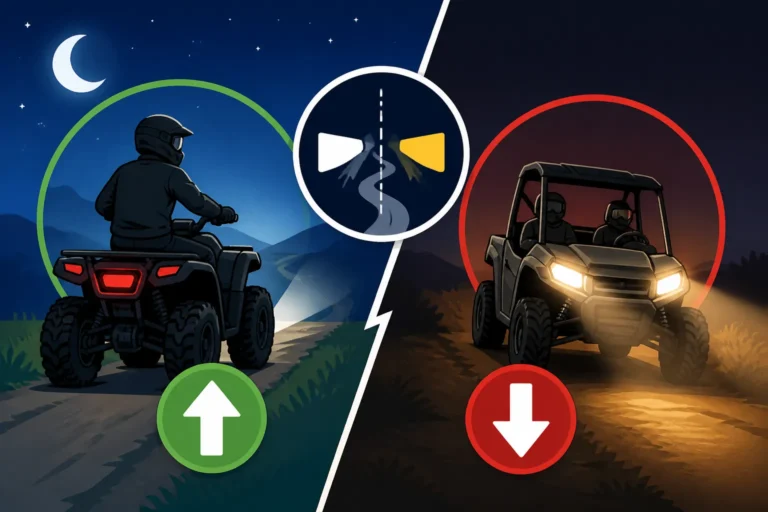
If your OHV is going to be on any public roadway, even paved ones for legal crossings, proper lighting is non-negotiable, particularly if you're out after dark. [North Dakota Headlamp Distance Standards] require your headlamp to be visible from at least 300 feet away, and your taillamp from 500 feet. You also need a red brake light visible from 100 feet when the brakes are applied. These aren't just for seeing; they're for being seen, which is paramount when sharing space with cars and trucks.
Many factory OHV lighting systems are designed for off-road visibility, which can be different from the specific standards required for road use. It's wise to check your machine's lights regularly, ensuring they are clean, functional, and meet the visibility requirements. Reflectors on the sides and rear of your machine also add to your passive visibility, catching the light from other vehicles. When you're dealing with the higher speeds and heavier traffic of paved roads, every bit of visibility helps to reduce the risk of an accident.
Speedometer and the 30 mph Capability
Another crucial requirement, detailed under [North Dakota Equipment Required on a Roadway], is that your OHV must be equipped with a speedometer that accurately displays your speed in miles per hour. This isn't just for your information; it's for compliance with speed limits, which are very much in force on any public road, paved or otherwise. Knowing your speed helps you avoid tickets and operate safely within the flow of traffic, even if you're only on the road for a moment.
Furthermore, your machine must be "capable of maintaining a speed of at least 30 miles per hour." This is addressed in [North Dakota's 30 mph Capability Rule]. This doesn't mean you have to drive 30 mph on every paved surface, but your machine must be able to reach and maintain that speed. This ensures that if you are allowed on a road, you won't be an obstruction to traffic, creating a dangerous slowdown. It also implies that smaller, less powerful youth machines or certain older, underpowered quads simply aren't suited for any public road use, even in limited circumstances.
Specific Paved Road Scenarios and Exceptions
While the general rule is "no paved roads," North Dakota law does carve out a few very specific, limited exceptions. These aren't free passes to joyride on Main Street, but rather practical allowances for situations where it's either necessary to quickly navigate a paved section or where the machine is serving a legitimate, often agricultural, purpose. Understanding these nuances is key to staying compliant without violating the spirit of the law.
Crossing Paved Roads: The Quickest Path
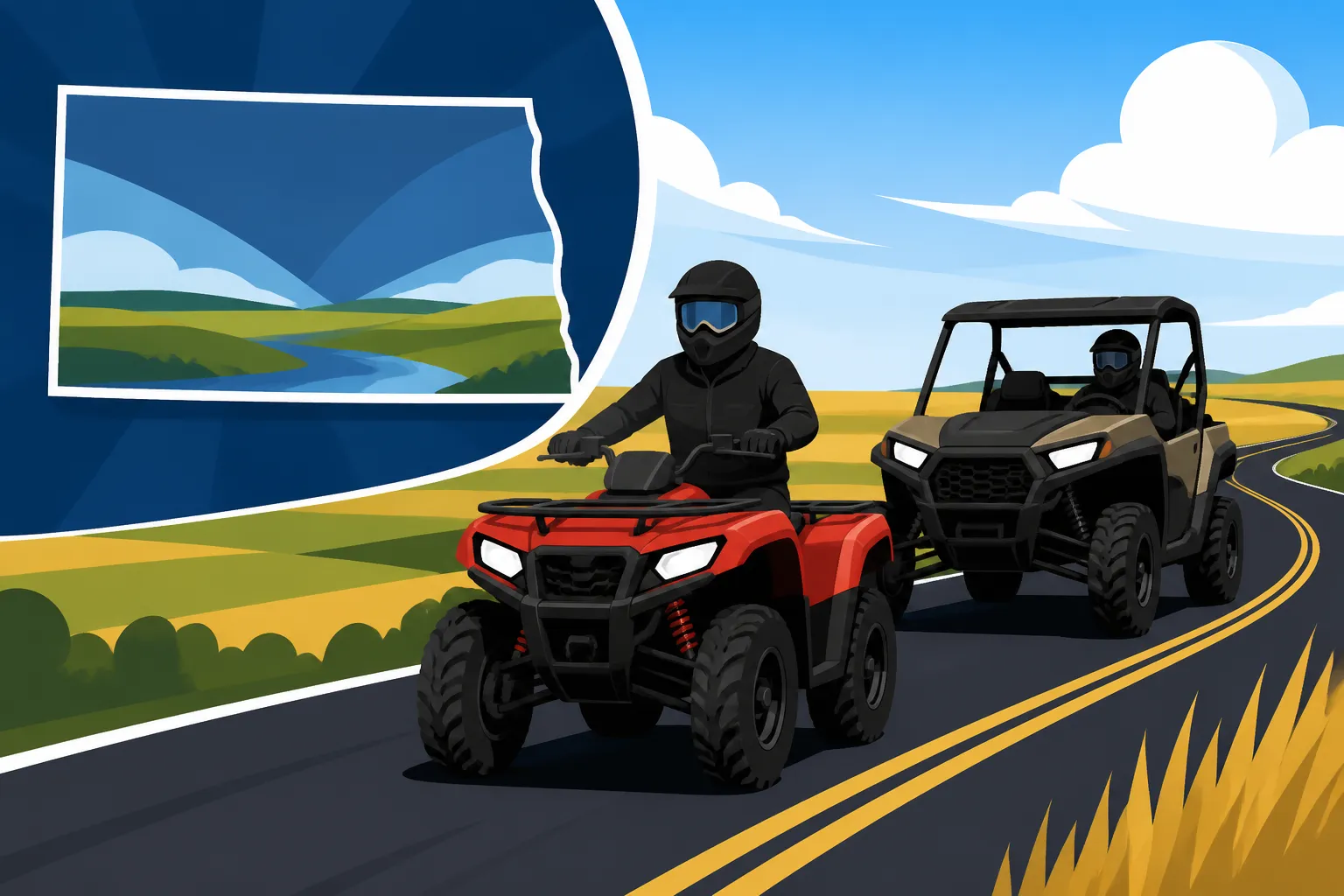
One of the most common and widely understood exceptions is the ability to cross a paved public roadway. This is not about riding on the paved road, but about moving directly across it. Imagine you're riding a gravel road or a ditch, and that route is interrupted by a paved county highway. You can cross that highway to continue your journey on the other side. The law is explicit here: the crossing must be made at an angle of approximately 90 degrees to the roadway, and it must be done safely, yielding to all oncoming traffic. The goal is to minimize your time on the paved surface.
This is a critical distinction because it allows riders to connect legitimate riding areas without having to trailer their machine for every small interruption. However, it requires extreme caution. Paved roads typically have higher speed limits, and traffic can appear quickly. Before you cross, always stop, look both ways, and ensure you have ample time to make it safely to the other side. This isn't a place to test your machine's acceleration; it's about being observant and courteous to other road users.
Short Stretches: Getting to the Ditch or Another Trail
Beyond simple crossings, there are very limited instances where an OHV might legally travel a short distance on a paved surface. This often pertains to moving from one legal riding area (like a gravel road or a ditch) to another, where a brief, unavoidable stretch of paved road connects them. This is usually allowed only if there's no reasonable alternative, and the travel is for the shortest distance practicable. These are typically local, low-speed paved roads, not major highways.
For example, if you're on a [North Dakota Rules for Riding a Gravel Road] and it turns into a short paved section before returning to gravel, a county or local ordinance might allow for this transition. However, this is highly dependent on local regulations, and you absolutely cannot assume it's okay everywhere. It's imperative to check with local law enforcement or county ordinances beforehand. These allowances are not for convenience but for necessity, emphasizing that the primary legal riding areas are off-pavement or on aggregate surfaces. The spirit of the law is to keep OHVs off high-traffic paved roads as much as possible.
Farm, Ranch, and Business Use Exceptions
North Dakota, with its vast agricultural landscape, understands that OHVs are essential tools for many farmers, ranchers, and other businesses. Because of this, there are specific exemptions for OHVs used for agricultural purposes or in connection with a business when operating on a paved road. For instance, a farmer might use an ATV to check fence lines or move equipment, and this work might necessitate traveling short distances on a paved road that borders or crosses their property. Similarly, utility workers or land surveyors might use OHVs to access remote areas, which could involve brief travel on paved surfaces.
These exemptions are not for recreational riding. They are tied directly to the legitimate performance of work. The machine must be directly engaged in agricultural or business operations, and the travel on the paved road must be incidental and necessary to that work. This typically means traveling at low speeds, only for the required distance, and often involves equipment attached to the OHV that signals its utility purpose. While such use might occasionally involve products like SuperATV's utility accessories or plows, the key is the purpose of the ride, not just the equipment.
Penalties and Risks of Non-Compliance
Riding your ATV or UTV on paved roads in North Dakota where it's not permitted isn't just "bending the rules"; it can have serious consequences. The state takes OHV regulations seriously, and an unauthorized ride on pavement can lead to fines, legal troubles, and even put your insurance coverage at risk. It’s crucial to understand what you stand to lose by ignoring these regulations.
The Costs of an Unlawful Paved Road Ride
If you're caught riding your OHV on a prohibited paved road, you're likely looking at a citation. The specific [North Dakota Ticket Cost for a Road Violation] can vary, but even a basic OHV violation can result in a fine. These fines can add up, especially if you incur court costs on top of the initial penalty. The exact amount might depend on the specific statute violated, whether it's a first offense, and the discretion of the issuing officer.
Beyond the immediate financial hit, repeated violations could lead to more severe penalties, potentially even impacting your driving record if the state links OHV violations to your standard motor vehicle license. It's simply not worth the risk. Imagine being hundreds of miles from home, on a riding trip, and getting a hefty ticket for something easily avoidable. Planning your route to adhere to [North Dakota ATV Road Rules by Surface Type] is a small investment of time that saves you a lot of headache and money in the long run.
Insurance Implications and Liability
This is where things can get really tricky, and potentially very expensive. If you're involved in an accident while riding your OHV illegally on a paved road, your insurance company might deny your claim. Most standard OHV insurance policies are designed to cover off-road use, or very specific, legally compliant road uses (like crossing or certain gravel road travel). If you're operating outside of the law, you're likely operating outside the terms of your policy.
This means that if you cause an accident, you could be personally liable for all damages – property damage, medical bills, lost wages for others, and even legal fees. This financial exposure can be devastating. [North Dakota Insurance Requirements at Registration] typically focus on ensuring you have some liability coverage, but that coverage is contingent on legal operation. Even if you have comprehensive coverage, riding somewhere you shouldn't voids your protection. It’s a huge risk to take for a moment of convenience. Always confirm your policy details with your insurer regarding legal road use.
Local Ordinances: When Paved Means "Absolutely Not"
While state law provides the overarching framework, counties and cities in North Dakota also have the authority to enact their own ordinances regarding OHV use within their jurisdictions. This means that even if a state law might allow for a very specific, limited use on a paved road, a local ordinance could completely prohibit it. This is why checking [North Dakota County and City ATV Ordinances] is so vital. What might be permissible in one rural township could be strictly forbidden in an adjacent city.
Cities, in particular, tend to have much stricter rules about OHVs on paved roads, often prohibiting them entirely, save for emergencies or very specific events. They have more traffic, more pedestrians, and different concerns than a sprawling rural county. For example, [North Dakota Rules for Riding in Fargo] or [North Dakota Rules for Riding in Bismarck] will almost certainly be much more restrictive than a small, unincorporated area. Never assume that just because you see an OHV on a road in one place, it’s legal everywhere else. Always do your homework before you ride, or stick to clearly marked trails and legal off-road areas to avoid any doubt and keep your adventures enjoyable and penalty-free.
| Equipment Category | Requirement for Road-Legal OHV in ND | Paved Road Specifics (Limited Legal Use) |
|---|---|---|
| Engine Size | Minimum 350cc | Essential for any limited paved use |
| Mirrors | At least one, 10 sq. inches visible | Crucial for situational awareness on paved roads |
| Horn | Audible at 200 feet | Important for signaling other road users |
| Headlamp | Visible at 300 feet | Mandatory for night, even on short paved stretches |
| Taillamp | Visible at 500 feet | Mandatory for night, even on short paved stretches |
| Brakelights | Red, visible at 100 feet | Essential for safety on paved surfaces |
| Speedometer | Displays MPH | Required for maintaining legal speeds |
| Capability | Must be capable of 30 mph | Directly impacts legality of paved road use |
Disclaimer
This article is for general informational purposes only and does not constitute professional advice. Laws, prices and regulations vary by location and change over time. Consult a qualified professional for guidance on your specific situation.