North Dakota Classroom Safety Classes
A child who needs an off-highway vehicle safety certificate may do better learning in a classroom than working through a course alone. The challenge is knowing who needs training, how to find a class, and what happens after it. Here’s how North Dakota classroom safety classes fit into ATV and UTV riding rules, and what to check before booking.
Who should take a North Dakota classroom safety class
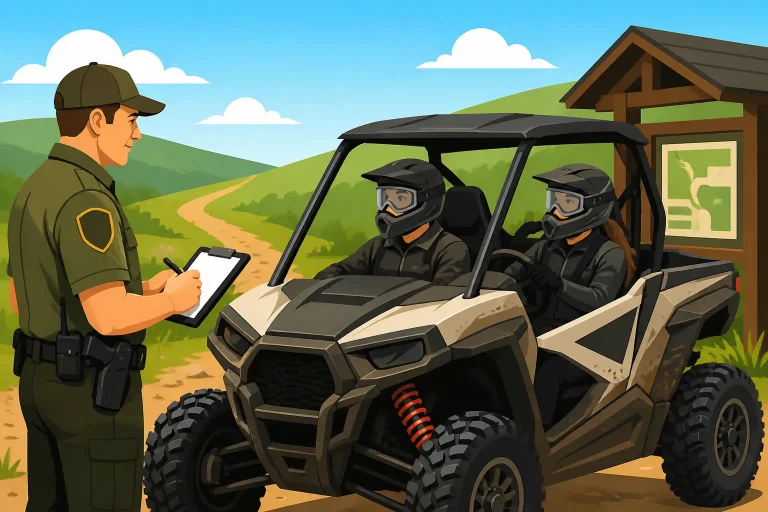
North Dakota offers safety training for off-highway vehicle riders, including ATV and UTV riders. A classroom class can suit a young rider who benefits from an instructor, a set schedule, and the chance to ask questions as they come up. It also gives a family a chance to talk through safe riding habits together.
The state’s safety course is intended for young operators. Riders generally need to be at least 12 to take the course, but eligibility and the rules that apply to an individual rider can depend on age and circumstances. If a child is approaching the minimum age, check with the course provider before registering rather than assuming the child can enroll early.
Training and the certificate requirement are related, but they are not the same question. A rider may need to complete a course and carry proof of certification when operating in situations covered by state rules. The rider’s age, where the machine will be used, and any applicable exception can matter. Review North Dakota Rules for Riders Under 16 and North Dakota OHV Safety Certificates at Age 12 for the age-related requirements.
A classroom safety class can be a practical choice if a young rider:
- Learns better through discussion and demonstration than independent study.
- Has questions about operating an ATV or UTV safely.
- Needs a structured course with an instructor and other students.
- Would benefit from having a parent or guardian participate in the preparation.
- Is new to public riding areas and needs to understand that safety training is only one part of getting ready.
An adult may also choose to attend or help a child prepare, even where the adult does not need a certificate. That support can make it easier to turn course material into habits at home, such as checking the machine before a ride, choosing suitable terrain, and agreeing on when to stop.
What classroom training covers and what it does not
Classroom training provides an organized way to learn safety principles and discuss how they apply to riding. The specific lesson plan, class format, and assessment can vary, so check the current course information when enrolling. In general, expect the class to focus on making safer decisions, understanding the machine, and recognizing situations that can lead to a crash or injury.
A safety class is not a substitute for hands-on familiarity with a particular machine. An ATV and a side-by-side are not operated in exactly the same way, and machines can differ in controls, size, and handling. After training, take time to read the owner’s manual and practise basic operation in a permitted, controlled setting before taking a new rider onto a trail or roadway.
Nor does passing a safety course give a rider permission to ride anywhere. Riders still need to follow rules for the location, machine, and activity. A certificate does not replace a required registration, a visitor permit, landowner permission, or compliance with local restrictions. For visitor requirements, see North Dakota Permits for Visiting Riders and North Dakota Has No Reciprocity With Any State. For training recognition from another jurisdiction, check Whether a Safety Certificate From Another State Counts rather than assuming an out-of-state card will be accepted.
| A classroom class can help with | A classroom class does not automatically provide |
|---|---|
| Learning safety concepts in a guided setting | Permission to ride on private or restricted land |
| Asking an instructor questions | Registration for an ATV or UTV |
| Preparing a young rider for responsible operation | A non-resident permit, if one is required |
| Completing the state’s safety training process | Proof that every local riding rule has been followed |
| Building a shared understanding between a child and parent | Practical experience on a specific machine |
The class is one piece of a responsible riding plan. A family should still check that the machine is appropriate for the rider, that any required equipment is in place, and that the intended riding area is open to that type of machine. A certificate cannot make an unsuitable machine safe for a child or turn a closed route into a legal one.
Parents should also avoid treating the course as a one-time conversation. Younger riders may need reminders about speed, passengers, terrain, visibility, and fatigue as their experience grows. Talking about a specific ride before setting out can help reinforce what the student learned in class.
How to find and book a classroom class
Class availability can depend on the schedule and location of the training provider. Do not assume that a class will be offered in a particular town or on a particular weekend. Check the current information from the North Dakota agency responsible for safety training, and confirm whether the session is classroom-based, who can attend, and how enrollment works.
A straightforward booking process is:
- Confirm the rider’s eligibility. Check the minimum age and any enrollment conditions. If the student is close to the minimum age, ask the provider how the rule applies to that student.
- Find a current classroom schedule. Use the state’s official course information or contact the listed provider. A past schedule or an old event announcement may not show what is available now.
- Check the full class details. Confirm the location, start and finish times, required materials, attendance expectations, and whether a test or other assessment is included.
- Register as directed. Some sessions may require advance registration. Ask whether a parent or guardian must complete paperwork or remain with a younger participant.
- Save the confirmation. Keep any enrollment details and instructions together so the student knows where to go and what to bring.
- Ask how completion is recorded. Find out whether the student receives a card, certificate, or another form of confirmation and how to replace or retrieve it if it goes missing.
Schedules can change, and a listing may have limited seats. Before travelling, confirm that the class is still taking place and that the student is registered. If there is no nearby session, ask the course provider whether another classroom date is planned or whether an approved online course is available. North Dakota also has an North Dakota Online Safety Course Option, which may be useful when classroom dates or locations do not work for a family.
Check the class’s cancellation and rescheduling process before making plans around it. This matters if the student becomes ill, severe weather affects travel, or the provider has to change the session. Avoid relying only on an old message or calendar entry if the class date is approaching.
For a group of young riders, ask the agency or provider whether a group session can be arranged. Do not assume that a private or group class automatically follows the same format as a scheduled public session. Confirm who provides the instruction, how students are registered, and what counts as successful completion. The page Booking a Four-Hour OHV Class for Your Crew covers group-class planning in more detail.
How to prepare a young rider for class
A little preparation can help a student get more from the class. Start by explaining that the goal is not simply to obtain a certificate; it is to learn how to make safer choices. A young rider should feel comfortable asking questions, including questions about something they do not understand.
Before class, check the provider’s instructions for arrival time, paperwork, and any materials the student should bring. If the student has a machine at home, the owner’s manual can be useful background, but do not assume the class requires a particular model or that bringing a machine is allowed. Ask the provider if the instructions are unclear.
It can help to talk through a few everyday scenarios before the session:
- What should the rider do if the trail is unfamiliar or visibility is poor?
- How can the rider tell when a route or area is not open to them?
- What should happen if the machine feels difficult to control?
- When should the rider stop because of fatigue, weather, or a mechanical problem?
- Who should the rider tell if they become separated from the group?
These conversations are not a replacement for instruction. They give the student a chance to connect general safety ideas to decisions they may actually face.
Parents can also prepare by checking the rules that affect the planned riding activity. A class may cover safety, but families should separately review requirements for permits, land access, passengers, and road use. For example, a safety certificate does not resolve whether a visitor needs a permit; North Dakota Non-Resident OHV Permit explains that separate issue. Similarly, North Dakota Rules for a Passenger is useful if the young rider expects to carry someone else.
After class, ask the student to explain the main points in their own words. This is more useful than asking only whether they passed. A rider who can describe when to slow down, where not to ride, and what to do when something changes is more likely to apply the training.
After the class: certificates, permits, and next steps
Once the student completes the required training, find out exactly how proof of completion is issued and how the rider should carry or access it. The course provider can explain whether completion is recorded electronically, whether a physical card is provided, and what to do if the proof is lost. Do not assume that a class registration receipt is the same as a completed-course certificate.
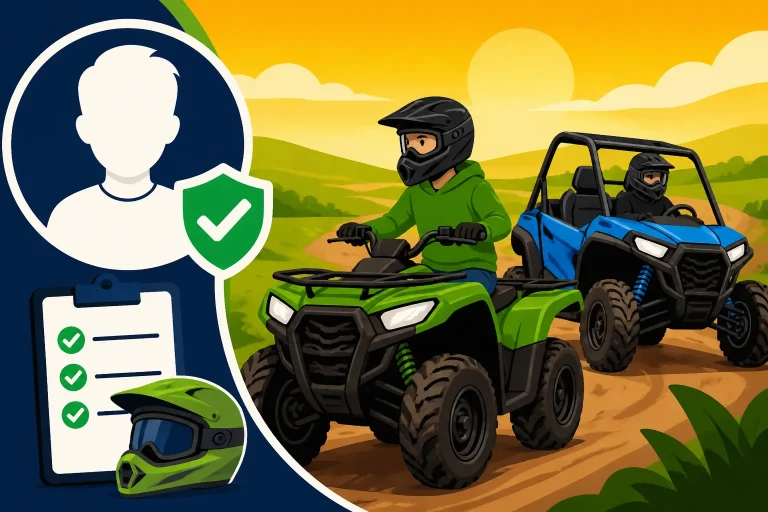
Before the first ride, make a short checklist for the rider and the adult responsible for the trip:
- Confirm that the rider has completed the applicable training and can show proof if required.
- Check that the machine is properly registered and that any required permit is in place.
- Confirm that the riding area is open to the machine and that access is allowed.
- Review the rules for passengers, protective equipment, and any roadway use planned.
- Check the machine’s condition and make sure the rider knows the basic controls.
- Set clear limits for the route, speed, group spacing, and when to return.
For non-resident families, keep the distinction between safety certification and a visitor permit clear. A course certificate does not itself authorize a visitor to ride on ground that requires a separate permit. The permit’s coverage and the certificate’s recognition are separate questions, so confirm both before travelling.
If the student’s riding plans change, revisit the requirements. A certificate obtained for a young rider does not make every later activity permissible. A road ride, a different class of machine, a new riding area, or a passenger can bring additional rules into play. For instance, North Dakota ATV Road Rules by Surface Type explains why the surface and type of roadway matter. Check the rules for the exact activity instead of relying on a general understanding from the class.
A good follow-up is to practise basic skills in an area where the rider is allowed to operate, with adult supervision appropriate to the situation. Start with simple controls and low-risk conditions. Move to more challenging terrain only when the rider can handle the basics consistently and the machine is suitable. If the rider is unsure or overwhelmed, stop and return to a simpler setting.
Frequently Asked Questions
Is a classroom safety class required for every ATV or UTV rider in North Dakota?
No single answer applies to every rider and situation. Requirements can depend on the rider’s age and where or how the machine is operated. Check the current rules for the rider and planned activity before riding.
Can a child take the classroom course before turning 12?
The course generally has a minimum age. Ask the provider how it applies to a child who is close to that age; do not assume early enrollment is permitted.
Does passing the class provide a North Dakota visitor permit?
No. Safety training and a non-resident permit are separate requirements. Check whether the visitor needs a permit for the planned riding and whether their certificate is accepted.
What if there is no classroom class nearby?
Check the current schedule and ask the training provider about other locations or upcoming sessions. An approved online course may be an alternative, but confirm that it meets the student’s needs and the applicable requirements.
Disclaimer
This article is for general informational purposes only and does not constitute professional advice. Laws, prices and regulations vary by location and change over time. Consult a qualified professional for guidance on your specific situation.