North Dakota Rules That Changed With HB 1346
It can feel like you just get a handle on the rules for riding your ATV or UTV in North Dakota, and then boom, things change. Keeping up with legislative updates can be a real headache, making you wonder if your favorite trails or ditch routes are even legal anymore. This guide is here to untangle the complexities of North Dakota House Bill 1346, explaining exactly what changed, why it matters for your machine, and how you can continue to enjoy the prairie responsibly and legally.
What is HB 1346 and Why Does It Matter to North Dakota Riders?
North Dakota House Bill 1346 brought about some significant adjustments to how off-highway vehicles (OHVs) are regulated across the state, particularly concerning where and how you can ride them on public roadways. For years, riders navigated a patchwork of rules, and while some aspects of OHV operation remained consistent, the Legislature recognized a need to clarify and update certain statutes to better reflect modern OHV use and safety concerns. This bill wasn't just a minor tweak; it was a comprehensive effort to codify new allowances and responsibilities, impacting everyone from weekend recreational riders to those who rely on their machines for farm work or daily errands in rural areas.
The core motivation behind HB 1346 was often a balancing act: expanding opportunities for riders while also enhancing safety for all road users and protecting property. Many OHV enthusiasts had been advocating for broader access to certain public roads, especially in areas where traditional trails are limited or non-existent, like much of the prairie. The previous laws could be confusing, leading to accidental violations or missed opportunities for legitimate use. By addressing these areas, the bill aimed to make the rules more explicit and, in some cases, more accommodating for responsible OHV owners.
Understanding the Legislative Push for Change
The journey of HB 1346 through the legislative process reflects a growing understanding of the role ATVs and UTVs play in North Dakota life. These machines aren't just toys; they're essential tools for many landowners, farmers, and ranchers, and they're also a popular way for families to explore the vast landscapes of the state. As the technology of OHVs has evolved, becoming more capable and powerful, the need for legislative updates to keep pace became evident. Lawmakers heard from constituents about the challenges of navigating strict road use laws that didn't always make sense for their circumstances, especially for residents in rural communities where an ATV might be the most practical vehicle for short trips.
The bill also considered public safety concerns. With more OHVs on the roads and in ditches, there was a clear need to define what constitutes safe operation, what equipment is mandatory, and what penalties would deter unsafe behavior. This isn't about curbing fun but ensuring that expanded access comes with a clear framework for responsibility. It’s about making sure that when you're out there, whether you're heading to the hunting shack or just enjoying a scenic route, you're doing so in a way that protects yourself and others.
Key Dates and Implementation for OHV Owners
Like most new laws, HB 1346 had specific effective dates that riders needed to be aware of. Generally, legislative changes in North Dakota often become effective on August 1st following the legislative session, unless otherwise specified. For HB 1346, many of its provisions impacting road access and penalties began to apply after this typical summer implementation period. This transition period is crucial because it gives riders time to understand the new rules, make any necessary modifications to their machines, and adjust their riding habits. It’s not uncommon for changes of this magnitude to catch some folks off guard, especially those who don't closely follow legislative sessions.
It’s always a good idea to check with the North Dakota Department of Transportation or a local motor vehicle branch for the most current information regarding effective dates and any supplementary guidance they might issue. Missing a small detail could mean the difference between an enjoyable ride and an unexpected citation. Ignorance of the law is rarely an excuse, so staying informed about when new rules kick in is just as important as knowing what those rules actually are. For instance, some of the penalty increases might have a slightly later implementation date than the new riding allowances, making it even more important to verify. You can find more details on how state law interprets these machines by reviewing [What North Dakota's OHV Law Requires of Owners].
Significant Road Riding Rule Changes for ATVs and UTVs
One of the most talked-about aspects of HB 1346 involved the changes to where ATVs and UTVs can actually be operated on public roads. Previously, access could feel incredibly restricted, pushing many riders solely into ditch bottoms or specific trail systems. The new legislation aimed to provide a more consistent and, in some cases, expanded opportunity for riders to use their machines on certain road types, acknowledging their utility and recreational value across the state. This doesn't mean every road is now open season, but it certainly broadened the horizons for many riders.
The changes primarily focused on differentiating between types of roads – paved versus gravel – and setting specific conditions for each. This nuanced approach helps accommodate the diverse needs of OHV owners, whether they're driving a sturdy utility quad for farm tasks or a sport UTV for recreation. However, with expanded access comes increased responsibility for ensuring your machine is properly equipped and that you understand the limitations and safety requirements of road use.
Expanded Access on Paved and Gravel Roads
Under the provisions of HB 1346, North Dakota saw some notable shifts in where OHVs can legally travel. For gravel roads, the rules became clearer and often more permissive. Registered OHVs can generally operate on unpaved county and township roads that are not part of the state highway system. This is a big deal for rural residents who often rely on gravel roads for access to land, errands, or just getting from one place to another without having to trailer their machine everywhere. It means more direct routes and less hassle for those whose daily lives involve their ATV or UTV. Remember, even on gravel, specific conditions apply, such as the minimum engine size requirement discussed in [North Dakota's 350cc Minimum for Road Riding].
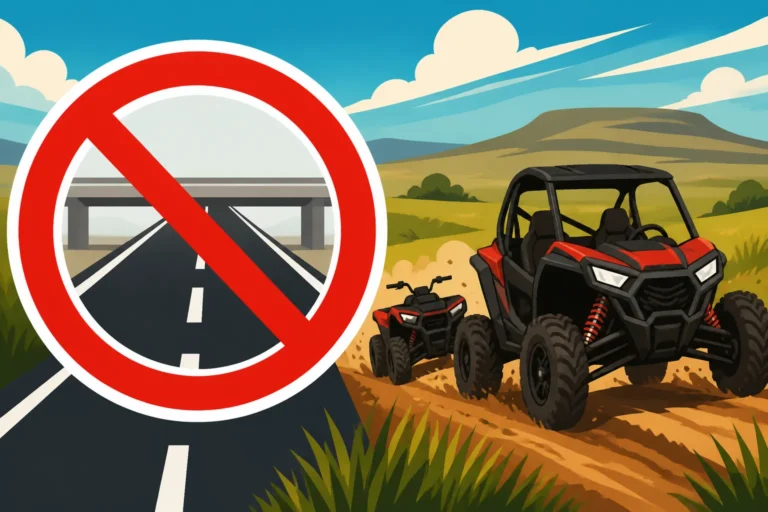
Paved roads, on the other hand, typically maintained stricter controls, but HB 1346 did provide some clarity and limited expansion. Generally, OHVs are allowed to cross paved roads and use them for short distances if there's an obstruction in the ditch or to access a legal riding area. However, the bill specifically addressed operation on paved roads with speed limits up to 55 mph, sometimes allowing OHVs to operate in specific circumstances, provided they meet certain criteria like having the capability to maintain at least 30 mph. Interstate highways, though, remained strictly off-limits. You can explore this further by reading [North Dakota ATV Road Rules by Surface Type]. It's about finding that balance between necessary access and ensuring the safety of faster-moving traffic.
New Equipment Requirements for Roadway Use
With increased access to public roads, HB 1346 also underscored the importance of proper equipment to ensure safety and visibility. If you're going to be sharing the road, even briefly, with cars and trucks, your OHV needs to meet certain standards. These requirements are not just suggestions; they are legal necessities that could result in a citation if ignored. Things like proper lighting, mirrors, and even a speedometer became more critical. Many riders already equip their machines with robust accessories, and companies like SuperATV offer a wide range of compliant products that can help meet these new requirements, ensuring your machine is ready for legal road use.
Key equipment mandates often include:
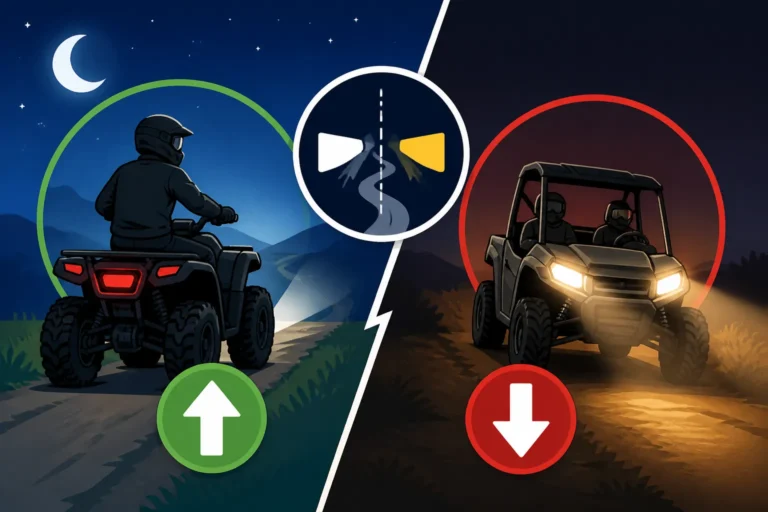
- Headlights and Taillights: These must be operational and visible from specific distances, especially during dusk, dawn, or nighttime operation.
- Brake Lights: Essential for signaling your intentions to traffic behind you.
- Mirrors: At least one rearview mirror is typically required, offering a clear view to the rear of the machine. [North Dakota Mirror and Horn Requirements] provides specific details on this.
- Horn: An audible warning device is mandatory for signaling other vehicles or pedestrians.
- Speedometer: Some provisions require a working speedometer to ensure riders can adhere to posted speed limits.
- Spark Arrester: While often already present on OHVs for fire safety, compliance with noise and spark regulations is always a good practice.
Neglecting these requirements isn't just a legal risk; it's a safety hazard. Making sure your machine is up to snuff before you venture onto public roadways is paramount for everyone's well-being.
Passenger Rules and Youth Rider Impact
The bill also touched upon who can ride and where, especially concerning passengers and younger operators. North Dakota has specific age restrictions for operating OHVs, and these often become even more stringent when the machine is on a public road or ditch. HB 1346 helped clarify situations involving passengers, generally stipulating that an OHV can only carry as many passengers as it was designed by the manufacturer to safely accommodate, with designated seating for each person. This means no doubling up on single-rider ATVs or having extra people dangling off the side of a UTV.
For youth riders, the rules often involve a combination of age, safety certification, and adult supervision. For instance, [North Dakota Helmet Law for Riders Under 18] remains a critical piece of legislation, requiring helmets for all riders under a certain age. While HB 1346 didn't necessarily overhaul all youth riding laws, it reinforced the existing framework, particularly in the context of increased road access. Parents and guardians need to be acutely aware of these rules, as they carry the responsibility for ensuring their young riders are compliant and safe. A minor operating an OHV on a public road must meet specific age and certification criteria, and generally, these machines are restricted from public roads if operated by someone under the legal age, regardless of parental consent.
Increased Penalties and Enforcement for Violations
One of the less enjoyable but equally important aspects of HB 1346 for OHV owners was the adjustment of penalties for violations. While expanded access is welcome, the legislature also decided to increase the consequences for those who choose to ignore the rules or operate their machines recklessly. This move is generally aimed at ensuring that the new privileges are not abused and that public safety remains a top priority. No one wants to face a hefty fine or worse, but understanding the potential repercussions is a vital part of responsible OHV ownership.
These changes mean that what might have once been a minor inconvenience could now be a significantly more expensive or legally complex problem. It serves as a strong reminder that knowing the law isn't just good practice; it's essential for protecting your wallet and your freedom to ride. Whether it's an unregistered machine or operating under the influence, the stakes are definitely higher.
Understanding the New Fine Structure
The new fine structure introduced by HB 1346 aimed to create a stronger deterrent for non-compliance. What previously might have been a nominal fine for certain offenses, such as operating an unregistered machine or a basic road violation, saw an increase. For example, a basic OHV violation, which used to be a set amount, saw an increase, making it more impactful on a rider's budget. There's even a provision that allows for a reduced fine if you correct the violation (like registering your machine) within a certain timeframe, as described in [Half Price If You Register Afterward]. This serves as both a penalty and an incentive to get compliant.
Beyond just the ticket amount, repeat offenses or more serious infractions can escalate quickly. A single violation might be a misdemeanor, but subsequent offenses could lead to higher classifications, increased fines, and even potential impoundment of your machine. It’s no longer just a slap on the wrist; the state is clearly signaling that OHV laws are to be taken seriously. This is particularly true for violations that pose a direct risk to public safety.
Emphasis on Impaired and Reckless Operation
Perhaps one of the most critical areas where penalties saw an uptick and enforcement intensified was around impaired and reckless operation. Just like with cars, operating an OHV while under the influence of alcohol or drugs is a serious offense in North Dakota. HB 1346 reinforced that [North Dakota DUI Rules for OHV Riders] carry significant weight and consequences, mirroring many of those applied to standard motor vehicles. This means loss of driving privileges, substantial fines, and even jail time are all on the table if you're caught operating impaired on an OHV, whether it's on a public road, a ditch, or a designated trail.
Reckless operation also received heightened attention. This refers to driving in a manner that shows a willful disregard for the safety of persons or property. Think excessive speed in inappropriate areas, dangerous maneuvers, or damaging property. Such actions are now more likely to be classified as a misdemeanor, carrying a higher fine and potentially court costs, as outlined in [What a Class B Misdemeanor Means in North Dakota]. The message is clear: enjoying your OHV comes with a responsibility to operate it safely and respectfully, especially with the increased access HB 1346 provides. Law enforcement officers are increasingly vigilant about these types of violations to protect both riders and the general public.
How to Stay Compliant and Ride Responsibly
Navigating the world of OHV laws can sometimes feel like trying to hit a moving target. With changes like those brought by HB 1346, it's more important than ever for riders to be proactive in understanding their responsibilities. Compliance isn't just about avoiding a ticket; it's about ensuring your safety, the safety of others, and preserving access to the beautiful North Dakota landscape for future generations. Being a responsible rider means more than just knowing where you can go; it means knowing how to get there legally and safely.
The key really lies in diligent preparation and ongoing education. Before you even put the key in the ignition, take a moment to consider your route, your equipment, and any local nuances that might apply. A quick check can save you a world of trouble and ensure your day out is filled with enjoyment, not frustration.
Checking Local Ordinances and Posted Land
While HB 1346 provides a statewide framework, it's crucial to remember that local rules can and do vary. Individual counties and cities in North Dakota have the authority to enact their own ordinances that might further restrict or permit OHV use within their boundaries. This means that even if a state law allows you to ride on a certain type of road, a specific county might have an ordinance that prohibits it or limits hours of operation. It’s always best to check with local law enforcement or county offices before heading out, especially if you're riding in an unfamiliar area. [North Dakota County and City ATV Ordinances] is a great resource to understand this further.
Furthermore, private property laws are paramount. North Dakota is very clear about trespass. Even if an area seems open, if it’s private land and not specifically designated for public OHV use, you need explicit permission from the landowner. Keep an eye out for "Posted" signs, and remember that even if you don't see a sign, if you're not absolutely sure it's public land or you have permission, it's best to stay off. Showing respect for private property is not only the law but also helps maintain positive relationships between riders and landowners, which is vital for preserving riding opportunities. You can learn more about this by reviewing [North Dakota Posted Land Rules for Riders].
Staying Informed and Advocating for OHV Rights
The legislative landscape for OHVs is always evolving. To truly stay compliant and responsible, it's a good practice to periodically check for updates from official sources like the North Dakota Department of Transportation or the North Dakota Parks and Recreation Department. These agencies often publish brochures, online guides, or news releases to inform the public about new laws or changes. Joining a local OHV club or association can also be incredibly beneficial. These groups often have their finger on the pulse of legislative developments, organize educational events, and are great networks for sharing information and best practices.
Beyond just staying informed, consider becoming an advocate for responsible OHV use. Legislators respond to their constituents. By demonstrating safe, respectful, and environmentally conscious riding habits, you contribute to a positive public image for OHVs. When new bills or regulations are proposed, your informed voice, shared respectfully with your representatives, can make a difference. Supporting organizations that champion OHV access and education ensures that the concerns of riders are heard and considered in future legislative discussions.
Here's a quick summary of some key changes and requirements:
| Aspect of Operation | Before HB 1346 (General) | After HB 1346 (General) |
|---|---|---|
| Gravel Roads | More restrictive/ambiguous | Generally more permissive for registered OHVs |
| Paved Roads | Very limited operation | Limited operation on roads ≤ 55 mph with specific conditions |
| Interstates | Strictly prohibited | Strictly prohibited |
| Required Equipment | Less explicit, varied | More clearly defined (lights, mirrors, horn, speedometer) |
| Passenger Rules | General manufacturer limits | Reinforced, specific to manufacturer seating |
| Basic Violations | Lower fine amounts | Increased fine amounts for violations |
| Impaired Operation | Illegal | Penalties reinforced, often mirroring motor vehicle DUI |
| Youth Riders | Age & certification rules | Existing rules reinforced, esp. for road use |
Disclaimer
This article is for general informational purposes only and does not constitute professional advice. Laws, prices and regulations vary by location and change over time. Consult a qualified professional for guidance on your specific situation.