North Dakota Rules for Riding to a Field
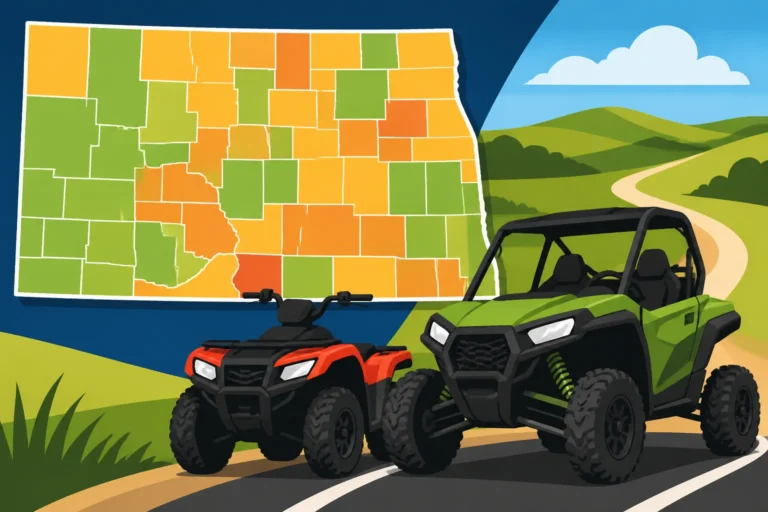
It can be incredibly frustrating to own an ATV or UTV in North Dakota, especially when you primarily use it for farm work, only to find yourself scratching your head about the rules for simply getting it to the next field. Many folks assume that because it’s a rural area and they’re doing farm tasks, all bets are off when it comes to road use, but that’s not quite the case. This guide will walk you through the specific rules and exceptions North Dakota has in place for using your off-highway vehicle (OHV) to access agricultural land, helping you avoid unexpected citations and ensure you’re operating within the law.
Understanding North Dakota's Intent Behind Farm-Use Rules
North Dakota, with its vast agricultural landscapes, certainly understands the integral role ATVs and UTVs play in farming operations. From checking fences to herding cattle, hauling small loads of feed, or simply traversing rough terrain that a pickup truck can't handle, these machines are workhorses for many landowners and agricultural workers. The state's laws try to strike a balance: acknowledging the practical necessity of OHVs for farm tasks while also ensuring public safety on roadways and preventing misuse. It’s not about making life harder for farmers; it’s about making sure everyone, including your neighbors on their way to town, stays safe.
Why Off-Road Machines Are Essential for Agriculture
Think about the sheer scale of some farms in North Dakota. A farmer might need to access multiple fields spread across miles, sometimes separated by paved or gravel roads. Driving a tractor on these roads can be slow, inefficient, and sometimes even dangerous for faster-moving traffic. An ATV or UTV offers a quick, agile, and fuel-efficient way to get to where the work needs to be done. It’s not just about speed, either. These machines are designed for the very conditions found on a farm – uneven ground, mud, snow, and the ability to tow small implements or carry supplies. They save countless hours and a lot of wear and tear on other, more expensive farm equipment. For many, an OHV is as crucial as a combine or a pickup truck for day-to-day operations.
The Balancing Act: Farm Use vs. Recreational Riding
Here's where the nuance comes in. While the state recognizes the utility of OHVs for farming, it also has a comprehensive set of rules governing their recreational use, particularly on public lands and roads. The challenge for many farmers is distinguishing when their machine is genuinely being used for agricultural purposes versus when it might appear to be a recreational ride. For instance, if you're taking your UTV to check irrigation lines in a distant field, that's clearly farm use. But if you decide to take a scenic detour through a state park on the way back, that shifts the intent entirely and can put you in violation of different regulations. The key takeaway is that the "farm use" exception isn't a blanket pass for all activities; it's specific to the functional needs of an agricultural operation. Understanding this distinction is vital for staying on the right side of the law. You’ll find more details on this balance if you look into [North Dakota Rules for Farm Use on a Road].
Navigating Public Roads to Access Your Fields
So, you've got a field across the highway, or perhaps your pasture is a mile down a paved county road. How do you get your OHV there legally? North Dakota law provides specific allowances for what’s called "transitory operation" or using the shoulder/ditch for farm-related travel. However, these allowances come with strict conditions and equipment requirements. It's not as simple as just hitting the blacktop; there are rules for which roads you can use, how you can use them, and what your machine needs to have equipped.
The "Transitory Operation" Exception
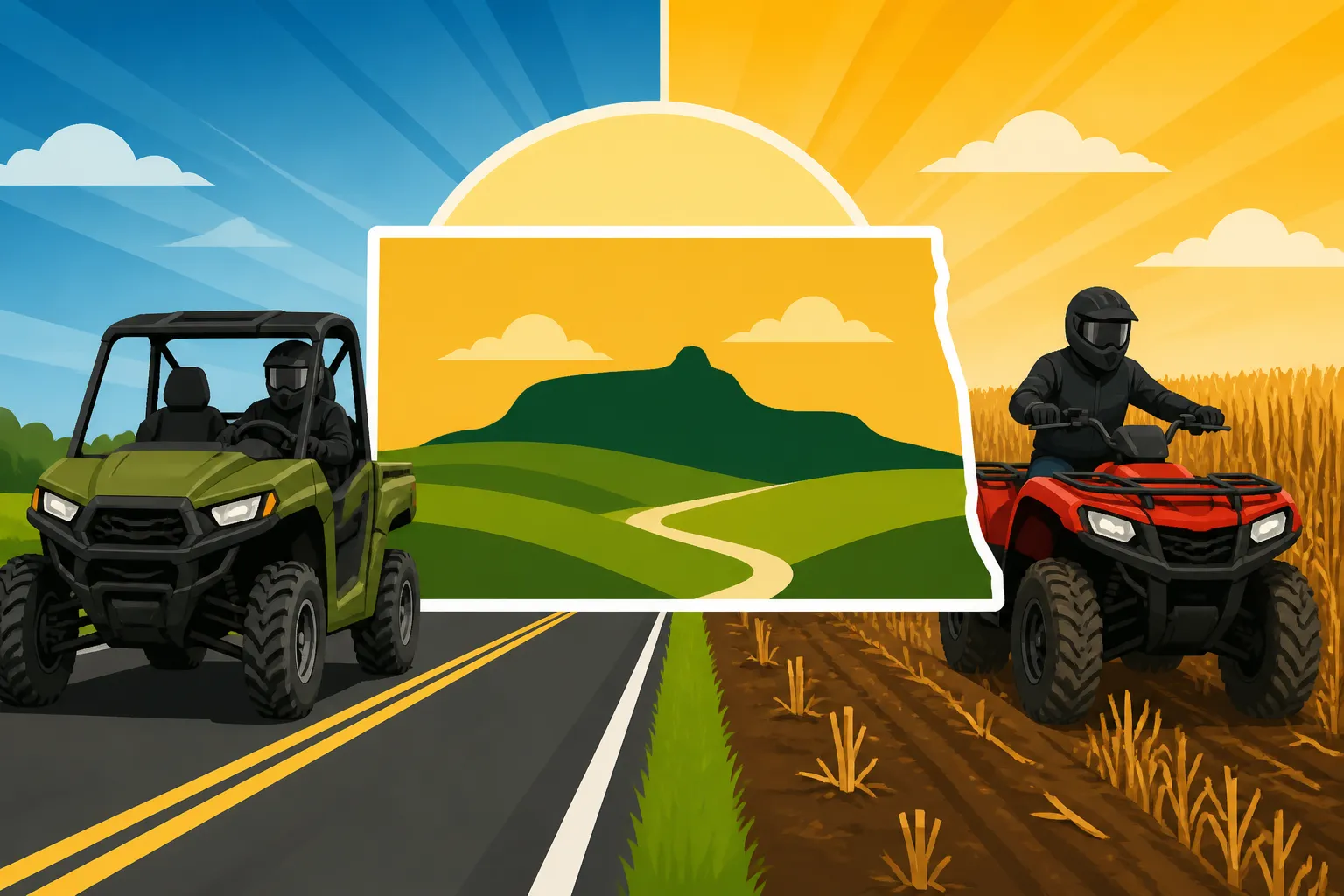
North Dakota law generally prohibits OHVs on paved public roads and highways, but it makes a significant exception for agricultural purposes. You can operate an OHV on public roads, including the roadway, shoulder, or ditch, for agricultural purposes if it's the most practical route to get from one parcel of land to another. This is often referred to as "transitory operation." It's critical that this travel is indeed the most direct and practical route. You can't just meander down the road for fun and claim farm use; the purpose must be explicitly to move between fields or farm properties. This exception is designed for necessity, not convenience or recreation. For example, if your family farm has two sections of land separated by a state highway, and the most direct route between them is a mile down that highway, the law allows you to use your OHV for that specific purpose.
Equipment Requirements for Road Travel
Even with the "transitory operation" exception, your OHV isn't entirely exempt from road-legal equipment standards if you're going to be on the pavement. To operate on a public roadway, your ATV or UTV must be equipped with certain items to ensure it's visible and controllable. This generally includes:
- Headlamps: At least one headlamp that emits a white light visible from a distance. For night travel, it needs to illuminate objects at 300 feet.
- Taillamp: A red taillamp visible from the rear.
- Brake Lights: Functioning brake lights.
- Reflectors: Rear reflectors.
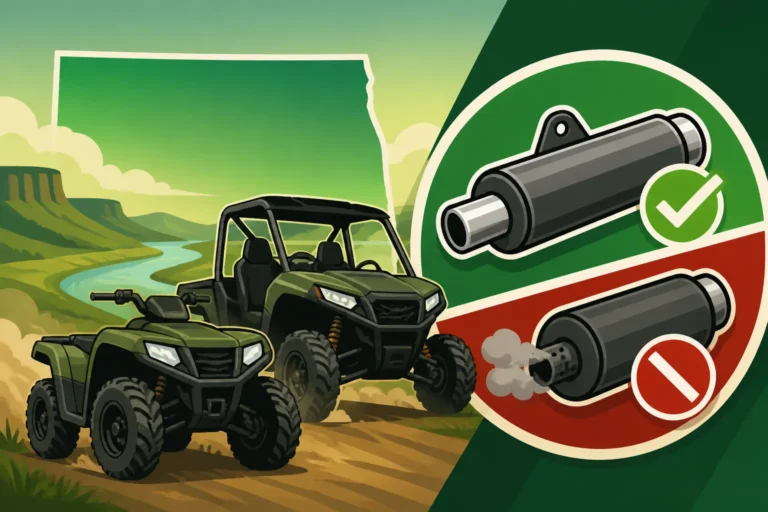
- Muffler: An adequate muffler to prevent excessive noise.
- Mirrors: A rear-view mirror. Many riders find a wide-angle mirror from a brand like SuperATV can significantly improve visibility behind them, which is crucial when sharing roads with faster-moving traffic.
- Horn: A horn capable of being heard from 200 feet.
- Speedometer: A working speedometer.
- Tires: Approved tires for highway use, if you're on the pavement for any length of time.
It’s important to note that these requirements are for operating on the roadway. If you're strictly sticking to the ditch or shoulder, some of these might be relaxed, but it's always safer and wiser to have them, especially if you might briefly enter the traffic lane for an obstruction. Checking your local county or township ordinances is also a smart move, as they can add certain restrictions beyond state law. For more on equipment, you might want to read [North Dakota Equipment Required on a Roadway].
Specific Road Types and Their Rules
North Dakota has different rules depending on the type of road you're on. This is where it can get a bit confusing, but knowing the distinctions is key:
- Interstates: Absolutely no OHVs are allowed on Interstate highways, even for farm use. These are considered controlled-access rights-of-way and are strictly off-limits.
- Paved Roads (State Highways, County Roads): Generally, OHVs are prohibited on paved roads. However, the agricultural exception for transitory operation does apply here, provided you meet the equipment requirements and the purpose is strictly farm-related. You'll typically be expected to ride on the far right side of the road or, ideally, the shoulder if it's safe and available. For roads posted at 55 mph or less, most registered OHVs can use them, but if the limit is higher, often only Class III machines (those with a steering wheel and automotive-type controls, like many UTVs) are allowed, and then only if they can maintain at least 30 mph. For more on paved road rules, check out [North Dakota Paved Roads Posted at 55].
- Gravel Roads (County Roads, Township Roads): These are generally more forgiving. Registered OHVs can be operated on gravel roads, including county and township roads, as long as it's for an agricultural purpose or if the road is explicitly designated for OHV use. Again, you should still operate safely, yield to other traffic, and be mindful of dust, especially around residential areas. For Class I and II machines, the minimum engine size is 350cc to ride on gravel roads. For deeper insight, consider [North Dakota Gravel Roads Open to Registered Machines].
- Ditch Bottoms and Back-Slopes: North Dakota law explicitly permits OHVs to operate in the ditch bottom or on the back-slope of a public road, outside of the traveled portion of the roadway, for agricultural purposes or for accessing adjacent land. This is often the safest and preferred route for farmers moving between fields. However, you cannot operate on the inslope or shoulder unless necessary to avoid an obstruction or for transitory operation. The intent of these rules is clearly laid out in [North Dakota Ditch Riding: The Legal Right Explained]. This means you can often avoid sharing the main traffic lane entirely by using the ditch.
Rules for Riding on Private Land and Section Lines to Reach Fields
While it might seem obvious that you can ride your ATV or UTV on your own land, things can get a little murkier when you need to cross someone else's property, or use those often-misunderstood "section lines" to get to your fields. Navigating these situations requires a good understanding of property rights and the importance of communication.
Written Permission: Your Best Friend
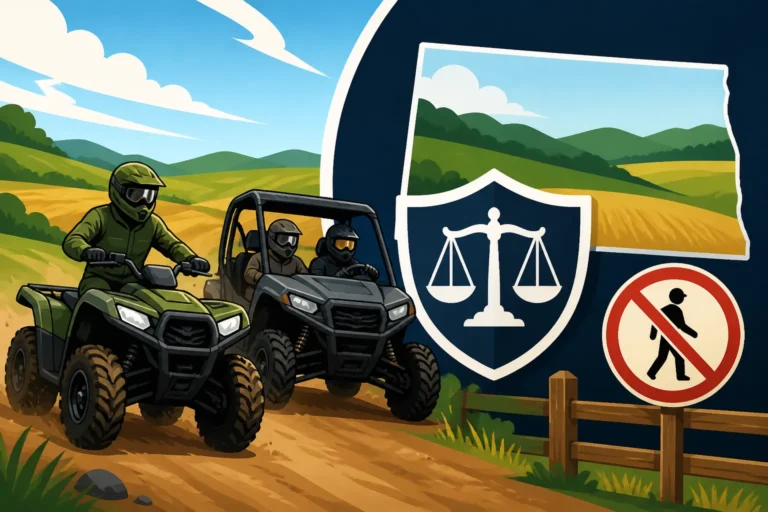
Even if you have an unwritten agreement with a neighbor to cross their property to get to your landlocked field, always get it in writing. This is crucial. North Dakota's trespass laws are clear: you need permission to be on private land. While many rural communities have a handshake agreement culture, written permission protects both you and the landowner. Imagine a new owner takes over, or there's a misunderstanding – having a signed document, even a simple one, outlining what you're allowed to do and where, can prevent serious issues. This is especially true if you’re using heavy-duty tires from SuperATV that might leave a deeper impression on softer ground, as the landowner needs to be aware of and consent to such use. This applies not only to crossing fields but also to using access roads or pathways that might technically be on their deeded property. A good practice is to carry this written permission with you whenever you're operating on land that isn't solely your own.
Section Line Rights vs. Landowner Discretion
Section lines in North Dakota are often seen as public access points, and while there's some truth to that, it's not an absolute right to roam. Generally, section lines are considered public rights-of-way, meaning you can often travel along them. However, they are typically limited to the width of a roadway, usually 66 feet, and this right is primarily for public travel, not necessarily for off-road recreation. When using a section line to access a field, you are generally within your rights to do so, but you must stay within the legal width of the right-of-way and respect any adjacent private property.
Here's where it gets tricky: A landowner can post a section line if it's entirely enclosed by fences or contains a dwelling. If the section line has gates, you're expected to close them behind you. Also, be incredibly mindful of the actual conditions. While you have a right to travel a section line, if your passage causes damage (e.g., rutting a wet area, damaging crops that might extend into the right-of-way), you could still be liable. Always exercise common sense and courtesy. If you're unsure, or if a section line appears to be actively used as part of a field or pasture, it's always best to ask the adjacent landowner for explicit permission. Sometimes, a quick chat with your neighbor can prevent a major headache. You can learn more about this nuanced area by looking up [North Dakota Section Line Rights in Practice].
Here's a quick reference table for road types and typical OHV use for agricultural access:
| Road Type | General OHV Rule (Non-Farm) | Farm Use Exception (Transitory Operation) | Key Conditions/Considerations |
|---|---|---|---|
| Interstates | Prohibited | NO EXCEPTION | Strictly forbidden. |
| Paved Roads | Prohibited (unless posted) | YES | Must meet equipment regs; Class III for >55 mph roads; most direct/practical route only; stay right. |
| Gravel Roads | Allowed (if registered) | YES | Must meet equipment regs; Class I/II must be 350cc+; yield to traffic; mind dust. |
| Ditch Bottoms/Back-slopes | Allowed (if registered) | YES | Preferred for safety; avoid inslope/shoulder unless obstruction; follow general OHV rules. |
| Section Lines | Generally allowed (as right-of-way) | YES | Stay within 66 ft width; respect posted/gated areas; avoid damage; explicit permission for crossing fields. |
Common Misconceptions and Avoiding Penalties
Operating an OHV for farm use in North Dakota can feel like navigating a minefield of "should I, shouldn't I?" decisions. There are a lot of unspoken assumptions and local customs that might not align with the actual letter of the law. Understanding these common pitfalls can save you from unexpected fines or confrontations with law enforcement.
The "Anything Goes on Rural Roads" Myth
This is perhaps the biggest misconception out there, especially in sparsely populated areas. Just because a road is rural, gravel, or rarely traveled doesn't mean it's an OHV free-for-all. North Dakota's traffic laws and OHV regulations still apply. This means speed limits, rules of the road, and equipment requirements are generally still in effect, even if you rarely see an officer. The "farm use" exception is specific and conditional; it's not a blanket waiver for operating an unregistered, unequipped machine or riding carelessly. Ignoring basic rules like proper lighting at dusk or dawn, or carrying an open container, can still lead to a citation, regardless of your destination being a field. The best approach is to assume standard road rules apply unless a specific, written exception (like transitory farm operation) explicitly states otherwise. Keep your registration current; information on that is available in [North Dakota's Two-Year OHV Registration].
Understanding Your Machine's Classification
North Dakota classifies OHVs into three categories: Class I (ATVs), Class II (Side-by-Sides/UTVs generally wider than ATVs), and Class III (larger UTVs often with steering wheels and automotive controls, and potentially higher speed capabilities). The rules for road access, especially on paved roads, can vary based on your machine's classification. For instance, a Class I ATV might be restricted from certain paved roads where a Class III UTV, due to its design and speed capability, might be allowed under the farm-use exception. Many farmers appreciate the utility of a larger UTV from a company like SuperATV for hauling feed or tools, but they need to be aware that even these robust machines still fall under specific classification rules. Knowing if your machine is a Class I, II, or III is important for understanding what you can and can't do on different road types. For a deeper dive into these classifications, you might want to review [North Dakota Class I Machines Defined].
What an Officer Might Ask to See
If you're stopped by law enforcement while riding your OHV to a field, being prepared can make the encounter much smoother. An officer will likely want to verify several things:
- Registration: Your OHV must be registered with the North Dakota Department of Transportation, even if primarily for farm use. This typically means you'll have a valid decal or plate. If you're using a machine with tracks, such as a tracked dirt bike, there may be an additional permit required.
- Proof of Ownership: This could be your title or registration document.
- Proof of Insurance: While North Dakota doesn't generally mandate insurance for all OHV operations, if you're venturing onto public roadways, having liability insurance is a very smart idea, and some local ordinances might require it. Check [North Dakota Insurance Requirements at Registration] for more context.
- Valid Driver's License: If you're operating on a public roadway, you typically need a valid driver's license.
- Equipment Compliance: The officer may do a quick check to ensure your machine has the required headlamps, taillamps, mirrors, horn, etc., for road travel.
- Reason for Travel: Be prepared to clearly articulate that your travel is for a legitimate agricultural purpose and that the route chosen is the most direct and practical way to access your field or farm property.
Having all your documentation readily available and your machine properly equipped demonstrates responsibility and a clear understanding of the law, which can go a long way in ensuring a positive interaction.
Disclaimer
This article is for general informational purposes only and does not constitute professional advice. Laws, prices and regulations vary by location and change over time. Consult a qualified professional for guidance on your specific situation.