Reading the Two Charges on Your Registration Receipt
It's incredibly frustrating when you get a government receipt that looks like a jumble of numbers, and you're left wondering exactly what you've paid for and why. Many North Dakota ATV and UTV owners find themselves scratching their heads when they see two distinct charges on their registration receipt. This guide is here to unravel that mystery, explaining clearly what each charge covers and why it matters for your off-highway vehicle adventures across our beautiful state.
Unpacking Your North Dakota OHV Registration Receipt
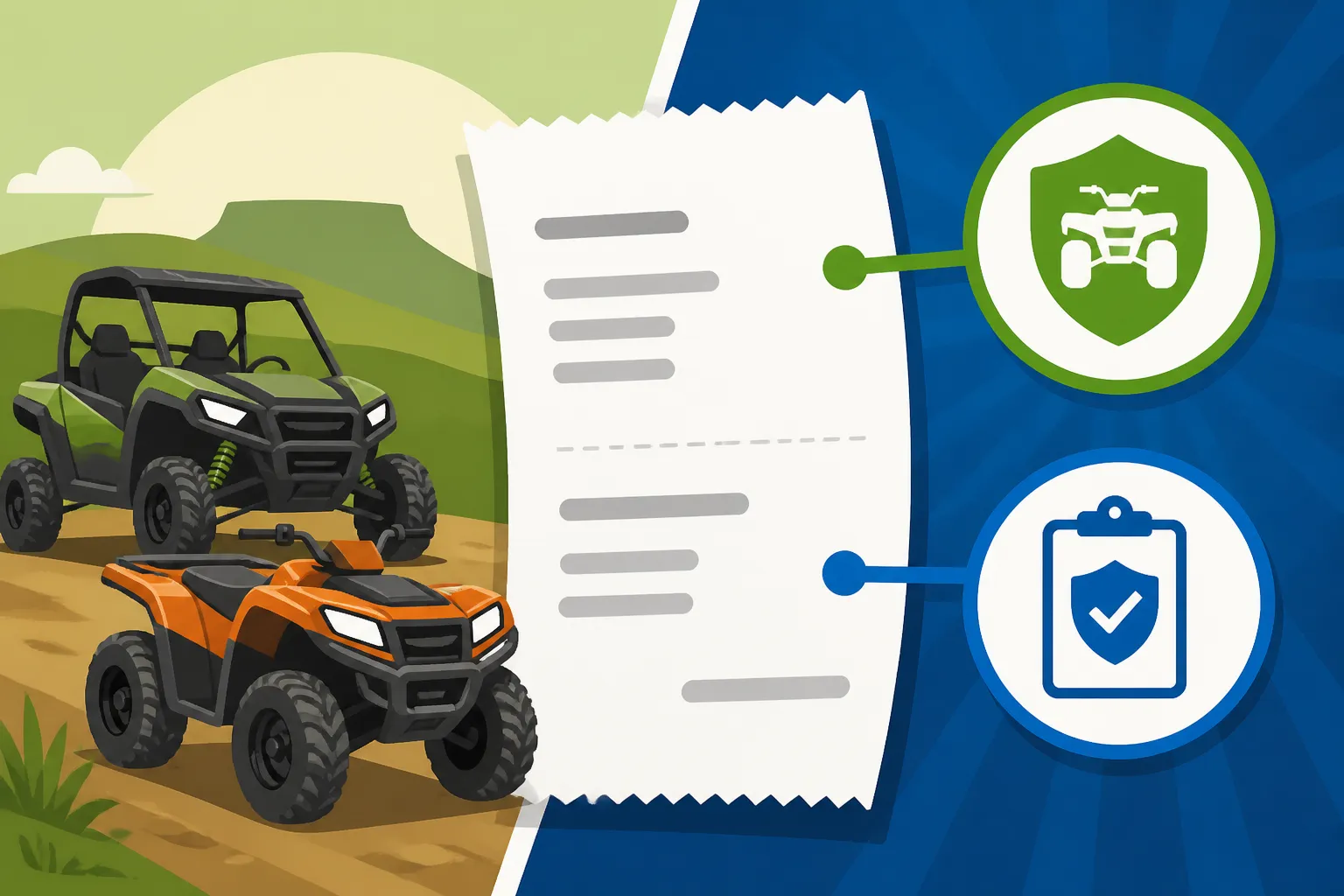
When you shell out your hard-earned cash to register your ATV or UTV in North Dakota, you're not just getting one simple charge. There are actually two separate components that come together to form your total registration fee, and understanding each one is key to knowing where your money goes. It’s easy to assume it’s all one big bucket, but the state actually earmarks these funds for very specific purposes.
The Core Registration Fee: What It Covers
Let's start with the first, and often smaller, portion of your registration bill: the core registration fee itself. This is the fee directly associated with getting your specific off-highway vehicle (OHV) officially recorded with the North Dakota Department of Transportation (NDDOT). Think of it as the administrative cost for the state to maintain a record of your machine, assign you an official identifier (be it a plate or a decal), and track its ownership. This fee helps cover the overhead involved in processing paperwork, issuing documentation, and keeping the system running smoothly.
For instance, when you complete the necessary forms and submit them, this fee is what pays for the time and resources it takes to enter your details into the state's database, print your registration card, and prepare your [North Dakota OHV Plate or Decal: Your Choice]. It's essentially the cost of being "on the books." The good news is that this isn't an annual expense; North Dakota operates on a [North Dakota's Two-Year OHV Registration] cycle, so you'll only pay this particular fee every other year. This core fee is about legal compliance and tracking, ensuring that every machine legally operating in North Dakota is accounted for.
The North Dakota Off-Highway Trail Tax: Funding Your Adventures
Now for the second, and perhaps more impactful, charge: the North Dakota Off-Highway Trail Tax. This isn't just another tax; it's a dedicated contribution from OHV enthusiasts like you, designed specifically to benefit the very activity you love. Unlike the administrative registration fee, the trail tax is directly funneled into improving and maintaining North Dakota's OHV riding opportunities.
Imagine hitting the trails at Pembina Gorge or exploring the Roughrider OHV Trail – the trail tax is what helps make those experiences possible. This money goes towards things like developing new trails, maintaining existing ones, signage, infrastructure (like parking areas and restrooms at trailheads), and even enforcing regulations to ensure safe and responsible riding for everyone. It's a user-funded program, meaning the riders themselves are directly supporting the future of OHV recreation in the state. If you've ever wondered [Where the Trail Tax Actually Goes], it's primarily to these essential efforts, managed by the North Dakota Parks and Recreation Department. This is why many riders view it not as just another fee, but as an investment in their passion.
Why Two Agencies Split One Fee
It might seem a bit convoluted to have two separate charges for essentially the same "registration" process, especially when they contribute to your ability to ride legally. However, there's a practical reason behind it: the division of responsibilities among state agencies. In North Dakota, the Department of Transportation (NDDOT) is generally responsible for vehicle titling and registration across the board, including OHVs. They handle the legal ownership records and the administrative aspects of getting your machine on the state's registry.
On the other hand, recreational activities, trail development, and outdoor management often fall under the purview of the North Dakota Parks and Recreation Department. They are the experts in identifying suitable lands, designing safe trails, and overseeing the maintenance required to keep these areas rideable. So, when you pay your OHV registration, the core fee goes to the NDDOT for administrative purposes, and the trail tax is channeled directly to Parks and Recreation to fund the actual trail systems. This division ensures that each agency can focus on its core competencies while still working together to support the OHV community. Understanding [Why Two Agencies Split One Fee] helps clarify that it's not a bureaucratic hurdle, but a division of labor for efficient management.
Breaking Down the Costs: Registration vs. Trail Tax
Knowing that your registration receipt isn't just one lump sum, but rather a combination of two distinct charges, can help you budget and understand your responsibilities as an OHV owner in North Dakota. It's not just about adding up numbers; it's about understanding the value and purpose behind each one.
The Standard Costs You'll See
For most OHV owners in North Dakota, the two charges you’ll routinely see on your registration receipt are pretty straightforward. The administrative registration fee is a nominal amount, while the trail tax makes up the larger portion of your bi-annual payment. Currently, many owners find that they are charged a basic $5 registration fee, alongside a $15 off-highway trail tax. This combines for a total of $20 for a two-year registration cycle. It's outlined clearly in phrases like [North Dakota Charges $5 Registration Plus $15 Trail Tax], confirming these specific amounts.
It's crucial to remember that this $20 total covers your operating privilege for a full two years. This is part of the state's [North Dakota's Two-Year Registration Cycle], which helps to reduce the frequency of paperwork for owners. These charges are separate from other costs you might incur when first acquiring your machine, such as the initial [North Dakota Title Fee of $5] or the [North Dakota's 5 Percent Motor Vehicle Excise Tax] you pay on the purchase price. When you're dealing with private sales or even just organizing your paperwork, keeping track of these different types of fees is essential. Tools like LawDepot can be incredibly helpful for drafting a clear bill of sale or other legal documents, which can itemize the purchase price and ensure that you understand what you've agreed to before you even get to the state registration fees. While LawDepot streamlines the private transaction, the state's registration fees and trail tax are separate, mandatory payments to the government.
Beyond the Basics: Other Potential Fees
While the $5 registration fee and $15 trail tax are the main charges you’ll find directly on your biennial registration receipt, it's important to remember that other related costs might pop up during your ownership journey. These aren't usually integrated into that single registration receipt, but they are part of the overall financial picture of owning and operating an OHV in North Dakota.
For instance, if you decide to personalize your OHV with a custom plate, that comes with an additional charge separate from the standard registration. There's a specific fee for [North Dakota Personalized OHV Plates at $25], which is paid when you order them. Similarly, if you own a specific type of machine, like a tracked dirt bike, you might need a special permit with its own cost. The [North Dakota Tracked Dirt Bike Permit at $25] is a prime example of an additional fee for a particular type of riding, not integrated into the standard OHV registration payment. These are typically handled as separate transactions or add-ons. It's always a good idea to factor in all potential expenses when you're budgeting for your OHV, from the initial purchase and excise tax to ongoing registration, special permits, and any personalized touches. These separate charges help clarify that not every fee related to your OHV ends up on the same piece of paper, but they all contribute to the overall [North Dakota OHV Registration Cost] when you consider all associated expenses. Some machines might even qualify for [North Dakota Registration Exemptions Explained], which means you might not even owe these fees if your use case falls under one of those categories.
Understanding Your Obligation and Benefits
Deciphering the charges on your registration receipt isn't just an exercise in accounting; it's about understanding your role as an OHV owner in North Dakota. Each payment carries a specific purpose, offering both legal compliance and tangible benefits to the riding community.
What These Charges Mean for You as an Owner
When you pay both the core registration fee and the off-highway trail tax, you're not just complying with state law; you're actively participating in and supporting the OHV ecosystem in North Dakota. The registration fee solidifies your legal ownership and permission to operate the machine in the state. This legal recognition is incredibly valuable, providing a clear chain of custody should your machine ever be stolen, or if you need to prove ownership for other legal matters. In situations where you might be selling your OHV, having clear, current registration records makes the transfer process much smoother, especially if you're utilizing services like LawDepot for a robust bill of sale or other transfer documents. These legal templates, combined with official state registration, provide peace of mind for both buyer and seller.
The trail tax, on the other hand, directly translates into more and better places for you to ride. It’s a collective fund that improves the quality of trails, ensures they are well-maintained, and helps expand the network of accessible areas. Without this tax, the development and upkeep of dedicated OHV trails would likely fall short, leading to fewer opportunities for enthusiasts. So, when you pay these two charges, you're investing in both the legal standing of your machine and the future enjoyment of your sport.
Avoiding Confusion and Planning Ahead
To avoid any future confusion and to ensure a smooth ownership experience, it’s always a good practice to keep your registration receipt handy and understand what each line item signifies. Knowing that one portion is administrative and the other is for trail development can help you appreciate where your money is going. As laws and fees can occasionally be adjusted, it’s always wise to check the official North Dakota Department of Transportation or Parks and Recreation websites for the most current information regarding fees and regulations.
When you're acquiring an OHV, especially through a private sale, make sure all the financial aspects are crystal clear. While a service like LawDepot can provide excellent legal templates for a bill of sale or transfer of ownership, these documents will detail the price of the machine itself. The state's registration fees and trail tax are a separate, subsequent step you'll handle with the NDDOT. Having a clear understanding of these distinct categories of costs from the outset will prevent surprises. Whether you're a seasoned rider or new to the North Dakota OHV scene, being informed about your [North Dakota OHV Registration Cost] and what each part means is a vital step toward responsible and enjoyable riding.
| Charge Type | Amount (2-year cycle) | Purpose | Administering Agency |
|---|---|---|---|
| Core Registration Fee | $5 | To register the OHV, track ownership, and administrative costs. | North Dakota Department of Transportation (NDDOT) |
| Off-Highway Trail Tax | $15 | To fund OHV trail development, maintenance, signage, and infrastructure. | North Dakota Parks and Recreation Department |
Disclaimer
This article is for general informational purposes only and does not constitute professional advice. Laws, prices and regulations vary by location and change over time. Consult a qualified professional for guidance on your specific situation.