Never Registering a North Dakota Machine
It’s easy to feel overwhelmed by all the paperwork, fees, and rules that come with owning an off-highway vehicle (OHV) in North Dakota. Many riders often wonder if they truly need to register their ATV or UTV, especially if they only plan to use it in very specific situations. This comprehensive guide is here to cut through the confusion and explain exactly when you can legally get away with never registering your North Dakota machine, and what the potential pitfalls are if you misinterpret the rules.
Understanding North Dakota's OHV Registration Law
Before diving into the exceptions, it's crucial to grasp the general rule. North Dakota, like many states, has established regulations to ensure that off-highway vehicles are accounted for, their owners are identifiable, and funds are collected to maintain riding areas. This isn't just bureaucracy; it's about safety, trail funding, and accountability.
The General Rule for North Dakota Riders
Most of the time, if you own an off-highway vehicle in North Dakota and you plan to operate it on any public land, including designated trails, ditches, or even across a paved road, you are required to register it. This registration process helps the state track OHVs, ensures a baseline understanding of ownership, and, importantly, contributes to the funding of the state’s OHV program through fees like the trail tax. For many casual riders or those new to the sport, heading to the local motor vehicle branch is just part of the process before they can hit the trail. Ignoring this step can lead to unexpected fines and a major headache if you’re stopped by law enforcement.
It’s about making sure everyone is playing by the same rules for the greater good of the riding community. The fees collected from registration contribute directly to maintaining the very trails and public lands you might want to enjoy. Think of it as your small contribution to keep the sport alive and accessible for everyone. For more details on the general requirements, you might want to check out [What North Dakota's OHV Law Requires of Owners].
What Counts as an "Off-Highway Vehicle" in North Dakota
North Dakota's legal definition of an off-highway vehicle is pretty broad, encompassing a range of machines that you might casually refer to as ATVs, UTVs, side-by-sides, or dirt bikes. Specifically, the law looks at vehicles that are designed for off-highway use and not primarily for travel on public highways. This includes any motorized vehicle that has a seat or seats for the rider and passengers, is designed to travel on land and not on rails, is propelled by an engine, and has either two, three, or four wheels.
The key here is "designed for off-highway use." This often means features like knobby tires, high ground clearance, and suspension systems built for rugged terrain, rather than smooth asphalt. It's not about how you use it, but how it was designed to be used. For instance, a quad built for tearing up mud bogs is definitely an OHV. A golf cart, typically, is not, unless it’s specifically modified and intended for rugged terrain. Knowing if your machine fits this definition is the first step in understanding if registration applies to you. If you're curious about the specifics, you can always look into [North Dakota Class I Machines Defined] and other class definitions to see where your machine fits.
Specific Exemptions: When Registration Isn't Required
Now for the exciting part for those looking to avoid the registration queue. North Dakota law provides several specific scenarios where an OHV is exempt from registration. These aren't loopholes; they are carefully defined circumstances where the state has determined that the usual requirements don't apply.
Riding Exclusively on Private Land
This is arguably the most common and significant exemption that allows a North Dakota resident to never register their OHV. If your ATV, UTV, or dirt bike never leaves private property—meaning it's confined to land you own, land your family owns, or private land where you have explicit permission to ride—then it does not need to be registered with the state. This means if you have a sprawling ranch where you only use your side-by-side for chores or recreation within your own fence lines, you're likely in the clear.
The operative word here is "exclusively." The moment one tire touches a public road, ditch, or designated trail, even if it's just to cross over to another section of your property, the exemption typically no longer applies, and you'd need registration. Many landowners enjoy their machines without the hassle of yearly renewals because they meticulously keep them off public access points. This exemption is a huge benefit for those living in rural areas with ample acreage. For a deeper dive into this specific rule, check out [North Dakota Private Land Only Exemption].
Machines Used in Organized Track Racing
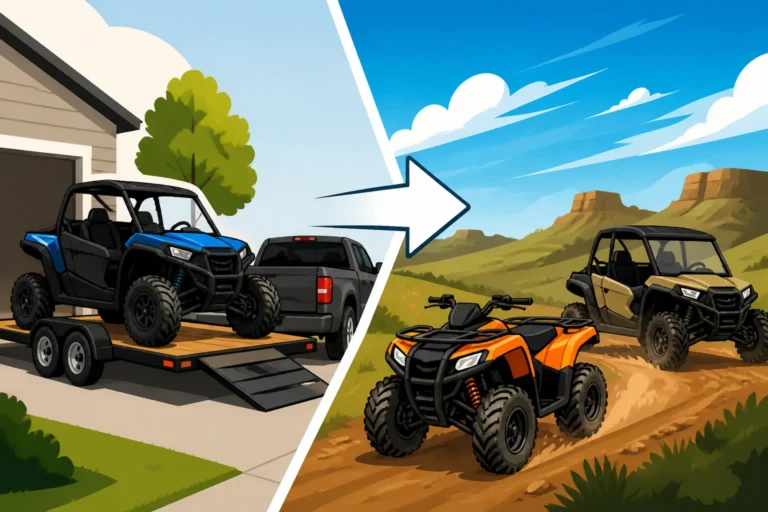
Another distinct exemption is for off-highway vehicles that are used exclusively in organized track racing events. Imagine a dedicated dirt bike track or an ATV race course where machines are transported to the site and only operate within the confines of the facility for competition purposes. These machines are purpose-built for racing and are not intended for general recreational riding on public lands or roads.
The logic behind this is that these machines operate in a controlled environment, often with their own specific event rules, safety protocols, and insurance requirements that differ from typical public land riding. They aren't contributing to wear and tear on public trails, nor are they typically involved in the kind of casual use that benefits from general registration and trail tax funding. If you're a serious racer whose machine only sees the inside of a trailer and a race track, then you can likely skip registration. You can learn more about this specialized exemption here: [North Dakota Track Racing Exemption].
Government-Owned Machines
This one is fairly straightforward. Off-highway vehicles that are owned by the United States government, the State of North Dakota, or any political subdivision (like a county or city) are generally exempt from registration. These machines are used for official purposes, such as law enforcement, park maintenance, emergency services, or other governmental functions.
For example, a UTV used by a state park ranger for patrols or trail maintenance wouldn't require a state registration decal. Similarly, an ATV utilized by a county sheriff's department for search and rescue operations would fall under this umbrella. Their operational context and public service function negate the need for the standard registration process applied to private citizens. It’s an administrative distinction to recognize their public purpose. The details are usually outlined in [North Dakota Government-Owned Machine Exemption].
Temporary Out-of-State Visitors
If you're visiting North Dakota from another state and bring your registered OHV with you, you often won't need to get a North Dakota registration. The state offers an exemption for non-residents, allowing them to operate their machines for a limited period, typically up to 30 consecutive days, as long as their machine is properly registered in their home state. This is a common courtesy between states, allowing tourists to enjoy North Dakota's riding opportunities without having to go through a full registration process for a short visit.
However, the "consecutive days" part is crucial. If you decide to extend your stay or spend more than 30 days riding within North Dakota, you would then be required to register your OHV in North Dakota. It's designed for genuine visitors, not those who effectively move their riding operations to the state for an extended period. Always make sure you have proof of your home-state registration readily available when riding. For more on this, check out [North Dakota's 30-Day Out-of-State Rule].
Machines Held for Resale by Dealers
Another key exemption applies to dealerships. If an OHV is part of a dealer's inventory and is held solely for the purpose of sale, it does not need to be registered. This prevents dealers from having to register every single new or used machine on their lot before it's sold to a customer. Once the machine is purchased, the new owner then becomes responsible for registering it (unless one of the other exemptions applies to them).
This exemption is primarily administrative, allowing the commercial flow of vehicles without unnecessary burdens on businesses. Dealers will often have specific dealer plates or other temporary permits for demonstration rides or transport, but these are distinct from full consumer registration. This is generally covered under commercial vehicle regulations.
The Risks of Avoiding Registration When It's Required
While knowing the exemptions is important, it's equally critical to understand the consequences if you should have registered your machine but chose not to. Thinking you can simply skirt the rules can lead to far more trouble than the registration fee itself.
Penalties for Riding Unregistered
If you're caught riding an OHV on public land in North Dakota that should have been registered but isn't, you're likely facing a citation. The specific penalties can vary, but generally, operating an unregistered OHV is a misdemeanor offense. This isn't just a slap on the wrist; it can come with fines that far exceed the cost of registration, and potentially even court costs.
Imagine planning a fun weekend ride with friends, only to have it cut short by a law enforcement officer who spots your lack of a current registration decal. Not only will your ride be over, but you could be looking at hundreds of dollars in fines, and the embarrassment of having your machine potentially impounded. It’s a completely avoidable situation that takes away from the enjoyment of the sport. Don't let a small oversight turn into a major legal hassle. Details on specific penalties are often found in resources like [North Dakota Penalties for Riding Unregistered].
Insurance Implications for Unregistered OHVs
Beyond the legal penalties, operating an unregistered OHV when it should be registered can have significant ramifications for your insurance coverage. Most insurance policies require that the vehicle be legally operated according to state laws. If you're involved in an accident while riding an unregistered OHV on public land, your insurance company could deny coverage based on a breach of policy terms.
This means you could be personally responsible for property damage to your own machine, damage to other vehicles or property, and, critically, medical bills for injuries to yourself or others. The financial burden could be catastrophic. Even if you only ride on private land (where registration isn't required), having proper insurance is a smart move. But once you venture onto public lands, ensuring your machine is legally registered is a crucial step in maintaining your insurance validity. Always review your policy and local laws to be sure.
Loss of Trail Access and Public Riding Opportunities
One of the most immediate and practical consequences of not registering your OHV when it's required is the denial of access to North Dakota's fantastic public riding areas. Designated trails, state parks, and public lands are typically open only to properly registered machines. The registration fees, particularly the trail tax component, directly fund the creation and maintenance of these very resources.
By not registering, you're not only breaking the law but also missing out on the vast majority of regulated and maintained riding spots. You won't be able to enjoy the beautiful scenery of Pembina Gorge, the challenge of the Roughrider OHV Trail, or the open play areas of Kimball Bottoms. These opportunities are significant, and deliberately opting out of registration means opting out of these experiences. If you intend to ride on any of North Dakota’s public trails or ditches, getting your machine registered is a non-negotiable first step. Take a look at [North Dakota Registration Before Your First Ride] to ensure you're ready for legal riding.
Proof of Ownership Without Registration (For Exempt Machines)
Even if your OHV never needs to be registered because it falls under an exemption, you still need solid proof of ownership. This isn't just about proving it's yours if questioned; it's essential for future sales, inheritance, or dealing with any disputes.
Maintaining a Solid Paper Trail
Whether your machine is registered or not, a meticulous paper trail is your best friend. This means keeping all purchase receipts, sales agreements, and any transfer documents in a safe and accessible place. Think of it as your OHV's life story documented on paper. This is especially important for exempt machines because they won't have the official state registration records to back up your claim of ownership.
This paper trail isn't just a stack of loose papers. It means having organized, clear documents. If you bought your machine new, keep the manufacturer's statement of origin (MSO) or certificate of origin (MCO). If you bought it used, the bill of sale from the previous owner is critical. Without these, if your machine is ever stolen, lost, or needs to be sold, you could face significant hurdles proving it's yours.
The Role of a Bill of Sale in North Dakota
For an OHV that never gets registered, a well-executed bill of sale is paramount. This document serves as the legal record of transfer of ownership from one party to another. It should clearly identify the buyer and seller, the machine (make, model, year, VIN), the purchase price, and the date of sale. Both parties should sign it, and it's always a good idea to have it notarized for added legal weight, even if not always strictly required by state law.
A robust bill of sale can prevent disputes down the line, especially if you ever decide to sell the machine. If you're looking for a template, resources like LawDepot offer customizable bill of sale forms that can be tailored to include all the necessary details for an OHV transaction in North Dakota. This ensures that even without a state-issued registration, the chain of ownership is clear and verifiable. For the specific form, refer to [North Dakota Bill of Sale Form SFN 2888].
Statement of Ownership for Older Machines
Sometimes, you might acquire an older OHV that has never been registered and perhaps the original bill of sale has been lost over time. In these situations, especially if you're the one who needs to establish ownership after years of use on private land, a Statement of Ownership might become necessary. This is a sworn document where you attest to your ownership of the machine, detailing how and when you acquired it, and any attempts made to locate previous owners or documentation.
This form is typically used when you cannot provide the usual chain of title or bill of sale, and it requires a strong declaration under penalty of perjury. While not a substitute for a bill of sale, it can be a critical piece of documentation for machines that have been in families for generations or were acquired under less formal circumstances, and which still meet a registration exemption. You can find more information about [North Dakota Statement of Ownership Form SFN 2903] and when it's appropriate to use.
Why a Title is Still Good Practice (Even if Not Always Required)
While this article focuses on when you can never register a machine, it's worth briefly mentioning titles. In North Dakota, titling and registration are distinct processes, though often done concurrently. Even if your OHV is exempt from registration (e.g., used only on private land), it might still be advisable to obtain a title. A title is the ultimate proof of ownership; it's like the deed to your house. It tracks the legal owner and any liens against the machine.
Having a title, even for an exempt OHV, significantly simplifies future sales, proving legal ownership, and often makes it easier to obtain insurance. If you ever decide to sell the machine to someone who will need to register it for public land use, having a clean title makes the transaction much smoother for them, potentially increasing your resale value. While you might not need to register it, considering the long-term benefits of a title, as outlined in guides like [Titling an ATV in North Dakota], is a wise move for any OHV owner.
| Scenario | Registration Required? | Key Condition(s) | Proof of Ownership Needed? |
|---|---|---|---|
| Public Land / Trails / Ditches | Yes | Any use on public access ways | Yes (Registration + Title) |
| Exclusively Private Land | No | Never leaves private property | Yes (Bill of Sale, MSO/MCO) |
| Organized Track Racing | No | Used only in dedicated racing events on track | Yes (Bill of Sale, MSO/MCO) |
| Government Owned | No | Owned by U.S., State, or political subdivision | Yes (Agency records) |
| Out-of-State Visitor | No (for 30 days) | Properly registered in home state; under 30 days stay | Yes (Home-state registration) |
| Dealer Inventory for Resale | No | Held solely for sale by a licensed dealer | Yes (Dealer inventory records) |
Disclaimer
This article is for general informational purposes only and does not constitute professional advice. Laws, prices and regulations vary by location and change over time. Consult a qualified professional for guidance on your specific situation.