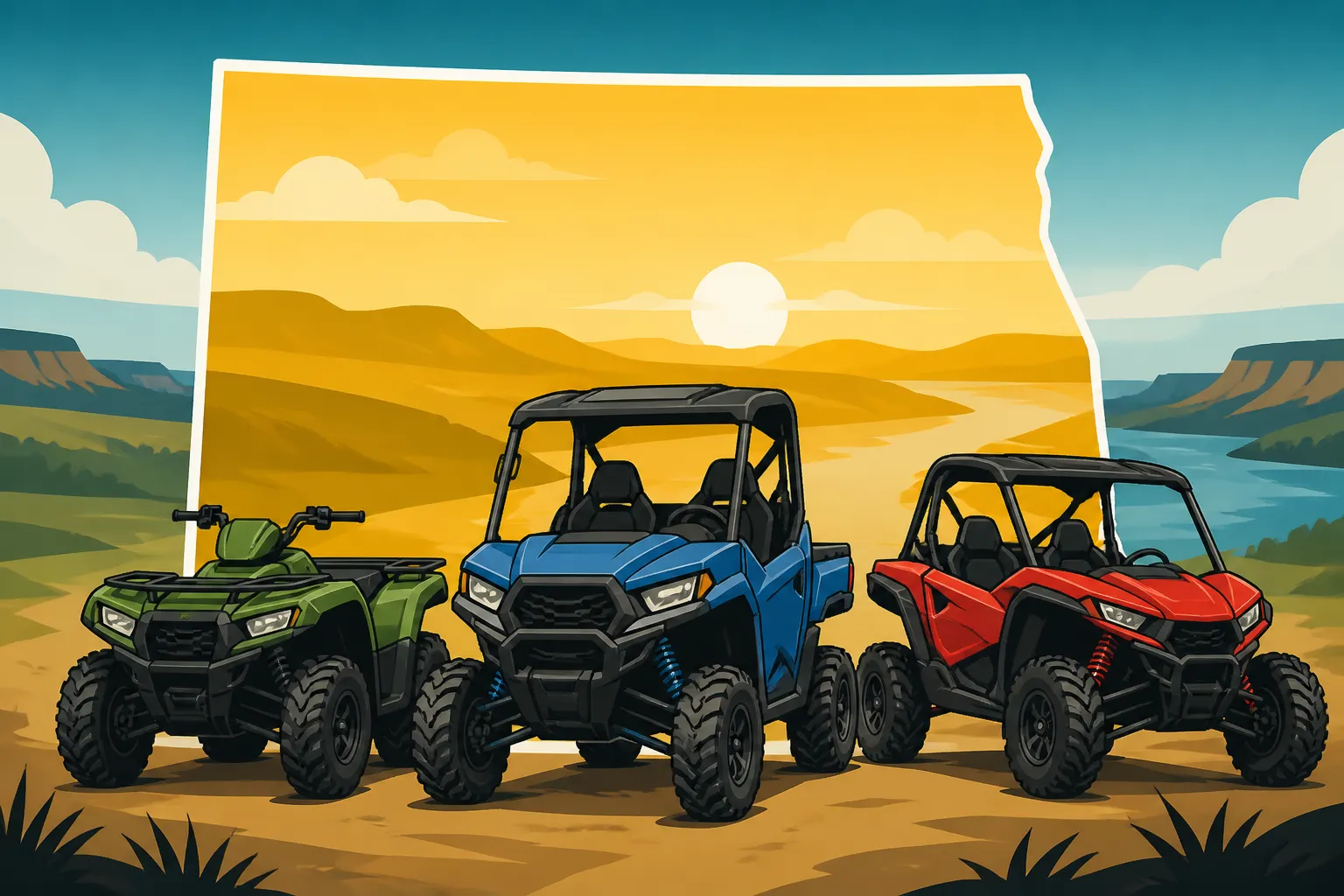
North Dakota’s Class I, II and III Machines
Many folks in North Dakota love getting out on their ATVs and UTVs, whether it's for work on the farm, a hunting trip, or just some exhilarating trail riding. But before you hit the dirt, there's a crucial piece of the puzzle that often causes a lot of head-scratching: understanding how North Dakota classifies off-highway vehicles (OHVs). It's not just bureaucratic jargon; these classifications—Class I, II, and III—directly impact how you register your machine, where you can legally ride it, and what equipment you might need. This comprehensive guide will demystify North Dakota's OHV classification system, ensuring you can confidently identify your machine's class and understand all that entails for a compliant and enjoyable riding experience.
Understanding North Dakota's OHV Classification System
Navigating the world of off-highway vehicles in North Dakota means understanding a specific set of definitions laid out in state law. These aren't just arbitrary labels; they are fundamental to how your machine is treated from a legal standpoint, influencing everything from registration to where you can legally operate it. Getting a grip on these classifications is the first step toward responsible and enjoyable OHV ownership in the Roughrider State.
Why Classifications Matter for Riders
For any OHV enthusiast, knowing your machine's classification is paramount to staying on the right side of the law. Operating an OHV without understanding its class can lead to misunderstandings with law enforcement, potential fines, and even a spoiled day of riding. It’s about more than just having a shiny [North Dakota OHV Plate or Decal: Your Choice]; it's about being informed and compliant with the specific regulations that apply to your vehicle type.
Beyond avoiding penalties, these classifications often dictate practical aspects of riding. For example, some public OHV trails have specific width restrictions, which directly relates to whether your machine falls into Class I, II, or III. Similarly, the rules for riding in ditch bottoms or on certain public roads can vary subtly based on the type of OHV you're operating. Understanding your class helps you choose appropriate riding areas and prevents you from unknowingly trespassing or violating local ordinances.
Moreover, knowing your OHV's classification can influence decisions even before you buy a machine or apply for insurance. When you're shopping, especially for a used vehicle, verifying its classification can help you anticipate future registration costs, potential trail access limitations, and even insurance premiums. It ensures you're making an informed purchase that aligns with your intended use and the specific regulations you'll encounter.
The Core Differences at a Glance
North Dakota's classification system primarily distinguishes OHVs based on seating arrangement, steering mechanism, and in some cases, width and weight. These factors aren't just minor details; they fundamentally define the design, capability, and intended use of the machine. The state's definitions aim to create clear categories for diverse types of off-highway vehicles, from traditional quads to large, multi-passenger side-by-sides.
The main distinguishing factors boil down to whether you straddle a seat or sit in a non-straddle seat, and whether you use handlebars or a steering wheel. For larger machines, width and weight limits further refine the categories, particularly for Class II and Class III vehicles. These distinctions are rooted in the physical design and operational characteristics that impact safety, maneuverability, and environmental impact.
It’s important to remember that these definitions are not left to individual interpretation. They are clearly enshrined in North Dakota Century Code, making them the definitive guide for riders, dealers, and law enforcement alike. Familiarizing yourself with these statutory definitions is key to accurately classifying your machine and ensuring you adhere to all applicable state laws and local regulations, whether you're navigating a remote trail or simply transporting your machine to a riding spot.
Diving Deep into Class I Machines
When most people think of an "ATV," they're likely picturing a North Dakota Class I machine. These are the workhorses and recreational favorites that have been around for decades, known for their versatility and active riding style. Understanding the specific legal definition of a Class I machine is crucial for anyone who owns or plans to purchase one.
Defining the "Straddle Seat" Experience
North Dakota defines a Class I off-highway vehicle as one "having a seat or seats to be straddled by the operator and any passenger." This is the quintessential characteristic: you sit on it, not in it. Think of it like a motorcycle, but with four wheels. The rider's legs are typically on either side of the machine, giving them a more direct connection to its movements and handling.
These machines are almost universally equipped with handlebars for steering, and foot pegs for the operator and often for a passenger, too. The control input is very physical; riders use their body weight, handlebar input, and throttle/brake controls to maneuver. This active riding style is a hallmark of Class I machines, allowing for dynamic weight shifting and precise control on varied terrain.
The "straddle seat" design is not just about comfort; it's fundamental to the machine's operational characteristics. This seating arrangement contributes to the nimble and often aggressive riding posture associated with traditional ATVs. This clear definition helps distinguish Class I machines from their side-by-side counterparts, ensuring that specific rules and regulations tailored to this type of vehicle are applied correctly. You can delve deeper into the exact wording in [North Dakota Class I Machines Defined].
Common Examples and Their Uses
Class I machines encompass the vast majority of traditional all-terrain vehicles (ATVs) found across North Dakota. Brands like Polaris with their Sportsman line, Honda's Foreman and Rancher models, Yamaha Grizzly, and Kawasaki Brute Force are all prime examples of Class I machines. Whether they are designed for utility, sport, or a combination of both, if you straddle the seat, it's Class I.
These machines are incredibly versatile and are used for a wide array of tasks and recreational pursuits in North Dakota. Hunters often rely on them to access remote hunting blinds or retrieve game from challenging terrain. Farmers and ranchers utilize them for checking fences, herding livestock, or transporting small equipment across their property. They are also popular for trail riding, ice fishing, and even plowing snow from driveways and private roads during the harsh prairie winters.
Consider a typical scenario: you're a rancher in southwestern North Dakota, and you use your trusty Honda Foreman 4×4 to patrol miles of pasture, check on cattle, and carry tools for fence repair. Your machine, designed with a straddle seat, falls squarely into Class I. This means you need to ensure it's properly registered, but also understand any specific rules about operating it on public roadways or [North Dakota Ditch Riding: The Legal Right Explained] when transitioning between fields or accessing remote parts of your property. Knowledge of its classification helps you navigate these regulations with confidence.
Exploring North Dakota's Class II Machines
As OHV technology advanced, a new category of off-road vehicles emerged, offering a different riding experience that quickly gained popularity: the side-by-side or utility terrain vehicle (UTV). These machines are generally classified as Class II in North Dakota, distinguished by their car-like features and specific size limitations.
The "Non-Straddle Seat" and Steering Wheel
North Dakota defines a Class II off-highway vehicle as one "designed to be operated by a driver and one or more passengers, with a non-straddle seat and a steering wheel." This is the key difference from a Class I ATV: riders sit in the vehicle, much like a car, rather than straddling a seat. The seating typically resembles bench seats or bucket seats, and passengers sit side-by-side, hence the common moniker "side-by-side."
Instead of handlebars, Class II machines are equipped with a steering wheel, providing a more familiar automotive-style control experience for many operators. They also often feature safety equipment like roll-over protection structures (ROPS) or full cabs, and seatbelts for all occupants. This design philosophy emphasizes passenger comfort and safety, making them ideal for family outings or tasks requiring multiple occupants or significant cargo.
The shift from a straddle seat and handlebars to non-straddle seating and a steering wheel fundamentally changes the dynamics of the vehicle. While still highly capable off-road, the driving experience is generally less physically demanding than a Class I ATV. This distinction is crucial for understanding how these vehicles are regulated, particularly concerning passenger rules and equipment requirements.
Navigating the Width and Weight Limits
For Class II machines, North Dakota law introduces specific dimensions that are critical for their classification and, subsequently, their use. A standard Class II OHV is generally defined as "not exceeding sixty-five inches in width and weighing under two thousand pounds." These limits are not arbitrary; they are in place to manage the impact of these vehicles on trails and shared public lands, as well as for safety considerations.
Exceeding these width and weight limits can have significant implications for a Class II machine. If a side-by-side is wider than 65 inches or weighs more than 2,000 pounds (without meeting a specific exception), it may no longer be considered a standard Class II machine and could fall into the Class III category. This reclassification can affect where you're legally allowed to ride, as many designated OHV trails, such as those in [Pembina Gorge: North Dakota's OHV Trail Park], have strict width restrictions, often at or below the 60-inch mark, making even some standard Class IIs a tight fit. You can find more details about these restrictions in [North Dakota Class II Width and Weight Limits].
Imagine you've just bought a new side-by-side for family outings at [Turtle Mountain Riding in North Dakota]. Before heading out, you'd want to double-check its width. If your machine is, say, 70 inches wide, it immediately falls outside the standard Class II definition for many purposes, potentially limiting where you can ride on designated OHV trails which often have a [North Dakota's 60-Inch Trail Width Cap]. Always measure your machine or check manufacturer specifications against state law to ensure compliance and avoid disappointment.
The 65-Inch Alternative: A Specific Rule
North Dakota law does offer a specific alternative for certain Class II machines, acknowledging that not all side-by-sides fit neatly into the general 65-inch width and 2,000-pound weight categories. This exception allows some machines to exceed the 2,000-pound weight limit if they are "sixty-five inches or less in width." This specific carve-out is important for certain types of UTVs that might be narrower but built for heavier loads or more rugged utility tasks.
This alternative is not a blanket allowance for all heavy side-by-sides. It's a precise rule designed to accommodate machines that might be heavier due to their construction, engine size, or specialized equipment, but still maintain a relatively narrow profile. This helps differentiate them from truly massive machines that would typically fall into Class III. For instance, a heavy-duty utility UTV designed for industrial use might be very stout and weigh more than 2,000 pounds, but if it stays within the 65-inch width, it can still be classified as Class II. This specific provision is detailed in [The 65-Inch Class II Alternative].
The intent behind this alternative is to prevent certain capable, yet still moderately sized, utility vehicles from being automatically reclassified as Class III simply due to their weight. This ensures that the state's classification system remains flexible enough to cover the diverse range of OHVs on the market, while still maintaining distinct categories for regulatory purposes. Riders and buyers should always consult the specific dimensions of their machine and North Dakota's statutes to ensure accurate classification.
Unpacking Class III Machines
Beyond the common ATVs and UTVs, North Dakota recognizes a third class of off-highway vehicles: Class III. These machines are typically the largest and heaviest of the OHV world, encompassing a variety of specialized or oversized vehicles that don't fit the narrower definitions of Class I or Class II.
The Heavy Haulers of North Dakota
Class III machines are essentially defined by exclusion: they are any OHV that does not meet the criteria for a Class I or Class II machine. This typically means they are either wider than 65 inches, weigh more than 2,000 pounds, or both, while still featuring non-straddle seating and a steering wheel. These are the heavy haulers, the multi-passenger giants, or highly specialized vehicles built for extreme conditions or specific commercial purposes.
These machines often feature robust chassis, powerful engines, and a design geared towards maximum utility, passenger capacity, or sheer off-road capability that exceeds the typical recreational side-by-side. Think of large, multi-row UTVs, specialized vehicles used in mining or remote construction, or even some amphibious vehicles that can operate both on land and water. They are built to tackle challenges that might overwhelm smaller Class I or II machines.
The general characteristics include a greater footprint, higher payload capacity, and often more advanced suspension systems to handle the increased weight and demands. Given their size and heft, their operational environment and limitations are naturally different from smaller OHVs. Understanding these distinctions is important for recognizing these powerful machines. For more on their specific weight limits, see [North Dakota Class III Machines Under 8,000 Pounds].
Common Scenarios for Class III Operation
Class III machines are often found in very specific operational settings where their size and capacity are a distinct advantage. One common scenario is in commercial enterprises, such as guided tours on large private properties or remote resorts, where an eight-passenger side-by-side might be used to transport groups of tourists. These machines provide a comfortable and safe way to explore vast landscapes, often exceeding the typical passenger and weight limits of Class II.
Another significant area of use is in heavy-duty utility or industrial applications. Construction crews operating in remote areas, search and rescue teams, or even some agricultural operations requiring robust transport of equipment and personnel might utilize Class III vehicles. Their ability to carry heavy loads or multiple occupants across challenging terrain makes them indispensable in these environments.
Consider a scenario where a local resort operating tours along a private stretch of the Missouri River might use an eight-passenger side-by-side. This machine, far exceeding the 2,000-pound limit of a Class II, would likely fall under Class III. The resort management needs to be acutely aware of its classification for [North Dakota Registration for a Rental Machine] and ensuring it adheres to any specific rules for such a large machine, especially regarding its movement on public roads to access their private property. This careful attention to detail is vital for both compliance and operational safety.
What These Classifications Mean for Registration and Titling
Understanding your OHV's class isn't just an academic exercise; it has very real and practical implications for how you register and title your machine in North Dakota. While the core process for [How to Register an ATV in North Dakota] remains similar, the classification ensures that the state accurately tracks the type of vehicle you own.
Impact on Registration Requirements
Generally, if you plan to operate your OHV off your own private land, regardless of its class, it will require registration with the North Dakota Department of Transportation. The classification itself doesn't typically change if you need to register, but rather provides essential information for the state's records. When you fill out registration forms, you'll need to accurately describe your machine, and its class is an inherent part of that description.
The fees associated with registration are usually consistent across classes. For example, the [North Dakota Charges $5 Registration Plus $15 Trail Tax] applies to all registrable OHVs, whether they are Class I, II, or III. The classification helps the Motor Vehicle Division understand the composition of the state's OHV fleet, which is vital for planning, resource allocation for trails, and enforcement. Accurate classification on your registration documents is crucial for avoiding any discrepancies with law enforcement.
It’s also important to note that the registration process often requires you to provide details like the make, model, year, and VIN (Vehicle Identification Number) of your OHV. This information, combined with its classification, allows the state to maintain a comprehensive record of all registered off-highway vehicles. This record-keeping is not just bureaucratic; it helps ensure that all machines operating on public lands contribute to the trail system through the trail tax and adhere to safety standards.
The Titling Process Across Classes
Just like registration, the titling process in North Dakota generally follows a similar path for all three OHV classes, provided the machine meets the criteria for titling (typically if it has a VIN and is newer than 1970 or meets other specific age/origin requirements). You'll typically submit forms such as [What the Title Application SFN 2872 Asks For] to record legal ownership.
The classification plays a key role here by helping the Motor Vehicle Division categorize the vehicle correctly on the official title document. This ensures that the title accurately reflects the type of machine, which is fundamental for legal ownership transfers, insurance purposes, and proper identification by law enforcement. A clear and correctly classified title is a testament to legitimate ownership and history.
A precise title, which explicitly states the OHV's classification, is invaluable for future transactions, such as selling your machine or making an insurance claim. For instance, if you were to sell your side-by-side, having a title that clearly identifies it as a Class II machine, along with a properly prepared bill of sale, simplifies the process for the new owner. Resources like LawDepot can be helpful for generating accurate documents like a bill of sale, ensuring all the critical details, including the machine's class, are correctly captured to avoid any legal ambiguities.
Exemptions and How Class Affects Them
While most OHVs operating off private land require registration, North Dakota law does provide for certain exemptions. These exemptions are primarily based on the use of the machine rather than its class, but the class can sometimes indirectly influence how easily a machine might fit an exemption.
For instance, machines used exclusively on private land are generally exempt from registration, regardless of whether they are Class I, II, or III. This [North Dakota Private Land Only Exemption] applies uniformly. Similarly, OHVs used solely for organized track racing events are also typically exempt under the [North Dakota Track Racing Exemption]. These exemptions focus on the confined or specific nature of the OHV's operation.
However, a machine's inherent class can sometimes influence its typical use, and thus its likelihood of qualifying for an exemption. For example, a heavy-duty Class III utility vehicle used almost exclusively for farm work might more readily fit the spirit of a private land or agricultural exemption than a sport-oriented Class I ATV that's frequently seen on public trails. While the rules are use-based, the type of machine often dictates its primary purpose, subtly impacting its path to an exemption. It is always wise to thoroughly understand the specific requirements for any exemption before assuming your machine qualifies.
Equipment and Road Use Rules by Class
The classification of your OHV in North Dakota also directly influences the type of equipment you might need and, perhaps more importantly, where and how you can legally operate it on public roads and trails. The state has developed rules that account for the differing designs and capabilities of Class I, II, and III machines.
Varying Equipment Standards
All OHVs, regardless of class, are expected to have fundamental safety equipment such as working brakes, a muffler to keep noise levels reasonable, and a spark arrestor. However, as you move from Class I to Class II and III, additional or differing equipment requirements can come into play due to the vehicle's design. For instance, an open Class I ATV might have simpler mirror requirements than a Class II or III machine with an enclosed cab.
If an OHV is to be operated on public roads, the equipment mandates become significantly more stringent and uniform across classes, though some nuances remain. Requirements typically include headlights that meet [North Dakota Headlamp Distance Standards], taillights, brake lights, mirrors that meet specific size criteria, and a horn audible at a certain distance. While the type of light or horn is generally the same, how they are integrated into the vehicle's design can vary based on whether it's a motorcycle-style Class I or a car-like Class II/III. You can find out more about these general requirements in [North Dakota Mirror and Horn Requirements].
Consider a scenario where you're upgrading your utility Class II side-by-side to occasionally run errands on a gravel township road. While your basic machine is fine for trails, for road use, you'll need to ensure it meets not only the mirror and horn requirements but also has proper turn signals and other road-legal safety features. These additions are critical for legal road operation and are assessed based on the machine's intended use and its inherent class characteristics.
Road Riding Permissions and Limitations
North Dakota has specific and somewhat unique rules regarding the operation of OHVs on public roadways, particularly concerning ditch riding. Generally, Class I and II machines have specific permissions for operating in ditch bottoms and on shoulders of certain roads, as detailed in [North Dakota Ditch Riding: The Legal Right Explained]. This allows riders to connect trails or access property.
However, the sheer size and weight of Class III machines can impose practical and legal limitations. While technically some of the ditch riding rules might apply, maneuvering a large, heavy Class III OHV in a narrow ditch bottom or on a soft shoulder can be significantly more challenging and potentially hazardous than with a nimble Class I or standard Class II. Additionally, Class III machines might face more restrictions on certain paved or higher-speed roads due to their design, often being less capable of maintaining higher speeds compared to some Class I or II models.
The ability to operate on paved roads also varies by machine type and local ordinances. While Class III machines are sometimes capable of highway speeds, they are not universally permitted on all paved roads. [North Dakota Class III Machines at 65 mph Roads] specifically points to certain high-capacity machines having greater road access, but this must always be checked against local county and city ordinances, which can [North Dakota Counties That Restrict Riding] OHVs on their roads. The rule of thumb is to always verify local regulations, as they can sometimes be more restrictive than state law.
How Class Affects Public Land Access
The classification of your OHV directly impacts where you can legally ride on North Dakota's public lands and designated trail systems. The most common restriction relates to width limits, which predominantly affect Class II and III machines. Many purpose-built OHV trails, such as those at [Pembina Gorge: North Dakota's OHV Trail Park], often have width caps to maintain trail integrity and ensure safe passage.
Class I ATVs rarely encounter width restrictions on dedicated OHV trails, given their typically narrower profile. However, Class II side-by-sides, especially those pushing the 60-inch mark or more, often find themselves limited on specific loops or sections of trails. Class III machines, by definition, usually exceed these width limits entirely, significantly restricting their access to narrow, designated trails and often relegating them to wider two-track roads or open play areas like [Kimball Bottoms: North Dakota's Open Play Area].
Planning a trip to a state park or a specific riding area means you need to check the rules for that specific location. For example, [North Dakota Grassland Roads Open to OHVs] exist, but there might be restrictions on cross-country travel that apply differently based on vehicle class. Always consult trail maps and local regulations, whether online or at a trailhead, to confirm that your specific Class I, II, or III machine is permitted. This due diligence ensures a hassle-free and compliant riding experience.
Important Considerations Beyond the Basics
Beyond the strict definitions of Class I, II, and III, there are several other practical considerations that riders in North Dakota should be aware of. These factors, while not directly defining a class, are closely intertwined with how each class is operated, insured, and perceived within the state's OHV community.
Safety Training and Age Restrictions
North Dakota places a strong emphasis on safety, particularly for younger riders. The state requires a mandatory [North Dakota OHV Safety Certificates at Age 12] for anyone under the age of 16 who operates an OHV off private land. This training is crucial for all OHV types, regardless of their classification, as it covers fundamental safety principles, riding etiquette, and an understanding of state laws.
While the safety certificate is universal, the type of machine often dictates the practical age and skill considerations. For instance, a youth-specific Class I ATV is a common choice for younger riders learning the ropes. Operating a larger, more powerful Class II UTV, even if the rider meets the age requirement for the safety certificate, demands a higher level of maturity, coordination, and strength. Parents often make thoughtful decisions about which class of machine is appropriate for their child's skill level and physical capabilities.
Ultimately, while the certificate is a legal requirement, the machine's class can influence the practical safety considerations. A heavy Class III machine, for example, has different handling characteristics and stopping distances than a lightweight Class I ATV. These differences highlight why continued education and a realistic assessment of a rider's abilities, relative to the machine they're operating, are always paramount for a safe experience.
Insurance Implications for Each Class
While North Dakota law does not mandate liability insurance for OHVs operated solely off-road on private property, it becomes critically important if you venture onto public lands or public roadways. Insurance companies classify OHVs by type, which generally aligns with North Dakota's Class I, II, and III system, when determining policies and premiums. Investing in [North Dakota ATV Insurance Requirements] is a wise decision for any rider.
Premiums for OHV insurance can vary significantly based on the class of your machine. A single-rider Class I ATV, while still requiring coverage, might have different liability and comprehensive premiums than a multi-passenger Class II or a powerful, high-value Class III. Factors like the machine's purchase price, its inherent risk for damage, its passenger capacity, and its typical use case (recreational vs. utility) all play a role in how insurance companies assess risk.
Consider when you're obtaining [North Dakota ATV Insurance Cost Per Year]; the insurance provider will meticulously inquire about your machine's make, model, year, and specifications. This information directly helps them determine its class and, subsequently, to accurately assess the risk and structure your premium. A higher-value Class II UTV with more seating capacity, for instance, might naturally incur a different premium structure than a basic, entry-level Class I ATV, reflecting its increased exposure and potential for claims.
Avoiding Common Misconceptions
One of the most common misconceptions about OHV classification is that a machine's marketing designation (e.g., "sport" or "utility") automatically dictates its class. In North Dakota, the classification is strictly based on the definitions provided in state law—seat type, steering mechanism, width, and weight—not on what the manufacturer or dealer calls it. A "sport" side-by-side that exceeds 65 inches in width will still be treated differently than a standard Class II, regardless of its intended "sporty" use.
Another pitfall is assuming that modifications won't affect a machine's class. Adding oversized tires, lift kits, or other accessories can sometimes push a Class II machine beyond the 65-inch width limit, effectively reclassifying it as a Class III. This change, even if unintended, can then limit where you can legally ride and may even impact your insurance coverage or registration validity. Always verify your machine's dimensions after significant modifications.
Therefore, it's crucial for riders and buyers to always review the manufacturer's official specifications and cross-reference them with North Dakota's legal definitions, rather than making assumptions. When purchasing a used OHV, obtaining clear documentation such as a [North Dakota Bill of Sale Form SFN 2888] that accurately describes the machine's original classification, along with its VIN, is an excellent practice. This helps ensure transparency and confirms that the machine you're buying truly matches the class you expect.
Ensuring You're Compliant with North Dakota Law
Ultimately, understanding North Dakota's OHV classifications boils down to ensuring you remain a compliant and responsible rider. The state's laws are designed to promote safety, protect natural resources, and ensure fair access for all users. By proactively managing your OHV's status, you contribute to a positive riding environment for everyone.
Keeping Your Documentation in Order
One of the simplest yet most effective ways to ensure compliance is to keep all your OHV documentation meticulously organized and readily accessible. This includes your current [North Dakota OHV Plate or Decal: Your Choice], valid registration papers, and proof of ownership such as your title. Having these documents on hand can prevent unnecessary delays or complications during a routine stop by law enforcement or during a trailside check.
For any legal forms related to the purchase, sale, or ownership transfer of your OHV, utilizing reliable templates is highly recommended. Services like LawDepot can provide standardized forms, such as bills of sale or statements of ownership, which help ensure that all necessary details, including your machine's class and VIN, are correctly and comprehensively recorded. This not only fulfills legal requirements but also provides a clear paper trail that protects you in case of theft, accidents, or ownership disputes.
Good record-keeping isn't just about avoiding fines; it's about protecting your investment and ensuring smooth sailing throughout your OHV ownership. Knowing exactly what class your machine falls into and having the paperwork to prove it makes every interaction, from buying insurance to selling your machine, a straightforward process.
When in Doubt: Seeking Clarity
The regulations surrounding OHVs can sometimes be complex, especially with local variations and specific exemptions. If you ever find yourself unsure about your machine's classification, specific equipment requirements, or permissible riding areas, the best course of action is always to seek official clarification. Don't guess; an honest inquiry can save you a lot of trouble down the line.
The North Dakota Department of Transportation (NDDOT) Motor Vehicle Division is the primary authority for registration and titling questions. For questions related to trail access, public land use, and safety, the North Dakota Parks and Recreation Department is an excellent resource. These agencies are equipped with the most up-to-date information and can provide definitive answers to your specific queries.
Additionally, contacting your local county sheriff's office or city police department can provide valuable insights into any specific local ordinances or restrictions that might apply in your area. While state law provides the broad framework, local jurisdictions can sometimes have their own rules regarding OHV operation. It's always better to make a few phone calls than to face a potential [North Dakota Penalties for Riding Unregistered] or other violation that could impact your riding privileges and wallet. By taking the time to understand and comply with North Dakota's OHV laws, you contribute to a safer and more enjoyable environment for all who love to explore the state's incredible landscapes on four wheels.
| Classification | Seat Type | Steering Type | Width Limit (General) | Weight Limit (General) | Common Examples | Key Differentiator |
|---|---|---|---|---|---|---|
| Class I | Straddle | Handlebars | N/A | N/A | ATVs, Quad Bikes, 3-wheelers | Straddle seat, handlebars |
| Class II | Non-straddle | Steering Wheel | <= 65 inches | <= 2,000 lbs | Side-by-Sides, UTVs (standard recreational/utility) | Non-straddle seat, steering wheel, width/weight limits |
| Class III | Non-straddle | Steering Wheel | > 65 inches OR > 2,000 lbs | > 2,000 lbs | Larger/heavier UTVs, amphibious vehicles, specialized OHVs | Exceeds Class II width/weight, non-straddle seat, steering wheel |
Disclaimer
This article is for general informational purposes only and does not constitute professional advice. Laws, prices and regulations vary by location and change over time. Consult a qualified professional for guidance on your specific situation.