North Dakota Rules for Riding in Bismarck
It can be incredibly frustrating when you're ready to hit the trails or simply get from point A to point B on your ATV or UTV, only to realize that navigating city limits comes with a whole different rulebook. Many riders assume that if their machine is registered, they can take it anywhere, but that's often not the case, especially in populated areas like Bismarck. This guide aims to cut through the confusion and give you a clear understanding of the specific rules and expectations for riding your off-highway vehicle within North Dakota's capital city.
The General Landscape of OHV Riding in North Dakota Cities
Before diving into the specifics of Bismarck, it's really important to grasp the broader picture of how state laws interact with local ordinances. North Dakota has a framework for OHV operation, but cities and counties have a lot of leeway to add their own restrictions, and that's where the confusion often begins for riders.
Why Local Rules Can Be So Confusing
You've got your machine registered, you might even have a title, and you're ready to ride. But then you hear whispers about city limits and wonder if you're suddenly breaking the law just by starting your engine. This frustration is completely valid. The core issue is that while North Dakota provides statewide guidelines for off-highway vehicles, it also grants local municipalities, like the City of Bismarck, the authority to establish additional regulations within their own jurisdictions. This means a blanket "yes" or "no" to riding on city streets simply doesn't exist, which can leave riders feeling lost in a maze of overlapping rules.
It's not uncommon for what's perfectly legal on a rural section line just outside town to be strictly prohibited once you cross that invisible city boundary. These local rules are usually put in place due to concerns about public safety, traffic flow, noise complaints from residents, and the wear and tear on paved infrastructure not designed for knobby off-road tires. Trying to figure out if your route will take you through an area with different rules can be a real headache, and often, the only way to be absolutely certain is to check directly with local law enforcement or city government. You can find more general information about this dynamic in articles like [North Dakota City Ordinances on OHV Riding].
The State's Stance on Municipal OHV Ordinances
While cities and counties have considerable power to regulate OHV use within their borders, there are some things they cannot do. North Dakota state law is clear that a city cannot require you to get a separate, local registration sticker or permit for your off-highway vehicle if it's already properly registered with the state. This is a relief for riders, as it prevents a patchwork of costly, redundant local fees and paperwork.
However, this doesn't mean cities are powerless. They absolutely can, and often do, create ordinances that restrict where and when OHVs can be operated. For example, a city might ban OHVs from all paved roads, limit them to certain hours, or restrict them to specific designated areas (which are rare in urban cores). So, while Bismarck won't ask you for a "Bismarck OHV permit," it can certainly tell you which streets are off-limits. This distinction is crucial for understanding your rights and responsibilities as a rider in any North Dakota municipality. It’s a common misconception that if a city can’t levy its own fee, it can’t stop you from riding. That’s simply not true, as explored in [North Dakota Cities Cannot Require Local Registration] and [North Dakota County and City ATV Ordinances].
Specific OHV Riding Rules Within Bismarck City Limits
Now, let's talk about Bismarck itself. Like many cities, Bismarck has specific ordinances that govern where and how you can operate an off-highway vehicle. The general rule of thumb for urban areas is often restrictive, prioritizing pedestrian and motor vehicle safety on traditional roadways.
Where Can You Actually Ride Your OHV in Bismarck?
When you’re thinking about riding your ATV or UTV in Bismarck, the answer for most paved city streets and sidewalks is a pretty firm "no." Urban environments are typically not designed for the safe integration of off-highway vehicles into general traffic or pedestrian areas. Picture a side-by-side trying to navigate the busy lanes of West Turnpike Avenue or cruising down a sidewalk in a residential neighborhood – it immediately brings up safety concerns for everyone involved. Most city ordinances, including those in Bismarck, explicitly prohibit OHV operation on these types of surfaces. This isn't just about convenience; it's about the safety of children playing, pedestrians walking, and other motorists who aren't expecting an off-road vehicle in their lane.
While North Dakota state law allows for ditch riding in many rural areas, this allowance generally does not extend into developed city limits like Bismarck. Within the city, ditches are often part of the municipal stormwater system, located near private property, or simply too integrated into the urban landscape to be safely or legally used by OHVs. Attempting to use ditches within Bismarck could lead to property damage, safety hazards, and likely a citation from local law enforcement. Unless a specific area or route is explicitly designated and marked for OHV use by the City of Bismarck, you should assume it's off-limits.
Permitted Uses and Exceptions (If Any) in Bismarck
While general riding on Bismarck's streets is largely prohibited, there are often very specific, limited exceptions, typically tied to property access or official duties. For example, you might be allowed to cross a public road at a 90-degree angle to get from one section of private property to another, provided it's the shortest, most direct route and done safely. This isn't about cruising; it's about essential, brief transit. Similarly, city workers, emergency personnel, or utility crews operating OHVs for official purposes might be exempt from certain restrictions, as their work often requires off-road access in unusual places.
Another potential, though rare, exception could involve specifically authorized events or parades. If the city issues a special permit for a community event that includes OHVs, those machines would be allowed to operate under the strict conditions of that permit. However, for the average rider just wanting to take their quad out for a spin, these exceptions are usually not applicable. It’s always best to err on the side of caution: if you don’t have explicit permission or see clear signage, assume you cannot ride there. There are no expansive city-wide trails or designated "riding zones" within Bismarck's core. For farm use on roads, you’d typically need to be outside city limits, as covered in topics like [North Dakota Rules for Farm Use on a Road].
Equipment Requirements for Road-Legal Operation (Even if Limited)
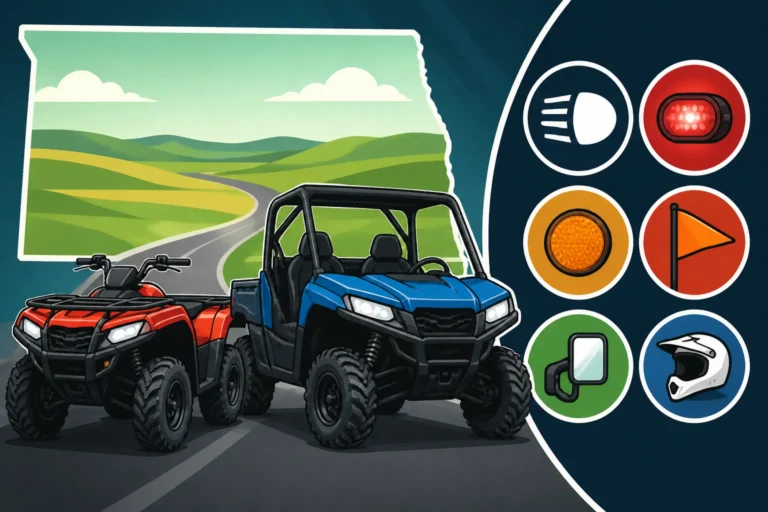
Even in situations where an OHV might be legally allowed to operate on a public road within Bismarck for a very limited purpose – such as a quick, direct crossing – it would still need to meet North Dakota's general equipment requirements for road use. These aren't optional; they're critical for safety and visibility, especially when interacting with other vehicles.
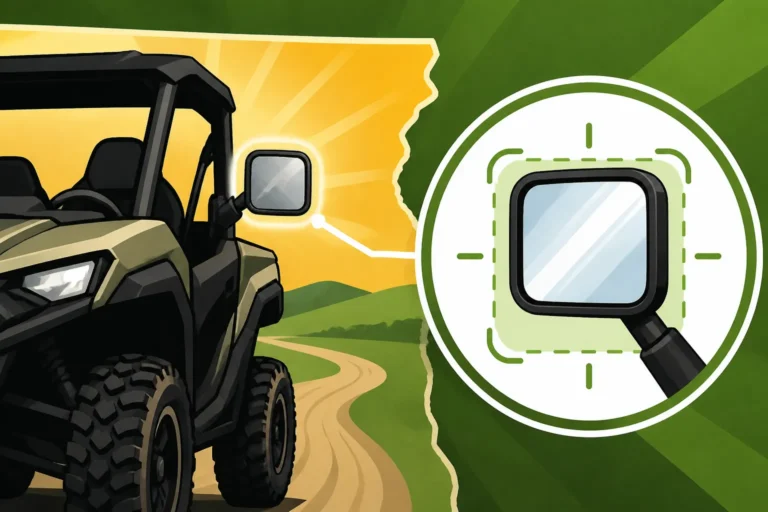
For instance, your machine would need proper headlamps that illuminate at least 300 feet, and working brake lights that are visible from 500 feet to the rear. A functional horn, audible from at least 200 feet, is also a must to alert others to your presence. Mirrors are essential for seeing what’s behind you, with state law often specifying a minimum surface area. For any limited road operation, a speedometer and odometer are also typically required.
Outfitting your machine with these accessories is not just about compliance; it's about your safety and the safety of others. While you might use your ATV primarily for off-road adventures, having high-quality, road-legal components can be invaluable for those rare moments you need to interact with a public road. Brands like SuperATV offer a wide range of aftermarket accessories, from robust rearview mirrors to powerful LED lighting kits and audible horns, that can help ensure your machine meets these safety standards, should you find yourself in a situation requiring a brief, legal road crossing. You can learn more about these specifics in [North Dakota Mirror and Horn Requirements] and [North Dakota Speedometer and Odometer Rule].
Penalties and Enforcement for Bismarck Riders
Operating an OHV illegally within Bismarck city limits is not just a minor infraction; it carries real consequences that can quickly turn a casual ride into a costly and frustrating experience. Local law enforcement takes these violations seriously, driven by concerns for public safety and quality of life for residents.
The Consequences of Unauthorized Riding
If you decide to operate your ATV or UTV where it's not permitted within Bismarck, you could be looking at more than just a slap on the wrist. Violating city ordinances typically results in a fine, which can range from moderate to substantial, especially for repeat offenses. These fines are designed to deter illegal activity and cover the administrative costs of enforcement. Imagine getting pulled over on a Bismarck street you thought was fair game, only to be handed a ticket for several hundred dollars – it’s a quick way to sour any enjoyment from your ride.
Beyond the immediate financial penalty, there’s also the very real possibility that your machine could be impounded. This means your ATV or UTV might be towed away, and you'd be responsible for paying towing fees, daily storage fees at an impound lot, and possibly additional release fees before you can get it back. These costs can quickly add up, often exceeding the initial fine itself. In some cases, depending on the severity of the infraction or if other laws are broken (like reckless operation), you could even face a misdemeanor charge. For a deeper dive into what a citation might cost you, see [North Dakota Ticket Cost for a Road Violation]. These penalties are serious and are put in place to ensure compliance with the city's safety and noise regulations. Even if your machine is fully registered with the state, riding it where it’s not allowed is still a violation, similar to what you’d face for general unregistered riding as detailed in [North Dakota Penalties for Riding Unregistered].
Why Local Law Enforcement Takes This Seriously
It might seem like a minor thing to ride your OHV down a quiet city street, but for local law enforcement in Bismarck, these rules are in place for critical reasons. First and foremost is public safety. ATVs and UTVs are not designed for paved roads; their tires, suspension, and handling characteristics are optimized for off-road terrain. This makes them less predictable and harder to control on asphalt, especially when sharing the road with cars, trucks, and unsuspecting pedestrians. An accident involving an OHV on a city street can be severe, not just for the rider but for others.
Secondly, noise and nuisance complaints are a significant factor. Many off-highway vehicles, especially those modified for performance, can be quite loud. Regular operation of these machines in residential areas can be a major disturbance to peace and quiet, leading to complaints from residents. Law enforcement officers in Bismarck are tasked with maintaining order and responding to these community concerns. From their perspective, enforcing OHV ordinances helps to prevent accidents, reduce noise pollution, and ensure that Bismarck remains a safe and pleasant place for everyone, not just those with ATVs.
Checking Before You Ride
Given the strict rules and potential penalties, the single most important piece of advice is to always check with local authorities before assuming you can ride your OHV in any part of Bismarck. Do not rely on assumptions or what someone told you casually. The best course of action is to contact the Bismarck Police Department's non-emergency line or visit the official City of Bismarck website to review their specific ordinances regarding off-highway vehicle operation.
Taking the time to make a quick phone call or look up the city's municipal code can save you a significant amount of money, hassle, and potential legal trouble. Local OHV clubs are also fantastic resources; members often have up-to-date information on local rules and regulations because they’re actively involved in advocating for riding access and staying informed. It's far better to spend a few minutes verifying the rules than to face a ticket or impoundment later.
Finding Legal Riding Opportunities Near Bismarck
While Bismarck city limits are generally a no-go for casual OHV riding, that doesn't mean North Dakota is devoid of fantastic places to enjoy your machine. You just need to know where to look, and often, that means venturing slightly outside the immediate urban sprawl.
Exploring State-Designated Trails and Riding Areas
The good news for OHV enthusiasts near Bismarck is the presence of legitimate, state-recognized riding areas just a short drive away. One of the most popular spots, and a true gem for riders, is Kimball Bottoms. Located just south of Bismarck along the Missouri River, Kimball Bottoms offers hundreds of acres of open play area where you can freely ride your ATV or UTV. It’s a diverse landscape with sandbars, open fields, and wooded sections, providing a great experience for all skill levels. This is exactly the kind of place where your registered OHV belongs, allowing you to ride without the worries of city ordinances.
Remember, even on designated trails, proper state registration for your OHV is a must, and it's always wise to have any required permits. These dedicated areas are maintained for safe OHV use, and they represent the best way to enjoy your machine legally and responsibly. Beyond Kimball Bottoms, North Dakota offers a few other excellent locations for off-road fun. You can find more details on these state-level opportunities in [Kimball Bottoms: North Dakota's Open Play Area] and [North Dakota OHV Trails: All Four Riding Areas].
Riding on Private Land and Ditch Bottoms (Outside City Limits)
Once you leave the paved streets and structured environment of Bismarck behind and head into the more rural areas, your options for OHV riding expand significantly. North Dakota has specific laws regarding riding on private land and in ditch bottoms, but there's a crucial caveat: these rules apply outside of incorporated city limits.
For private land, the golden rule is always to obtain explicit permission from the landowner before you ride. Trespassing with an OHV is a serious offense and can quickly damage relationships with landowners and lead to legal trouble. A simple conversation or a written permission slip can prevent misunderstandings and ensure you're riding legally and respectfully. Many farmers and ranchers are amenable to allowing responsible riders, especially if you offer to help check fences or perform other tasks.
North Dakota is also unique in its allowance for riding in public road ditches, often referred to as "ditch riding." However, this comes with its own set of rules regarding speed, time of day, equipment, and which specific parts of the ditch are open. It’s not a free-for-all, and these rules are designed to ensure safety and prevent damage. Crucially, these ditch riding laws do not extend into Bismarck's city limits due to the reasons discussed earlier (safety, infrastructure, residential density). Always verify you are outside municipal boundaries before considering ditch riding. You can learn more about the specifics of these laws in [North Dakota Ditch Riding: The Legal Right Explained] and [North Dakota Posted Land Rules for Riders].
Essential Gear for Responsible Riding
No matter where you choose to ride – whether it’s the open expanse of Kimball Bottoms, a farmer’s field with permission, or a legal ditch outside city limits – having the right gear is absolutely non-negotiable for safety and comfort. Your personal protective equipment should always include an approved helmet (especially critical for riders under 18, as detailed in [North Dakota Helmet Law for Riders Under 18]), eye protection, and sturdy over-the-ankle boots. Long pants and a long-sleeved shirt, even in warm weather, offer crucial protection against scrapes, brush, and sun exposure.
Beyond personal gear, consider equipping your OHV with practical accessories that enhance safety and utility. A winch can be a lifesaver if you get stuck in mud or snow. A first-aid kit, fire extinguisher, and a reliable communication device (especially in areas with spotty cell service) are smart additions for any ride into remote areas. Having a spare tire (if applicable to your machine) and basic tools for minor repairs can prevent a long walk home. Brands like SuperATV offer a wide array of utility accessories, from durable winches and cargo boxes to comprehensive protection parts, all designed to make your off-road adventures safer and more enjoyable, whether you're working on the farm or exploring new trails. Thinking ahead and preparing your machine and yourself will make all the difference in having a safe and memorable experience.
Disclaimer
This article is for general informational purposes only and does not constitute professional advice. Laws, prices and regulations vary by location and change over time. Consult a qualified professional for guidance on your specific situation.