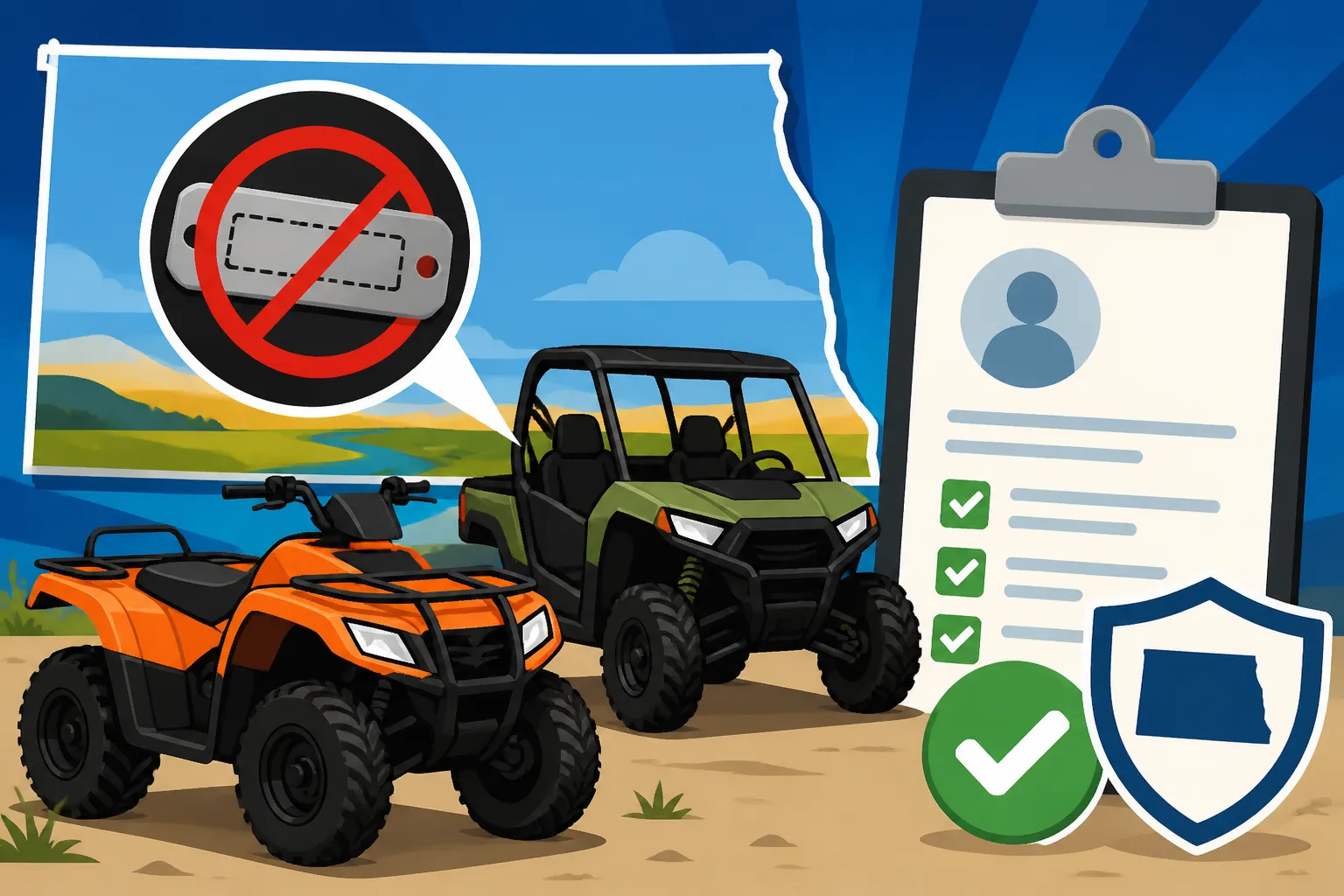
North Dakota Registration When the VIN Is Gone
Imagine you've just bought an awesome used ATV or maybe inherited an old farm UTV that's been sitting for years, only to discover the Vehicle Identification Number (VIN) is completely unreadable or, even worse, missing entirely. This can feel like a huge roadblock when you're trying to get it properly registered in North Dakota, leaving you wondering if your new ride will ever hit the trails or fields legally. This guide is here to walk you through the precise steps required by the North Dakota Department of Transportation (NDDOT) to register an off-highway vehicle (OHV) when its VIN is gone, ensuring you can get that machine on the books and enjoy the prairie.
Why Your VIN is the Lifeblood of Your OHV's Identity
It's easy to overlook something as seemingly minor as a VIN until it's missing, but trust me, that little number is more crucial than most riders realize. It's not just a string of characters; it's the unique identifier for your specific machine, acting as its fingerprint and its entire history rolled into one. Without a clear VIN, proving ownership and ensuring your OHV is legitimate becomes an uphill battle, especially in North Dakota where proper registration is a must for public land use.
More Than Just a Number: What a VIN Represents
Think of your VIN as the social security number for your ATV or UTV. This 17-character code tells a comprehensive story about your machine: its manufacturer, model year, assembly plant, and unique serial number. It's what allows law enforcement to track stolen vehicles, helps mechanics identify the correct parts, and most importantly for us, enables the NDDOT to link a specific vehicle to a registered owner. When you're trying to get a machine [Titling an ATV in North Dakota] or [Getting a UTV on the Books in North Dakota], that VIN is the very first piece of information you'll need. Without it, the entire system grinds to a halt.
When you purchase a used OHV, the VIN is your first line of defense against fraud. You can use it to check for salvage titles, previous accidents, or outstanding liens, giving you peace of mind that you're making a sound investment. For registration purposes, it's the undeniable proof that the machine you're presenting is, in fact, the one you claim to own. Imagine trying to explain to a motor vehicle clerk that your beautiful side-by-side exists but has no identifiable number—they'd simply shake their head, and rightfully so.
The Legal Ramifications of a Missing VIN
Operating an OHV on public lands in North Dakota without proper registration is a pretty clear path to a citation, and a missing or unreadable VIN complicates registration entirely. If you're pulled over or involved in an incident, and your machine's VIN is missing or appears altered, you're not just looking at an unregistered vehicle ticket; you could be facing much more serious questions about the machine's origin. Law enforcement takes VIN issues very seriously because they are often linked to theft or tampering.
Beyond legal trouble, a compromised VIN can also severely impact the resale value of your machine. Future buyers will be extremely wary, and rightly so, of a vehicle that can't be easily identified. It screams "problem" even if your intentions are entirely innocent. Getting a new VIN assigned by the state isn't just about compliance; it's about re-establishing your machine's identity and protecting yourself from future headaches. This process is crucial for anyone dealing with [North Dakota Machines With No Paperwork].
Navigating the NDDOT When the VIN Disappears
So, you've discovered your OHV's VIN is unreadable, or perhaps it was never stamped in the first place, common with some homemade machines or older models. Don't panic! While it's a hurdle, North Dakota has a process for situations like this. The key is to be proactive, organized, and understand that this isn't a simple in-and-out registration. It requires a bit more legwork and direct interaction with the NDDOT.
Your First Steps: Gathering Existing Documentation
Even if the VIN is gone, you probably have some documentation related to your OHV. This is where you need to gather everything you possibly can. Did you get a bill of sale? Even a handwritten one? Do you have a prior registration card, a canceled check, or any kind of receipt from when you acquired the machine? Maybe it's an old farm quad that's been in the family for generations, and you have old photos or a [North Dakota Statement of Ownership Form SFN 2903] that links it to your family. Any shred of evidence that proves your ownership history will be incredibly helpful.
If you're buying a machine without a clear paper trail, consider drafting a detailed bill of sale with the seller, even if it's informal. Services like LawDepot can provide templates for these kinds of documents, helping ensure you cover all the bases even when a VIN is not readily available. The more comprehensive your proof of ownership, the smoother the process will go. The NDDOT needs to be absolutely sure that you are the rightful owner before they assign a new VIN to your machine. This is a critical step, especially if the machine hasn't been on the books for years.
Reporting the Missing VIN to Authorities
This step might seem daunting, but it's essential: you need to contact your local law enforcement agency. Whether it's the county sheriff or city police, you'll need to report the missing or unreadable VIN. This isn't about accusing anyone of wrongdoing; it's about establishing a paper trail and ruling out theft. They may want to physically inspect the machine to confirm the VIN issue and will likely provide you with a police report or incident number. This official report is a critical piece of documentation that the NDDOT will require.
The NDDOT's concern is preventing stolen machines from being "washed" with a new identity. A police report demonstrates you've done your due diligence and that the machine isn't flagged as stolen. This also protects you down the line. Imagine trying to sell your OHV later, and a buyer runs a VIN check on the newly assigned number, only to find no history prior to your ownership. The police report bridges that gap, providing a clear explanation of how the new VIN was assigned. Don't skip this; it's a foundational step to move forward.
Undergoing a North Dakota Vehicle Inspection Without a VIN
Once you've gathered all your ownership documents and secured a police report regarding the missing VIN, your next major step is to undergo a specialized vehicle inspection. This isn't your standard emissions check; it's a thorough examination to verify ownership and ensure the machine isn't stolen or cobbled together from illegal parts. The NDDOT takes this very seriously to protect both consumers and the integrity of vehicle records.
Scheduling and Preparing for Your VIN Inspection
You'll need to contact the NDDOT to schedule a special VIN inspection. They often have designated inspectors or authorized locations for these types of cases. Be prepared for a bit of a wait, as these inspections can require specific personnel. When you schedule, be clear that you have an OHV with a missing or unreadable VIN and need a new one assigned. They'll advise you on any specific forms or additional documentation they require, which may include the [North Dakota Vehicle Inspection Form SFN 58953].
Before you bring your machine in, make sure it's clean and accessible, especially the area where the VIN should be. If the VIN plate is just obscured by rust or grime, try to clean it gently. If it's truly gone or illegible, make sure the machine is in a condition that allows the inspector to clearly see all its components and confirm it's what you claim it to be. Also, bring all your documentation: your bill of sale, the police report, any prior registration, and any sworn affidavits of ownership (which tools like LawDepot can help you draft if you're comfortable with legal forms). The more organized you are, the more efficiently the inspection will proceed.
What the Inspector is Looking For
During the inspection, the NDDOT inspector isn't just glancing at the machine; they are conducting a forensic review. They'll meticulously check for any hidden VINs, manufacturer's serial numbers on the engine or frame, and any signs of tampering or alteration. Their goal is to verify that the machine truly has no identifiable VIN or that the existing one is indeed unreadable, rather than intentionally defaced. They'll also compare the machine's features—make, model, color, engine type—against any documentation you provide to ensure consistency.
This process can feel a bit like an interrogation, but remember, the inspector is simply doing their job to prevent fraud. They're looking for absolute certainty that this is your machine and that it hasn't been stolen or illegally modified. If they find any discrepancies or suspicious markings, it could lead to further investigation or denial of a new VIN assignment. Being honest and transparent throughout this process is absolutely critical. They might even check to see if the machine's parts have unique identifiers that might lead back to a different vehicle or previous owner.
Here's a quick overview of what to prepare:
| Item | Description | Importance | Notes |
|---|---|---|---|
| Existing Proof of Ownership | Bill of sale, old registration, prior title, family transfer documents. | Critical | Proves your claim to the machine. Use [North Dakota Bill of Sale Form SFN 2888] if needed. |
| Police Report | Official report of missing/unreadable VIN. | Essential | Clears the machine of potential theft flags. |
| Vehicle Inspection Form | [North Dakota Vehicle Inspection Form SFN 58953] (may be provided by NDDOT). | Required | Formal record of the inspection findings. |
| Identification | Your driver's license or state ID. | Standard | Verifies your identity as the applicant. |
| OHV Itself | The ATV or UTV with the missing VIN. | Obvious | Must be present for physical inspection. Cleaned and accessible. |
From Inspection to Registration: Getting Your New North Dakota VIN
After the thorough inspection, if everything checks out and the NDDOT is satisfied with your proof of ownership and the circumstances surrounding the missing VIN, they will take the final steps to assign a new identity to your OHV. This is the moment you've been working towards, and it paves the way for legal operation of your machine.
Receiving Your Assigned VIN
Once the inspector completes their review and approves your application, the NDDOT will issue a new, unique VIN for your OHV. This isn't a factory VIN, but rather a state-assigned number that will forever be linked to your machine. They will typically provide you with paperwork reflecting this new VIN and instructions on how it should be permanently affixed to your machine. In some cases, they might even provide a physical VIN plate or decal that you are responsible for attaching securely in a visible, prominent location on the frame. It's crucial that this new VIN is applied exactly as instructed to prevent future issues.
This new VIN essentially re-legitimizes your OHV, giving it a verifiable identity that was previously missing. It will now be entered into the state's motor vehicle database, allowing it to be tracked and registered like any other OHV. This is a huge relief, especially if you were worried your machine might be relegated to private land use only. Now, it has an official presence, ready for the next steps. This new VIN will be used for all future transactions, including [North Dakota Ownership Transfer in 15 Days] if you decide to sell it.
Finalizing Your North Dakota OHV Registration
With your newly assigned VIN in hand and securely affixed to your OHV, you can finally proceed with the standard registration and titling process. You'll take the paperwork from your VIN assignment, along with your proof of ownership and identification, to a North Dakota motor vehicle branch office. There, you'll complete the [North Dakota Form SFN 2872 Explained], which is the application for certificate of title and registration. This form will now reflect your newly assigned VIN, linking all future records to this unique identifier.
You'll pay the necessary fees, which typically include the [North Dakota Title Fee of $5] and the [North Dakota OHV Registration Cost]. Remember, North Dakota OHV registrations operate on a [North Dakota's Two-Year Registration Cycle], so you'll be getting two years of peace of mind. While the process of dealing with a missing VIN is certainly more involved than a straightforward registration, taking these steps ensures that your ATV or UTV is legally recognized, registered, and ready for all the adventures North Dakota has to offer, whether that's hitting the [Pembina Gorge: North Dakota's OHV Trail Park] or riding a [North Dakota Section Line]. Make sure to keep all your paperwork, including the VIN assignment and police report, in a safe place, as it tells the complete history of your machine's identity.
Disclaimer
This article is for general informational purposes only and does not constitute professional advice. Laws, prices and regulations vary by location and change over time. Consult a qualified professional for guidance on your specific situation.