North Dakota Riding With a Group of Ten
A group of ten riders can make a North Dakota ATV or UTV trip feel like a proper outing, but it also creates more chances for a missed turn, a delayed rider, or a crowded trailhead. This guide covers how to choose a suitable riding area, organize your group, prepare for prairie conditions, and keep the day manageable without leaving anyone behind.
Choose a riding area that suits ten people
Match the terrain to your machines and riders
Ten people do not necessarily make one easy-to-manage group. A mix of ATVs and side-by-sides, different experience levels, and varying comfort with mud or steep ground can change what feels like a good route. Before choosing a destination, ask what each rider wants from the day: a relaxed ride, a technical challenge, room to explore, or a longer trip with a campground nearby.
North Dakota offers different kinds of riding experiences. Pembina Gorge is a trail-based option near Walhalla, while the Roughrider OHV Trail follows a corridor along the Missouri River between Fort Abraham Lincoln and Fort Rice. Turtle Mountain offers a different setting near Bottineau, and Kimball Bottoms is an open riding area by the Missouri River. Review the terrain, trail rules, access details, and available facilities before settling on one. The guide to [North Dakota OHV Trails: All Four Riding Areas] can help you compare the broad options.
A large group can also make a narrow or technical trail feel slower than it looks on a map. A route that is enjoyable for two experienced riders may be frustrating for ten people who need to stop, regroup, and let slower machines catch up. Choose for the least experienced rider and the largest vehicle in your party, not just for the most confident person planning the trip.
Check access, conditions, and vehicle fit before you travel
Trail access and conditions can change with weather, maintenance, or temporary closures. That matters especially in North Dakota, where wet ground and gumbo mud can turn a planned ride into a recovery exercise. Check the destination’s official status information before leaving, and check again if heavy rain or flooding has affected the area. For Pembina Gorge, use [Checking Pembina Gorge Trail Status by Phone] as a reminder to confirm conditions rather than assuming a route is open because it was open on a previous visit.
Vehicle dimensions matter, too. Some trails or gates have width restrictions, and a side-by-side that fits one riding area may not fit another. Compare your machine’s actual width with the destination’s rules before loading up; don’t rely on a general description such as “trail-friendly.” If Pembina Gorge is on the shortlist, review [North Dakota's 60-Inch Trail Width Cap] and verify how it applies to the specific route you intend to ride.
It helps to collect the essential information in one place: the trailhead address or entrance, the permitted vehicle types, any width limits, parking arrangements, closure notices, and the route back to the highway. A shared map on a phone app such as onX Offroad can make it easier for everyone to understand the planned route, but it should not replace posted signs, official notices, or a backup navigation plan.
| Planning question | Why it matters for a group of ten | What to do |
|---|---|---|
| Can every machine use the route? | The widest or least suitable machine can limit the whole group. | Check vehicle and width rules before departure. |
| Is the route open and in good condition? | A closure or muddy section can split the party or strand a machine. | Check official status information close to ride day. |
| Is there enough room to stage? | Ten riders may arrive with several trucks and trailers. | Confirm parking details and agree on a meet-up point. |
| Does the route suit mixed experience levels? | The group moves at the pace of its least confident rider. | Choose manageable terrain and plan regroup stops. |
| Can everyone navigate if separated? | A missed turn can become a bigger problem in a large group. | Share the route and carry a backup map. |
Organize the group before the first machine starts
Assign simple roles and divide into smaller riding pods
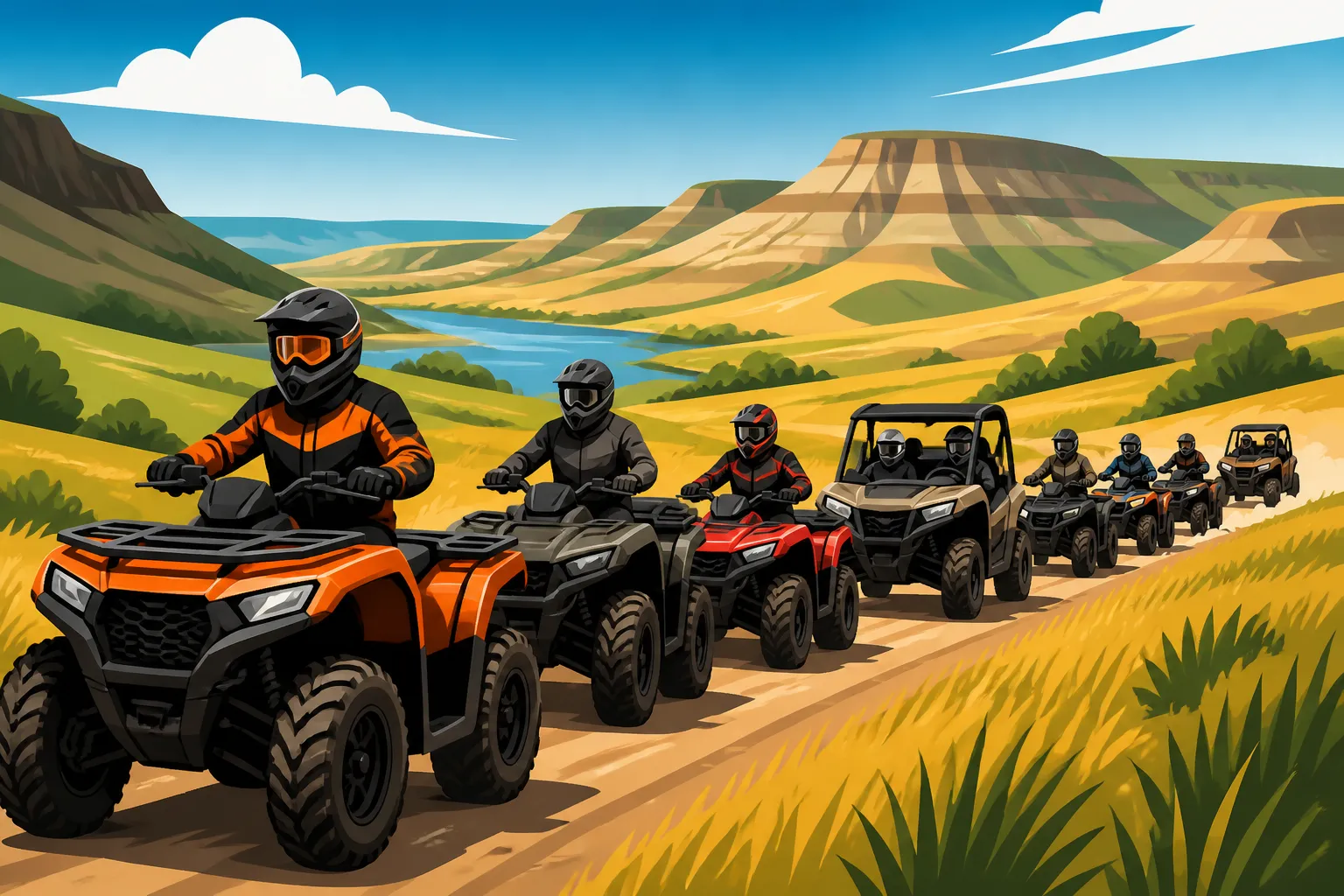
Ten machines riding in a single line can stretch out, especially when the trail curves, visibility is limited, or one rider needs to stop. Instead of expecting everyone to keep the same pace, divide the group into two or three smaller pods. Each pod should have a lead rider who knows the plan and a sweep rider who stays behind the last machine. The lead should avoid speeding away; the sweep should not be expected to solve every problem alone.
Before departure, pick a regroup point that is easy to identify, such as a trail junction, a signed entrance, or a designated parking area. Agree that riders will wait there rather than continuing to guess where the group went. If one pod takes a wrong turn, having a known meeting place can prevent the rest from chasing in different directions.
A route map in onX Offroad or another navigation tool can help each pod stay oriented, but make sure people know how to use it before the ride. A quick screen check at the trailhead is much easier than trying to explain map controls while parked on a muddy shoulder. Share the intended route, likely turnaround point, and any places where the group plans to stop.
Set a communication and regrouping plan
Cell service may be inconsistent in some riding areas, so don’t make a text message the only way to handle a separation. Decide what the group will do if someone cannot reach the others: stop somewhere safe, stay with their riding partner, return to the last agreed regroup point, or follow another pre-agreed procedure. Make sure everyone knows who to contact and has the trailhead location saved offline where possible.
A short pre-ride briefing is useful even among friends. Cover the route, expected pace, hazards to watch for, how the group handles breakdowns, and what to do if someone falls behind. Keep it practical. For example, a rider who needs to stop should tell their pod leader if possible, and the rest of the pod should stop in a safe location rather than leaving one person to catch up alone.
Ten people can also mean ten different ideas about how long a stop should take. Agree on a loose schedule for breaks and the turnaround time, especially if the ride has a fixed end point or the group needs to return before dark. A shared plan makes it easier to enjoy the outing without turning every junction into a debate.
Prepare for prairie weather and trail conditions
Plan around mud, wind, heat, and changing visibility
North Dakota weather can make a comfortable ride feel very different within a few hours. Wind can wear riders down, blowing dust can reduce visibility, and recent rain can leave clay-heavy areas slick or rutted. Ask riders to bring layers, eye protection, water, and weather-appropriate gear. For spring or post-rain trips, review [North Dakota Riding in Spring Mud] and [North Dakota Trails Closed by Wet Weather] before deciding whether the group should go.
When conditions are questionable, be willing to change plans. A large group is slower to recover from a bad route choice because there are more machines to turn around, more people to check on, and more opportunities for someone to get stuck. If the ground is soft, stay on authorized routes, avoid widening ruts, and turn back before a small muddy patch becomes a recovery problem. [Tread Lightly on Wet Clay] offers useful reminders about reducing damage and avoiding unnecessary trouble.
Heat and wind deserve attention even when the ride itself is not especially strenuous. Riders can lose track of how much water they have had while focusing on the trail. Build in drink breaks, keep an eye on anyone who seems unusually tired, and make sure people are not riding beyond their comfort level just to keep up with a faster pod.
Carry tools and supplies that match the group’s needs
A group of ten does not need ten identical tool kits, but it does need enough basic supplies to handle ordinary delays. Before departure, ask who is carrying a first-aid kit, tire or belt tools appropriate to the machines, a tow strap, water, and a way to communicate if phones fail. Confirm that the gear is accessible rather than buried under luggage in a truck parked miles away.
A breakdown plan should include more than “we’ll tow it.” Make sure the tow strap and connection points are suitable for the machine, and agree that the rider operating the disabled vehicle will direct the recovery. Keep bystanders clear of tensioned straps and avoid risky recoveries on slopes, near water, or in places where other riders cannot see the activity. When a situation feels beyond the group’s ability, stop and arrange appropriate help rather than escalating the risk.
For longer rides, a paper map or offline map is a sensible backup. A navigation app such as onX Offroad may help riders see their location, but battery life, poor signal, or an unfamiliar screen can complicate things. Save maps before leaving service, carry charging options, and make sure at least two people in each pod can follow the route without relying on one rider’s phone.
Keep the ride considerate and finish with a clear check-in
Share space and follow local rules
A group of ten takes up more space and makes more noise than a couple of machines. Keep your group compact where practical, but leave enough distance between vehicles for dust, braking, and sudden stops. At a trailhead or narrow section, pull over only where it is safe and permitted. Don’t block access for other riders, land managers, or emergency vehicles.
Some riding areas are shared with other trail users or have specific access rules. Turtle Mountain, for example, is an area where riders should be alert to other users, including horses. Slow down, give people room, and follow posted instructions. For broader trip planning, [North Dakota Trail Etiquette Locals Expect] is a useful checklist for avoiding the small discourtesies that can spoil an otherwise good day.
Land access deserves the same care. Stay on designated routes, obey signs and closures, and do not assume that an open-looking track is available for motorized use. Where permission is required, get it before riding. If your plans involve private land, read [North Dakota Landowner Permission Forms] and confirm the actual terms with the landowner rather than relying on an informal assumption.
Use a simple end-of-ride headcount
When the group returns to the staging area, take a headcount before anyone leaves. Check that every rider and machine is accounted for, and ask whether anyone needs help loading, fixing a minor issue, or contacting someone at home. This matters most when the group has split into pods and riders return at slightly different times.
Do a quick review of the day while the route is still fresh. Note which sections were difficult, whether the turnaround time worked, and whether the chosen area suited the machines and experience levels. If the group wants to return, those observations can help you plan better next time. If a route was muddy or confusing, record the specific location instead of relying on someone’s memory months later.
Most importantly, make it easy for someone to speak up during the ride. A rider who is tired, uncomfortable, or worried about a machine should not feel pressured to keep going. A planned regroup stop gives people a natural chance to say what they need before a small concern becomes a safety issue. With ten riders, a little structure does not make the day less spontaneous; it gives everyone more room to enjoy it.
Disclaimer
This article is for general informational purposes only and does not constitute professional advice. Laws, prices and regulations vary by location and change over time. Consult a qualified professional for guidance on your specific situation.