North Dakota’s Only OHV Campground
Finding a North Dakota campground where you can camp and ride without making every trip a haul-and-unload exercise can be surprisingly difficult. Pembina Gorge is the state’s standout option for combining an overnight stay with nearby OHV trail access. This guide explains what to expect, how to plan your visit, and what to check before you tow your ATV or UTV north.
Why Pembina Gorge Stands Out for OHV Camping
A campground close to a dedicated riding area
Pembina Gorge, northwest of Walhalla in Pembina County, is known for its wooded river valley and designated off-highway vehicle trails. For riders who want camping and trail access as part of the same trip, it is often described as North Dakota’s only OHV campground. That makes it a natural base for a weekend ride, especially if you are traveling from another part of the state and would rather not drive back and forth between a campsite and a riding area.
The key distinction is that a campground near a trail is not automatically an OHV campground. You need to know whether riding is allowed on the route between your site and the trail system, where vehicles may be unloaded, and whether the campground itself has rules about parking or machine use. At Pembina Gorge, plan around the designated access and riding areas rather than assuming you can drive an ATV anywhere on the property. The guide [North Dakota OHV Camping at Pembina Gorge] is a useful companion when you are comparing overnight plans with trail access.
The setting is part of the appeal. Pembina Gorge feels different from the open prairie rides many people picture when they think of North Dakota. The landscape is hilly and wooded, and the area’s trails make a campground stay feel like a riding getaway rather than simply a place to sleep after a day elsewhere. It is still worth checking the route and site details before you leave home; a beautiful destination is less relaxing when you arrive late and discover you have not confirmed the basics.
What “only OHV campground” means for your trip
The phrase “only OHV campground” is most useful as a planning clue, not as permission to ride wherever you please. It points riders toward Pembina Gorge as a special place to investigate for a camp-and-ride visit. It does not mean every campsite in North Dakota is closed to OHV riders, or that other campgrounds cannot be used as a base if you trailer your machine to a legal riding area.
It also does not replace checking the campground’s specific arrangements. Before booking or setting out, confirm the campground’s location, access road, site availability, vehicle parking expectations, and what facilities are available for your planned dates. Ask whether there is a permitted route from the camping area to the riding area or whether you must haul your machine to a separate trailhead. Those details matter if you are bringing a long trailer, traveling with children, or arriving after dark.
If you have previously camped at a conventional campground, the difference is practical: you may be able to build the whole weekend around riding, but you still need to follow posted rules and marked routes. For an overview of the area as a riding destination, see [Pembina Gorge: North Dakota's OHV Trail Park]. For the campground itself, use [Pembina Gorge Camping Rates] as a reminder to check the current booking and cost details directly before committing.
Planning Your Campsite and Arrival
Confirm the site setup before you tow
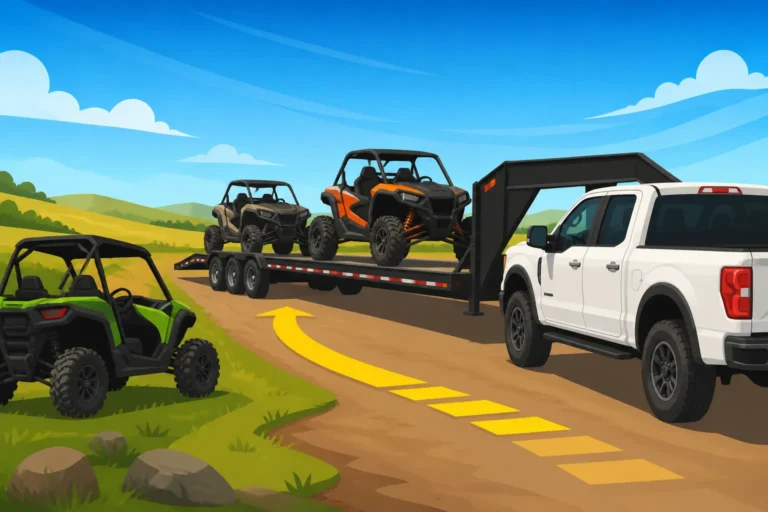
A campsite that works for a tent may not suit a side-by-side, a trailer, and a family’s worth of gear. Before you reserve, find out what kind of site you are selecting and whether the parking layout can accommodate the vehicle combination you plan to bring. A narrow turn, soft shoulder, or limited space for backing can turn an easy arrival into a stressful one, particularly if you reach the campground after a long drive.
Ask about the practical details rather than relying on the word “campground” to tell you everything. Confirm whether the site is intended for tents, RVs, or both; what utilities or shared facilities are available; whether water is available; and how waste disposal works. Facilities and arrangements can change, so it is safer to verify than to pack on the assumption that a particular service will be there. If your group has a large trailer, mention its approximate length when you ask about parking.
It helps to make a simple arrival checklist before leaving. Save your reservation information, write down the campground’s directions, check your fuel and tie-downs, and make sure you know where you are expected to park or unload. If a campground or trailhead has a separate entrance or staging area, do not assume your vehicle can pass through every gate. For trailhead location and approach planning, see [Pembina Gorge's Trailhead Northwest of Walhalla].
Build your weekend around travel time and daylight
Pembina Gorge sits in northeastern North Dakota, so the drive can be a significant part of the trip if you are coming from Bismarck, Fargo, or the western side of the state. Work out your arrival time with enough daylight to find your site, unload safely if allowed, and get settled without rushing. A late arrival can be especially awkward when you are backing a trailer in unfamiliar surroundings or trying to locate a specific entrance.
Rather than treating the first evening as a full riding session, consider making it a setup night. Get camp arranged, check the trail information, and decide which route or loop makes sense for the next day. That gives you time to spot any issues with your machine, confirm the weather, and learn where the permitted riding begins. If you arrive early enough to ride, choose a modest first outing rather than trying to squeeze in a long unfamiliar route before sunset.
The same planning helps on the way home. Allow time to load carefully, secure machines, and check that you have not left gear behind. If conditions have been wet, muddy equipment may need extra attention before it goes back on the trailer. A calm departure is better than a hurried pack-up that leaves a loose strap, an unsecured ramp, or a forgotten helmet behind.
| Planning question | Why it matters | What to confirm |
|---|---|---|
| Can your trailer fit at the site? | Parking and turning space can be limited | Site dimensions, vehicle limits, and overflow options |
| Is there a permitted ride-out route? | Camping nearby does not automatically allow riding between areas | Approved access route, gates, and staging arrangements |
| What facilities are available? | Services affect what you need to pack | Water, toilets, utilities, and waste arrangements |
| Are trails open for your visit? | Weather or maintenance can affect access | Trail status and any closures |
| What permits or documents do you need? | Requirements can depend on residency and the machine | Registration, permits, and safety documentation |
Understanding Pembina Gorge Trails
Know the trail system before choosing a ride
Pembina Gorge’s trail network is a major reason riders make the trip. The area is associated with roughly 16 miles of OHV trails, but mileage alone does not tell you whether a route is right for your machine, riding experience, or group. Trail conditions, access points, marked routes, and any restrictions are the details that shape a safe and enjoyable day. Check the official trail information before you choose your route, and follow posted signs once you arrive.
One especially important detail for side-by-side owners is width. Pembina Gorge is known for a 60-inch trail width limit in relevant areas, so do not assume a machine will fit just because it is a UTV or because you have ridden it elsewhere. Measure the machine’s actual width in its riding configuration, including tires or accessories that affect the overall measurement, and check the applicable trail rules. [The 60-Inch Gate at Pembina Gorge] can help you understand why this restriction belongs on your pre-trip checklist.
A ride that looks straightforward on a map can feel very different on the ground. Slopes, turns, surface conditions, visibility, and traffic all matter. If you are riding with a less experienced driver or a child, pick a route that leaves room to stop, regroup, and turn around safely. For an overview of the trail mileage and area, see [Pembina Gorge's 16 Miles in North Dakota], then use current trail information to decide what is open and suitable for your group.
Check conditions rather than relying on an old plan
Trail status is not just a box to tick before departure. Wet weather can make some routes difficult or lead to closures intended to protect the trail surface. Riding soft ground can rut the trail, damage the area, and make the route harder for everyone who follows. If the weather has been rainy, check before you travel and again before you unload. A campsite reservation does not guarantee that every trail will be open or in good condition.
Give yourself a backup plan. If your preferred route is closed, you may be able to adjust your ride, spend time exploring the area without riding, or return another day. That is more satisfying than arriving with a group that has driven for hours and then pressuring one another to ride a closed or unsuitable route. Trail conditions can also vary within the same area, so do not assume a route is passable because a different section looks dry.
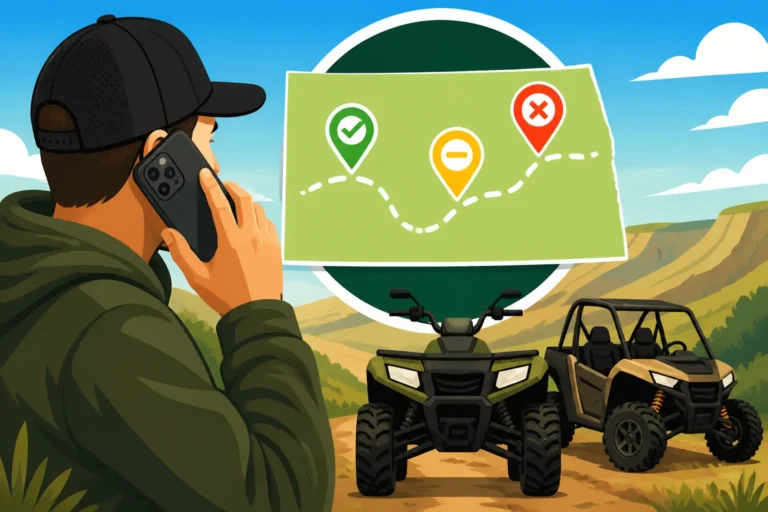
You can use mapping tools to help organize a ride, but treat them as aids rather than substitutes for official closures and signs. For example, onX Offroad can help you prepare and keep track of your planned route, while the current information provided for the riding area should guide decisions about access. Some riders save an offline map before leaving home, since reception can be unreliable in rural areas. Keep [Pembina Gorge Closing After Rain] and [North Dakota Trail Status by App and Phone] in mind when rain or changing conditions may affect your plans.
Getting Ready to Ride and Camp
Check the machine, paperwork, and safety gear
A smooth camping trip begins with a machine that is ready for the route you intend to ride. Check tires, brakes, lights, controls, fuel, and any straps or cargo that could come loose. If you are bringing a UTV, inspect the belt and other components according to the manufacturer’s maintenance guidance. For an ATV, make sure the tires suit the conditions and that the controls are familiar to the rider. A quick check at home is easier than discovering a problem after you have unloaded at the trailhead.
Bring the documents and permits that apply to your machine and circumstances. Registration requirements can differ for residents and visitors, and requirements may vary depending on the vehicle and where it is used. Do not assume that a campground reservation, state park entrance permit, or home-state registration automatically covers every OHV requirement. Review [North Dakota's Non-Resident OHV Permit] if you are visiting from out of state, and check [North Dakota Has No Reciprocity With Any State] to understand why a home-state sticker may not be enough.
Safety gear should match the riders, the route, and the weather. Helmets are essential, and riders should have suitable eye protection, gloves, sturdy footwear, and clothing that protects against dust, branches, and changing temperatures. Pack water, basic first aid, a charged phone, and a way to communicate if your group gets separated. If you ride with children, confirm the applicable age and safety requirements before the trip rather than sorting them out at the campground.
Pack for a rural stay and changeable conditions
The wooded gorge and northeastern location can make a Pembina Gorge weekend feel quite different from an afternoon ride close to home. Weather can change, and a comfortable day in camp may become chilly or wet after sunset. Bring layers, rain protection, and spare clothes that can handle mud and dust. A tarp or storage bins can keep sleeping gear and food separate from dirty riding equipment.
Think through fuel and food before you arrive. Do not count on finding fuel or supplies at the trailhead, and do not assume nearby services will be open when you need them. Plan fuel for the machine and the tow vehicle, carry enough drinking water, and bring food that suits your group’s schedule. If you are riding for several hours, take water and snacks with you rather than expecting to return to camp at a convenient time.
A little organization makes shared camping easier. Keep helmets, keys, and riding documents in one known place, and use a separate container for muddy gloves or wet gear. Agree on a meeting point in case anyone gets separated, and set a clear return time. These are small steps, but they reduce the familiar campground scramble of searching for a missing key while the rest of the group is waiting to ride.
Riding Responsibly and Making the Most of the Stay
Follow marked routes and respect other visitors
A campground-and-trail setting brings together riders, campers, hikers, wildlife, and people who may be visiting the gorge for reasons other than OHV riding. Stay on designated routes, obey signs, and keep speeds appropriate for visibility and trail conditions. Do not cut across vegetation to bypass a muddy spot or create a new path around a closure. Shortcuts can cause lasting damage and may create confusion about where riding is allowed.
Be especially considerate around campground roads, trailheads, and places where people are walking or loading machines. Reduce speed, give pedestrians room, and avoid revving or unnecessary noise near occupied campsites. Keep group rides orderly: agree on a lead rider and a sweep rider, stop in places where the whole group can get off the trail safely, and avoid blocking access while people regroup.
Good etiquette also includes respecting the land beyond the trail. Pack out trash, manage food and camp waste appropriately, and follow any fire restrictions or campground rules. If another rider is stopped, leave enough room to pass safely and offer help if it is appropriate. For a broader sense of the conduct expected at riding areas, see [North Dakota Trail Etiquette Locals Expect].
Make a backup plan and leave room to enjoy camp
It is tempting to plan every hour around maximizing trail time, especially after a long drive. But a good weekend does not have to mean riding from dawn until dark. Build in time for meals, rest, machine checks, and unexpected delays. If a route is closed, the weather turns, or someone in the group is tired, having a flexible schedule makes it easier to change plans without frustration.
Give the group a few clear expectations before the first ride. Decide how far you intend to go, how often you will regroup, and what the plan is if a machine has a problem. Keep the ride within the least experienced person’s comfort level. A confident adult may be ready to continue, while a new rider may need more breaks or a shorter loop; the best outing is one that everyone can complete safely.
Before leaving, take a few minutes to check the campsite and trailer. Make sure food and rubbish are handled, fires are fully out if fires are permitted, gear is packed, and the site is left tidy. Then check your machine and tie-downs before moving the trailer. Leaving the area in good shape helps protect the campground and keeps it welcoming for the next group of riders.
Use a simple pre-trip checklist
A checklist is useful because the details that matter most are easy to overlook when you are loading after work or coordinating several vehicles. Check the reservation and directions, confirm the campground setup, verify trail status, and review any access or machine-width rules. If you are visiting from outside North Dakota, confirm the permit requirements early enough to resolve questions before you arrive.
For equipment, make sure you have helmets, eye protection, gloves, tools, a first-aid kit, water, fuel, and secure tie-downs. For camp, pack bedding, food, weather-appropriate clothing, and the supplies required by the facilities available at your site. Put important documents and keys somewhere easy to reach, but protected from rain and dust.
Finally, share the plan with everyone traveling with you. Make sure each driver knows where to meet, which routes are allowed, and what to do if the group becomes separated. OnX Offroad can be one part of route preparation, but use posted information and official trail updates to make the final call. A little preparation makes the trip feel less like a logistics puzzle and more like the getaway you were hoping for.
Disclaimer
This article is for general informational purposes only and does not constitute professional advice. Laws, prices and regulations vary by location and change over time. Consult a qualified professional for guidance on your specific situation.