Buying a Permit at a Park Office
If you’re bringing an out-of-state ATV, UTV, or dirt bike to North Dakota, you can buy the required non-resident access permit in person at a state park office. The key is knowing what the permit covers, what information to have ready, and why it does not replace your machine’s registration or guarantee that every trail is open.
Who needs to buy a permit at a park office
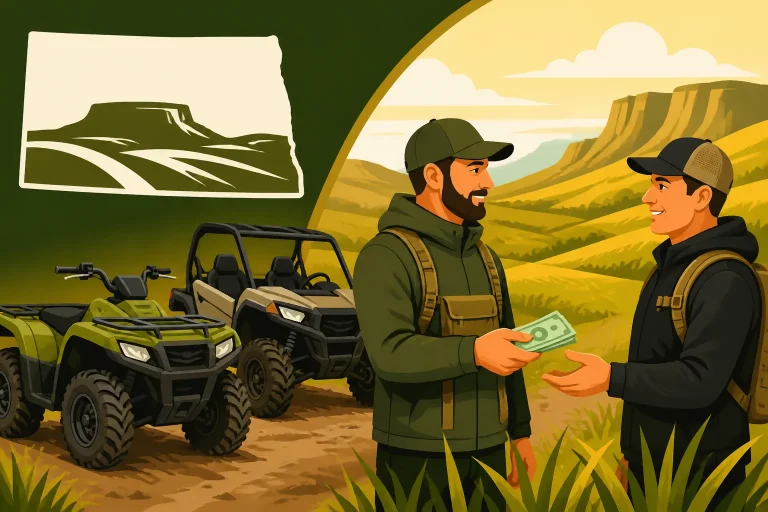
The park-office permit is intended for owners of OHVs registered outside North Dakota. According to the North Dakota Parks and Recreation Department, owners of out-of-state registered OHVs must purchase a non-resident public trails and lands access permit. You can buy one in person at any North Dakota state park office.
The permit is for access to public trails and lands covered by the program. It is not a substitute for registering a machine that is required to be registered, and it does not grant permission to ride on private land, enter a closed area, or ignore local restrictions. Before traveling, check both the permit requirement and the riding rules for your planned destination.
| Your situation | What to check |
|---|---|
| Your OHV is registered outside North Dakota | According to the North Dakota Parks and Recreation Department, you need a non-resident public trails and lands access permit. |
| Your OHV is registered in North Dakota | According to the North Dakota Parks and Recreation Department, resident OHVs used on public lands and trails require North Dakota registration rather than the non-resident permit. |
| Your machine is not registered | Buying an access permit does not by itself make an otherwise unregistered OHV legal to ride. Check the registration rules for your machine and situation. |
| Your destination is a state park | A park office can sell the non-resident permit, but access and trail conditions still depend on the destination’s current rules and status. |
For a broader explanation of permit eligibility and the access permit, see North Dakota’s Non-Resident OHV Permit. If you’re unsure whether your home-state registration is enough, North Dakota Has No Reciprocity With Any State explains why visitors should not assume their state’s registration replaces North Dakota’s permit.
Permit cost and validity
According to the North Dakota Parks and Recreation Department, the non-resident public trails and lands access permit costs $10 per year as of November 2026. The department says non-resident permits are valid from January 1 through December 31, so a permit purchased late in the year does not carry forward into the next calendar year.
That calendar-year period is different from North Dakota resident OHV registration. According to the North Dakota Parks and Recreation Department, resident registration costs $20 and covers a two-year period paid and expiring on even-numbered years. Those figures are current as of November 2026. If you’re comparing the two requirements, North Dakota Registration Versus a Non-Resident Permit gives a useful overview.
The distinction matters when you travel. A visitor might have a valid registration from another state and still need the North Dakota access permit. Conversely, a North Dakota resident should check registration requirements rather than buying the non-resident permit simply because they plan to ride at a park.
How to buy the permit at a state park office
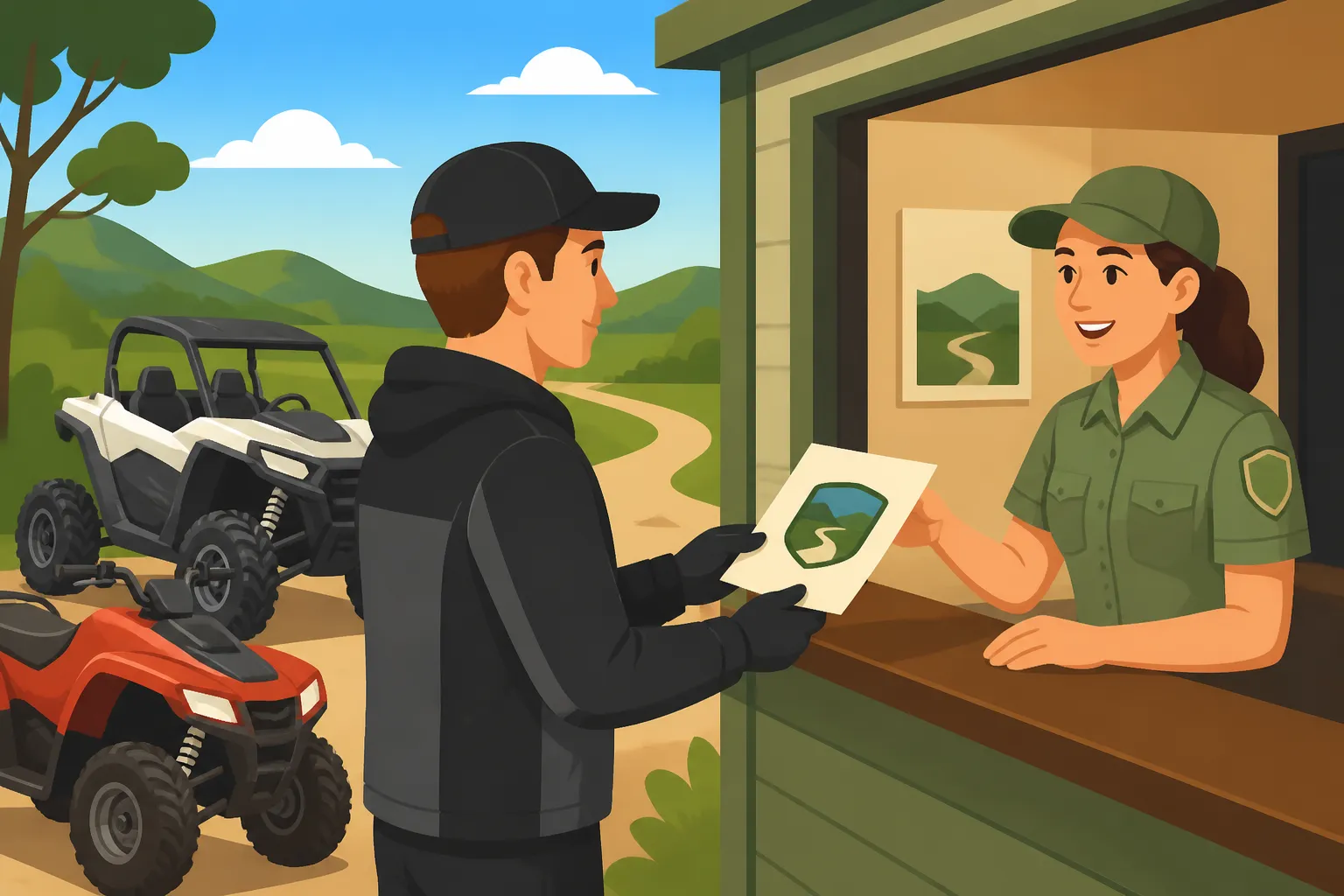
The in-person option is useful if you prefer to handle the permit when you arrive, or if you’re already stopping at a state park. According to the North Dakota Parks and Recreation Department, non-resident public trails and lands access permits can be purchased in person at any North Dakota state park office.
A straightforward plan is to:
- Confirm that the non-resident permit applies to you. If your OHV is registered outside North Dakota, the department requires the public trails and lands access permit. If your registration or ownership situation is unusual, check with the department before relying on an in-person purchase to resolve it.
- Choose a state park office that fits your route. The permit is available at any state park office, but that does not guarantee every office is open when you arrive. Confirm the office’s hours and whether it can complete the transaction before making a special trip.
- Bring your machine and registration details. The permit requirement is tied to an out-of-state-registered OHV. Having the registration information available can help you answer questions or correct a mismatch in the machine details.
- Ask for the non-resident public trails and lands access permit. Be clear that you’re asking about the OHV access permit, not a state park entrance permit or resident registration.
- Check the permit information before leaving. Make sure the permit corresponds to the machine you intend to ride, and keep the permit or proof of purchase available as directed.
- Confirm the riding area is open and suitable for your machine. A permit is not a trail-status update. Check for closures, width limits, and destination-specific rules before unloading.
If you would rather buy before traveling, the department also lists other purchase options. See North Dakota Permits Sold Online or How to Buy a North Dakota OHV Permit for details. If you’re traveling a long distance or arriving outside normal office hours, arranging the permit in advance can reduce the risk of losing riding time to an unexpected closure or unavailable office.
What information should you have ready?
The North Dakota Parks and Recreation Department says the OHV registration application asks for the owner’s name and address, as well as the machine’s make, year, and serial number. That information is useful to have on hand when sorting out paperwork, though the registration application and a non-resident access permit are separate things.
Before you leave home, check that the serial number on your paperwork matches the machine. If the registration is in someone else’s name, or the machine has recently changed owners, do not assume the permit purchase resolves that paperwork question. Review North Dakota Permit for a Visiting Machine and contact the agency if you need a clear answer for your circumstances.
You can also call the office you plan to visit and ask what it needs to issue the permit, how payment is handled, and whether it can complete the transaction during your visit. Those practical details can vary by office, so confirming them is better than relying on assumptions.
Before you ride: registration, access, and safety
A permit purchased at a park office is only one part of getting ready to ride. According to the North Dakota Parks and Recreation Department, OHVs operated on public land in North Dakota generally must be registered, and all riders must be properly registered or permitted to ride legally. For an out-of-state visitor, the required access permit does not turn an unregistered machine into a registered one.
North Dakota classifies motorcycles and dirt bikes as Class I OHVs, ATVs as Class II, and UTVs or side-by-sides as Class III, according to the North Dakota Parks and Recreation Department. If you’re uncertain how your machine is classified, North Dakota’s Class I, II and III Machines can help you identify which rules to check.
Riding on public roads involves additional restrictions and equipment requirements, separate from the park-office permit. For example, according to the North Dakota Parks and Recreation Department, roadway operation requires a motor of at least 350 cubic centimeters, and an OHV may not be operated on the shoulder or inside slope of a highway right of way. Do not treat a trails-and-lands access permit as permission to ride on a road or roadside.
Youth riders and safety certification
If a young rider is coming along, check certification requirements before the trip. According to the North Dakota Parks and Recreation Department, youth ages 12 through 15 without a valid driver’s license or learner’s permit must take an OHV safety certification class to legally operate on allowed public lands. The department also says certification is required for youth to operate on land other than a parent’s, including designated trails and ditches.
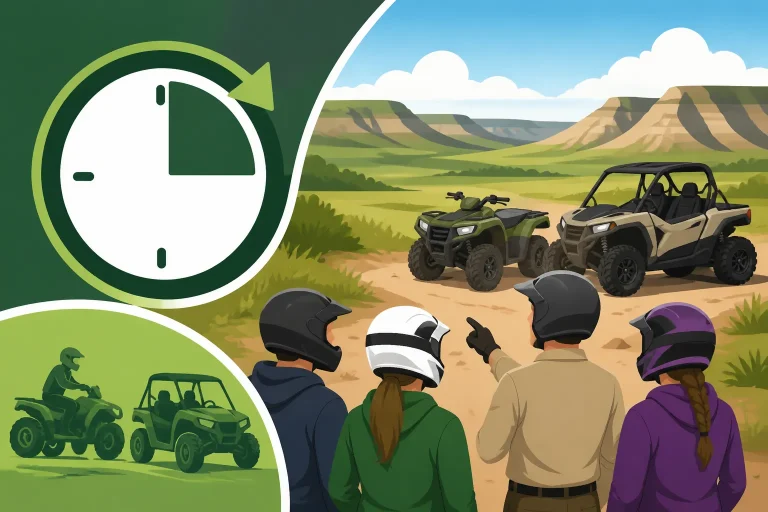
The North Dakota Parks and Recreation Department says riders must be at least 12 years old to become certified. A child who is 11 but turns 12 within six months of a class date may take the hands-on course, but receives the certification card after turning 12. Hands-on sessions are held from May through August, and the department offers them for free. Each in-person class is limited to eight participants.
Students taking the hands-on course must first complete the introductory e-course online and bring their certificate number. The department says students must wear over-the-toe shoes, long pants, and a long-sleeve shirt, and provide their own eye protection. It provides a free helmet at the beginning of the course for students to keep. The complete online safety course is another option; according to the North Dakota Parks and Recreation Department, it costs $34.95 as of November 2026.
Riders and passengers under age 18 must wear a DOT-approved helmet when riding any OHV, including dirt bikes, ATVs, and side-by-sides, according to the North Dakota Parks and Recreation Department. If you need eye protection for a class, check that the item meets the class requirements before buying; stores such as Amazon may offer options, but the class requirement is for students to bring their own protection.
Avoid common permit and trip-planning mistakes
The main mistake is treating the permit as an all-purpose pass. It addresses the non-resident access requirement, but it does not replace registration, safety certification, helmet rules, or the riding area’s access conditions. It also does not override posted restrictions or make a closed route available.
Another common mistake is assuming that a park office will be open whenever you arrive. The permit is sold at state park offices, but office hours and transaction arrangements are practical details to verify directly. If the trip depends on buying the permit on arrival, call ahead and build in time for the stop.
A permit also does not confirm that trails are open on the day you ride. According to the North Dakota Parks and Recreation Department, closures at Pembina Gorge State Park, Roughrider OHV Trail, and Turtle Mountain State Recreation Area are evaluated every 24 hours. Conditions can change, so check the latest information close to your departure and again before riding. North Dakota Trail Status by App and Phone is a useful next step for planning around trail conditions.
Finally, match your plan to the place you’re visiting. A permit for public trails and lands is not a promise that every public area allows motorized riding, and rules can differ by site. Confirm that your machine is allowed, check any width or equipment limits, and make sure you know where riding begins and ends. For an extended visit, North Dakota Visitors Staying Over 30 Days can help you consider what happens if your stay lasts beyond a short trip.
The safest sequence is simple: confirm that your machine is registered, determine whether you need the non-resident permit, buy it at a park office or through another available option, and check the destination’s current rules before riding. That avoids a frustrating surprise at the trailhead and keeps paperwork, safety requirements, and trail access in their proper places.
Sources
- North Dakota Parks and Recreation Department — OHV Permits & Registration | ND Parks and Recreation – Business and Grants (checked November 3, 2026)
- North Dakota Parks and Recreation Department — OHV Safety | ND Parks and Recreation – Business and Grants (checked November 3, 2026)
- North Dakota Parks and Recreation Department — Motorized Safety | North Dakota Parks and Recreation (checked November 3, 2026)
- North Dakota Parks and Recreation Department — Off-Highway Vehicles (OHV) | ND Parks and Recreation – Business and Grants (checked November 3, 2026)
- North Dakota Parks and Recreation Department — OHV Trails | ND Parks and Recreation – Business and Grants (checked November 3, 2026)
- North Dakota Parks and Recreation Department — Snowmobile Permits & Registration | ND Parks and Recreation – Business and Grants (checked November 3, 2026)
- North Dakota Parks and Recreation Department — Snowmobile Safety | ND Parks and Recreation – Business and Grants (checked November 3, 2026)
- North Dakota Parks and Recreation Department — Snowmobile Trails | ND Parks and Recreation – Business and Grants (checked November 3, 2026)
- North Dakota Parks and Recreation Department — 04-2022%20OHV%20Brochure%20WEB.pdf (checked November 3, 2026)
Disclaimer
This article is for general informational purposes only and does not constitute professional advice. Laws, prices and regulations vary by location and change over time. Consult a qualified professional for guidance on your specific situation.