Retrieving Game With a Machine
Retrieving game with an ATV or UTV can save a long carry, but it does not automatically make every route legal. In North Dakota, the key questions are where the machine may travel, who controls that land, and what the current hunting rules allow. A little planning helps you avoid turning a successful hunt into an access or equipment problem.
Can you use an ATV or UTV to retrieve game?
Possibly, but the answer depends on the land and the rules for the hunt. Permission to hunt an area is not always permission to drive across it, and permission to recover an animal does not necessarily allow a machine off an established route. Treat the ride and the recovery as separate questions: first confirm you may operate the OHV there, then confirm your recovery plan fits the applicable hunting rules.
North Dakota has different access arrangements across private property, public hunting areas, wildlife management areas, and national grasslands. A road, trail, or two-track that looks usable may be closed to motorized travel, limited to certain vehicles, or open only under specific conditions. Regulations can also vary by season and by the area’s managing agency. Check the current hunting regulations and the land manager’s rules before relying on a route.
It is especially important not to assume that “retrieval” creates a general exception to motor-vehicle restrictions. Some rules may allow particular uses or routes, while others may not. If the rules are unclear, ask the land manager or the agency responsible for the hunting area before the hunt. The general overview in North Dakota Hunting Access by OHV can help you identify the access questions to check, but area-specific restrictions still matter.
| Where the animal is | What to check before driving in |
|---|---|
| Private land | Get the landowner’s permission for both the hunt and the machine route. Ask where you may travel and whether recovery across fields or fences is allowed. |
| Wildlife management area | Check the area’s current motorized-vehicle rules, designated routes, and any seasonal closures. |
| National grassland | Consult the current motor vehicle use map and land-manager rules. Do not assume cross-country travel is allowed. |
| Designated trail or road | Confirm the route is open to your machine and that using it for game recovery is permitted. |
| Land with unclear boundaries | Stop and confirm ownership and access before proceeding. A map line or visible track is not permission. |
On private property, make your request specific. Ask whether you may drive the machine to the recovery location, which route to use, whether you may cross a field, and where you should turn around or park. A landowner may agree to the hunt but not want an ATV in a crop field, pasture, shelterbelt, or wet area. Written permission can prevent misunderstandings; North Dakota Landowner Permission Forms and North Dakota Posted Land Permission cover related access issues.
On public land, follow the designated route even if it means carrying or dragging the animal farther. A hunter’s access right does not necessarily include unrestricted vehicle access. For national grasslands, North Dakota Grassland Motor Vehicle Use Maps is a useful reminder to check the routes that are actually open to motorized travel. If the route is not shown as open, do not treat a game recovery need as permission to go off route.
Permits, registration, and access are separate
A machine’s registration or visitor permit does not grant permission to ride on every parcel or trail. It addresses the machine’s legal status, while access rules determine where it can go. A hunting license also does not replace an OHV permit or landowner permission. Check each requirement independently before your trip.
North Dakota residents and visitors may have different OHV requirements. If you are bringing a machine from another state, do not assume its home-state registration automatically satisfies North Dakota’s rules. The state’s approach to visitors is covered in North Dakota Non-Resident OHV Permit and North Dakota Has No Reciprocity With Any State. Confirm current requirements for your machine and circumstances before traveling; permit rules and official guidance can change.
Likewise, a permit should not be mistaken for a trail sticker that opens all public land. It does not override a closure, a posted restriction, a route map, or a landowner’s decision. Before riding, check the rules for the specific place where you plan to hunt and recover game. For an area managed by a wildlife agency, North Dakota Wildlife Area Rules for OHVs is a relevant starting point.
Be careful when a carcass is down beyond a boundary or on land you can see but cannot access from your hunting location. The shortest route may cross private property or closed public ground. Contact the owner or land manager and get permission before driving in. If you cannot get permission, ask about another lawful recovery route rather than crossing first and explaining later.
A practical check before the hunt is to note:
- The land parcel and its manager or owner.
- The designated motorized route and any closures.
- Whether your machine needs a North Dakota registration or visitor permit.
- Whether the route is suitable for the machine’s width and the ground conditions.
- Who to contact if the animal is down beyond the planned access area.
These checks can feel like extra work, especially when an animal is down and daylight is fading. They are still easier to do before the hunt than when you are deciding whether to cross a fence or drive across a field.
Plan the recovery before you need it
A recovery plan should account for the animal, the route, the machine, and the weather. A UTV may carry more cargo than an ATV, but size alone does not make it suitable for every trail or gate. Confirm that the vehicle can use the route legally and physically. Width restrictions, narrow gates, soft ground, steep banks, and tight turns can all make a route unsuitable.
Decide where you will leave the machine before approaching the recovery site. If the final distance is outside an authorized route, park legally and use a hand cart, sled, or other non-motorized method if the conditions and hunting rules allow it. Avoid driving around a wet spot or rut if doing so means leaving the permitted route. In prairie and grassland conditions, a small detour can damage vegetation or leave a machine stuck.
Secure the animal so it cannot shift, slide, or interfere with steering, braking, lights, or the operator’s view. Use suitable tie-downs and follow the machine manufacturer’s cargo limits. A cargo net or rated straps—available through many outdoor and hardware retailers, including Amazon—may help contain equipment, but no strap makes an overloaded or unstable load safe. Keep the load low and balanced, and do not carry more than the machine is designed to handle.
For an ATV, an uneven load can affect control more quickly than it may seem, particularly on a side slope or soft ground. For a UTV, cargo should not block the driver’s view or interfere with passengers’ safe seating. Make multiple trips if needed rather than trying to haul an awkward load in one go. Never let a passenger ride on cargo or in a position not designed for a passenger.
Recovery can also involve more than the ride back. Follow the applicable hunting rules for tagging, transport, and handling of the animal. Keep required licenses and documents available, and do not assume that a machine’s cargo bed changes the rules that apply to the game. If you are unsure about a species-specific requirement, verify it in the current regulations before the hunt.
A short preparation list can reduce delays:
- Save the area map and the current motor-vehicle route information for offline use.
- Mark your intended parking spot and an alternate recovery route that is also legal.
- Check the forecast and ground conditions; wet soil can turn a short ride into a damaging or unsafe one.
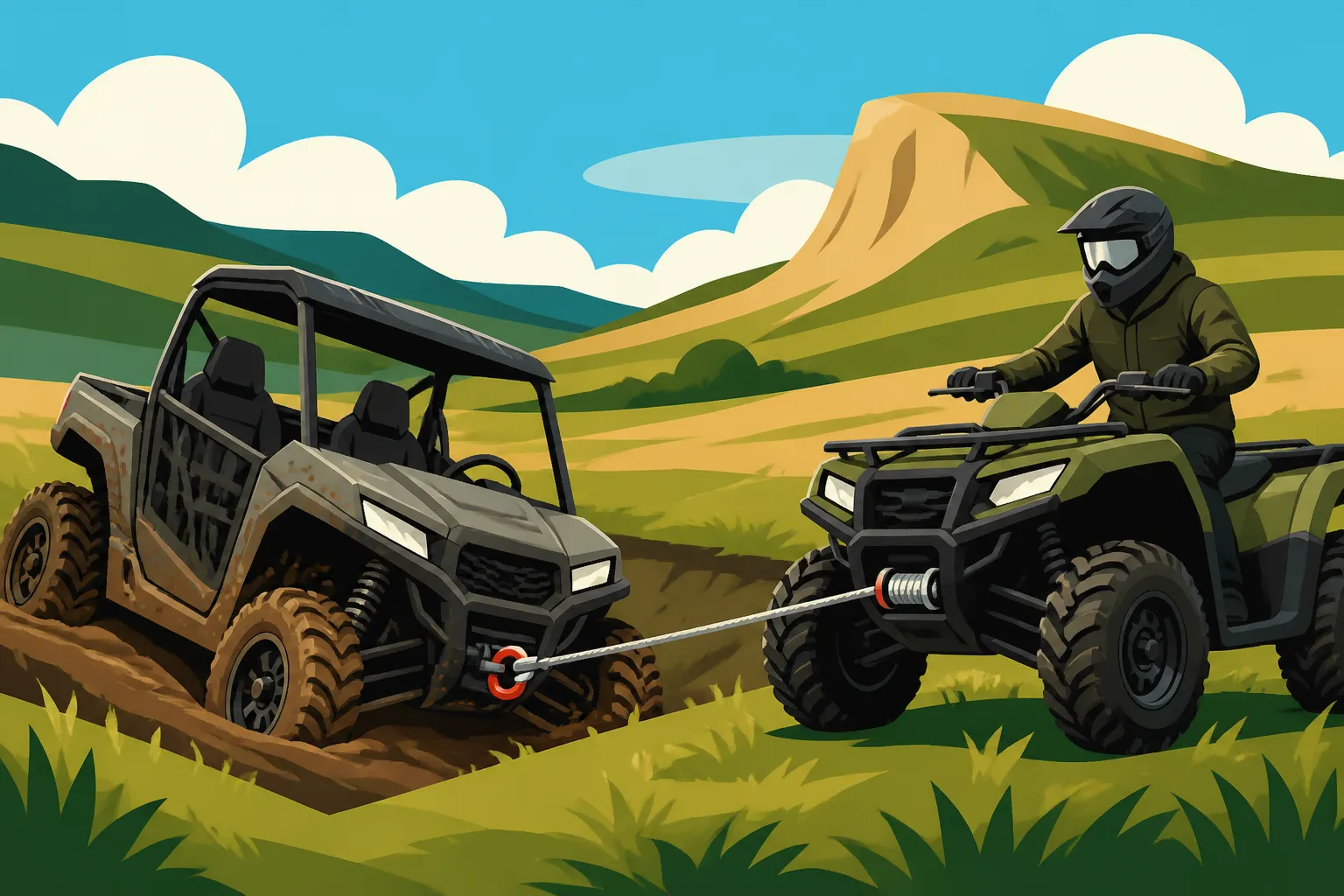
- Carry a charged phone, basic recovery gear, water, and warm or weather-appropriate clothing.
- Tell someone where you plan to hunt and when you expect to return.
- Make sure the operator knows the machine’s limits and that everyone rides in a designated seat.
If you hunt with a group, agree on the recovery plan before separating. Establish who is allowed to operate the machine, where it will be parked, and how you will communicate if the route is blocked. A second person should not follow the first machine off an approved route simply because it appears to be the easiest way to reach the animal.
Common mistakes to avoid
The most common mistake is treating the need to retrieve game as automatic permission to drive anywhere. It is not safe to assume that a motorized vehicle may leave a road or trail because the animal is nearby. Check first, and use a non-motorized recovery method when the route is closed or permission is unavailable.
Another mistake is confusing hunting access with vehicle access. A parcel may be open to hunting under certain conditions while motorized travel remains restricted. On private land, a verbal “you can hunt here” may not settle whether the owner allows a machine in a particular field or along a particular fence line. Ask directly, and respect the answer.
Do not rely on another hunter’s route, an old map, or tire tracks as proof that a road is open. Closures, seasonal conditions, and management rules can change. Check the latest route information for the area, especially if you are visiting a place you have not hunted before.
Finally, do not let urgency push you into a risky load or an unsafe ride. If the animal is too heavy or awkward for your machine, make more trips or use another lawful method. If conditions are poor, ask the land manager or a qualified local contact about safe options. Protecting the land and keeping the machine under control matter just as much on the return trip as they do on the ride out.
Disclaimer
This article is for general informational purposes only and does not constitute professional advice. Laws, prices and regulations vary by location and change over time. Consult a qualified professional for guidance on your specific situation.