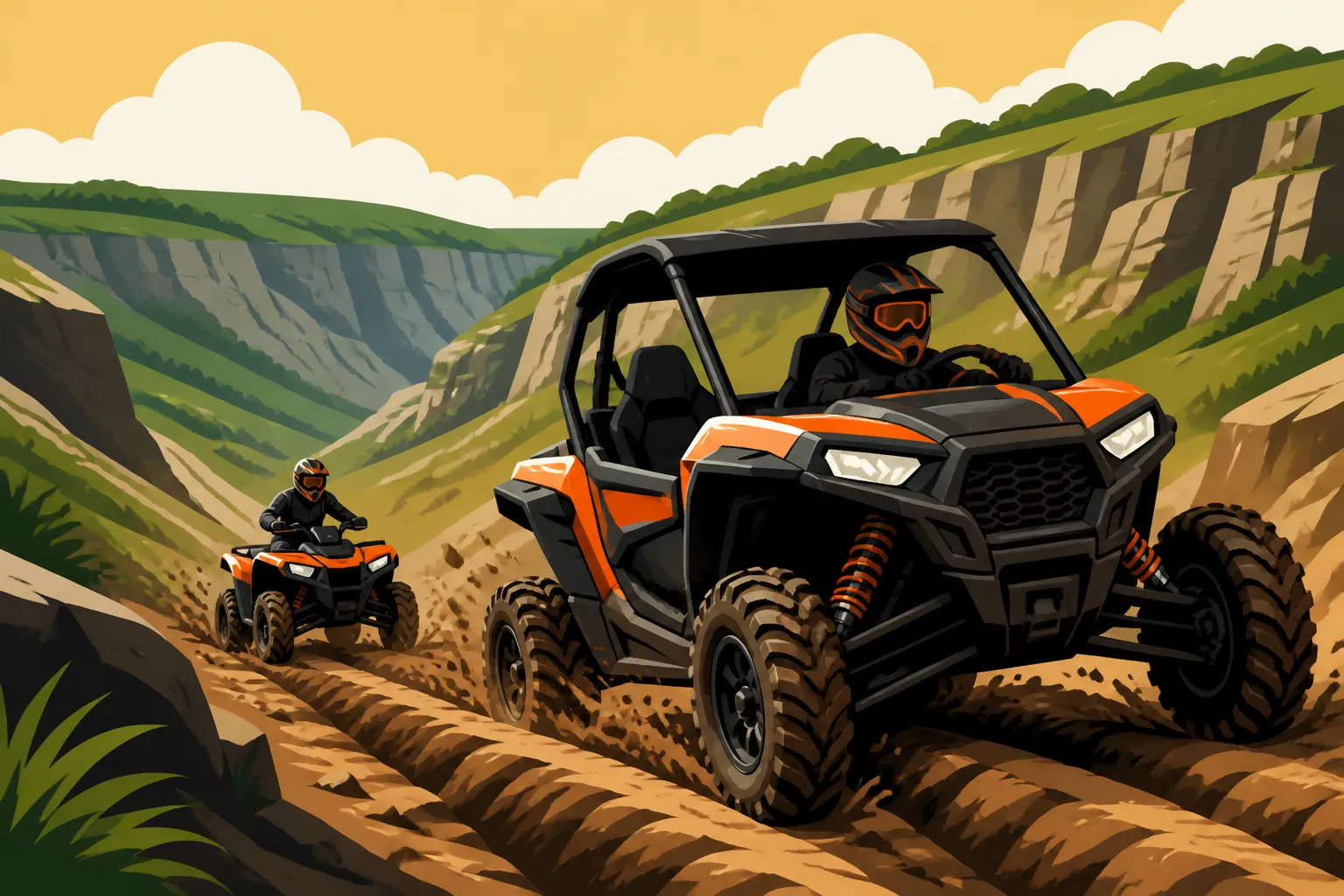
Rutting at Pembina Gorge
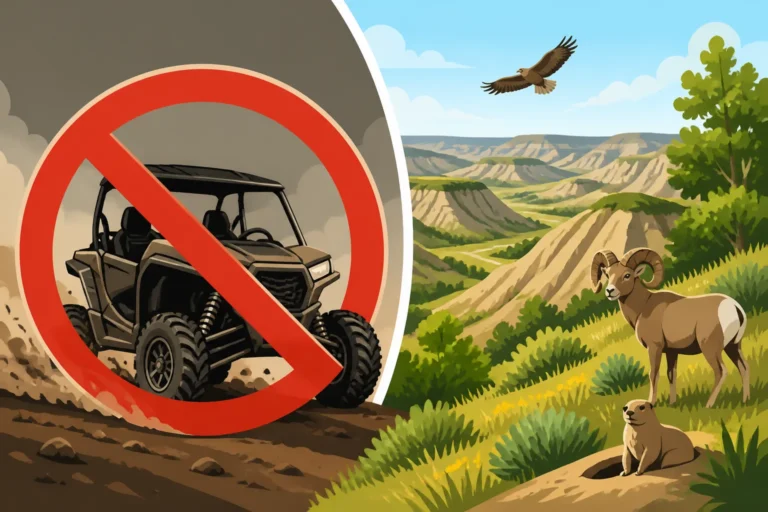
When rain leaves Pembina Gorge’s trails soft, a single ATV or UTV can carve deep ruts that make the route harder and less safe for everyone who follows. This guide explains why rutting happens, how to recognize a trail that is too wet to ride, and what to do if conditions change during a trip near Walhalla.
Why rutting happens at Pembina Gorge
Wet soil cannot support the same traffic
Pembina Gorge’s rolling terrain and wooded slopes make for a memorable ride, but they also mean trail conditions can change quickly. Rain and snowmelt soak the ground, and low-lying or shaded sections may stay wet after exposed areas begin to dry. When the soil is saturated, it has less ability to support a machine’s weight.
A tire that rolls across firm ground may press into soft soil instead. Once the tread breaks through the surface, the wheel can push loosened soil aside and deepen the track. The next rider may steer into that depression, adding more pressure in the same spot. Several passes can turn a shallow mark into a rut that holds water and becomes increasingly difficult to ride.
This process is especially noticeable in sticky clay or gumbo-like soil. It can cling to tires, pack into tread, and make steering unpredictable. A rider who expects the machine to track normally may find it sliding, bogging down, or pulling toward an existing rut. Conditions that seemed manageable at the trailhead can feel very different on a shaded slope or in a low spot.
Repeated passes make damage worse
Ruts are not only a cosmetic issue. Deep channels can redirect water, allowing it to flow along a trail instead of soaking gradually into the ground. That runoff may carry soil downhill, expose roots, and widen the damaged area. A route that was once a narrow tread can become a broad, muddy section as riders try to find firmer ground around the rut.
There is a practical safety concern, too. A tire caught in a rut can pull a machine off its intended line. On a side-by-side, that may mean a sharp correction or an awkward angle across uneven ground. On an ATV, a rut can tug at the handlebars and make it difficult to choose a smooth path. Mud can also hide rocks, roots, and the depth of the channel.
If you want to understand how wet ground can affect trail access more broadly, North Dakota Trails Closed by Wet Weather offers related context. For a Pembina-specific visit, check Pembina Gorge Closing After Rain and Checking Pembina Gorge Trail Status by Phone before loading up. A ride plan made the night before may need to change after overnight rain.
How to tell when a trail is too wet
Look for signs before you commit
At the trailhead, take a moment to assess the ground rather than relying only on the weather forecast. Fresh tire tracks that have sharp, deep edges are a warning that the soil is soft. So are puddles with churned mud around them, water flowing down the tread, and mud stuck in thick layers on tires from only a short distance of riding.
Pay attention to the areas where water naturally collects: low points, narrow drainage crossings, shaded woods, and the bottom of a slope. A dry entrance does not prove that the whole route is ready. Pembina Gorge’s varied terrain can create a patchwork of conditions, with firm stretches beside muddy pockets.
Use your judgment about how much traction and control you have. If the machine is digging down rather than rolling across the surface, if you need repeated throttle to move through a short muddy spot, or if steering feels loose, stop and reassess. Pushing through can turn one small soft patch into a larger damaged section.
Distinguish damp from saturated
A trail can be damp without being too fragile to ride. The key question is whether the surface supports the machine without deforming heavily. On firm ground, tires may leave light impressions but do not continually sink, push soil aside, or create a channel. On saturated ground, each pass can change the trail noticeably.
| Trail condition | What you may notice | Sensible response |
|---|---|---|
| Firm or lightly damp | Shallow tire marks, steady traction, little soil displacement | Continue carefully and stay on the marked route |
| Soft in isolated spots | Slower travel, some tire slip, muddy pockets near low ground | Avoid unnecessary passes and turn back if control becomes uncertain |
| Saturated | Deep tracks, wheels sinking, mud churning, water gathering in ruts | Do not continue through the section; return only if you can do so without worsening damage |
| Actively deteriorating | Ruts deepen with each pass, water moves along the trail, the route widens | Stop riding that route and follow posted guidance or park directions |
This table is a decision aid, not an official trail-closure standard. Posted signs and park instructions take priority. If a section is marked closed, do not ride around the barrier or search for an alternate line through vegetation.
When you are unfamiliar with the area, a map app such as onX Offroad can help you keep track of your location and plan a return route. Still, a digital line on a map does not confirm that a trail is open or dry. Pair any navigation tool with current park information and what you can see on the ground.
What to do when conditions turn muddy
Turn around early and avoid widening the trail
It can be frustrating to turn back after driving to Pembina Gorge, especially if your group has already unloaded and planned a full day. But stopping early is often the better choice when the trail begins to rut. Continuing until the machine is stuck can leave you with a recovery problem and add more damage as the tires spin.
If a muddy section appears ahead, slow down somewhere firm and take stock before entering it. Look for posted directions and consider whether the route can be safely retraced. Avoid riding off the marked tread to pass around a soft spot: that can widen the trail, damage nearby vegetation, or create a new track that other riders mistake for an approved route.
If you have already entered a section and your machine is losing traction, avoid aggressive wheelspin. Repeated acceleration can dig the tires deeper and throw soil out of the rut. If it is safe, ease off, keep your movements controlled, and decide whether a careful retreat is possible. Do not put another machine into a failing section simply to pull the first one out without considering the risks and likely ground damage.
A navigation app such as onX Offroad may help you orient yourself if you need to retrace a route, but use it as a location aid rather than as permission to leave the marked trail. If you are unsure where the route goes or whether a closure applies, ask park staff or follow the posted instructions.
Check local status before changing your plans
Conditions can vary across the park, and a report from one trail or one day may not describe what you will encounter. Before leaving home, check the official status information for the riding area. Then check again when you arrive if signs or staff provide updated directions.
For a closer look at the area’s trail network and riding setting, see Pembina Gorge: North Dakota’s OHV Trail Park and Pembina Gorge’s 16 Miles in North Dakota. For route planning, Pembina Gorge’s Trailhead Northwest of Walhalla can help you think through where your trip begins. These references can help with orientation, but the actual condition of the ground still needs to guide the decision to ride.
If the park advises that trails are closed or unsuitable after rain, choose another activity or postpone the ride. A trail closure is not an invitation to find an informal detour. Waiting for the surface to recover protects the route and reduces the chance that a small muddy patch becomes a long stretch of damaged tread.
How to reduce rutting on future rides
Ride with a light touch
When the trail is open and the surface is firm enough, ride smoothly. Avoid sudden acceleration, hard braking, and sharp turns that break up the soil. Choose a steady pace that gives you time to respond to roots, slopes, and changes in traction. If you see a rut forming, do not assume that steering around it through brush or soft ground is harmless.
Keep your group compact and avoid unnecessary repeat passes over fragile areas. A large group can put substantial traffic through one section in a short time, especially if riders stop, turn around, or attempt the same obstacle repeatedly. If one machine is struggling, pause the group on stable ground rather than allowing everyone to queue in a muddy low spot.
It also helps to arrive prepared to turn back. Carrying basic recovery equipment and having enough fuel for a change of plan can make it easier to choose the cautious option. For broader guidance on riding when soil is wet, Tread Lightly on Wet Clay and North Dakota Riding After Heavy Rain provide useful related reading.
Leave the route ready for the next rider
At the end of a muddy trip, clean your machine where appropriate and check for packed soil around tires and components. Mud carried from one place to another can create maintenance problems, and cleaning before it hardens is usually easier than dealing with thick, dried deposits later.
Most importantly, treat the condition of the trail as part of the ride, not as an obstacle to defeat. Pembina Gorge is worth returning to, and choosing not to ride a saturated section helps preserve the experience for the next group. Before another trip, review Pembina Gorge Closing After Rain and confirm the latest park guidance rather than assuming that a route has recovered simply because the weather has cleared.
Disclaimer
This article is for general informational purposes only and does not constitute professional advice. Laws, prices and regulations vary by location and change over time. Consult a qualified professional for guidance on your specific situation.