Pembina Gorge’s 16 Miles in North Dakota
Pembina Gorge’s 16 miles of off-highway vehicle trail can make for a memorable North Dakota ride, but a short mileage total still calls for planning. Trail width, machine fit, weather, access, and where you’ll park or camp all affect the day. This guide explains what to expect and how to prepare before you head toward Walhalla.
What 16 miles at Pembina Gorge really means
A compact trail network, not a paved touring route
Pembina Gorge’s OHV trails offer a relatively compact place to ride in northeastern North Dakota. Sixteen miles may sound brief if you’re used to covering long distances on open roads, but off-highway trail mileage doesn’t translate neatly into road mileage. The route may involve uneven ground, curves, climbs, and stops to let other riders pass or to check your position.
The total also isn’t a promise that every rider will cover all 16 miles in one go. Your pace depends on the machine, the conditions under the tires, your comfort level, and how often you stop. A newer rider may prefer a shorter outing and time to get familiar with the terrain. An experienced group may cover more ground, but still needs to allow for breaks and changing conditions.
Think of the mileage as a guide to the scale of the riding area, rather than a timed itinerary. If you’re weighing Pembina Gorge against other places, [Pembina Gorge: North Dakota's OHV Trail Park] offers a useful starting point for understanding the area as a riding destination.
Why a short route can still fill a day
Trail riding is not a race to accumulate miles. On an unfamiliar route, riders often pause to look for the next turn, regroup, or give a slower rider a chance to catch up. That’s especially helpful when a group includes different machines or experience levels.
A family might spend much of the ride managing breaks, checking that everyone is comfortable, and deciding whether to continue. A group of friends might stop to inspect a muddy section or help someone with a minor adjustment. Those pauses are part of a good ride, not wasted time.
Build the day around the experience you want rather than a mileage target. Check the trail status before leaving, allow time to unload and gear up, and keep enough flexibility to turn back if conditions or fatigue make that the better choice. For other destination options, [North Dakota OHV Trails: All Four Riding Areas] can help put Pembina Gorge in context.
Choosing a machine and checking trail fit
Confirm width before loading up
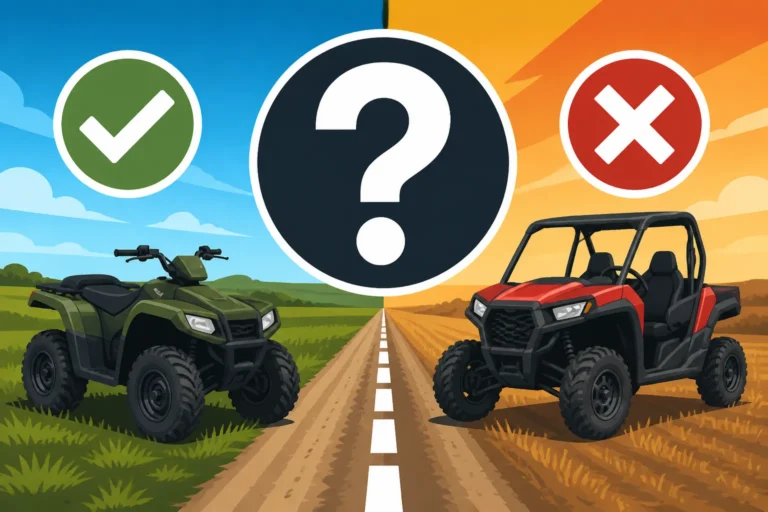
A machine that fits your trailer and garage may not automatically fit every trail entrance. Pembina Gorge is associated with a 60-inch width limit, so measure the machine at its widest point and verify the current access requirements before you travel. Don’t rely solely on the model name or a manufacturer’s general width figure; accessories such as tires, wheel spacers, or other modifications can affect the actual measurement.
This is especially important for side-by-sides, where riders may assume a machine is trail-ready because it is commonly used off-road. If your UTV is close to the limit, measure carefully and check the posted rules for the riding area. A tight entrance or gate is not a place to discover that your machine is too wide.
The [The 60-Inch Gate at Pembina Gorge] guide is a relevant companion if you’re assessing whether a particular machine can get through the access point. When in doubt, verify the current requirements with the park or managing agency before making the drive.
Match the route to the rider, not just the vehicle
Machine fit is only one part of the decision. A rider who is new to off-road terrain may be more comfortable starting slowly, even if the ATV or UTV is capable of handling more. Experienced riders should also remember that a passenger, a heavy load, or a machine with a different handling feel can change how a section rides.
| Rider or machine situation | What to think through before riding |
|---|---|
| First-time trail rider | Start at a comfortable pace, plan frequent stops, and don’t feel pressured to keep up with faster riders. |
| Side-by-side near the width limit | Measure the widest point and confirm the current access rules before loading. |
| Group with mixed experience | Agree on a regrouping plan and choose a pace that lets everyone ride safely. |
| Youth rider | Check age-related requirements, supervision needs, and whether the machine is suitable for the rider. |
| Passenger aboard | Confirm the machine is designed to carry a passenger and that both riders have appropriate protective gear. |
If Pembina Gorge is part of a first trail trip, [Best North Dakota OHV Trails for Beginners] may help you compare the kind of outing you want with other riding areas. And if your group is deciding whether to bring a side-by-side, [North Dakota Trails That Allow Side-by-Sides] is another useful topic to review.
Prepare the machine for a full ride day
A trail-ready machine should be in sound operating condition before it reaches the trailhead. Check tires, controls, brakes, lights, and fuel, and make sure the machine is appropriate for the route and conditions. Bring any basic tools or supplies you normally rely on for a ride, along with a way to contact help if your group becomes separated or runs into trouble.
Don’t forget the practical details that are easy to overlook during loading. Secure the machine properly on the trailer, bring the required paperwork and riding gear, and check that everyone knows how to operate their vehicle. If you’re bringing a second machine for a friend or family member, confirm its fit and condition separately rather than assuming the same preparation applies to every vehicle.
A simple pre-ride check can prevent an avoidable problem from taking over the day. It also gives you a chance to catch small issues—such as a loose strap or low tire—while you’re still at home or near your vehicle, rather than after you’ve left the trailhead.
Planning the trip to the trailhead
Find the access point and confirm current details
Pembina Gorge is near Walhalla, but knowing the nearest town is not the same as knowing where to park, unload, and begin riding. Before setting out, confirm the current trailhead location and access instructions. The guide [Pembina Gorge's Trailhead Northwest of Walhalla] can help orient your planning around the trailhead.
Use a route-planning map to understand the drive, especially if your group is coming from different parts of the state. A navigation app such as onX Offroad can help riders review an area and keep track of a planned route. Download or otherwise prepare for the possibility of weak service before you leave home; a map that depends on a strong connection may be less useful once you’re in a coverage gap.
Map information is a planning aid, not a substitute for current posted directions or official trail information. Check that your route leads to the correct access point, confirm where trailers may be parked, and avoid assuming that an unmarked road or track is open to OHVs. If a map and posted instructions appear to conflict, follow the official directions and ask the managing agency for clarification.
Make parking and unloading part of the plan
A trail trip can feel rushed before it even starts if the group arrives without a plan for trailers, unloading, or gear. Decide who is bringing each machine, who is carrying shared supplies, and where the group will regroup before riding. If several trucks and trailers are involved, check whether the parking area can accommodate the vehicles and allow room for safe loading and unloading.
Give yourself time to secure the tow vehicle and trailer, complete a machine check, and make sure everyone has their helmet and other protective equipment. Rushing through these steps can lead to missed items or a machine that hasn’t been checked properly. A calm start is particularly valuable when children or new riders are part of the group.
If you’re using onX Offroad to plan your route, look at the approach and trailhead details before travel rather than waiting until you arrive. Save the relevant map information in advance and make sure someone else in the group knows the plan too. It’s easier to adjust a route together before leaving than to sort out conflicting phone maps at the trailhead.
Consider an overnight stay without assuming amenities
Some riders may want to make Pembina Gorge part of an overnight outing rather than a quick day trip. If that’s your plan, check the current camping options, reservation process, and rules before leaving. Don’t assume that a trailhead provides camping, water, restrooms, or other services simply because it is a popular riding area.
The [North Dakota OHV Camping at Pembina Gorge] guide is a helpful next read for thinking through an overnight visit. For reservations or access questions, confirm details directly with the park or facility handling the stay. Availability, site rules, and services can change, so plan around the information provided for your intended dates.
If you’re traveling with a trailer, make sure your lodging or campsite can accommodate it. Also consider where machines may be parked, whether you’ll need to secure them overnight, and how you’ll manage muddy gear. A little preparation can spare you the familiar end-of-day scramble of trying to fit wet boots, helmets, and trail-stained clothing into a vehicle.
Conditions, closures, and trail etiquette
Check for wet-weather closures
North Dakota weather can change the feel of a trail quickly. A route that was manageable in dry conditions may become slippery or difficult after rain, and soft ground can be damaged by repeated traffic. Avoid treating a forecast as a guarantee that the trail will be open or suitable. Check for current notices close to your departure and again before riding.
The [North Dakota Trails Closed by Wet Weather] guide explains why wet conditions deserve attention. If a trail is closed, don’t ride around a barrier or look for an informal way to enter. Closures help protect the surface and reduce the chance that riders, machines, or trail crews will encounter preventable problems.
Even without a formal closure, use judgment. If the ground is becoming deeply rutted or your machine is struggling for traction, slow down and consider turning back. Avoid spinning tires to force a path through soft spots. A ride is not worth damaging the trail or creating a hazard for the next group.
Keep the group considerate and predictable
Trail etiquette matters on a compact route where riders may encounter one another repeatedly. Keep to the marked route, approach other riders at a controlled speed, and leave space when passing or stopping. If your group needs to pause, choose a place that doesn’t block the trail or create a blind-spot hazard.
Make sure everyone knows what to do if the group becomes separated. Agree on a regrouping point or a simple plan before setting off, and don’t leave a rider behind without checking that they’re safe. Groups with a range of experience may want to use a lead rider and a designated sweep rider so someone remains at the back.
Respect posted rules, private property boundaries, and any restrictions in place for the riding area. A map app can help with orientation, but it cannot grant permission to travel somewhere that is closed or private. Use onX Offroad or another mapping tool as a planning aid, and rely on posted signs and official instructions for access decisions.
Stay within your limits as the day changes
Fatigue can creep up gradually. A rider may begin the day feeling confident, then become less attentive after hours of wind, vibration, and concentration. Take breaks before anyone is exhausted, drink water, and keep an eye on children and less experienced riders. If someone seems uncomfortable, pause and reassess rather than pushing ahead because the group has a schedule.
Weather, visibility, and trail conditions can also change during the ride. If a section feels beyond your ability or machine, stop somewhere safe and decide whether to proceed, turn around, or ask for help. There’s no need to prove anything to the group by taking a risk you wouldn’t choose on your own.
Carry a charged phone, but don’t make the whole group’s safety plan depend on cell coverage. Share your itinerary with someone who isn’t riding, and let them know when you expect to be back. A modest amount of preparation can make a remote-feeling ride more manageable without taking the fun out of it.
A practical plan for a Pembina Gorge ride
Before you leave home
A successful ride often comes down to a handful of details handled in advance. Confirm the trail is open, review current access rules, check machine width, and make sure the route to the trailhead is clear. If you’ll be camping, confirm the site and its rules separately rather than assuming that camping is included with riding access.
Use a map tool such as onX Offroad to prepare for the general route, but save what you need before travel and keep official information handy. Make sure every rider understands the plan, including where the group will meet, how you’ll regroup, and what to do if someone has a mechanical issue.
Finally, leave room in the schedule. A relaxed departure lets you inspect machines, adjust gear, and respond to changing conditions without feeling as though every delay is ruining the day.
At the trailhead
Once you arrive, take a few minutes to read posted information and look over the access area. Confirm that your machine fits the rules, that you’re using the correct route, and that your parking or unloading spot is appropriate. If anything is unclear, stop and ask rather than making an assumption.
Before riding, check that everyone has what they need and that each machine is ready. Agree on a pace and a signal or method for stopping. Keep the first stretch easy enough to let everyone settle in, especially if the group includes a new rider or someone who has not used that machine on a trail before.
After the ride
When you return, account for everyone and inspect the machines before loading. Look for obvious damage, loose items, or a problem that should be addressed before the next outing. Clean off mud and debris in a suitable place, and follow any local rules for washing equipment.
If you encountered a closure, confusing sign, or a trail condition that seemed unsafe, share that information with the appropriate managing agency. Don’t treat an informal report from another rider as proof that a route is open or closed; check official updates before your next visit.
Pembina Gorge’s 16 miles can be plenty for a rewarding ride when you match the machine and pace to the conditions. Confirm the details that matter most—access, width, weather, and overnight plans—then give the day enough breathing room to enjoy the trail rather than rush through it.
Disclaimer
This article is for general informational purposes only and does not constitute professional advice. Laws, prices and regulations vary by location and change over time. Consult a qualified professional for guidance on your specific situation.