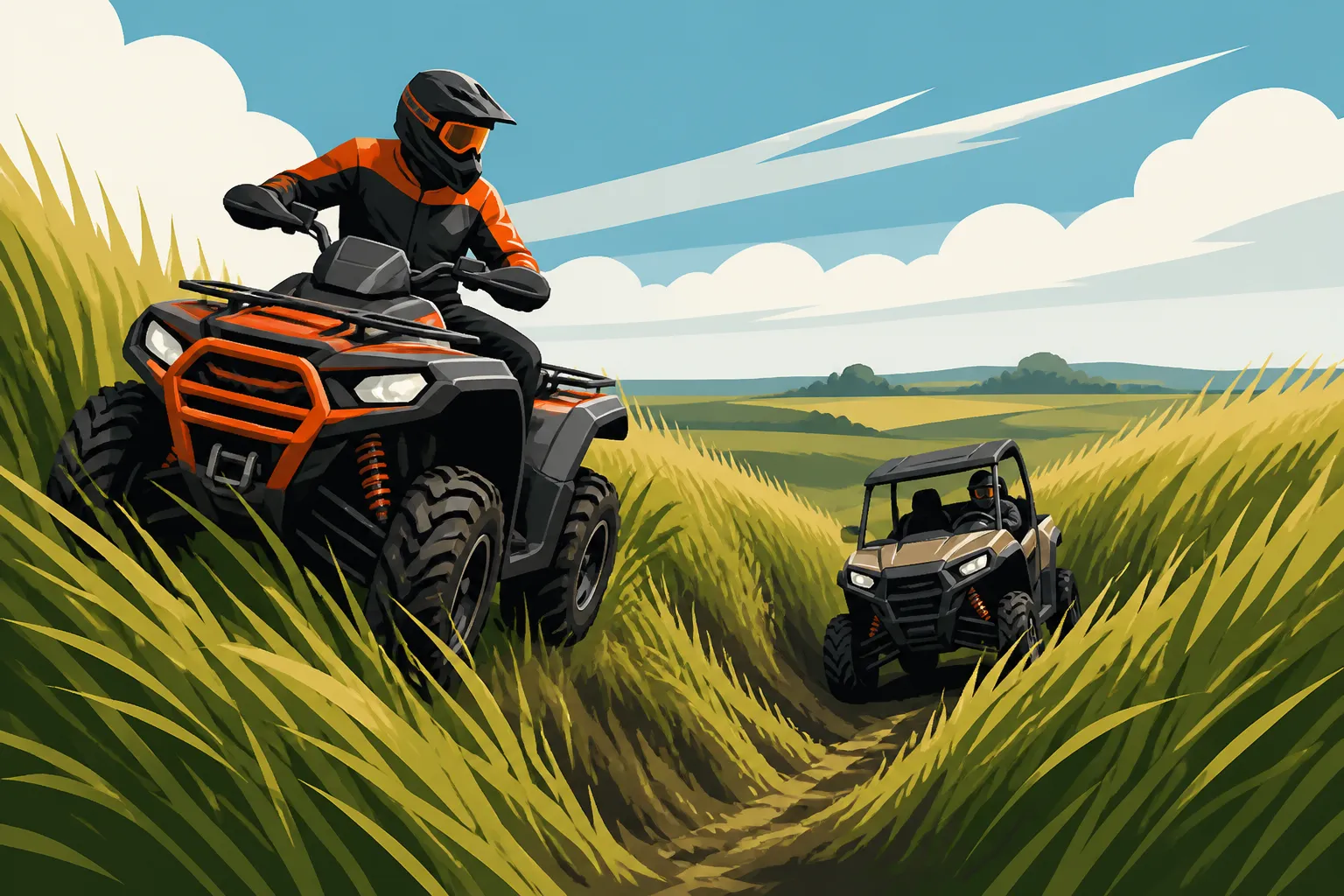
Riding a Ditch in Tall Grass
It's a beautiful sunny day in North Dakota, and you're itching to get your ATV or UTV out for a ride. Maybe you're heading to a fishing spot, checking fences, or just enjoying the open country. Often, the most direct route, and a legal one in many parts of the state, is along a road ditch. But what happens when those ditches are choked with tall grass, swaying high above your tires? It can turn a routine ride into a nerve-wracking gamble. This guide is here to walk you through the real challenges and practical considerations of riding North Dakota ditches when the grass is tall, helping you stay safe and legal.
Understanding North Dakota's Ditch Riding Rules
North Dakota offers some unique opportunities for OHV enthusiasts, with ditch riding being a prime example. However, it's not a free-for-all, and understanding the specific regulations is crucial, especially when conditions like tall grass enter the picture.
The Legal Right to the Ditch Bottom and Back-Slope
In North Dakota, the law provides for a specific right to operate off-highway vehicles (OHVs) within the public road ditch. This isn't just a suggestion; it's a legal allowance for Class I and II OHVs, with some specific stipulations. You're generally permitted to ride on the back-slope and ditch bottom. Think of the back-slope as the part of the ditch furthest from the road, rising up to the adjacent private land, and the ditch bottom as the lowest point. This gives riders a fair amount of space to maneuver.
However, it's really important to know where those boundaries lie. The inslope—that part of the ditch closest to the road surface, including the shoulder—is typically off-limits. Crossing from the ditch bottom to the road shoulder is where many riders get into trouble. Knowing [Riding North Dakota's Ditch Bottom and Back-Slope] is critical to understanding these distinctions. These rules are in place not just for your safety, but for the safety of other motorists and to prevent damage to the road infrastructure itself. While it might seem like a small detail, adhering to these specific areas helps maintain the balance between OHV use and general public safety.
When Tall Grass Becomes an Obstruction
Now, add tall grass into this equation. Suddenly, those clearly defined legal boundaries become a lot fuzzier. North Dakota's ditch laws do include provisions for [North Dakota's Obstruction Exception], allowing you to briefly leave the ditch bottom or back-slope to bypass an obstruction. But is tall grass an obstruction? This is where it gets tricky and often relies on common sense and the judgment of a law enforcement officer. A patch of knee-high alfalfa might not be an obstruction, but a dense, six-foot-tall cattail marsh certainly could be.
The intent of the law is to allow practical passage, not to permit riders to create their own paths or ignore hazards. Tall grass isn't a groomed trail; it conceals the true nature of the ground beneath. What looks like a smooth, grassy path could be hiding a deep rut, a forgotten culvert, or even a hidden approach. This lack of visibility is the core issue. While the letter of the law might permit riding in the ditch, the spirit of safety dictates caution. Always remember that ditch conditions can vary dramatically from one mile marker to the next, and what was clear last week might be overgrown and hazardous this week.
Navigating the Hazards of Tall Grass Ditch Riding
Riding in tall grass isn't just an inconvenience; it introduces a host of genuine hazards that can turn an enjoyable outing into a dangerous situation. These aren't just theoretical risks; they're challenges North Dakota riders face regularly.
Hidden Obstacles and Uneven Terrain
Imagine cruising along, enjoying the scenery, only for your front tires to suddenly drop into a hidden culvert or slam into a large rock that was completely obscured by a curtain of chest-high grass. It happens. North Dakota ditches, particularly in agricultural areas, are often riddled with unseen dangers. [Hidden Culverts and Approaches] are a significant concern, designed to manage water flow, but deadly traps for an unsuspecting OHV rider. Beyond culverts, you might encounter old fence posts, irrigation pipes, discarded farm equipment, construction debris, or even natural features like boulders and erosion ruts.
When grass is tall, these obstacles are impossible to spot until you're right on top of them. This drastically increases the risk of a rollover, a sudden stop that throws you from your machine, or severe damage to your ATV or UTV's suspension, tires, or frame. It's not just the big, obvious things; even seemingly minor uneven terrain, like a sudden drop-off or a deeply eroded section, can become a major incident when you can't see it coming. Riders often underestimate the impact of these hidden hazards, thinking the grass will cushion the blow, but it rarely does.
Visibility, Traction, and Machine Overheating
Tall grass creates a multi-faceted problem for visibility. First, your visibility as a rider is severely hampered. You can't see what's directly in front of your machine, meaning you can't anticipate changes in terrain or spot obstacles. You also can't see cross-traffic or other ditch riders until they're almost on top of you. Second, your machine's visibility to others is reduced. If you're riding a smaller ATV, you might be almost entirely hidden from the view of passing motorists, creating a dangerous situation if you need to briefly emerge or cross an approach. This is why some riders use brightly colored flags that extend above the grass line.
Traction can also become an issue. Dense, wet grass can be surprisingly slick, especially if there's mud or soft soil underneath. This can lead to unexpected slides, loss of control, and difficulty climbing out of depressions. Perhaps one of the most overlooked hazards, particularly on hot summer days, is machine overheating. Tall grass can pack tightly against your radiator, restricting crucial airflow needed to cool the engine. This is especially true for UTVs and larger ATVs. Additionally, dry grass can wrap around hot exhaust pipes, catalytic converters, or other engine components, posing a significant fire risk – a scenario no one wants to experience out in the middle of nowhere. It's a real concern and one that demands attention.
Wildlife Encounters and Environmental Impact
Riding through tall grass often means you're moving through prime habitat for North Dakota's diverse wildlife. It's not uncommon to surprise a deer, a flock of pheasants, or even a startled rabbit. A sudden burst of movement from a hidden animal can cause you to swerve instinctively, potentially leading to a loss of control, a rollover, or a collision with the animal itself. Smaller animals like badgers or porcupines might also be hidden, and a direct impact could injure both you and the animal, or cause severe damage to your machine.
Beyond direct encounters, riding in tall grass can have an environmental impact, especially if you venture outside the designated ditch bottom and back-slope. You could inadvertently disturb nesting birds, trample young crops on adjacent private land, or damage fragile ecosystems. While North Dakota's ditch laws generally allow for passage, it doesn't give carte blanche to wreak havoc. Maintaining respect for the environment and adjacent landowners is key to preserving the privilege of ditch riding. Always be mindful of your surroundings and consider the wider impact of your ride.
Essential Gear and Techniques for Riding in Tall Grass
Riding safely and effectively in tall grass isn't just about knowing the rules; it's about being prepared and employing smart riding techniques. A little foresight and the right gear can make a world of difference.
Pre-Ride Checks and Machine Preparation
Before you even think about tackling those tall grassy ditches, a thorough pre-ride inspection of your ATV or UTV is paramount. Start with your tires: ensure they're properly inflated and that your tread is in good condition for maximizing traction. Check all fluid levels – oil, coolant, and brake fluid. This is especially important for preventing overheating when the radiator might be getting choked by grass. Secure any loose items on your machine that could get snagged or fall off.
Consider what accessories might enhance your safety. A winch, for instance, can be an absolute lifesaver. Products like those from SuperATV offer robust winch systems that are invaluable if you find yourself stuck in a deep, grass-hidden rut or bog. You might also want to ensure your machine has a properly functioning spark arrester to minimize fire risk from hot exhaust contacting dry grass. Furthermore, a brightly colored flag, mounted on a pole and extending above your machine, significantly increases your visibility to other riders and passing motorists, especially when you're mostly hidden by tall grass. Always carry basic tools, a first-aid kit, and enough water, as these rides can be more strenuous and isolating than you anticipate.
Riding Techniques for Tall Grass Conditions
When the grass is tall, your riding technique needs to shift dramatically. The golden rule is simple: slow down. You should only go as fast as you can see what's ahead of you. This means being prepared to stop or swerve at a moment's notice. Ride defensively, always assuming there's a hidden obstacle or an approaching vehicle you can't see. Maintain a safe, respectable distance from the edge of the paved or gravel road to give yourself maximum reaction time if road traffic gets close.
Using a lower gear is often a good strategy when navigating dense, tall grass. It provides better torque, which helps maintain momentum without excessive speed, and it reduces the strain on your engine, helping to prevent overheating. Avoid sudden, jerky movements, as these can lead to loss of traction or control, especially on unseen uneven terrain. Remember that [North Dakota Helmet Law for Riders Under 18] applies, but wearing a DOT-approved helmet is smart for all riders, regardless of age, especially in conditions where unseen hazards are prevalent. Eye protection is also a must to shield against flying debris and grass.
Post-Ride Maintenance
The ride isn't over when you park your machine; post-ride maintenance is crucial, especially after navigating tall, grassy ditches. The first thing you'll want to do is carefully inspect your machine for any grass that might have wrapped itself around axles, driveshafts, or, most critically, your radiator. Even small amounts of packed grass can significantly reduce cooling efficiency, leading to overheating on future rides. Thoroughly cleaning out your radiator fins with compressed air or a gentle stream of water is highly recommended.
Next, check for any damage to your tires, wheels, or suspension components from those hidden obstacles. Look for bent tie rods, damaged CV boots, or punctures. This is also a good time to consider protective upgrades. Adding robust skid plates, like those offered by SuperATV, can provide a crucial layer of defense for your undercarriage against rocks, stumps, and other hidden hazards that tall grass loves to conceal. Regular cleaning of your machine, particularly after dusty or muddy rides through the ditch, will help extend its lifespan and ensure you're ready for your next adventure.
Safety and Legal Considerations Beyond the Grass
Riding in North Dakota ditches, particularly in challenging conditions like tall grass, requires a holistic understanding of safety and legal responsibilities. It's about more than just your machine; it's about your impact on others and the land.
Landowner Relations and Posted Land
While North Dakota law allows for OHV operation in public road ditches, it's critical to remember that the land adjacent to the ditch is almost always private property. Crossing onto private land, even inadvertently, without explicit permission from the landowner is trespassing. This is where [North Dakota Posted Land Rules for Riders] become incredibly important. Signs indicating "Posted" land mean no entry without permission, and this applies to the areas beyond the ditch right-of-way.
Maintaining good relationships with landowners is essential for the future of ditch riding in North Dakota. A few bad actors can ruin it for everyone. If you encounter a situation where you need to leave the ditch for any reason (e.g., to retrieve a stuck machine), always try to contact the landowner first. Knowing how to identify [North Dakota Posted Land Signs and Riders] and respecting those boundaries helps build trust and ensures that this unique riding opportunity remains available. Err on the side of caution; when in doubt, stay strictly within the ditch bottom and back-slope.
Local Ordinances and Enforcement
While North Dakota state law sets a baseline for OHV operation in ditches, it's vital to understand that local jurisdictions can have their own specific rules. [North Dakota County and City ATV Ordinances] can add layers of complexity, sometimes restricting hours of operation, prohibiting riding in certain areas, or even banning ditch riding altogether within specific municipal or county limits. Just because the state allows it doesn't mean your local county or city does.
Before venturing into a new area, it's always a good idea to check with local law enforcement or the county sheriff's office. A quick phone call can save you a potential citation. Officers are within their rights to ask to see your registration, proof of ownership, and potentially a safety certificate if you're under 16. Understanding [What an Officer Can Ask to See] and being prepared to show your paperwork can smooth over many interactions. Riding an unregistered machine can lead to [North Dakota Penalties for Riding Unregistered], which can be costly and frustrating. Being informed about local rules demonstrates responsible riding and helps foster a positive image for the OHV community.
Insurance and Liability
Given the increased risks associated with riding in tall grass – hidden obstacles, reduced visibility, potential for rollovers – having adequate insurance for your OHV is not just a good idea, it's a critical safety net. While North Dakota does not mandate liability insurance for all OHV operation, if you plan to ride on public roads or trails, it's highly recommended and may even be required for road-legal operation. [North Dakota Insurance Requirements at Registration] cover the basics for road-going machines.
The potential financial burden of an accident without sufficient coverage can be devastating. If you hit a hidden culvert and damage your machine, or worse, if you cause damage to private property or injure someone, your liability could be enormous. Understanding [North Dakota Accident Reporting for an OHV] is also important in case something does go wrong. Investing in comprehensive and liability coverage protects not only your machine but also your personal finances. Don't assume your homeowner's policy will cover your OHV; often, it does not when you're operating off your own property. It’s an investment in peace of mind.
Here's a quick look at some common challenges and how to mitigate them:
| Hazard | Description | Mitigation Strategy |
|---|---|---|
| Hidden Obstacles | Culverts, rocks, ruts, debris obscured by tall grass. | Slow down, ride cautiously, use a spotter if available, consider skid plates (SuperATV). |
| Reduced Visibility | Rider can't see ahead; machine is hidden from others. | Use a tall, brightly colored flag; wear bright clothing; slow down; keep distance from roadways. |
| Machine Overheating | Grass blocks radiator airflow; engine works harder. | Clean radiator pre-ride; use lower gears; take breaks; carry water; check coolant levels. |
| Fire Risk | Dry grass contacts hot exhaust or engine components. | Ensure spark arrester is clean; inspect for grass buildup post-ride; carry a small fire extinguisher. |
| Wildlife Encounters | Startled animals darting out of tall grass. | Ride slower, be alert for movement, avoid riding at dawn/dusk; use horn if needed. |
| Getting Stuck | Deep mud, soft ground, or ruts hidden by grass. | Consider a winch (SuperATV); ride with a buddy; carry a tow strap and shovel. |
| Trespass | Inadvertently straying onto private land beyond ditch right-of-way. | Know local ordinances; respect [North Dakota Posted Land Signs and Riders]; obtain landowner permission. |
Disclaimer
This article is for general informational purposes only and does not constitute professional advice. Laws, prices and regulations vary by location and change over time. Consult a qualified professional for guidance on your specific situation.