Sharing a Gravel Road With Grain Trucks
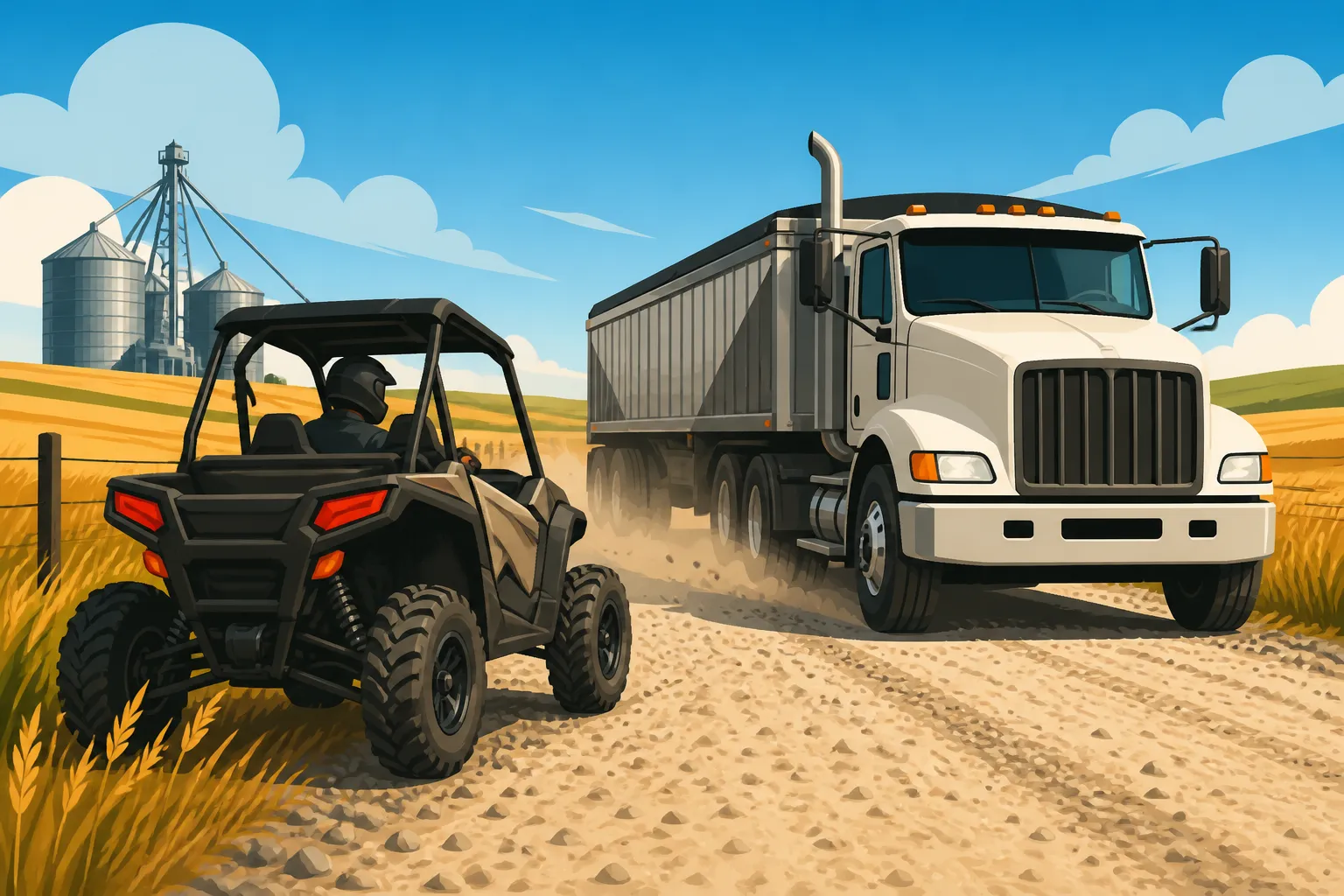
It’s a scene all too familiar for anyone who loves to ride their ATV or UTV in North Dakota: you’re cruising down a gravel road, enjoying the open air, maybe heading to a favorite fishing spot or a friend’s farm, when suddenly, a towering cloud of dust appears on the horizon. Moments later, a behemoth grain truck, often loaded to the brim and moving with purpose, barrels towards you. That sudden, heart-thumping moment of shared road space can feel incredibly intimidating, and it’s a real challenge riders face regularly. This guide is here to walk you through how to navigate these encounters safely and confidently, ensuring both you and the truck drivers can go about your day without incident.
The Unique Landscape of North Dakota Gravel Roads
North Dakota is a land defined by its agriculture, and that means its road network, especially the sprawling grid of gravel roads, is designed to serve the rhythm of the farming season. These aren't just scenic routes; they're vital arteries for moving crops, machinery, and livestock. Understanding the nature of these roads and the other vehicles that frequent them is the first step toward safe riding.
The Nature of the Beast: Dust, Loose Gravel, and Visibility
If you've spent any time off the pavement in North Dakota, you know that gravel roads here are a world unto themselves. They're often dynamic, changing with weather and traffic. In dry conditions, they can be incredibly dusty. A passing vehicle, particularly a heavy one, can kick up a thick, blinding plume that hangs in the air, obliterating visibility for everyone behind it. This isn't just an inconvenience; it's a serious hazard, turning a familiar stretch of road into a dangerous guessing game.
Then there's the gravel itself. Some roads are freshly graveled, with loose stones that can feel like riding on ball bearings, especially around corners or when braking. Others are washboarded, creating a jarring, rattling experience that can challenge your machine's suspension and your own control. And let's not forget the occasional deep rut or unexpected pothole, formed by heavy farm equipment or spring thaws. These conditions demand constant vigilance and a keen understanding of your machine's limits. For more on the specifics, check out [North Dakota Rules for Riding a Gravel Road].
Who Else Is Out There? Beyond Grain Trucks
While grain trucks are the focus of our discussion today, it's important to remember they're not the only giants you'll encounter on North Dakota's gravel roads. You'll share these thoroughfares with a whole parade of agricultural vehicles: massive combines slowly moving between fields, wide tractor-trailer units hauling various implements, sprayers with long booms, and even herds of cattle being moved from pasture to pasture. Then there are the everyday pickups, SUVs, and passenger cars driven by local residents who know these roads like the back of their hand and often drive at speeds that feel, shall we say, "optimistic" for the conditions.
Each of these vehicles presents its own set of challenges, from their sheer size and slower speeds to their unpredictable movements as they turn into field approaches. Understanding this broader context helps you mentally prepare for the myriad of situations you might encounter. If you're using your ATV or UTV for farm work, you're part of this system, and knowing the paperwork requirements, especially for your machine, is helpful. We've got more information on that in [North Dakota Farm Machines and North Dakota Paperwork].
The Imposing Presence of Grain Trucks
Let's get down to the brass tacks: grain trucks are a force of nature on North Dakota's rural roads. They are essential to the state's economy, and during harvest, they represent an intense, focused effort to get crops from field to elevator. For us, as recreational or utility riders, this means we must approach every interaction with them with the utmost respect and caution.
Size, Weight, and Stopping Power Differences
Think about the difference between a pebble and a boulder. That's essentially the dynamic between your ATV or UTV and a fully loaded grain truck. These trucks, especially the semi-trucks with double trailers, can weigh many tens of thousands of pounds. Your machine, by comparison, might be a few hundred pounds or, for a larger UTV, perhaps a couple of thousand. This colossal difference in mass translates directly into momentum and, crucially, stopping distance.
A grain truck simply cannot stop on a dime, especially on loose gravel. Their drivers need significant lead time to slow down, and they have very limited ability to swerve or make sudden maneuvers to avoid an obstacle. What might be a minor swerve for you to avoid a pothole could be a catastrophic event for a loaded truck. This reality means the onus is largely on us, the ATV and UTV riders, to recognize their limitations and give them ample space and right-of-way. Feeling dwarfed and vulnerable next to one of these giants is a completely valid emotion, and it should inform your riding strategy.
The "Draft" and Debris: What They Throw Your Way
It’s not just the direct impact you have to worry about; it's also the physics of a large, fast-moving object. As a grain truck rushes past, it creates a significant air displacement, often referred to as a "draft" or vacuum effect. This can literally pull a lighter ATV or UTV slightly towards the truck, which can be unsettling and dangerous if you're not prepared for it. It's like a sudden gust of wind that you can't see coming.
Beyond the air current, these trucks are often kicking up a formidable amount of dust, gravel, and sometimes even spilled grain. These aren't just little specks; a rock flung from a dual tire at highway speed can be a serious projectile. Imagine a baseball hitting your helmet or windshield. This is why having proper protective gear is non-negotiable, and why many riders consider sturdy upgrades. Investing in a high-quality windshield or even a full cab enclosure from a reputable manufacturer like SuperATV can be a game-changer for protecting you from these unexpected projectiles and the relentless dust.
Seasonal Intensification: Harvest Time Hustle
The frequency and intensity of grain truck traffic aren't static throughout the year. While you'll encounter them during planting season in spring, harvest time in late summer and fall is when these roads truly come alive with activity. Farmers are often working around the clock, pushing hard to get their crops in before bad weather hits or market prices shift. This means trucks are running continuously, sometimes with multiple drivers, and often at the maximum safe speed for the conditions, trying to minimize turnaround times.
During these critical periods, you need to be exceptionally aware. The roads are busier, drivers are often fatigued, and the urgency is palpable. This isn't the time for casual, inattentive riding. If you’re riding to access a field, being aware of the farmer's schedule and the heavy traffic can help you plan your route or timing. We cover more details about riding near agricultural operations in [North Dakota Rules for Riding to a Field]. It’s a period where your patience and defensive riding skills will be truly tested.
Your Strategy for Safe Coexistence
Riding on gravel roads alongside working vehicles requires a proactive and defensive mindset. It's about anticipating hazards, making yourself seen, and understanding that you are often the more agile, but also the more vulnerable, party.
Maximizing Your Visibility and Awareness
Making yourself as visible as possible is paramount. Think bright colors for your riding gear – neon green, orange, or yellow are excellent choices. Many riders also add reflective tape to their helmets, vests, and even their machines. Always run your headlights and taillights, even in broad daylight. Consider adding auxiliary lights or LED whips, especially if you plan to ride near dusk or dawn. Products from SuperATV, for example, often include robust lighting options designed for off-road use, which translate well to enhancing visibility on gravel roads.
Awareness, however, goes beyond just being seen. It means keeping your head on a swivel. Actively scan the road ahead for dust plumes, which are often the first sign of an approaching vehicle. Listen for the distinct rumble of a heavy diesel engine or the hiss of air brakes, especially when visibility is poor or you're approaching a blind corner or hill crest. Use your mirrors religiously. A good set of mirrors is not just for looking cool; it's a critical safety tool, allowing you to monitor traffic behind you. If you need to upgrade your mirrors, you can find options to improve your field of vision. More information on mirror requirements can be found in [North Dakota Mirror Rules on a Quad], and for lighting, check out [North Dakota Lighting Rules on a Quad].
Mastering the Art of the Pass or Yield
When you encounter a grain truck, or any large farm vehicle, your primary instinct should almost always be to yield. This means pulling over to the right-hand shoulder, slowing down significantly, or even coming to a complete stop, especially if the dust cloud is thick. Give them as much room as you possibly can. Wait for them to pass safely, and then wait for the dust to settle before you pull back onto the main track. Patience here is a virtue that can save your life.
If you find yourself behind a slow-moving truck and need to pass, exercise extreme caution. Only attempt to pass when you have a clear, unobstructed view of the road ahead for a significant distance. Signal your intention clearly, ensure the driver sees you (a quick flash of your headlights might help, but don't assume they saw you), and execute the pass quickly and decisively. Never pass on a blind curve, over a hill crest, or when there's an oncoming dust cloud. Remember, their high vantage point means they might not see your smaller machine easily, particularly if you're close behind them. These rules of the road apply generally to any highway crossing as well. For general guidance, refer to [North Dakota Rules for Crossing a Highway].
Machine Preparedness: Enhancements for Safety
Beyond your personal gear and riding technique, your machine itself plays a role in your safety. Ensure your ATV or UTV is in top mechanical condition. This includes properly inflated tires (consider tires designed for gravel or mixed terrain rather than aggressive mud tires, which can be squirrely on hardpack), well-maintained brakes, and a properly functioning suspension. A healthy engine means you have the power to accelerate out of a sticky situation if needed.
Consider adding aftermarket accessories that enhance safety. Beyond the visibility aids mentioned earlier, a sturdy front bumper can offer some protection, and a winch, like those offered by SuperATV, can be invaluable if you have to pull far off the road into a soft ditch to yield and get stuck. Make sure your muffler is in good shape, not just for noise regulations (which you can learn more about in [North Dakota Muffler Requirements]), but also so you can hear approaching vehicles clearly and communicate effectively.
Beyond the Ride: Being a Responsible Member of the Road
Riding an ATV or UTV on North Dakota's gravel roads isn't just about following rules; it's about being part of a community and respecting the landscape and the livelihoods of those around you.
Understanding Local Etiquette and Expectations
In rural North Dakota, common courtesy goes a long way. A simple wave to an oncoming truck driver, especially if you've pulled over to let them pass, acknowledges their presence and effort. Remember that these truck drivers are often local farmers or their employees, and they are working long, hard hours to feed the world. Their priorities are speed, efficiency, and safety for their operation. Your recreation, while important to you, is not their main concern.
Avoid kicking up excessive dust when passing homes or farmsteads. If you see cattle or horses nearby, slow down to avoid startling them. Be mindful of posted land. While you're on a public road, farm fields are often right up to the ditch, and showing respect for private property is crucial for maintaining good relationships with landowners. More details on respecting private land are available in [North Dakota Posted Land Rules for Riders]. Being a good neighbor means understanding that the roads you enjoy are also their workspace.
When to Report a Problem
Most interactions with grain trucks and other farm vehicles are routine, even if a bit nerve-wracking. However, there might be rare instances where you encounter genuinely reckless driving or dangerous situations. If you witness someone driving unsafely, posing a clear and present danger to others, you have the option to report it to local law enforcement. It's usually best to get a vehicle description, license plate number, and the time and location of the incident.
Before reporting, always prioritize your own safety. Avoid confrontation. Your immediate goal is to remove yourself from harm's way. While reporting is an option, remember that in most cases, defensive driving and smart decision-making on your part will be your best defense. Knowing who to call and what information to have ready can be important, especially if there's ever an accident. For specific guidance on what documentation officers might ask for, refer to [What an Officer Can Ask to See] and [North Dakota Accident Reporting for an OHV]. It’s also wise to ensure you have adequate insurance coverage, just in case, which is discussed in [North Dakota Insurance Rules for OHV Riders].
Here’s a quick overview of key considerations when encountering heavy agricultural traffic:
| Aspect | ATV/UTV Rider's Action | Why It Matters |
|---|---|---|
| Visibility | Wear bright colors, use lights, add reflective tape | Makes you stand out against dust and background; reduces blind spots |
| Awareness | Scan far ahead, listen for engines/brakes | Allows early detection of approaching vehicles and hazards |
| Yielding | Pull to the right, slow/stop, wait for dust to settle | Gives large trucks ample space; acknowledges their inability to stop quickly |
| Passing | Only when clear, signal, quick execution | Minimizes time in opposing lane; reduces risk of collision |
| Dust Mitigation | Reduce speed, increase following distance, use windshield | Protects rider from debris; maintains visibility for everyone |
| Machine Prep | Good tires, brakes, suspension, accessories like winch | Ensures control, safety, and ability to handle unexpected situations |
| Etiquette | Wave, respect private land, avoid excessive dust | Builds positive relationships with local community and farmers |
| Legality | Know road rules, carry necessary permits | Avoids citations; ensures you're riding legally and responsibly |
| Emergency | Know how to report issues, carry a first-aid kit | Preparedness for unforeseen events |
Remember, North Dakota’s gravel roads offer incredible access to the outdoors and serve vital agricultural purposes. By understanding the unique challenges they present and adopting a proactive, respectful approach to sharing them with grain trucks and other large vehicles, you can ensure your rides remain enjoyable and, most importantly, safe. Always be aware of the [North Dakota Equipment Required on a Roadway] for your machine to stay compliant.
Disclaimer
This article is for general informational purposes only and does not constitute professional advice. Laws, prices and regulations vary by location and change over time. Consult a qualified professional for guidance on your specific situation.