Calling a Sheriff Before You Ride
There's nothing quite like the freedom of hopping on your ATV or UTV and hitting the trails or cruising a ditch in North Dakota. But let's be real, that feeling of freedom can quickly turn into a knot of anxiety when you're unsure about where you can legally ride, especially when local rules often muddy the waters. Many riders find themselves scratching their heads, wondering if that seemingly open section line is truly fair game or if a quick trip to the general store on their side-by-side will land them a hefty fine. This guide is all about cutting through that confusion, explaining why a simple call to your local sheriff's office or police department before you ride can save you a whole lot of headache, heartache, and even money.
The Patchwork of North Dakota OHV Rules at the Local Level
Navigating the rules for riding your off-highway vehicle (OHV) in North Dakota can feel like trying to solve a jigsaw puzzle with pieces from different boxes. You learn the state laws, you understand the basics of registration and equipment, but then you encounter local ordinances that seem to contradict everything you thought you knew. This isn't just frustrating; it’s a genuine challenge for even the most responsible riders.
Why Local Ordinances Create Confusion
The biggest source of bewilderment for many riders is the fact that while North Dakota state law provides a general framework for OHV operation, it also grants significant authority to local jurisdictions—counties, townships, and cities—to enact their own, often more restrictive, rules. This means that a ditch you've always ridden in one county might be perfectly legal, while an identical ditch just a few miles down the road, now within a different county or city limit, could be strictly off-limits.
Imagine you're planning a weekend ride with friends, mapping out a route that you believe adheres to all state regulations for [North Dakota Ditch Riding: The Legal Right Explained]. You've got your machine registered, your helmet on, and you're ready to explore. However, unbeknownst to you, the small town you plan to ride through has a specific ordinance prohibiting OHV use on any municipal roads, or perhaps limiting riding hours to daylight only. Suddenly, your fun outing turns into an unexpected conversation with a local deputy, potentially leading to a citation. This scenario plays out far too often, not because riders are intentionally breaking the law, but because the local nuances are incredibly hard to track down without direct inquiry. These local rules can cover everything from speed limits within town boundaries, specific no-ride zones, noise curfews, or even outright bans on certain types of OHVs on particular roads.
What State Law Says About Local Control
It’s easy to think that if state law permits something, then it’s universally allowed across North Dakota. However, when it comes to OHVs, the state legislature has built in provisions that empower local governments to have their say. This isn't a loophole; it's an intentional delegation of authority. For instance, while state law allows for riding on certain gravel and paved roads under specific conditions, local city councils or county commissions can pass ordinances that modify or completely disallow this in their specific jurisdictions.
The key thing to understand is that state law generally sets a baseline, but local governments can build upon that baseline with additional restrictions. They cannot, for example, create laws that permit something explicitly forbidden by state law, but they can certainly prohibit something that state law might otherwise allow. A common point of confusion here is whether a city can require its own special sticker or permit for OHVs. State law is quite clear on this: [North Dakota Cities Cannot Require Local Registration]. While they can't make you buy a separate city sticker, they can and do implement ordinances that restrict where and when you can ride within their boundaries. This means that even if your OHV is fully registered with the state, a local prohibition could still apply, emphasizing the need for riders to be vigilant and informed about the specific rules in the areas they intend to ride.
When and Why to Contact Local Law Enforcement Before You Ride
Given the complex web of state and local regulations, knowing when and why to reach out to local law enforcement can save you a tremendous amount of grief. It’s not about getting permission to break rules; it’s about clarity, safety, and responsible recreation.
Navigating Unfamiliar Territory
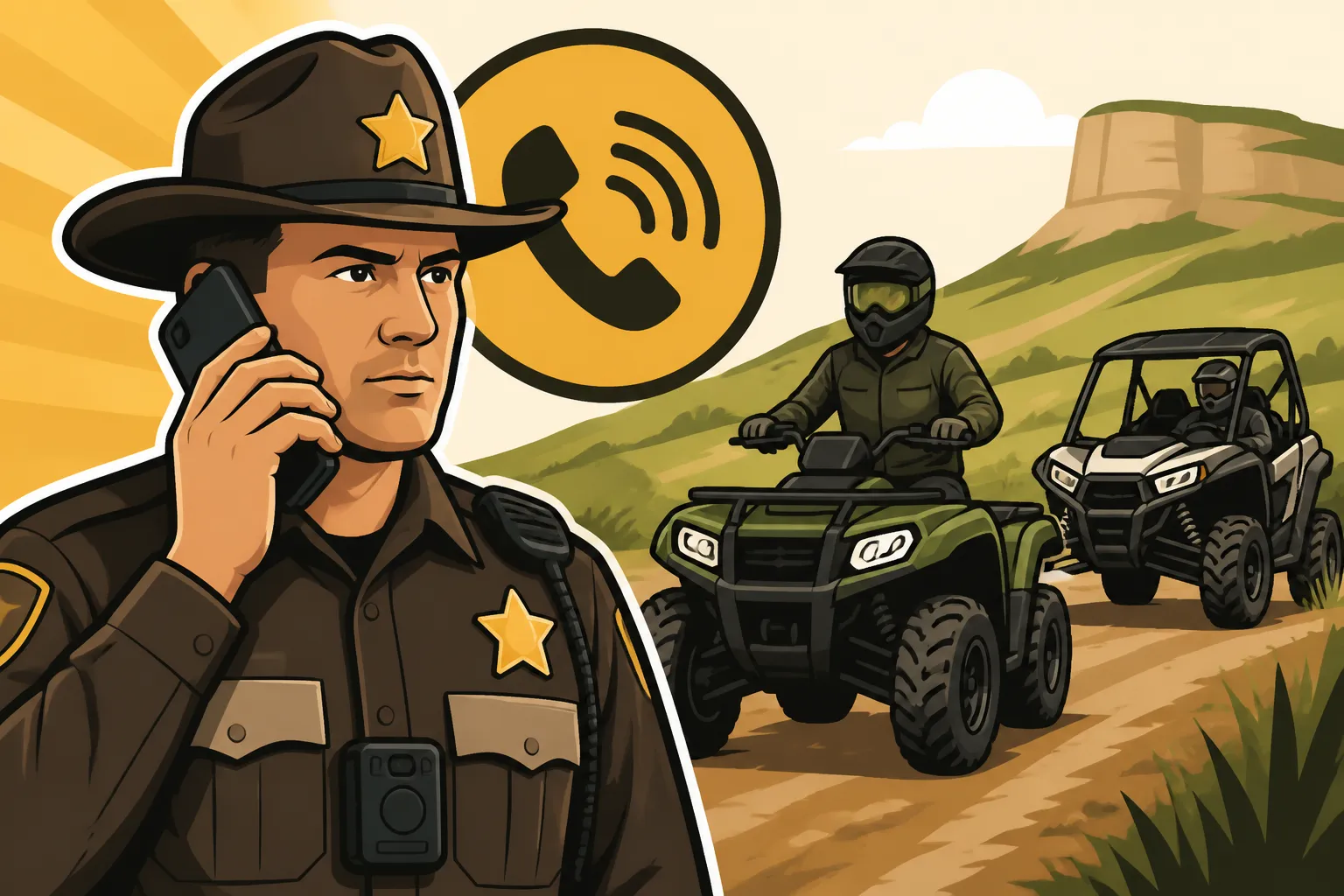
If you're anything like me, you probably have your go-to riding spots – areas where you know the lay of the land, the private property boundaries, and, crucially, the local OHV rules inside and out. But what happens when you venture beyond those familiar haunts? Perhaps you've heard about a great riding area a few counties over, or maybe you're visiting family in a different part of the state and want to bring your OHV along. This is precisely when a quick call to the local sheriff's office or city police department becomes not just a good idea, but an essential step.
Consider a hypothetical scenario: You're planning a long weekend trip to a lake cabin in a county you've never ridden in before. You've checked the state laws for [North Dakota Rules for Riding a Gravel Road] and feel confident about your understanding. However, without knowing the local ordinances, you might inadvertently find yourself riding on a road that a particular county has deemed off-limits for OHVs, or perhaps you're passing through a township that has stricter noise regulations than you're used to. A quick, polite phone call can clear up these ambiguities and prevent an unpleasant encounter with law enforcement. It shows you are a responsible rider, eager to comply with local statutes, and that goes a long way. Furthermore, being proactive helps promote a positive image for the entire OHV community, showing that riders are respectful of local rules and residents.
Specific Situations That Warrant a Call
While it's always a good idea to check, certain situations absolutely scream for a call to local law enforcement. These include:
- Riding Near or Within City Limits: If your route takes you close to or through any incorporated towns or cities, stop and call. These areas almost always have their own set of rules, often more restrictive than state law, regarding speed, noise, and permissible roads. You might be allowed to ride on a section line for miles, but as soon as it crosses into city jurisdiction, the rules can change dramatically.
- Accessing Private Land via Public Roads: Many riders use OHVs to access hunting land, fishing spots, or agricultural fields. While you might have permission from the landowner to be on their property, getting to that property often involves using public roads or easements. Confirming the legality of your proposed route on these public thoroughfares is crucial. Understanding [North Dakota Rules for Riding to a Field] can be complex depending on how it interacts with local ordinances.
- Organized Events or Group Rides: If you're organizing or participating in a group ride, especially one that covers a significant distance or crosses multiple jurisdictions, it's paramount to involve local law enforcement early. They can advise on safe routes, potential restrictions, and may even be able to offer assistance in case of an emergency. This is particularly important for charity rides or poker runs.
- Uncertainty About Section Lines or Township Roads: North Dakota has a unique system of section lines and township roads. While state law offers some guidance, local interpretations or specific county ordinances can still apply. If you're unsure about [North Dakota Rules for Riding a Section Line] or [North Dakota Rules for Riding a Township Road] in a specific area, [Checking With Local Law Enforcement First] is your best bet to avoid unintentional violations.
- When You Need to Traverse a Road with a Higher Speed Limit: State law often dictates different rules for OHV operation based on the posted speed limit of a road. If your route involves roads posted at, say, 55 mph or 65 mph, verifying local applicability is key. For example, [North Dakota Class III Machines at 65 mph Roads] have specific allowances, but again, local rules could supersede them.
How to Effectively Communicate with the Sheriff's Office or Local Police
Making that call can feel a bit daunting, but approaching it with the right information and a clear purpose will make it smooth and productive. Remember, these folks are there to help ensure public safety and answer questions, especially from responsible citizens.
Gathering Your Information Before the Call
Before you dial, take a few moments to gather some key details. This will help you ask precise questions and allow the officer or dispatcher to provide accurate information. Nothing is more frustrating for both parties than a vague inquiry.
Here’s what you should have ready:
- Specific Location Details: Be as precise as possible. Provide actual street addresses, road numbers (e.g., County Road 7, 42nd Street NW), or even section numbers if you're looking at a plat map. If you're referring to a general area, mention landmarks or nearby towns. For example, "I'm planning to ride OHVs in the ditch along County Road 15 between the towns of [Town A] and [Town B] in [County Name]."
- Type of Machine: Clearly state whether you'll be riding an ATV, a UTV (side-by-side), or even a dirt bike. Mentioning its classification (e.g., Class I, Class II, or Class III) can also be helpful if you know it, as specific rules might apply to each. [North Dakota Class I Machines Defined] and [North Dakota Class II Width and Weight Limits] are state-level distinctions that might play into local considerations.
- Proposed Riding Activity: Explain what you intend to do. Are you primarily riding ditches? Planning to use county roads to connect to private land? Are you hoping to ride within the confines of a small town to get gas or food? The activity itself often dictates which rules apply.
- Your Preparedness: Briefly mentioning that your machine is properly registered and equipped can also set a positive tone. For instance, you might note that your UTV has a SuperATV mirror that meets visibility standards for road riding, or that your headlights and tail lights are fully functional. This demonstrates you've already taken steps to be a responsible rider. [North Dakota Mirror Rules on a Quad] and [North Dakota Lighting Rules on a Quad] are crucial aspects to be aware of.
Having this information ready makes it easier for the person on the other end of the line to assist you without a lot of back-and-forth, showing respect for their time and expertise.
What Questions to Ask and What to Expect
When you call, state your purpose clearly and politely. Something like, "Hello, I'm calling for some clarification on OHV rules in your jurisdiction. I'm planning to ride my ATV in [specific area/road] and want to make sure I understand all local ordinances."
Here are some specific questions to consider asking:
- "Are OHVs (ATVs/UTVs) permitted on [specific road name or type, e.g., gravel county roads, section lines] within [this city/county]?"
- "Are there any specific time restrictions for OHV operation, such as night curfews or noise ordinances that would apply to my machine?" [North Dakota Noise Complaints About Quads]
- "What are the local rules for ditch riding along county roads in this area?" Specifically refer to [Can You Ride an ATV in the Ditch in North Dakota?] if you're looking for clarification on ditch riding.
- "Are there any areas within the city limits where OHVs are explicitly prohibited, even if state law might allow for certain road use?"
- "If I'm accessing private land, are there any specific considerations for using township or county roads to get there?"
What to Expect:
- Patience and Clarity: Most law enforcement personnel are happy to provide information to responsible citizens. Be patient, as they might need to look up specific ordinances.
- Direct Answers (or Referrals): You should expect direct answers. If they don't know immediately, they might transfer you to someone who does, or advise you where to find the ordinances (e.g., the county website).
- Varying Levels of Detail: The depth of information you receive might vary. Some offices are very familiar with OHV rules, while others might have to do some digging. Don't be afraid to politely ask for clarification if something isn't clear.
- No Legal Advice: Remember, they are providing information on current laws, not legal advice. Their guidance is for practical compliance.
Here's a handy table of questions you might consider:
| Category | Key Questions to Ask | Importance |
|---|---|---|
| Location | Are OHVs permitted on Specific Road/Area? | Direct answer for your intended route. |
| Jurisdiction | Are there specific city/county ordinances different from state law? | Uncovers local restrictions that override state allowances. |
| Time/Noise | Are there time-of-day or noise restrictions? | Prevents citations for late-night or early-morning rides. |
| Ditch Riding | What are the rules for ditch riding here? | Ditch riding rules can vary locally. |
| Access | Can I use public roads to access private property? | Clarifies legality of connecting routes. |
| Events | Are there special permits for group rides/events? | Essential for organized activities. |
| Equipment | Any local equipment requirements (e.g., louder horn standards)? | Confirms if your OHV meets local safety specs. |
Common Misconceptions and Best Practices for Local Riding
Even with the best intentions, riders often fall prey to certain assumptions or overlook crucial steps that could prevent issues with local authorities. Understanding these pitfalls and adopting best practices is key to enjoying your OHV responsibly in North Dakota.
The Myth of "If it's not posted, it's open"
This is perhaps one of the most dangerous assumptions an OHV rider can make, particularly when riding near or within populated areas. While it's true that state law regarding [North Dakota Posted Land Rules for Riders] often centers on explicit signage for private property, the same logic does not universally apply to public roads or urban environments. Just because a city entrance or a county road doesn't have a large, obvious "No OHVs Allowed" sign doesn't automatically mean it's open for riding.
Local ordinances are legally binding regardless of whether there's physical signage announcing every single rule. For example, a city's general ordinance might prohibit OHV use on all paved roads within city limits, or only allow it during specific hours. There won't be a sign at every intersection or on every block stating this. The burden of knowing and complying with these local laws almost always falls on the rider. This is why a proactive phone call is so much more effective than relying on the absence of a sign. You might be legally in the clear by state law on a gravel road, but if that road suddenly enters a township or city boundary with its own specific ban, a lack of signage will not be a defense in court. Always default to caution, especially when venturing into areas that are clearly more developed or unfamiliar.
Building Positive Relationships with Local Authorities
Beyond simply avoiding a ticket, being proactive and respectful in your dealings with local law enforcement offers long-term benefits for the entire OHV community. When you take the time to call and ask questions, you’re not just being a responsible individual; you’re contributing to a positive image for all riders.
- Demonstrate Responsibility: Law enforcement appreciates citizens who are actively trying to comply with the law. This creates a foundation of trust. If an officer encounters you later, they are more likely to view you as a responsible recreationalist rather than someone trying to skirt the rules.
- Facilitate Future Understanding: Positive interactions can help bridge the gap between riders and local authorities. If local officials see that OHV riders are considerate and law-abiding, they may be more open to discussions about creating new riding opportunities or finding solutions to shared concerns, rather than defaulting to outright bans.
- Personal Safety Net: In the rare event you do have a minor issue or need assistance while riding, having established a polite rapport can sometimes lead to a more understanding interaction. Knowing you've equipped your machine responsibly, for instance with a reliable SuperATV winch – not just for getting unstuck, but also demonstrating preparedness for challenging terrain – can show your commitment to safety and responsible riding. Likewise, ensuring all riders, especially those [North Dakota Helmet Law Age Limit] applies to, wear DOT-approved helmets, reflects a commitment to safety that law enforcement will appreciate.
- Community Integration: OHV riding is a growing pastime in North Dakota. By being respectful and informed, we help integrate OHV recreation into the fabric of local communities without creating friction. This is especially true for events like poker runs or charity rides, where good communication with local sheriffs can make or break the success and reception of the event.
Documenting Your Inquiry
Even after a helpful phone call, memories can fade, and personnel can change. It’s always a good practice to document your inquiry. This doesn't need to be an elaborate legal brief, just a simple record for your own peace of mind and as proof of due diligence.
Jot down:
- Date and Time of Call: When did you make the inquiry?
- Name of the Person You Spoke With: If they provide their name or title, make a note of it.
- Department Called: Which sheriff's office or police department?
- Key Information Discussed: Briefly summarize the questions you asked and the answers you received, especially regarding specific roads, areas, or restrictions.
- Your Plan of Action: How will this information influence your ride plan?
This informal record can be incredibly useful. While it won't necessarily stand as absolute legal protection if you still somehow find yourself in violation, it serves as strong evidence of your proactive efforts to comply with the law. It demonstrates that you made a genuine attempt to understand the rules before you rode, a sign of a truly responsible OHV owner.
Disclaimer
This article is for general informational purposes only and does not constitute professional advice. Laws, prices and regulations vary by location and change over time. Consult a qualified professional for guidance on your specific situation.