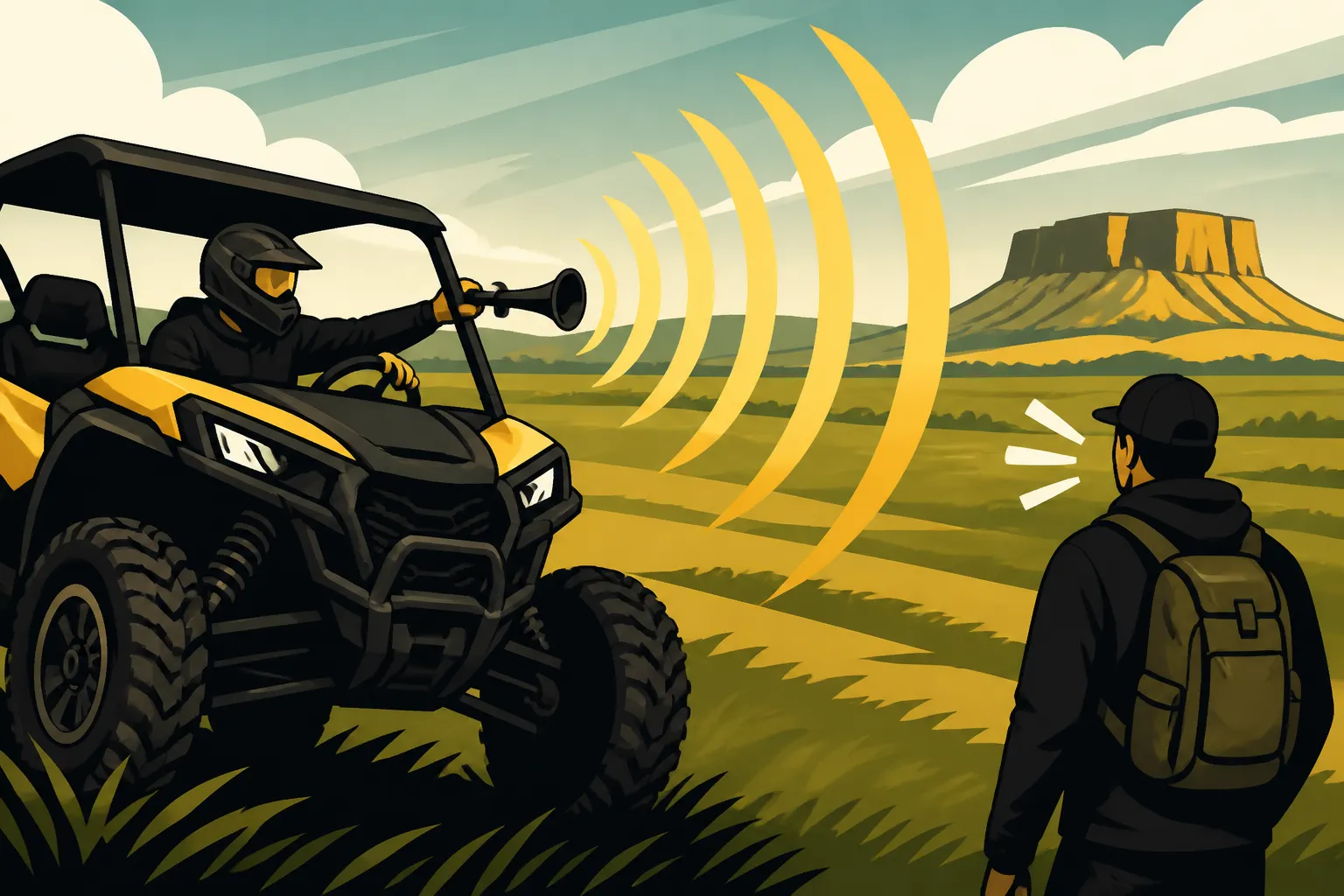
A Horn Audible at 200 Feet
There's nothing quite like the freedom of taking your ATV or UTV out on the open road in North Dakota, whether you're just heading to a hunting spot, getting to a nearby trail, or simply making a quick trip into town. But that freedom comes with some very specific responsibilities, and one of the most commonly overlooked details is the requirement for a proper horn. It's not enough to just have any horn; North Dakota law specifies that it must be "audible at 200 feet." This can be a real head-scratcher for many riders, leaving them wondering if their machine's factory horn—if it even has one—actually measures up. This guide will dive deep into what that 200-foot rule truly means for you, why it's so important, and how to ensure your off-highway vehicle (OHV) is legally equipped for the road.
Why North Dakota Demands an Audible Horn on the Road
The idea of putting a horn on an ATV or UTV might seem a bit odd to seasoned off-roaders. After all, when you're out on the trails or navigating rough terrain, the roar of the engine or the general clamor of the environment often serves as enough warning. But the moment you transition from a dirt path to a public road, the rules of the game change dramatically. You're no longer just dealing with fellow enthusiasts; you're sharing the pavement with cars, trucks, pedestrians, and cyclists who operate under a very different set of expectations.
Safety First on Public Roadways
Think about it: cars and trucks come with factory-installed horns for a critical reason. They're essential for alerting other drivers to your presence, especially in blind spots, when passing, or when an unexpected hazard arises. A quick honk can prevent a collision, warn a distracted pedestrian, or even scare off an animal that's wandered into the road. Your OHV, especially a quiet electric model or one roaring along at high speeds, needs the same capability to communicate its presence quickly and unequivocally. Without an effective horn, you're essentially riding without a voice, increasing the risk for yourself and everyone else on the road. This safety consideration is paramount, and it's why North Dakota doesn't just suggest a horn but mandates a specific standard.
Many factory-installed ATV or UTV horns are designed for low-speed, off-road communication – a quick "heads up" to a rider just ahead. They often sound more like a polite beep than a commanding alert. When you're trying to signal an oncoming semi-truck or a car backing out of a driveway, a timid beep simply won't cut it. The louder, more authoritative sound required by the 200-foot rule ensures that your warning will be heard over ambient traffic noise, wind buffeting, and even the sound of your own engine. It’s about being heard and understood in situations where mere seconds can make a difference between a close call and a serious accident.
Understanding North Dakota's Specific Horn Requirement
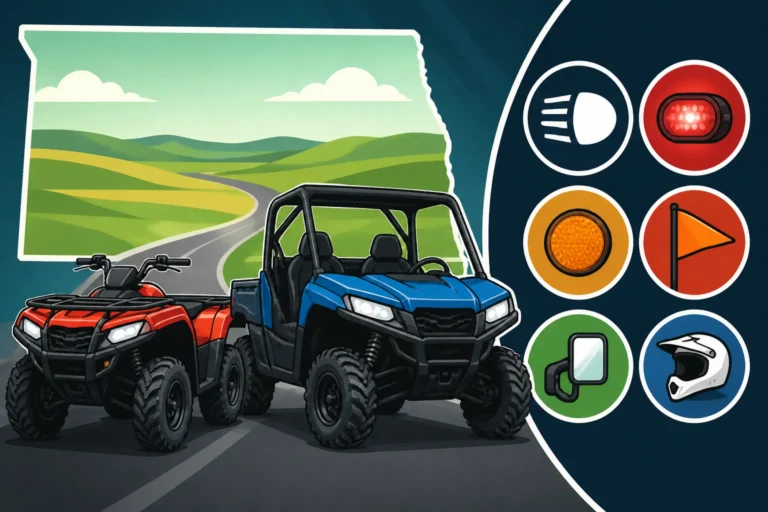
North Dakota law is quite clear: if you intend to operate your OHV on public roads, you need specific equipment. This isn't just a minor technicality; it's a foundational element of making your machine road-legal. While you're probably already thinking about headlights, taillights, and mirrors, the horn often gets overlooked until you're pulled over or trying to pass an inspection. The state wants to ensure that any vehicle sharing its roads can effectively signal intent and warn others. Neglecting this crucial detail can lead to fines and a premature end to your ride. Riders should always review [North Dakota Equipment Required on a Roadway] before hitting any paved or gravel surface.
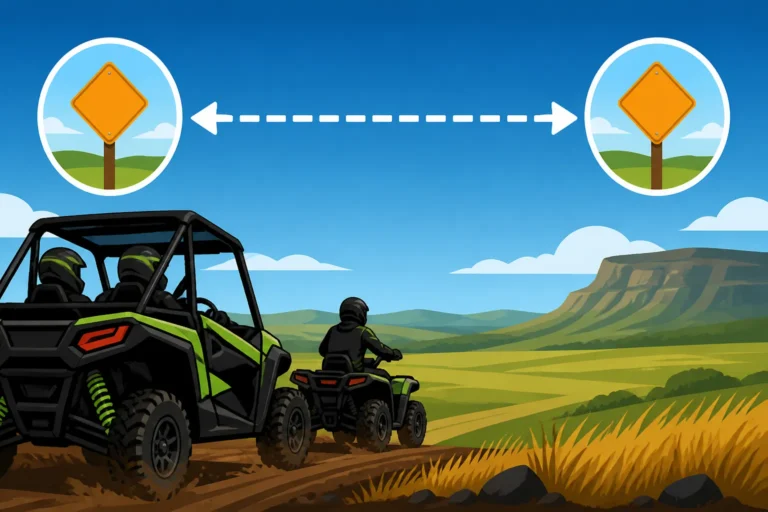
The "audible at 200 feet" standard isn't an arbitrary number. It’s a distance chosen to provide adequate reaction time for other road users. Imagine a scenario where you're approaching an intersection and a car starts to pull out in front of you. If your horn can only be heard at 50 feet, it might be too late for the other driver to react by the time they hear it. At 200 feet, you're providing a much larger buffer, allowing enough time for the other driver to register the sound, locate its source, and take corrective action. This legal requirement demonstrates a commitment to road safety that extends beyond just passenger cars and trucks, embracing the growing number of OHVs on public routes.
What "Audible at 200 Feet" Really Means in Practice
This particular phrase can be a bit nebulous for most riders. What does "audible" truly mean? Is it a faint whisper you can barely distinguish, or a clear, unmistakable sound? In the context of vehicle laws, "audible" means that the horn's sound must be clearly recognizable as a horn blast, distinct from other noises, and loud enough to draw attention. It needs to cut through the background noise of traffic, wind, and your machine's own engine. It's not about being the loudest horn on the block, but about being effective at a distance that allows for proper warning.
Achieving this 200-foot audibility isn't always straightforward. Many stock OHV horns are designed for trail use, where ambient noise is often lower and speeds are reduced. When you introduce highway speeds, passing vehicles, and the natural elements like strong prairie winds, a standard horn might simply get drowned out. This means you might need to invest in an aftermarket horn specifically designed for higher decibel output or more penetrating sound. It’s about ensuring that your warning carries far enough and loud enough to be noticed by a driver inside a climate-controlled vehicle with their radio on, or a pedestrian engrossed in their phone.
Choosing and Installing the Right Horn for Road Legal Riding
So, you've understood the requirement. Now, how do you go about finding a horn that actually meets North Dakota's "audible at 200 feet" standard? It's not just about picking the loudest option; it's about reliability, proper installation, and ensuring it integrates seamlessly with your OHV.
Types of Horns and What to Look For
When you start looking for a horn, you'll encounter a few main types. The most common are electric horns, similar to what you'd find in a car. These are powered by your machine's 12-volt system and produce sound through a vibrating diaphragm. They come in various sizes and decibel ratings, with some designed specifically to be much louder than typical factory units. Another option is an air horn, which uses compressed air to produce a very loud, often truck-like sound. While incredibly effective at generating volume, air horns usually require an air compressor and a small tank, which adds complexity and space requirements to your OHV.
For most OHV riders seeking road legality, a robust electric horn is the sweet spot. When selecting one, look for horns marketed for motorcycles, ATVs, UTVs, or even marine applications, as these are often built to withstand harsh weather and vibration while delivering significant decibels. Brands like SuperATV offer a range of universal and specific fitment horns, often as part of larger street-legal kits. These kits are convenient because they are typically designed to meet specific legal requirements, taking some of the guesswork out of the process. Always check the horn's decibel rating, if available, but remember that real-world audibility at 200 feet will depend on many factors beyond a lab test.
Practical Steps for Testing 200-Foot Audibility
This is where things get hands-on. How do you actually verify that your horn meets the 200-foot rule? You can't just guess; you need to conduct a real-world test. Find a safe, quiet location away from heavy traffic or loud machinery – an empty parking lot or a rural stretch of road would be ideal. Bring a friend and a measuring tape or use an app on your phone to accurately measure 200 feet (that's about 60 meters or roughly the length of two semi-trucks with their trailers).
Have your friend stand at the 200-foot mark while you remain in your OHV. Sound the horn. Your friend should then honestly assess if the horn is "clearly audible." This means they shouldn't have to strain to hear it, nor should it sound like a distant, indistinct noise. It should be unmistakably a horn. Repeat the test a few times, perhaps with your engine running to simulate road conditions. If your friend struggles to hear it, or if it sounds weak, you likely need a different horn or a better installation. Remember, an officer checking your horn won't be looking for a faint sound; they'll be looking for a distinct warning signal.
Installation Considerations for Longevity and Performance
Proper installation is just as critical as choosing the right horn. Mounting location is key. The horn needs to be protected from direct impacts and excessive mud or water, but also positioned where its sound isn't muffled by body panels or other components. Many riders choose to mount horns on the frame, behind the grille, or even on a roll cage if accessible. Ensuring a clear path for the sound to project forward is crucial for maximizing its audibility.
Wiring is another vital aspect. Most aftermarket horns require a connection to your OHV's 12-volt electrical system. It's often best to wire the horn through a relay, especially for high-power horns, to protect your OHV's existing wiring and switches. Use appropriate gauge wire, secure connections, and insulate all exposed terminals to prevent short circuits and corrosion. Given North Dakota's varied weather conditions, from blizzards to dusty summers, weatherproofing your connections and the horn itself is paramount. A well-installed horn will not only meet legal requirements but also provide reliable service for years to come. For more detailed insights into what specific equipment is needed, including mirrors, check out [North Dakota Mirror and Horn Requirements].
Legal Implications and Staying Compliant
Ignoring the horn requirement, or having one that doesn't meet the "audible at 200 feet" standard, isn't just a minor oversight. It carries legal consequences and, more importantly, can compromise your safety. Knowing the rules and how enforcement works is vital for every North Dakota OHV rider.
Avoiding a Citation and Understanding Penalties
Being caught on a public road with an inadequate or non-existent horn can result in a citation. While the exact fine may vary, even a basic OHV violation can add up once court costs are included. An officer performing a routine stop for another reason, or even conducting a random safety check, can easily test your horn. If it doesn't meet the standard, you could find yourself with a ticket that puts a damper on your ride and your wallet. These penalties can also escalate, so it's always better to be proactive rather than reactive. If you are curious about potential costs, check out [North Dakota Ticket Cost for a Road Violation] for more information.
Beyond the immediate fine, being found non-compliant can cause other headaches. An officer might issue a "fix-it" ticket, requiring you to get the issue resolved and prove compliance. In some cases, depending on the severity and other factors, they might even deem your vehicle unsafe for road operation, forcing you to trailer it home. It's a hassle that's easily avoided by ensuring your horn is up to snuff before you leave the driveway. Think of it as a small investment in peace of mind and uninterrupted riding.
Comprehensive Road-Legal Equipment Check
The horn is just one piece of the puzzle when it comes to making your OHV road-legal in North Dakota. Other critical components include proper lighting (headlights, taillights, brake lights, and turn signals), at least one rearview mirror (and often two for optimal safety), and tires that are designated for highway use. Furthermore, there are specific engine displacement requirements, such as a [North Dakota's 350cc Minimum for Road Riding] for certain road types. Riders under a certain age also need to comply with [North Dakota Helmet Law for Riders Under 18] and hold a valid safety certificate.
When preparing your machine for road use, it's wise to go through a comprehensive checklist. You don't want to get pulled over for a faulty turn signal if your horn is perfectly legal. Many riders choose to purchase complete street-legal kits from reputable brands like SuperATV, as these kits often bundle all the necessary components designed to meet state requirements. This approach helps ensure that you don't miss any critical details and that all parts are compatible.
Here's a quick overview of essential road-legal equipment for North Dakota OHVs:
| Equipment Feature | North Dakota Requirement | Notes |
|---|---|---|
| Horn | Clearly audible at 200 feet | Must be distinct from other noises. |
| Headlamps | At least one, visible at 300 feet | Must be on during night travel, and bad weather. |
| Taillamps | At least one, visible at 500 feet | Red in color, constant illumination. |
| Brake Lamps | At least one, visible at 100 feet | Activates when brakes are applied. |
| Rearview Mirror | At least one, clear view 200 feet to the rear | Many riders prefer two for better visibility. |
| Tires | Non-highway use tires allowed on specific roads | Designated highway tires generally recommended for paved roads. |
| Muffler | Adequate to prevent excessive noise | Spark arrestor often required off-road. |
| Speedometer/Odometer | Required for operation on public roads | Must be calibrated in miles per hour. |
| Engine Size | Minimum 350cc for operation on paved roads | Certain exceptions for agricultural use or crossing roads. |
| Helmets | Required for riders under 18 years of age | Must meet DOT standards. |
| Registration/Title | Valid [North Dakota ATV Registration Renewal] and title | Display plate or decal as required. |
This table provides a snapshot, but always remember to check the specific statutes and local ordinances, as regulations can sometimes vary slightly by county or city. For instance, [North Dakota ATV Road Rules by Surface Type] can inform you where certain machines are allowed based on their capabilities.
Understanding North Dakota Road Rules for OHVs
Beyond the equipment, operating your OHV on North Dakota roads means adhering to all the same traffic laws as any other motor vehicle. This includes speed limits, stop signs, traffic signals, and yielding the right-of-way. It's also critical to understand where you can actually ride. While North Dakota allows OHVs on many gravel and paved roads, there are restrictions. Interstates are generally off-limits, and certain high-speed paved roads may have limits on the class of OHV permitted.
Furthermore, driving under the influence applies equally to OHVs on public roads, trails, or even ditch bottoms. The penalties for [North Dakota DUI Rules for OHV Riders] are severe and can include fines, loss of driving privileges, and even jail time. The key takeaway is to treat your OHV like any other vehicle when it's on public land, whether that's a road, a ditch, or a designated trail. Responsibility and awareness are your best companions for a safe and legal ride.
Integrating a Road-Legal Horn into Your OHV Setup
Making your off-highway vehicle road-legal in North Dakota is a process that goes beyond just adding a horn. It involves thoughtful integration of all the necessary components, ensuring they work together reliably and effectively.
Aftermarket Kits Versus Piecemeal Solutions
For many riders, the easiest path to road legality is investing in an aftermarket street-legal kit. These kits, like those offered by SuperATV, are designed to provide a comprehensive solution, often including a compliant horn, turn signals, mirrors, and sometimes even a license plate bracket with a light. The main benefit here is convenience and compatibility; the components are typically designed to work together and often come with detailed instructions tailored to popular OHV models. This can save you a lot of time and potential headaches compared to sourcing each part individually and trying to make them all integrate.
However, a piecemeal approach can be more cost-effective if you already have some components or prefer specific brands. If you're going this route, be diligent in checking each component against North Dakota's specific requirements. For a horn, remember the "audible at 200 feet" rule. For lighting, ensure it meets visibility standards. For mirrors, check the size and visibility range. While it might take more effort, building your road-legal setup piece by piece allows for greater customization and control over the quality of each component. Just be sure to double-check everything before you consider your machine ready for public roads.
Maintaining Your Horn for Consistent Performance
Just like any other electrical component on your OHV, a horn needs regular maintenance to ensure it remains reliable and effective. Exposure to mud, water, dust, and vibrations can take a toll. Regularly inspect your horn for any visible damage, loose connections, or corrosion on the terminals. Test it periodically to ensure it still produces a strong, clear sound. If you notice a change in pitch or volume, it might be a sign of impending failure.
If your horn is exposed to particularly harsh conditions, a quick spray with a water-displacing lubricant can help protect its internal components. For air horns, regularly check the air lines for leaks and ensure the compressor is functioning correctly. Don't wait until you need to use your horn in an emergency to find out it's not working. A little proactive maintenance can save you from a dangerous situation or a frustrating citation down the road.
Riding Safely and Responsibly with Your Equipped OHV
Ultimately, having a road-legal horn and all other required equipment is about more than just avoiding tickets – it's about being a responsible and safe rider. The horn is a crucial communication tool that helps you interact safely with other vehicles and pedestrians. Use it appropriately: to warn, to alert, and to prevent accidents, not just for fun or to express frustration. Understanding [North Dakota ATV Road Rules by County] is vital, as local areas can have specific ordinances.
Embrace the privilege of riding your OHV on North Dakota's roads by adhering to all traffic laws, exercising courtesy, and always being aware of your surroundings. The more responsibly OHV riders conduct themselves on public roadways, the more positive the perception of our sport will be. So, get that horn installed, test it thoroughly, and enjoy the freedom of exploring North Dakota's diverse landscapes, knowing you're doing so safely and legally.
Disclaimer
This article is for general informational purposes only and does not constitute professional advice. Laws, prices and regulations vary by location and change over time. Consult a qualified professional for guidance on your specific situation.