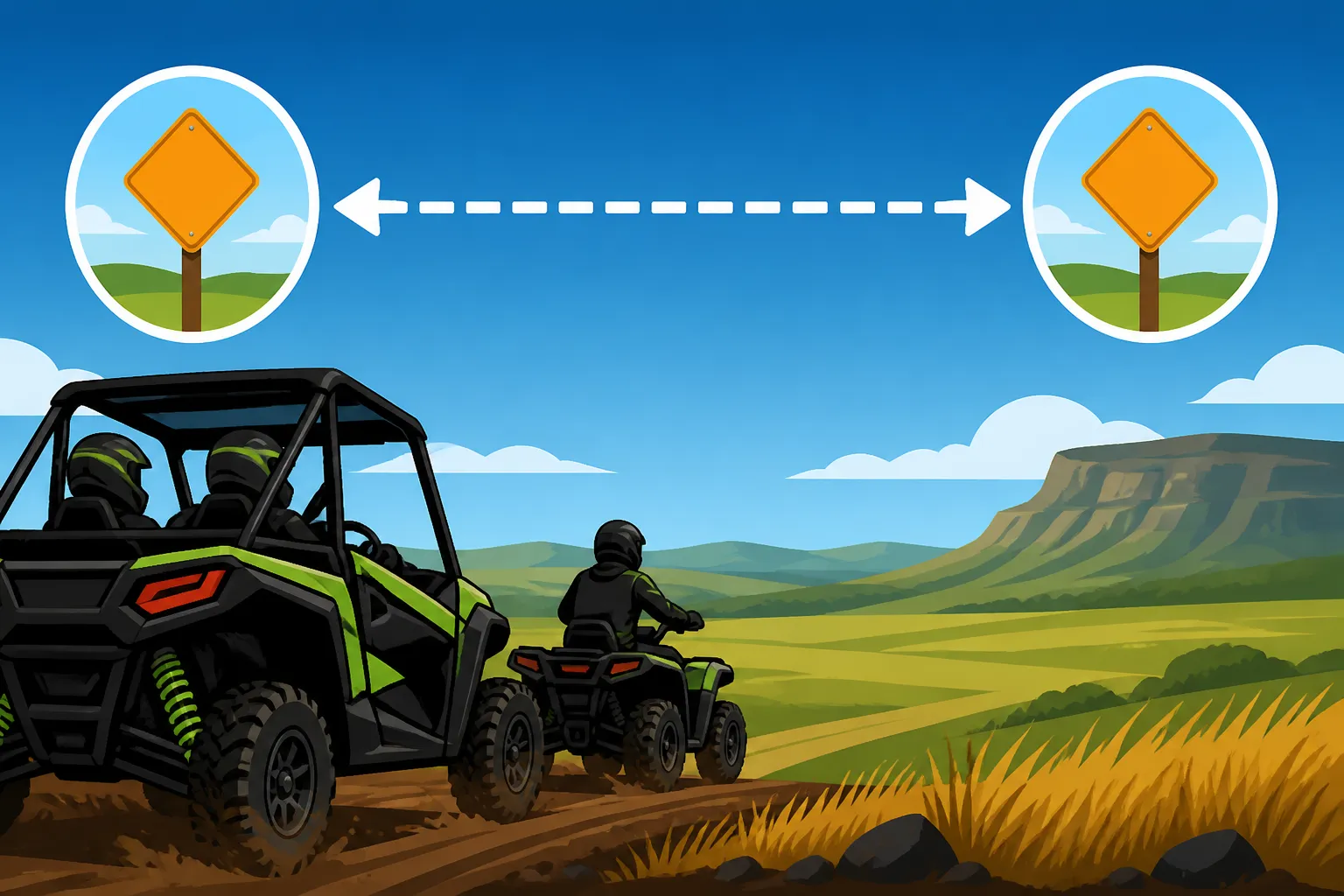
Signs Placed 880 Yards Apart
It's incredibly frustrating to be out on your ATV or UTV, enjoying the wide-open spaces of North Dakota, only to suddenly second-guess whether you're on private land without permission. The feeling of uncertainty can really put a damper on your ride. This guide is all about helping you understand North Dakota's specific rules regarding posted land, especially the seemingly arbitrary distances between signs, so you can ride with confidence and respect for landowners.
The Core Rule: Why North Dakota Posted Signs Are Placed 880 Yards Apart
Navigating North Dakota's vast and often sparsely populated landscape on an OHV requires a keen understanding of land ownership and trespass laws. One of the most critical aspects for any rider to grasp is the legal standard for "posted land," particularly the specific spacing requirement for signs. It's not just a random number; the 880-yard rule is a cornerstone of how private property rights are communicated to the public.
What the 880-Yard Standard Actually Means for Landowners
North Dakota law outlines precise requirements for what constitutes legally posted land, and the 880-yard rule is central to this. For a property owner to legally "post" their land against trespass, they must place signs that are visible and spaced no more than 880 yards apart. To put that into perspective, 880 yards is exactly half a mile. Imagine a long stretch of fence line or a property boundary that extends for miles; signs must be regularly placed along that entire perimeter.
This standard isn't just about putting a sign up; it's about providing continuous, clear notification. A landowner can't just slap a "No Trespassing" sign on one corner of a 160-acre field and call it a day if the other sides aren't similarly marked. The intent is to make it abundantly clear to anyone approaching the property that entry is restricted. This requirement forces landowners to be diligent in their posting efforts, ensuring that riders really do have a fair chance to know where private property begins and ends. It’s a measure designed to prevent ambiguous situations where a rider might genuinely not realize they’ve crossed onto private land. When you see signs, you should always assume the land is private and access is restricted.
How Riders Should Interpret These Spacing Requirements
As an OHV rider, understanding the 880-yard rule is crucial for your own protection against accidental trespassing. While landowners are required to space their signs correctly, you, as the rider, have the responsibility to interpret what you see. If you encounter a "No Trespassing" sign along a fence line or property boundary, you should immediately assume that the land beyond that sign is posted. Don't try to calculate if the next sign is exactly 880 yards away before deciding to turn around. The mere presence of a clearly visible sign is your cue.
Visibility can be challenging, especially in areas with dense vegetation, rolling hills, or during certain times of the year when snow or tall crops might obscure signage. A sign might be placed correctly, but due to your angle of approach or the terrain, you might not spot it until you’re quite close. This is where your personal responsibility comes in. Always ride defensively, constantly scanning for signs, fence lines, and other indicators of private property. If you're on a public trail or road that skirts private land, be extra vigilant. Even if you don't see another sign for a long stretch, once you've seen one, the obligation is on you to respect that boundary. Remember, landowners have put in the effort to mark their property; it's your job to heed those warnings.
Beyond the Signs: Understanding What "Posted" Truly Means in North Dakota
While physical signs are the most common way landowners communicate "no trespassing," North Dakota's definition of "posted land" actually goes a bit further. It's not just about the classic rectangular sign anymore; landowners have a few tools at their disposal to mark their property, and riders need to be aware of all of them to avoid inadvertently breaking the law.
Traditional Posted Land: Signs, Paint, and Gates
The most recognizable form of posted land involves physical signs. As we discussed, these signs need to be clearly visible and spaced no more than [North Dakota Posted Land Signs and Riders] 880 yards apart along the perimeter of the property. These signs often state "No Trespassing," "Private Property," or "Hunting/Fishing By Permission Only." The language is usually unambiguous, leaving little room for misinterpretation.
But signs aren't the only traditional method. North Dakota also recognizes purple paint markings as a legitimate way to post land. A vertical stripe of fluorescent purple paint, at least 8 inches long and 1 inch wide, placed on trees or posts at specific heights and intervals, serves the same legal purpose as a "No Trespassing" sign. These purple marks are often used in wooded areas where signs might be harder to maintain or see. It's a color that stands out and is universally understood in many states, including North Dakota, to mean "keep out." So, if you see those distinct purple stripes, consider the land posted.
Furthermore, a fully enclosed parcel of land, particularly one with a visible gate or barrier at common points of entry, can also be considered posted. This means if you encounter a closed gate across a private trail or access road, even if you don't immediately see a sign or purple paint, you should treat that land as private and inaccessible without explicit permission. The presence of a [Gates on a Fully Enclosed Parcel] gate is a strong indicator that the landowner intends to restrict access. Always assume closed gates mean no entry unless you have direct permission.
The Rise of Electronic Posting and What It Means for OHV Riders
In our increasingly digital world, North Dakota has also embraced modern technology to help landowners post their property and assist the public in identifying those boundaries. This is known as "electronic posting," and it's becoming an increasingly common and effective way to manage land access.
Electronic posting typically involves landowners registering their property as "posted" with a state-approved system, often managed through a third-party app or online platform. These systems create digital maps that clearly delineate private, posted land. For OHV riders, this means you can use a smartphone app or website to view real-time or frequently updated maps showing exactly where posted property lines are. [North Dakota Electronic Posting and Riders] is a game-changer because it removes much of the ambiguity that traditional signs, especially those subject to weather or vandalism, can present. Imagine being able to pull up a map on your phone and see the property lines highlighted, giving you a clear visual guide on your ride.
While electronic posting offers incredible clarity, it also places a new responsibility on riders. While not legally required to check these apps, it's a "best practice" for any responsible OHV enthusiast. Before you head out, especially if you're exploring a new area or riding near mixed-use land, checking an electronic posting map can save you a lot of trouble. It empowers you to proactively plan your route to avoid private land, ensuring a smooth, legal, and respectful ride. This is especially useful in areas where traditional signs might be sparse or hard to spot.
Navigating the Landscape: Best Practices for OHV Riders to Avoid Trespassing
Nobody wants to be "that rider" who unknowingly ventures onto private land and causes a headache for a landowner, or worse, gets into legal trouble. Fortunately, with a bit of planning and a commitment to responsible riding, you can easily navigate North Dakota's diverse landscape while respecting property rights. It's all about proactive measures and a good dose of common sense.
Always Seek Explicit Permission, Even When Unsure
This really can't be stressed enough: when in doubt, always seek permission. Even if you don't see any obvious "No Trespassing" signs or purple paint, if you suspect land might be private, the safest and most respectful course of action is to find out who owns it and ask for permission before riding on it. Many landowners are perfectly amenable to allowing responsible riders on their property, especially for accessing specific areas or crossing a corner, but they appreciate being asked first.
How do you get permission? Sometimes, a quick conversation with a local resident can point you to the landowner. Property ownership information is often publicly available through county assessor's offices or online mapping tools. Once you identify the owner, a polite phone call or even a letter explaining your intentions can go a long way. If you secure permission, it's a smart idea to get it in writing, even if it's just a simple text message or email confirming the details. This protects both you and the landowner. Some landowners even have specific [North Dakota Landowner Permission Forms] they prefer to use, outlining the terms of access. Remember, building a good relationship with landowners benefits the entire OHV community by fostering trust and potentially opening up more riding opportunities in the future.
Equipping Your Machine for Responsible Riding
Being prepared for varying terrain and understanding your location is key to responsible OHV riding, especially when dealing with property boundaries. Your machine itself can be equipped with tools that greatly aid in preventing accidental trespass. A reliable GPS unit, for instance, is an invaluable asset. Modern GPS devices, or even smartphone apps, can display property boundaries, public land designations, and even highlight known trails. Pre-loading maps that show these boundaries before your ride can act as a virtual perimeter alert, helping you stay on track and off private land.
Consider durable mounts for your GPS or phone, especially if you're riding a side-by-side or ATV. Companies like SuperATV offer a range of robust mounts and accessories designed to keep your navigation tools secure and visible, even on the roughest North Dakota terrain. A secure mount means you can glance at your screen easily without fumbling or taking your eyes off the trail for too long. Beyond navigation, ensure your machine is in good working order, with proper lighting and mirrors, so you can clearly see your surroundings and any approaching signs, especially in changing light conditions. Good visibility and accurate navigation are your best friends in ensuring you respect every property line you encounter.
The Repercussions: What Happens When You Ride on Posted Land Without Permission
Riding on posted land without permission isn't just a minor oversight; it carries significant legal and ethical consequences. It's a serious matter that can lead to fines, legal action, and a damaged reputation for the entire OHV community. Understanding these repercussions is a powerful motivator for always riding responsibly and respecting private property.
Understanding North Dakota's Trespass Law for Riders
North Dakota law takes trespassing seriously, and that applies directly to OHV riders. If you are caught riding on posted private land without permission, you can face charges under [North Dakota Trespass Law for Riders]. The penalties can vary depending on the specific circumstances, such as whether it's your first offense, the extent of the trespass, or if any damage occurred. Typically, a basic trespass violation can result in a fine, and if you're found responsible, you'll be on the hook for those costs. [North Dakota Ticket Cost for a Road Violation] can add up quickly, especially when you factor in court fees and other associated expenses.
Beyond monetary fines, there could be other implications. In some cases, your OHV could even be impounded, leaving you stranded and with the added cost of retrieval. More severe cases, especially those involving repeated offenses or damage to property, could escalate to more serious legal charges. It's not just about getting a ticket; it's about potentially having a criminal record, which can impact various aspects of your life. The legal system in North Dakota is clear: private property rights are protected, and OHV riders are expected to abide by those protections. Ignorance of the law is generally not considered an excuse, so it’s crucial to know where you are at all times.
Building and Maintaining Positive Landowner-Rider Relationships
The consequences of trespassing extend far beyond the individual rider. Every instance of an OHV rider disrespecting private property creates negative perceptions that can affect the entire riding community. When landowners experience trespass, vandalism, or disruption from riders, it understandably makes them less likely to be open to any OHV use on or near their property. This can lead to more land being posted, existing access being revoked, and a general tightening of rules across the state.
Conversely, when riders consistently demonstrate respect for private property, seek permission, and ride responsibly, it helps to build trust and foster positive relationships. Many landowners are hunters, farmers, or fellow outdoor enthusiasts themselves, and they often understand the desire to explore. By being courteous, asking for access, and staying on designated routes, we help to paint a picture of responsible OHV enthusiasts who are good stewards of the land. This collective effort is vital for maintaining and even expanding riding opportunities in North Dakota. Protecting access starts with each one of us making the right choices every time we hit the trails or navigate the open country.
| Feature | Traditional Posting (Signs, Paint, Gates) | Electronic Posting (Apps, Online Maps) |
|---|---|---|
| Visibility | Physical presence, subject to weather, vegetation, and vandalism. Requires direct line of sight. | Digital display, always visible on a screen (with service/battery). Not affected by physical obstructions. |
| Accuracy | Relies on physical placement; can be ambiguous if signs are missing or damaged. | High accuracy with GPS-based mapping; updates can be frequent. |
| Accessibility | Anyone can see physical signs. | Requires smartphone/GPS device and potentially an app subscription or internet access. |
| Landowner Effort | Ongoing maintenance, replacement of signs, painting, gate upkeep. | Initial registration and digital mapping; less physical maintenance. |
| Rider Responsibility | Always look for signs/paint, respect gates, assume private. | Check apps/maps before and during ride, verify location. Still respect physical signs. |
| Legal Standing | Clearly defined in North Dakota law regarding spacing and types of markers. | Increasingly recognized, but traditional methods are still the primary legal standard for posting (though electronic assists riders). |
| Best Practice | Combine both methods: Use electronic maps for planning, but always defer to visible physical signs on the ground. |
Disclaimer
This article is for general informational purposes only and does not constitute professional advice. Laws, prices and regulations vary by location and change over time. Consult a qualified professional for guidance on your specific situation.